Artwork
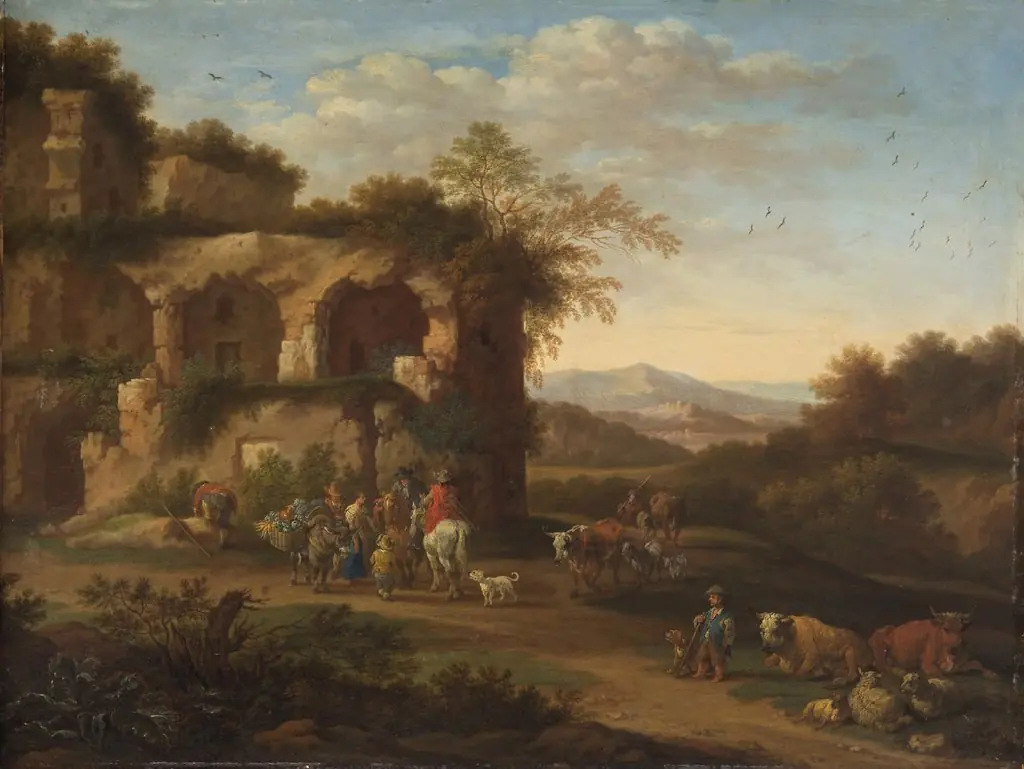
Italian landscape with a group of shepherds
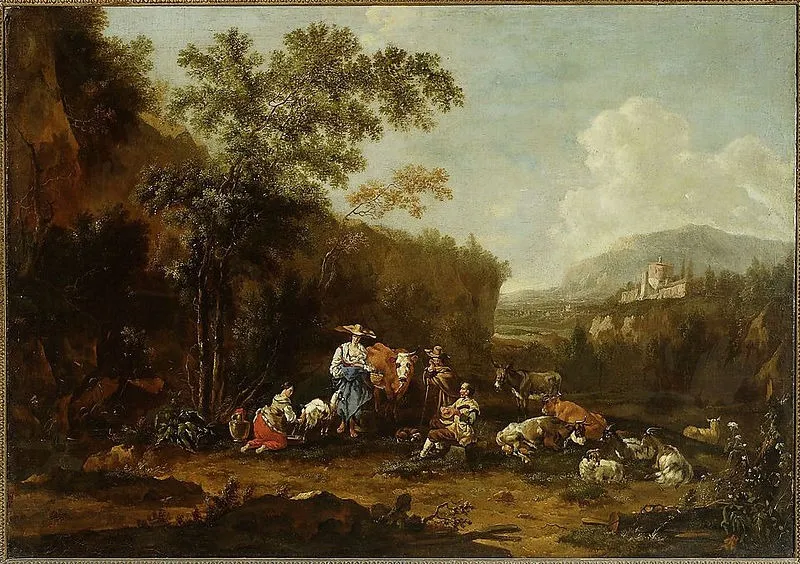
Italian landscape with a group of shepherds is an oil painting by the Dutch Golden Age artist Jan Both. It dates from 1645 and is held in the collection of the National Museum in Warsaw.
About this work
Overview
Painted around 1645 by Dutch artist Jan Both, this oil-on-canvas work presents a tranquil Italian countryside inhabited by shepherds and their flocks.
Painted around 1645 by Dutch artist Jan Both, this oil-on-canvas work presents a tranquil Italian countryside inhabited by shepherds and their flocks. Though Both was Dutch, his travels in Italy deeply influenced his subject matter. The painting is part of the collection at the National Museum in Warsaw, where it remains a representative example of 17th-century Dutch Italianate landscape painting.
Subject & Meaning
The scene portrays shepherds in quiet daily routines—tending sheep, resting, or conversing—set against a gentle, sunlit landscape. There is no narrative drama; instead, the focus lies in the harmony between humans and nature. The figures are small relative to the environment, suggesting a contemplative view of rural life as part of a larger, enduring natural order.
Technique & Style
Both employed oil paint to achieve subtle gradations of light and atmospheric depth. Soft, diffused sunlight filters through trees, casting elongated shadows and warming the earth tones of the hills. The brushwork is precise yet unobtrusive, allowing the landscape to feel immersive. His technique reflects the influence of Claude Lorrain, particularly in the balanced composition and luminous haze.
History & Provenance
The painting entered the National Museum in Warsaw’s collection in the 19th century, likely through acquisitions by Polish collectors interested in Dutch and Italianate works. Its journey from the Netherlands to Poland reflects broader European patterns of art collecting during the Enlightenment and Romantic periods, though specific ownership details prior to the 1800s remain undocumented.
Context
In the mid-17th century, Dutch artists increasingly depicted idealized Italian scenes, drawn by the classical ruins and light of the Roman countryside. Jan Both, like many of his peers, traveled to Italy and returned with sketches that informed studio paintings. These works catered to a market seeking romanticized visions of the South, blending observation with poetic invention.
Legacy
Both’s landscapes contributed to the development of the Italianate genre in Northern European art. While less celebrated than contemporaries like Claude, his works helped establish a visual language of serene, light-filled countryside scenes that influenced later landscape traditions. This painting endures as a quiet example of how Dutch artists reimagined foreign landscapes through their own aesthetic sensibilities.
Artist & collection

Artist
Jan Dirksz Both was a Dutch painter, draughtsman, and etcher, who made an important contribution to the development of Dutch Italianate landscape painting.

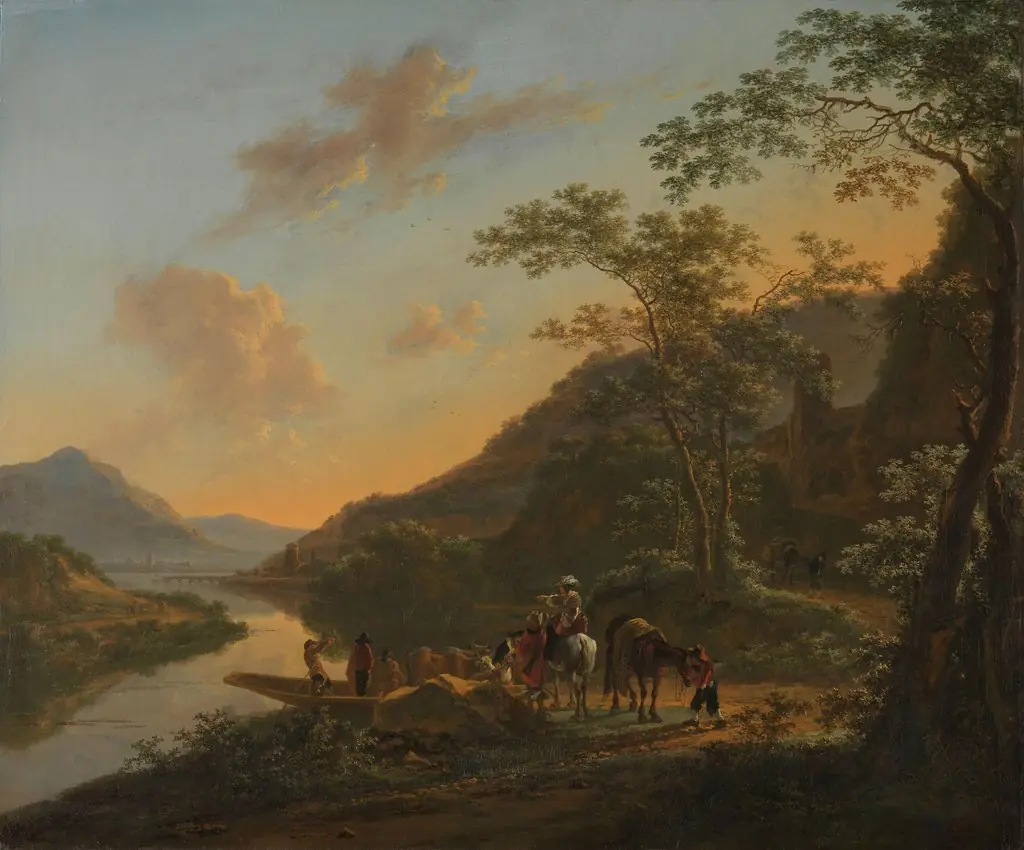
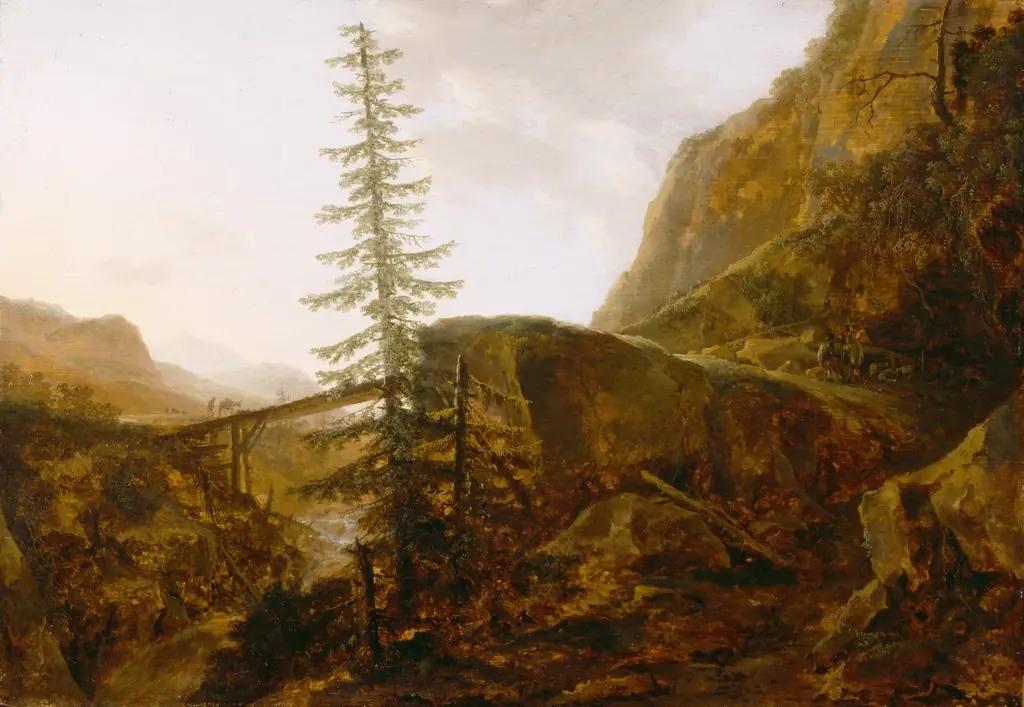
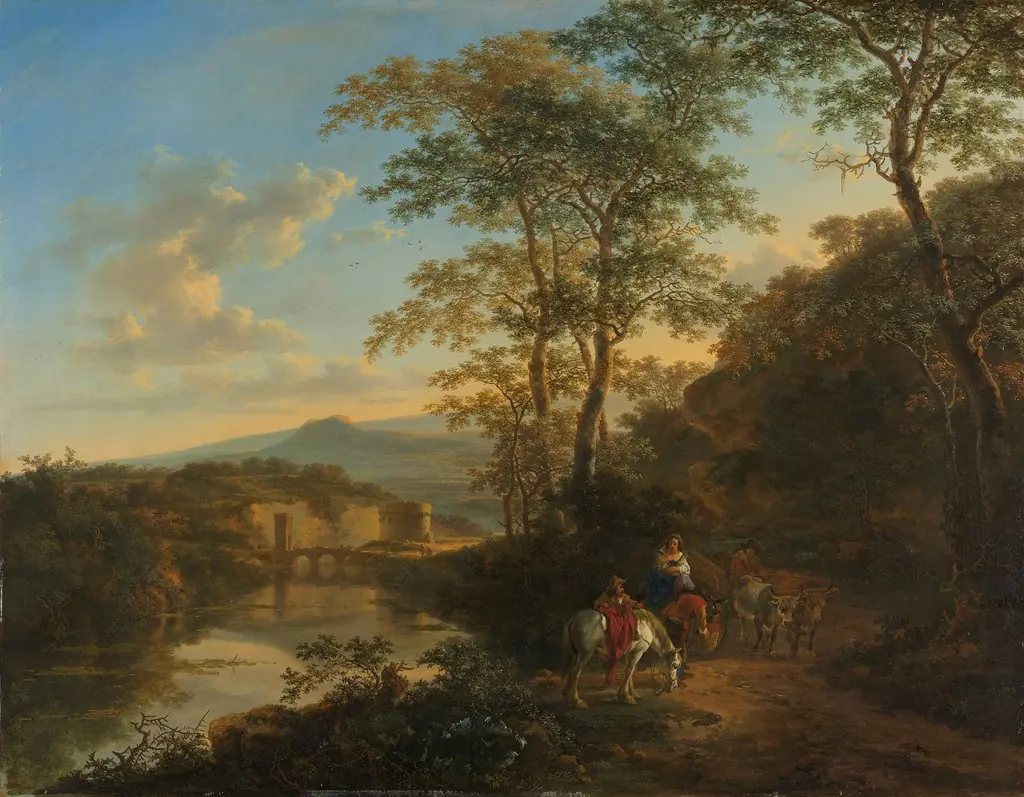
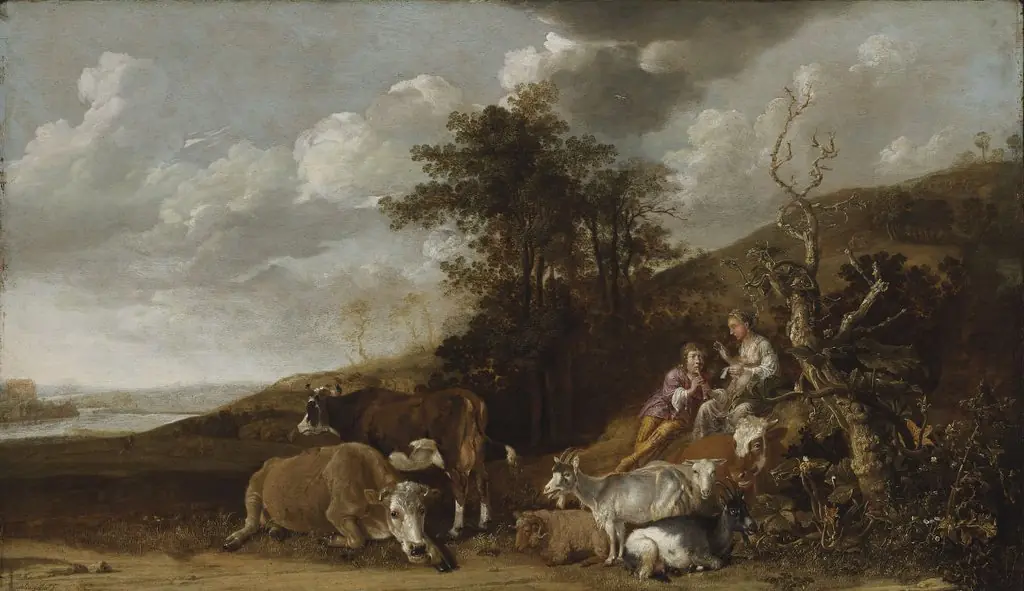 Landscape with Shepherdess and Shepherd Playing Flute
 Peisaj cu personaje și animale
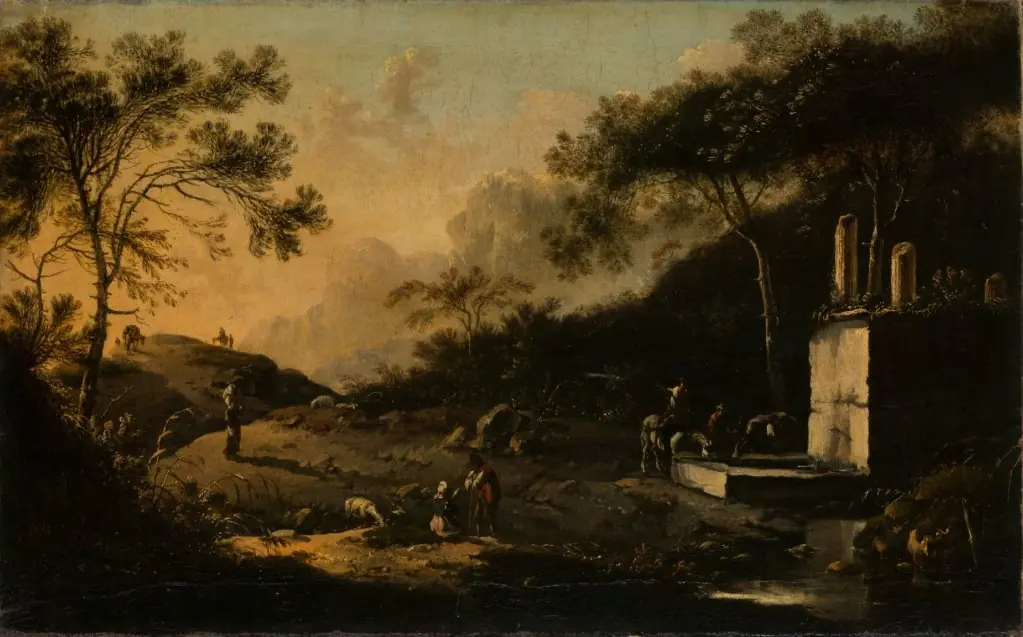 Italian Mountain Landscape with Travelers at a Well
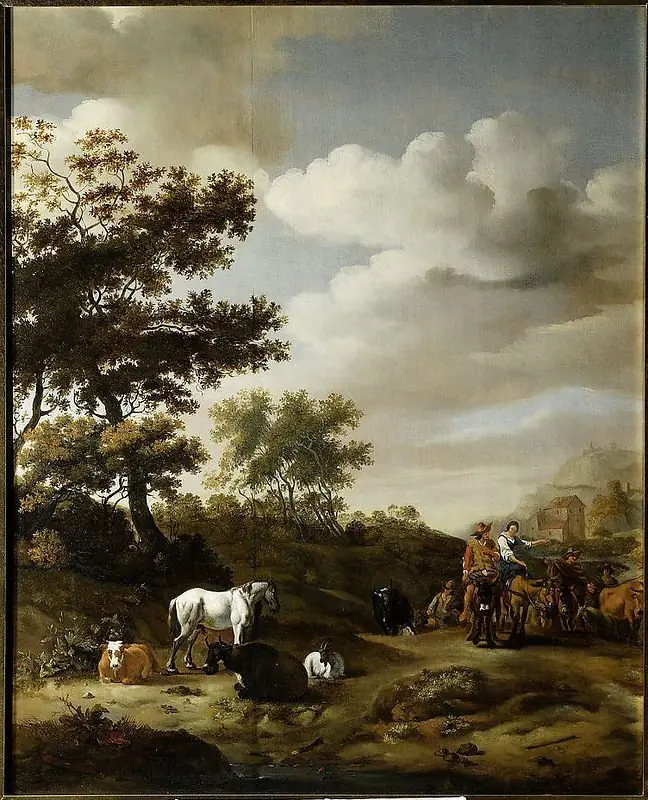 Landscape with people and cattle
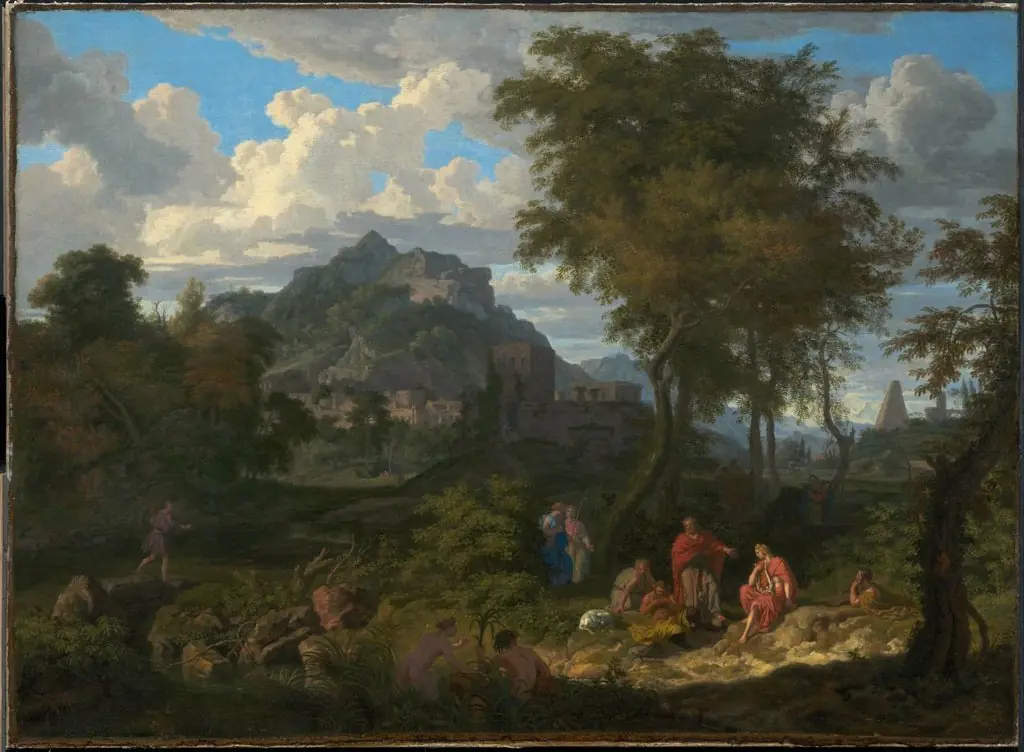 King Midas Judging the Musical Contest between Pan and Apollo
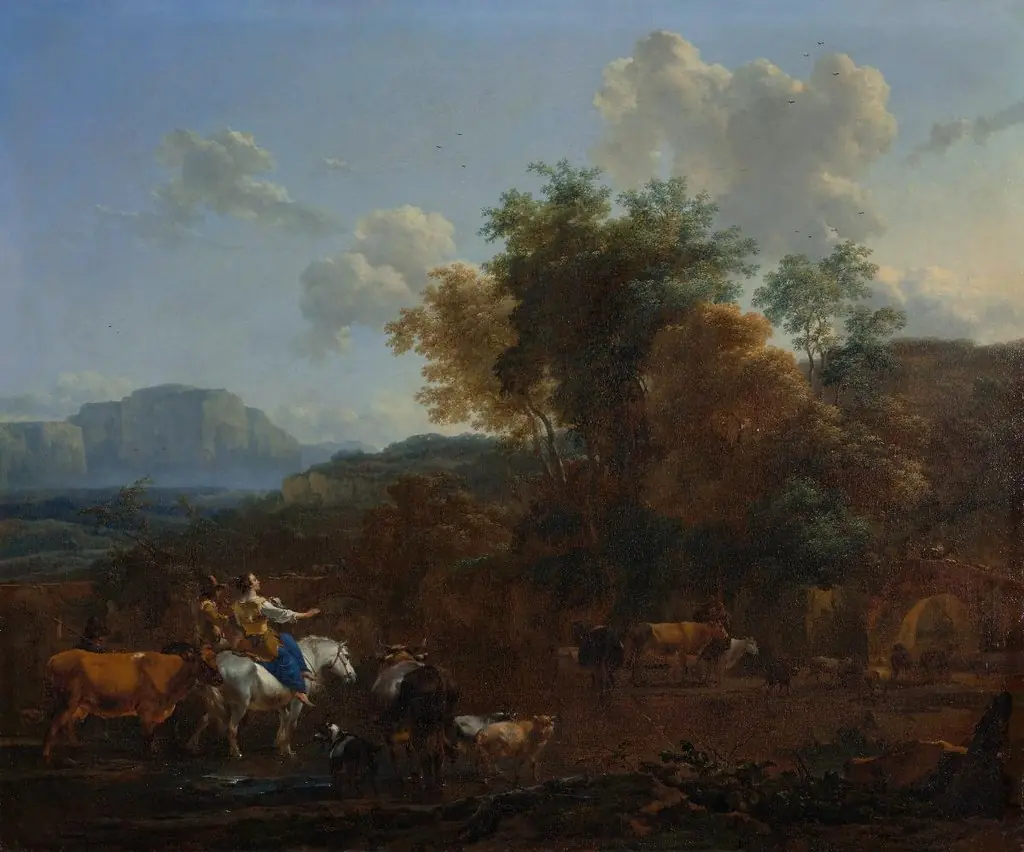 Italienische Landschaft mit musizierenden Hirten und ziehender Herde
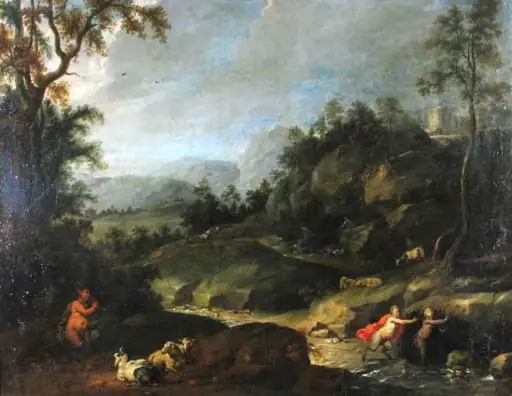 Nimfa Syrinx urmărită de satir
 Italian landscape with antique ruins and herders