Artwork
The penitent Saint Jerome
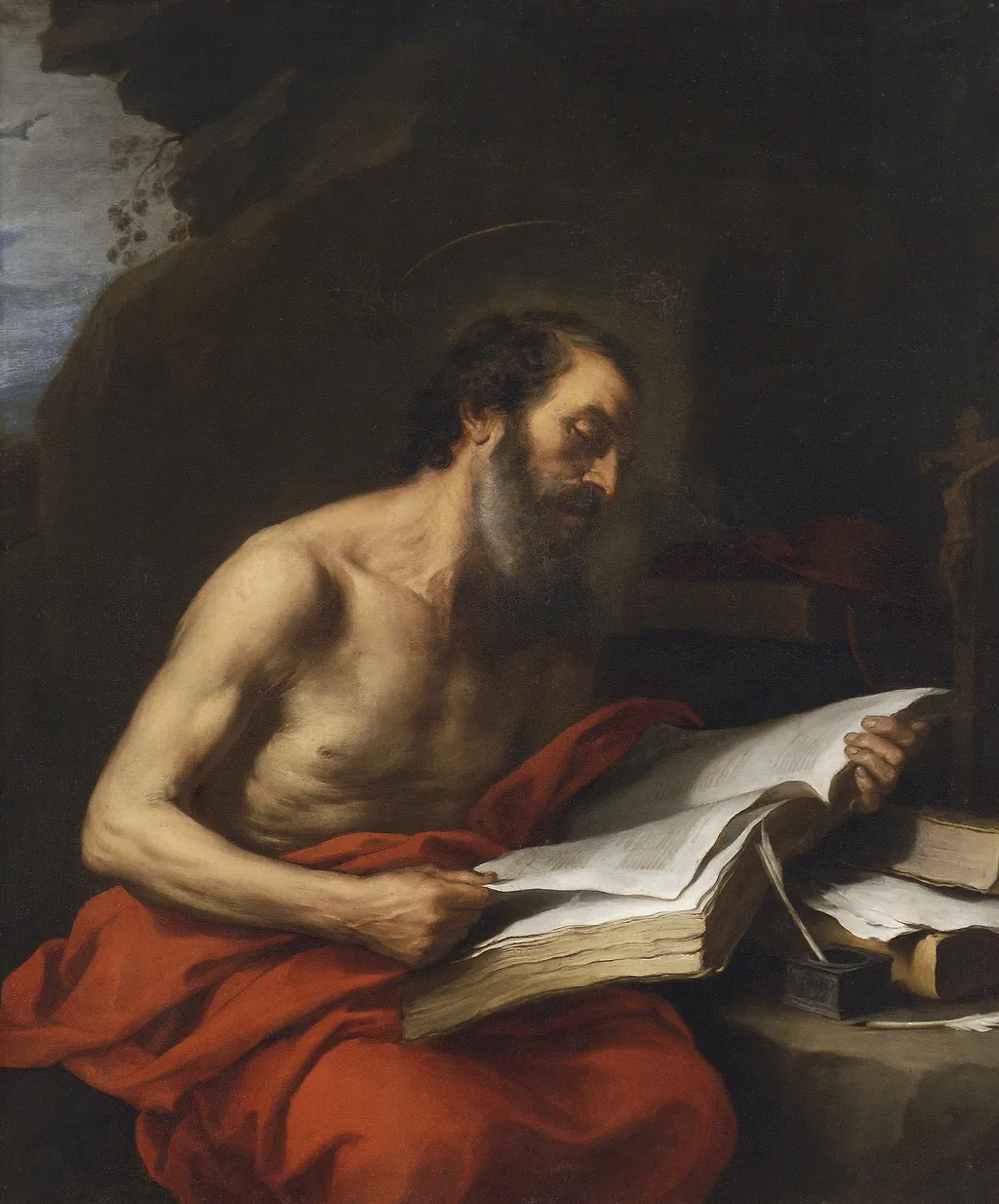
The penitent Saint Jerome is an oil painting by the Early Baroque Italian artist Bartolomé Esteban Murillo. It dates from 1650 and is held in the collection of the Museo del Prado.
About this work
Overview
Created circa 1650 by the Spanish Baroque artist Bartolomé Esteban Murillo, this oil on canvas presents a solitary figure of Saint Jerome. The composition places the saint in a dim interior, his form illuminated against a dark backdrop, emphasizing his contemplative posture as he engages with a text.
Subject & Meaning
The work portrays the biblical scholar Saint Jerome in a moment of penitence, seated with an open book, a quill and an inkwell nearby, and a discarded hat on the floor. The setting underscores Jerome’s reputation for ascetic scholarship and his devotion to translating the scriptures.
Technique & Style
Murillo employs a pronounced chiaroscuro, using stark contrasts of light and shadow to model the saint’s warm, smooth skin and the rich red cloth that drapes his torso. The limited palette and soft modeling reflect the early Baroque sensibility, while the careful rendering of textures—fabric, leather, and parchment—adds tactile realism.
History & Provenance
The painting entered the collection of Madrid’s Museo del Prado, where it remains on display. Its attribution to Murillo aligns with his prolific output of religious subjects during the mid‑17th century, a period when he was celebrated for integrating devotional themes with a gentle, accessible visual language.
Own this work as a print
Artist & collection
Artist
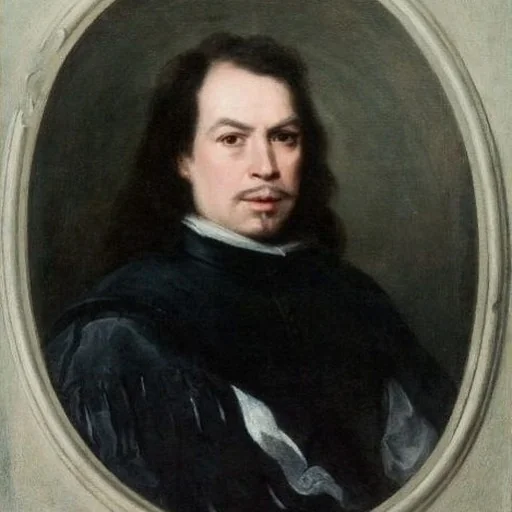
Bartolomé Esteban Murillo ( mure-IL-oh, m(y)uu-REE-oh, Spanish: ; late December 1617, baptised 1 January 1618 – 3 April 1682) was a Spanish Baroque painter.