Artwork
The Prodigal Son receiving his Inheritance
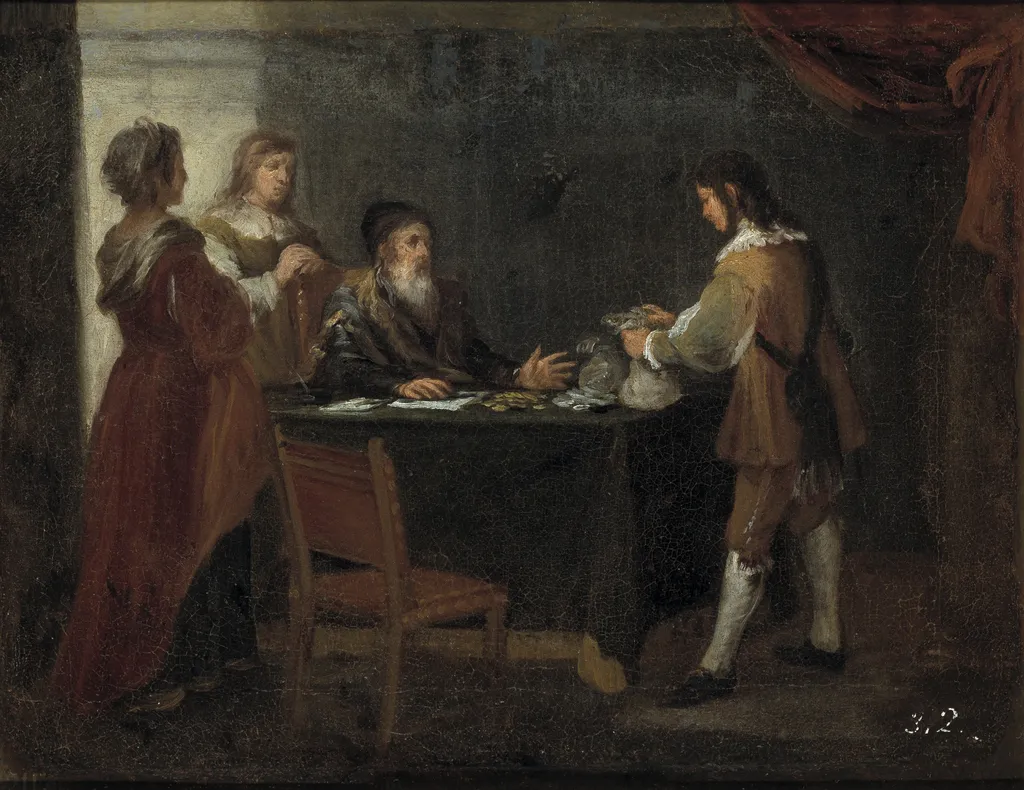
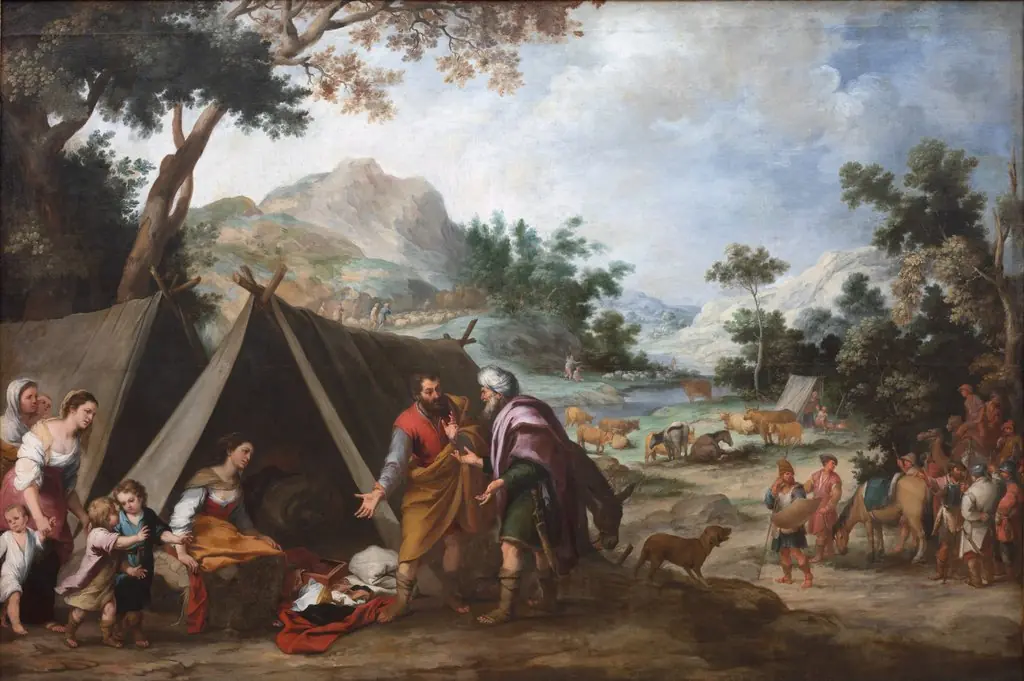
The Prodigal Son receiving his Inheritance is an oil painting by the Early Baroque Italian artist Bartolomé Esteban Murillo. It dates from 1660 and is held in the collection of the Museo del Prado.
About this work
Overview
Bartolomé Esteban Murillo, a Spanish painter of the Baroque period, completed an oil painting titled *The Prodigal Son receiving his Inheritance* in 1660. The work belongs to the religious genre and is part of the collection of the Museo del Prado in Madrid.
Subject & Meaning
The composition shows a young man in 17th‑century dress accepting a sack of money from an older, formally dressed figure seated at a table. A woman stands behind the elder, observing the transaction. The scene evokes the biblical parable of the prodigal son, emphasizing themes of restitution and familial duty.
Technique & Style
Murillo employs chiaroscuro to model the figures, allowing a shaft of daylight from a distant window to illuminate the central exchange. The contrast of light and shadow creates a sense of three‑dimensionality and focuses attention on the hands and the money bag, while the surrounding interior recedes into darkness.
History & Provenance
Since its creation in the mid‑17th century, the painting has remained within Spanish collections, eventually entering the holdings of the Museo del Prado. No record of intermediate owners is noted, indicating a relatively direct acquisition by the national museum.
Context
Executed during the early Baroque phase in Spain, the work reflects Murillo’s dual interest in sacred narratives and everyday scenes. By placing the biblical episode in a contemporary interior, the artist connects the moral lesson to the social realities of his time, a practice common among Baroque painters.
Own this work as a print
Artist & collection
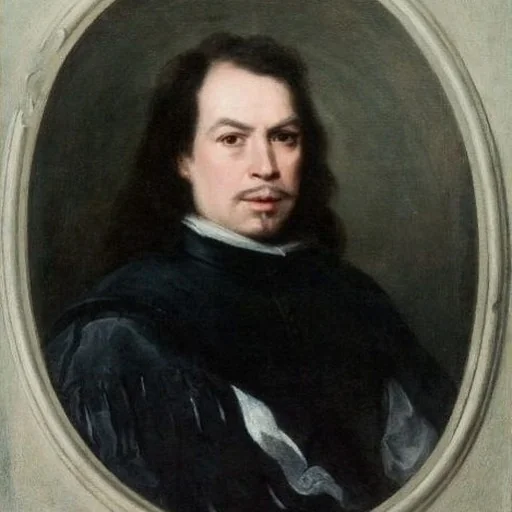
Artist
Bartolomé Esteban Murillo ( mure-IL-oh, m(y)uu-REE-oh, Spanish: ; late December 1617, baptised 1 January 1618 – 3 April 1682) was a Spanish Baroque painter.