Artwork
Death of St Francis
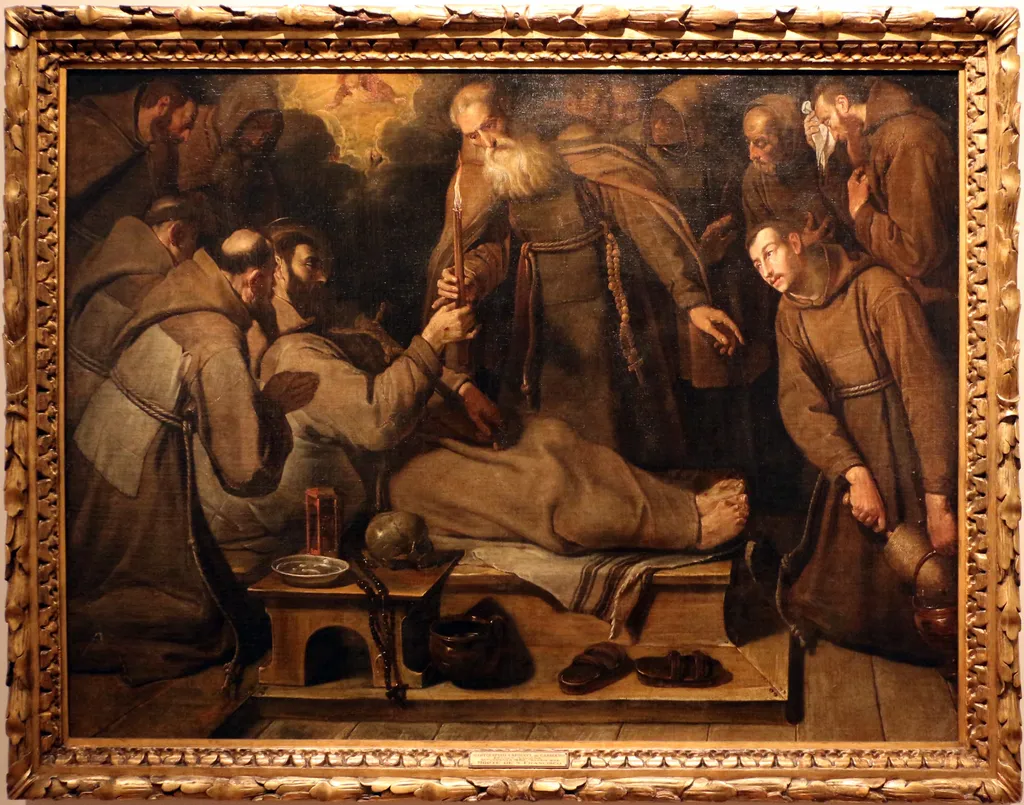
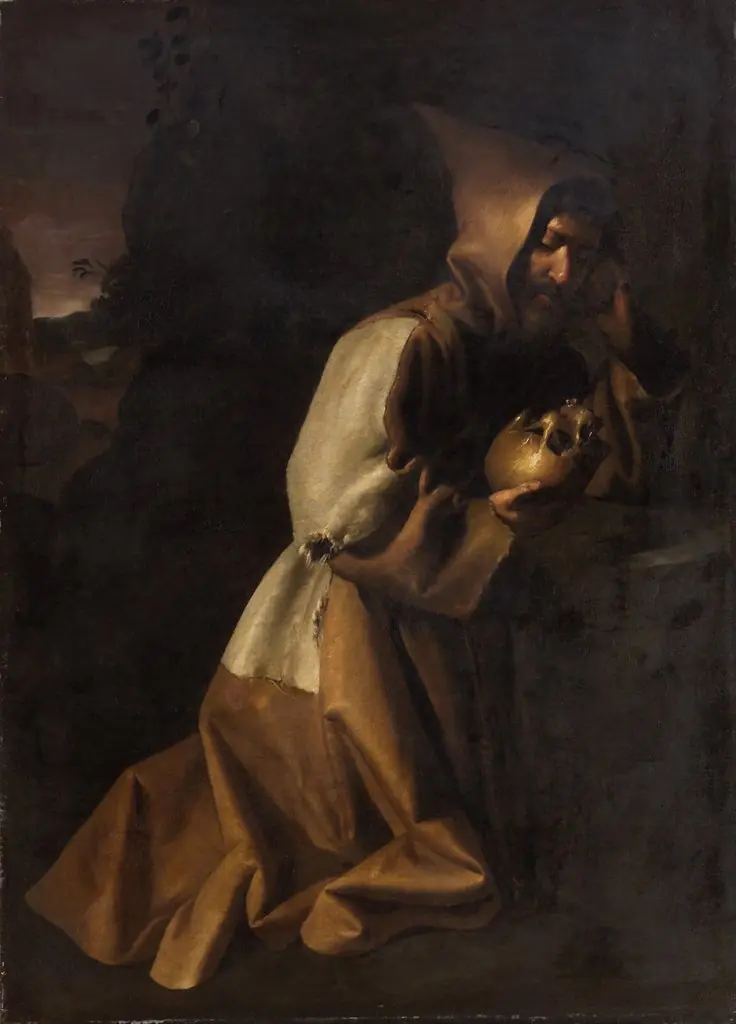
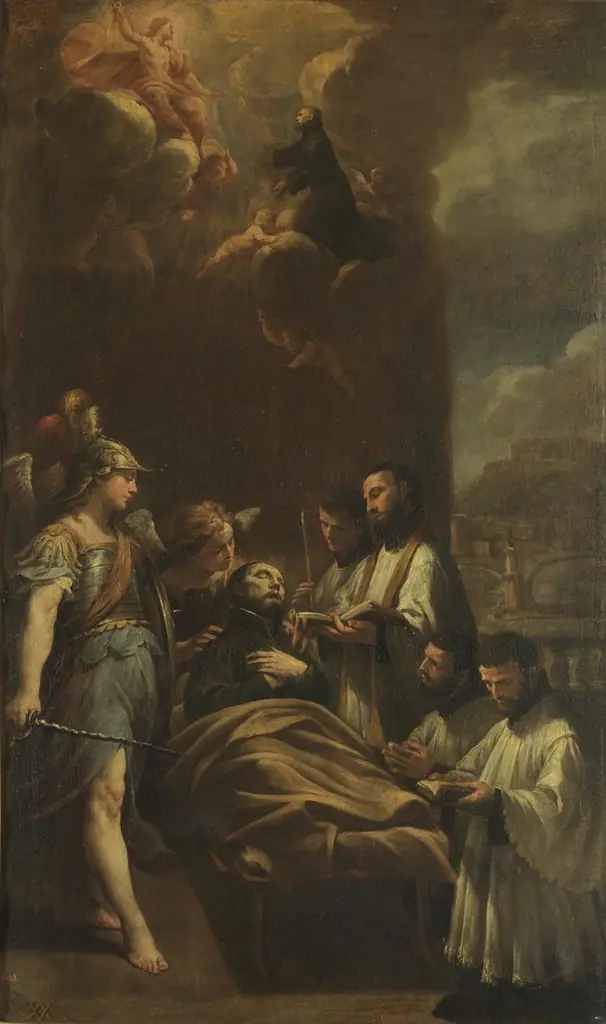
Death of St Francis is an oil painting by the Early Baroque Italian artist Bartolomeo Carducci. It dates from 1597 and is held in the collection of the National Museum of Ancient Art.
About this work
Overview
Executed in the transitional style between Mannerism and early Baroque, the painting reflects the religious devotion characteristic of Counter-Reformation art.
Painted in 1597 by Bartolomeo Carducci, this oil work captures the final moments of Saint Francis of Assisi. Executed in the transitional style between Mannerism and early Baroque, the painting reflects the religious devotion characteristic of Counter-Reformation art. It is currently held in the National Museum of Ancient Art in Lisbon, where it remains a quiet example of Italianate influence in Iberian collections.
Subject & Meaning
The scene portrays Saint Francis on his deathbed, surrounded by his Franciscan brothers in silent grief. His bare feet and simple brown habit emphasize humility, while the group’s subdued expressions convey reverence rather than theatrical sorrow. The moment is not one of dramatic ecstasy but of intimate spiritual transition, aligning with Franciscan ideals of peace, acceptance, and detachment from worldly concerns.
Technique & Style
Carducci employs chiaroscuro to model the figures with soft, directional light, guiding attention to the saint’s still form. The palette is restrained—earthy browns, muted grays, and dull ochres—enhancing the somber mood. Brushwork is controlled, avoiding flamboyance; folds in the robes are rendered with quiet precision, reinforcing the painting’s contemplative tone rather than emotional intensity.
History & Provenance
Carducci, an Italian artist who worked in Spain under the name Carducho, created this painting during his time in the Iberian Peninsula. It entered the Portuguese royal collection before being transferred to the National Museum of Ancient Art. Its presence in Lisbon suggests it was acquired as part of broader cultural exchanges between Italy and Portugal during the late Renaissance.
Context
Created during the Counter-Reformation, the painting responds to Church efforts to reinforce devotional imagery centered on saints’ lives and deaths. The emphasis on Francis’s humble passing aligns with Franciscan spirituality promoted by the Catholic Church to counter Protestant critiques of monastic excess. Such scenes served as models of piety for the faithful.
Legacy
Though not widely reproduced or celebrated in mainstream art history, the painting remains a thoughtful example of late 16th-century religious portraiture. It reflects the quiet, inward turn in devotional art that preceded the more theatrical Baroque style. Its preservation in Lisbon underscores its role as a regional witness to transnational artistic and spiritual currents.
Artist & collection
Artist
Bartolomeo Carducci (1560 – 14 November 1608) was an Italian painter, better known as Carducho, the Spanish corruption of his Italian patronymic.