Artwork
Muza
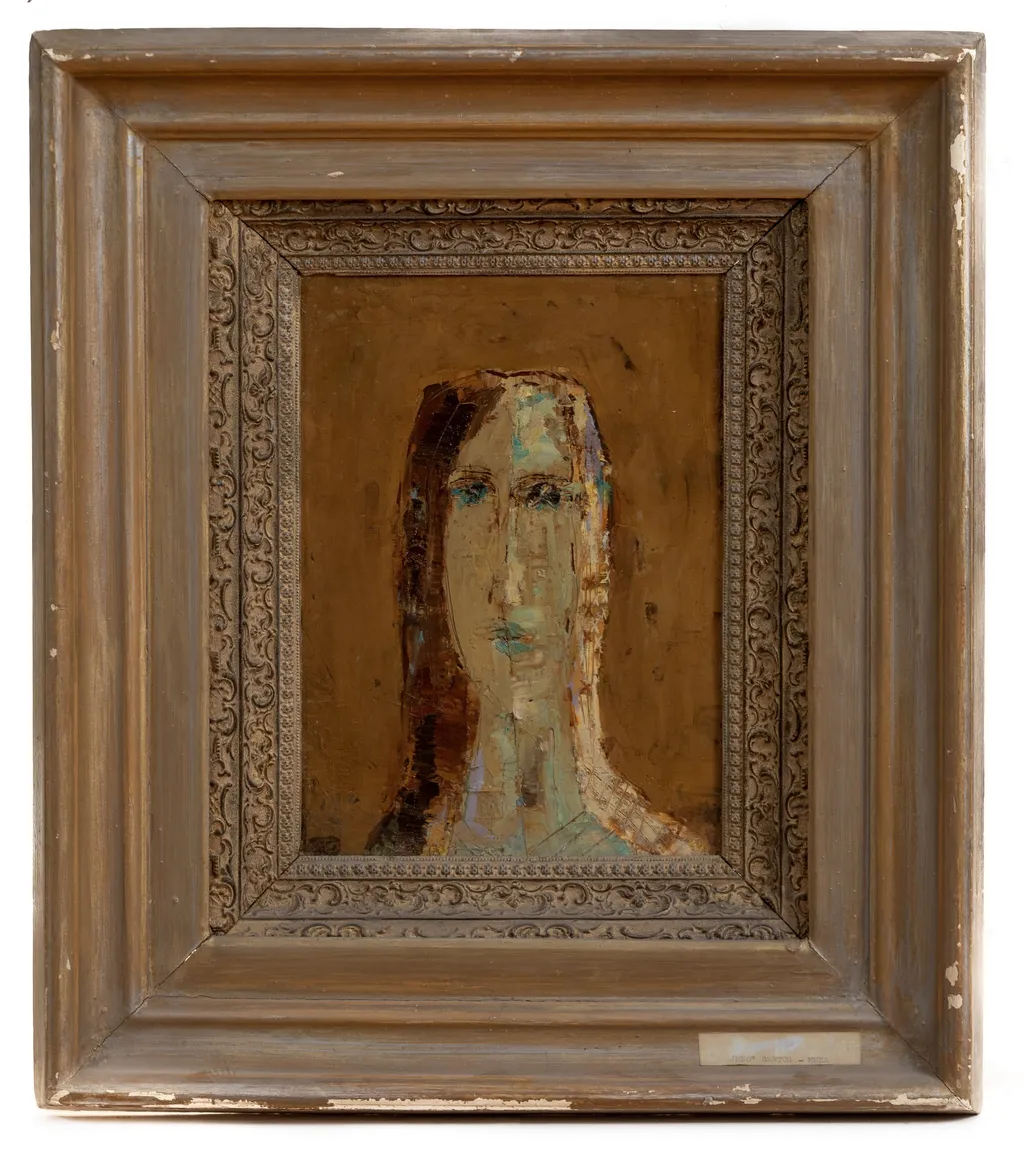
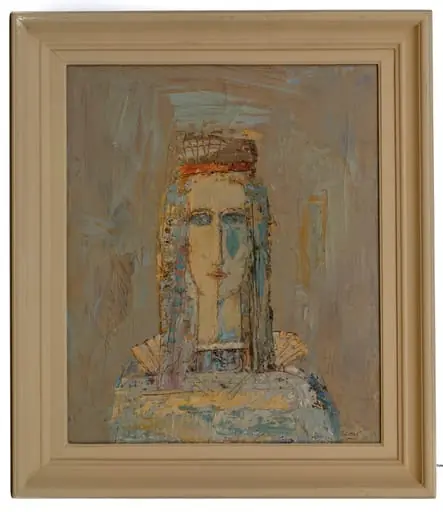
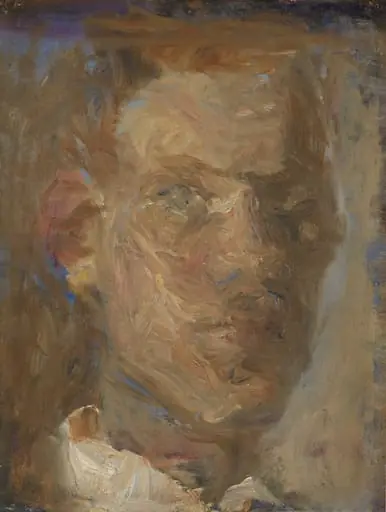
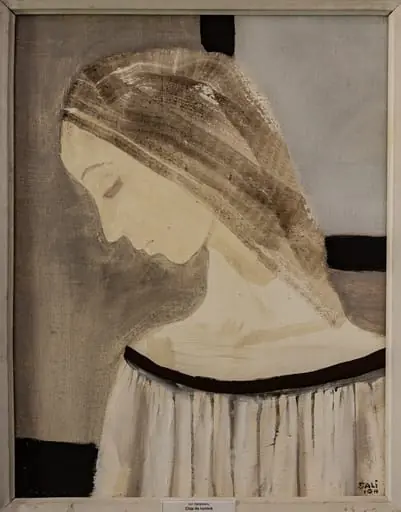
Muza is a print by Bartos Jeno. It is held in the collection of the Moldova National Museum Complex. This portrait depicts a woman with long, flowing hair rendered in an abstracted, expressive manner.
About this work
Overview
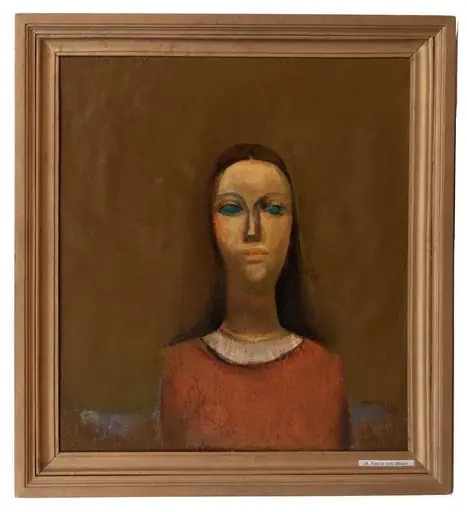
This portrait depicts a woman with long, flowing hair rendered in an abstracted, expressive manner. The composition centers on her face, framed by loose strokes that suggest rather than define her features. The palette is restrained, dominated by earthy browns and beiges, creating a quiet, contemplative mood. Brushwork is deliberate yet unrefined, emphasizing texture and gesture over detail.
Subject & Meaning
The subject is a woman whose identity remains unnamed, inviting focus on her presence rather than her biography. Her gaze and posture convey stillness, avoiding overt emotion. The abstraction of her form suggests an interest in essence over likeness, reducing personal detail to evoke a universal sense of quiet dignity. The framing of her face by hair acts as both structure and softness.
Technique & Style
The painting employs a loose, gestural technique with visible, layered brushstrokes that build form through texture rather than line. Colors are muted and blended subtly, avoiding high contrast. The surface retains the physicality of paint, with areas of thick application and thin washes. This approach aligns with expressive modernism, prioritizing emotional resonance over realism.
History & Provenance
The painting’s origin and ownership history are not documented in available records. It is attributed to an artist associated with early 20th-century expressive portraiture, though no definitive archival trail exists. Its title, 'Muza,' suggests a possible reference to muse or inspiration, but this remains interpretive without supporting evidence.
Context
Created during a period when many artists moved away from academic realism, this work reflects broader trends in modernist portraiture that valued emotional expression and formal economy. Similar approaches appear in the work of contemporaries who reduced figures to essential forms, often using limited palettes to heighten psychological presence.
Legacy
Though not widely exhibited or studied, the painting’s stylistic choices resonate with a subset of modernist portraiture that favored restraint and tactile surface. Its association with Bartos Jeno, if accurate, situates it within a regional modernist circle that emphasized introspective imagery over narrative or spectacle.
Artist & collection
Artist
Bartos Jeno’s small bundle mixes print, textile, and painting in a quiet mid-century style.