Artwork
Titiro and Messo
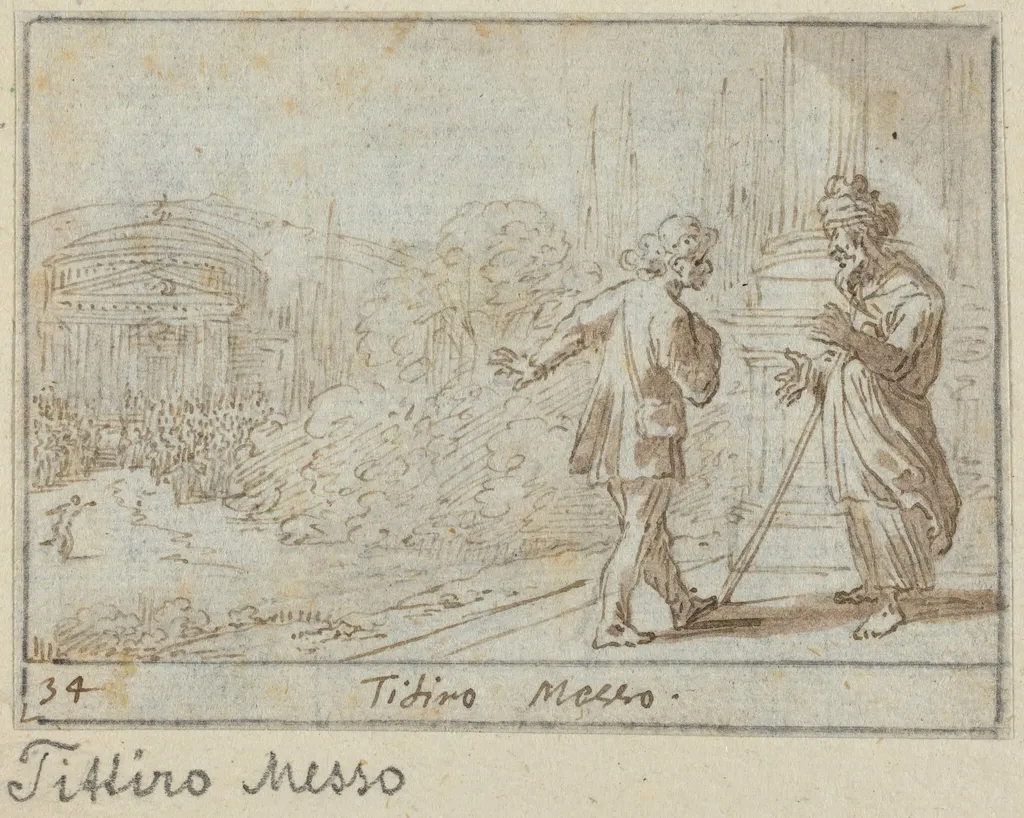
Titiro and Messo is an ink drawing by the Baroque artist Johann Wilhelm Baur. It dates from 1640 and is held in the collection of the National Gallery of Art.
About this work
Overview
Johann Wilhelm Baur’s drawing *Titiro and Messo* was executed in 1640 with pen, brown ink and a brown wash on laid paper. The composition presents two elderly figures seated beneath a tree; one holds a flute while the other listens with closed eyes, creating an intimate, contemplative atmosphere.
Subject & Meaning
The image illustrates a moment from the 16th‑century pastoral poem *Il pastor fido*, focusing on the characters Tityrus and Messo. By rendering the literary scene in a quiet, private setting, Baur translates the poem’s lyrical tone into a visual meditation on music and repose.
Technique & Style
Baur employs fine pen lines combined with a subtle brown wash, allowing tonal variation without heavy shading. The use of laid paper contributes a textured surface that enhances the delicate rendering of foliage and the figures’ gestures, characteristic of his miniature drawing practice.
History & Provenance
Born in Strasbourg in 1607, Baur worked as an engraver, etcher and miniature painter before his death in Vienna the same year he completed this drawing. His oeuvre includes numerous illustrations for Ovid’s *Metamorphoses*, situating *Titiro and Messo* within his broader engagement with classical literature.
Context
The drawing reflects the 17th‑century German interest in adapting Italian pastoral literature for visual arts. Baur’s choice of a modest, ink‑only medium aligns with contemporary practices of preparatory sketches for larger works, such as the related composition held by the National Gallery of Art in Washington.
Artist & collection
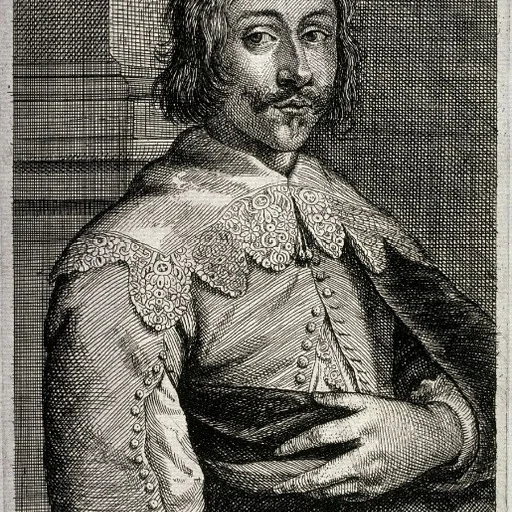
Artist
Johann Wilhelm Baur, Joan Guiliam Bouwer, or Bauer (Strasbourg, 31 May 1607 - Vienna, 1 January 1640) was a German engraver, etcher and miniature painter. He is famous for a series of illustrations of Ovid's Metamorphoses.