Artwork
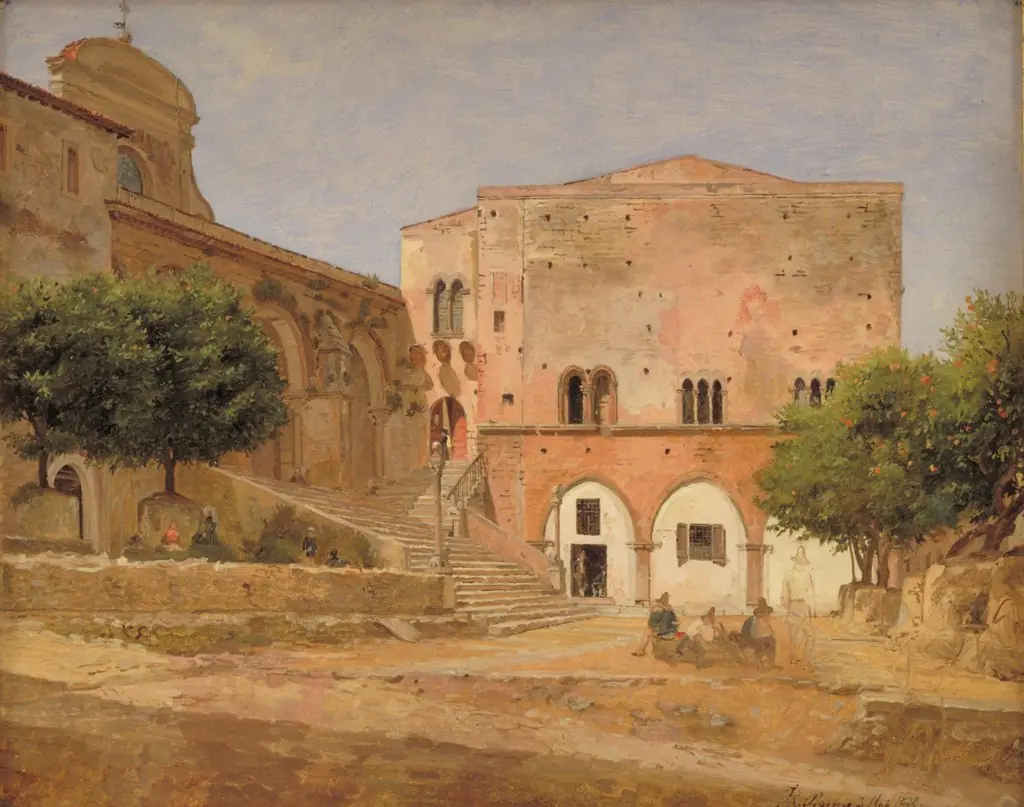
The Episcopal Palace at Viterbo, Italy
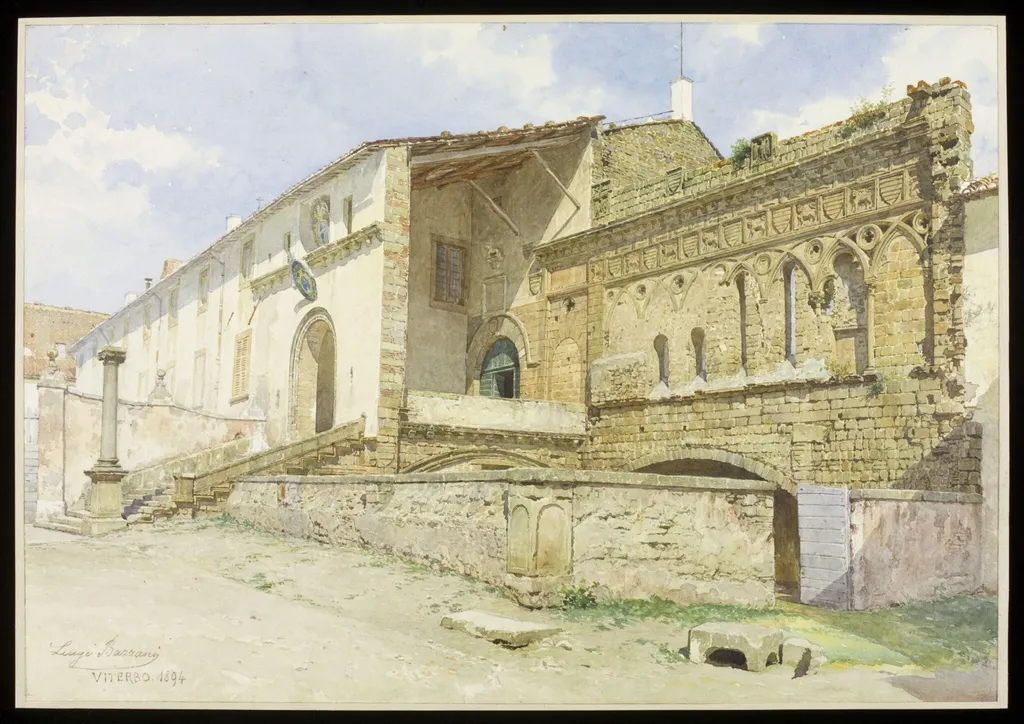
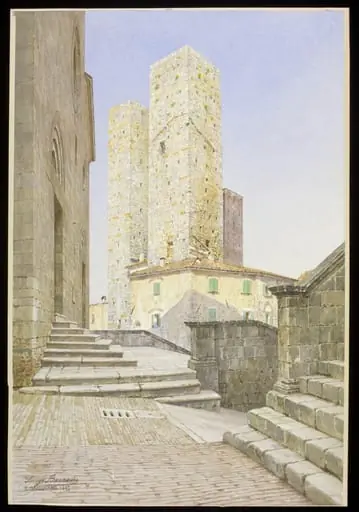
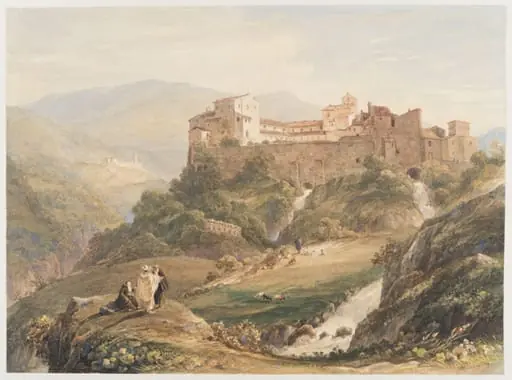
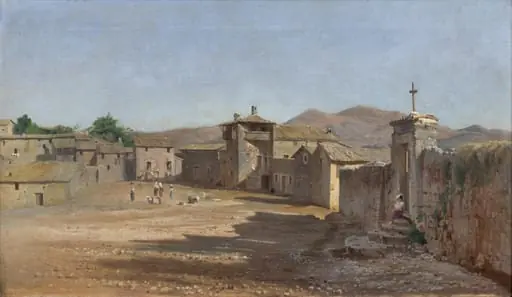
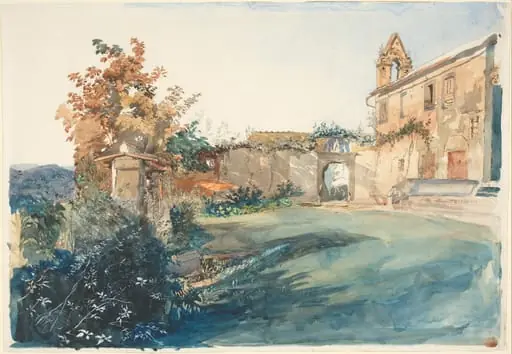
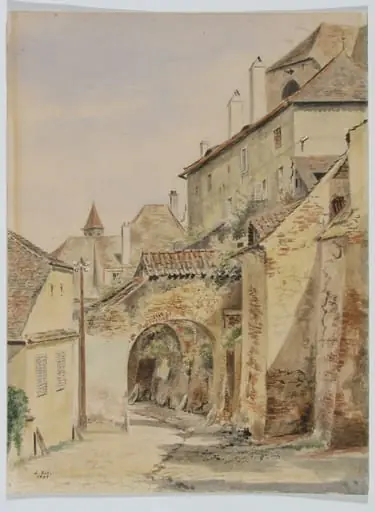
The Episcopal Palace at Viterbo, Italy is a watercolor work on paper by the Impressionist artist Luigi Bazzani. It dates from 1894 and is held in the collection of the Victoria and Albert Museum.
About this work
Overview
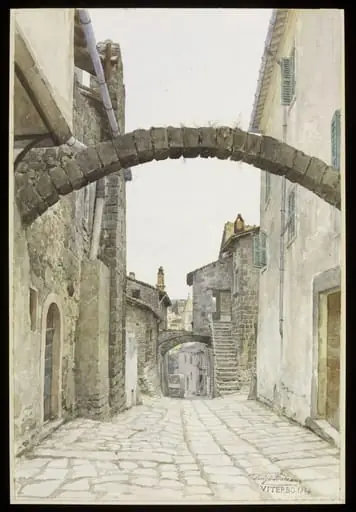
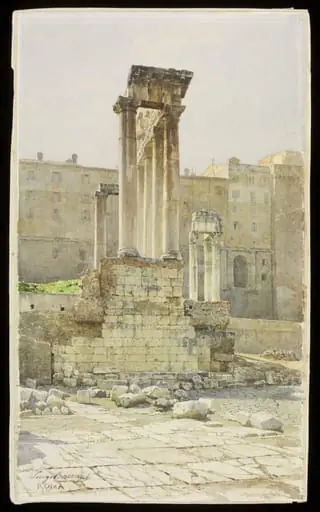
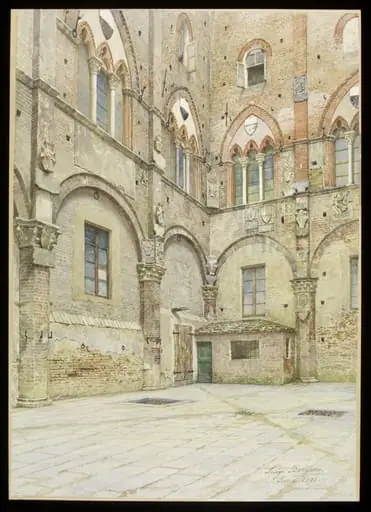
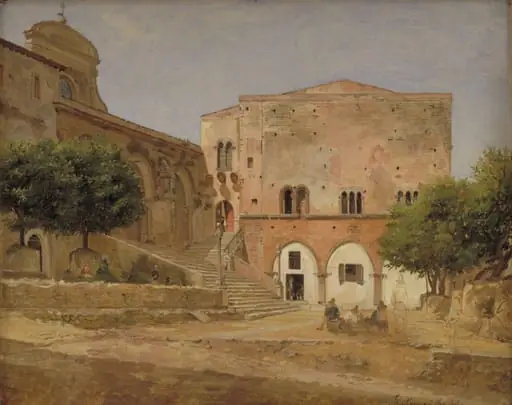
Luigi Bazzani’s 1894 watercolour captures the loggia of the Episcopal Palace in Viterbo, Italy, with precise attention to architectural detail.
Luigi Bazzani’s 1894 watercolour captures the loggia of the Episcopal Palace in Viterbo, Italy, with precise attention to architectural detail. The composition centers on a weathered stone arcade lined with interlaced arches and embedded heraldic emblems. Beyond, a long façade rises, its entrance marked by two papal coats of arms. The artist’s signature and date are visibly inscribed, anchoring the work in its historical moment.
Subject & Meaning
The scene presents a quiet monument to ecclesiastical authority, framed by decay. The presence of Pope Leo XIII’s coat of arms identifies the building’s recent papal connection, while the crumbling staircase and faded frescoes suggest the passage of time. The lone column and adjacent church imply a landscape of layered religious history, where institutional power endures even as physical structures erode.
Technique & Style
Bazzani employs delicate watercolour washes to render the granular texture of aged stone and the soft fading of fresco pigments. His brushwork emphasizes surface wear—cracked mortar, chipped edges, and weathered surfaces—without idealization. The muted palette and restrained tonal range reflect the late 19th-century Italian tradition of topographical realism, valuing accuracy over dramatic effect.
History & Provenance
Created in 1894, the watercolour documents a specific architectural site during a period of renewed interest in Italy’s ecclesiastical heritage. Bazzani, known for his architectural studies, likely produced this as part of a broader project recording historic buildings. Its survival and documentation suggest it was preserved within scholarly or collector circles, though its exact provenance prior to institutional acquisition remains unrecorded.
Context
In late 19th-century Italy, artists like Bazzani turned to architectural subjects as a means of preserving cultural memory amid rapid modernization. This work aligns with a movement that valued documentary precision in depicting medieval and Renaissance structures, often commissioned by academic or civic institutions seeking to catalog national heritage before further deterioration.
Legacy
Bazzani’s watercolour contributes to a body of work that helped define the visual record of Italy’s ecclesiastical architecture. While not widely exhibited, such pieces remain important references for architectural historians and conservators. Their quiet documentation offers insight into the state of historic buildings at a time when preservation efforts were still emerging.
Artist & collection

Artist
Luigi Bazzani, also called Il Bazzanetto, was an Italian painter, illustrator, and watercolorist.