Artwork
Untitled
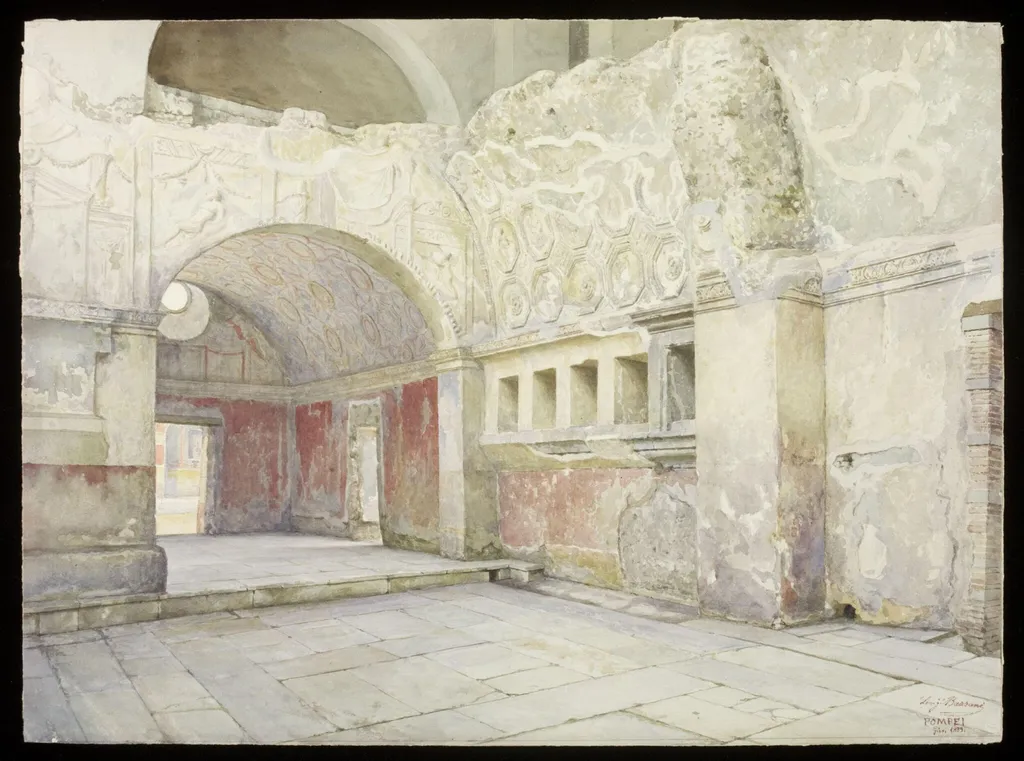
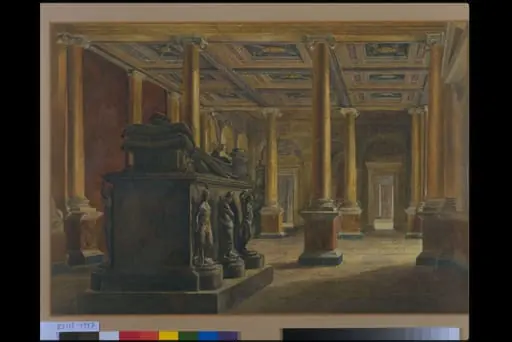
Untitled is a watercolor work on paper by the Impressionist artist Luigi Bazzani. It dates from 1894 and is held in the collection of the Victoria and Albert Museum.
About this work
Overview
Rendered in delicate washes, the work documents the architectural layout and surviving decorative elements of the ancient Roman facility.
This watercolor by Luigi Bazzani captures the Apodyterium and its connecting ante-room within the Stabian Baths at Pompeii. Rendered in delicate washes, the work documents the architectural layout and surviving decorative elements of the ancient Roman facility. The artist’s signature is present, affirming its origin as a deliberate record rather than a speculative composition. The scene conveys a quiet stillness, emphasizing the passage of time through subtle tonal shifts and restrained detail.
Subject & Meaning
The painting focuses on a public changing room and its adjacent corridor, spaces once used by bathers in ancient Pompeii. The inclusion of the doorway to the Palaestra suggests the interconnectedness of bathing and exercise in Roman daily life. The deteriorated condition of the stucco and paint reflects the site’s abandonment after the eruption of Vesuvius, transforming the scene into a silent testament to lost routines and the fragility of urban life.
Technique & Style
Bazzani employs watercolor with a restrained palette of muted reds, ochres, and grays to evoke the weathered surfaces of aged stone and plaster. Soft chiaroscuro models the architectural forms, lending volume to the high ceiling and recessed niches. The brushwork is precise yet gentle, capturing peeling paint and cracked tile without dramatic emphasis. The technique prioritizes atmospheric tone over vivid color, reinforcing the sense of quiet decay.
History & Provenance
Created in the late 19th century, this watercolor emerged during a period of renewed archaeological interest in Pompeii. Bazzani, known for his topographical studies of Roman ruins, likely produced it as part of a systematic documentation effort. The work may have served academic or publishing purposes, contributing to the visual record of excavated sites before modern conservation practices were established.
Context
In the decades following Pompeii’s rediscovery, artists and archaeologists collaborated to record the site’s fragile remains. Bazzani’s watercolor aligns with this tradition, reflecting a scholarly impulse to preserve visual evidence of structures threatened by exposure and erosion. Unlike romanticized depictions of antiquity, this work favors observational accuracy, mirroring contemporary efforts to distinguish historical fact from imaginative reconstruction.
Legacy
The watercolor remains a valuable reference for understanding the state of the Stabian Baths in the 19th century, before later excavations and restorations altered the site. Its quiet realism offers a counterpoint to more theatrical representations of Pompeii, preserving a moment when the ruins were still visibly weathered by centuries of neglect. It stands as a quiet artifact of archaeological documentation in the pre-photographic era.
Artist & collection

Artist
Luigi Bazzani, also called Il Bazzanetto, was an Italian painter, illustrator, and watercolorist.

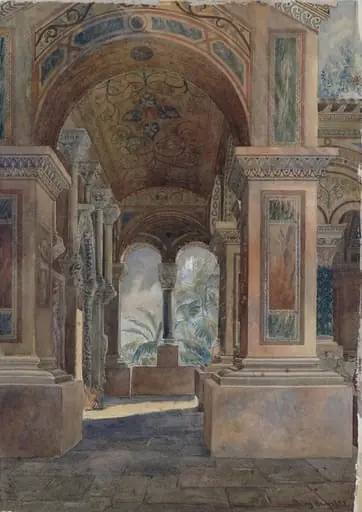 Interior of the Byzantine Court
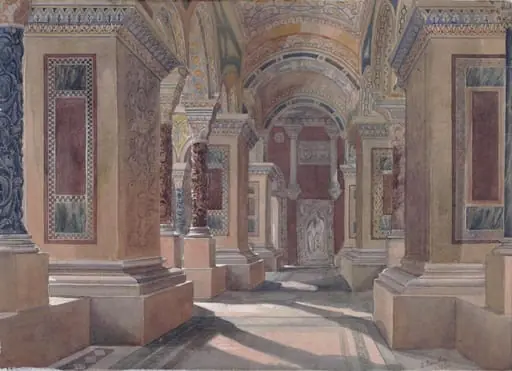 Interior of the Byzantine Court at Crystal Palace
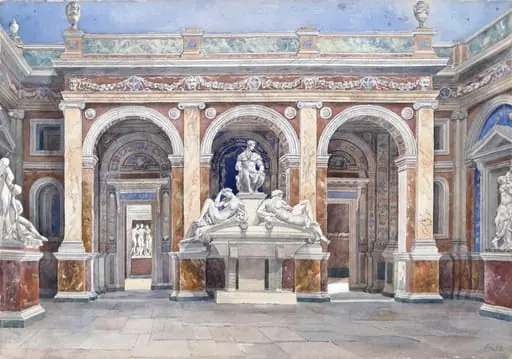 Marbled room with statues at Crystal Palace
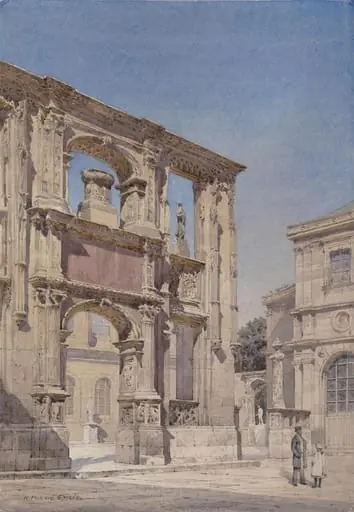 Part of the Chateau de Gaillon re-erected in the court of the Palais des Beaux Arts
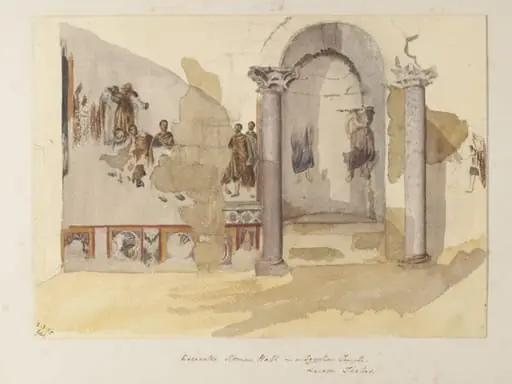 `Excavated Roman Hall in an Egyptian Temple - Luxor. Thebes'
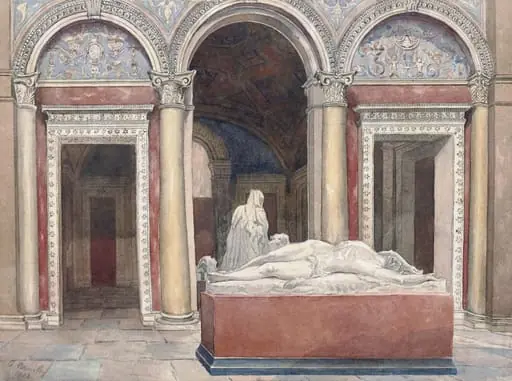 Interior of Crystal Palace, Italian vestibule
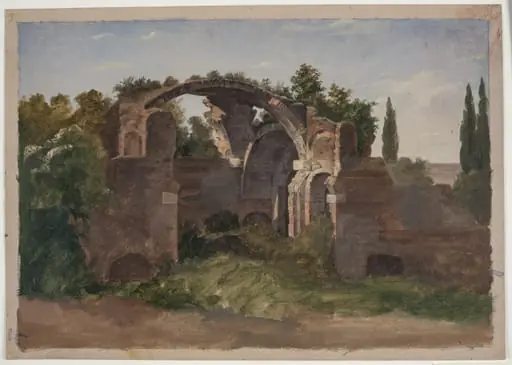 Ruiner. Caracallas termer i Rom?
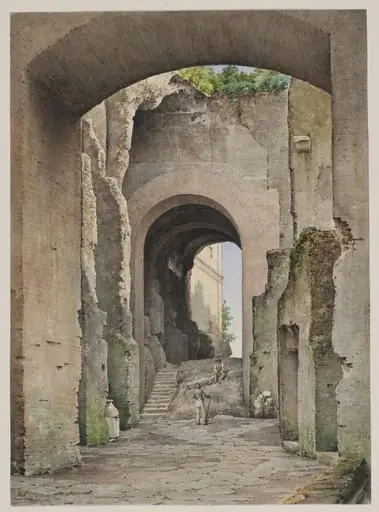 Fra udgravning i Kejserpaladset, Rom 1864
 Italian Court at Crystal Palace
 Architectural Fantasy