Artwork
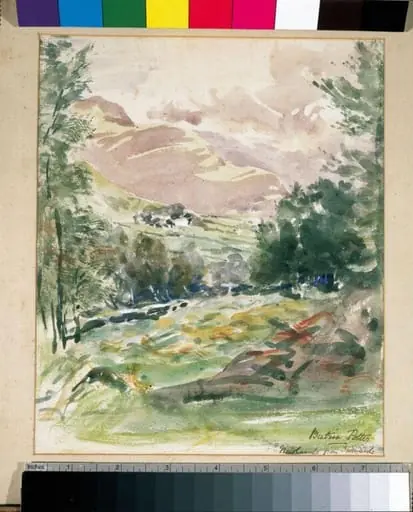
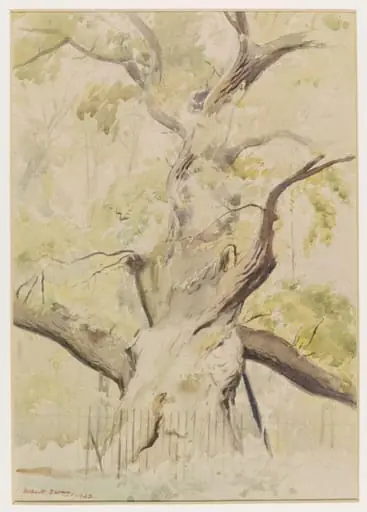
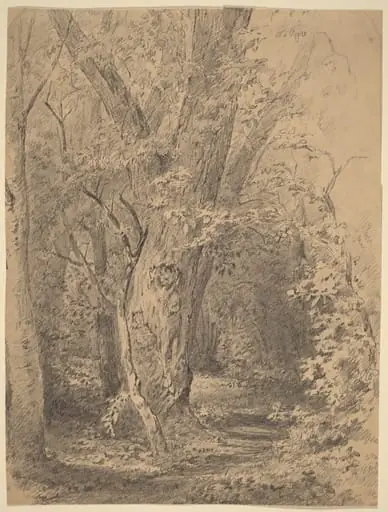
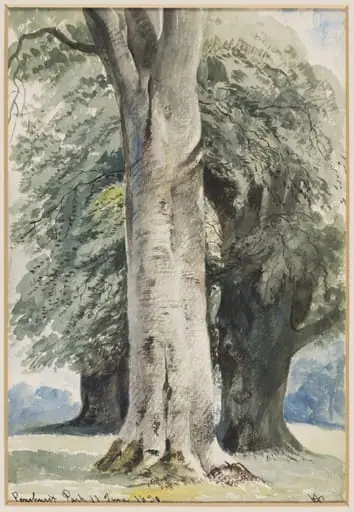
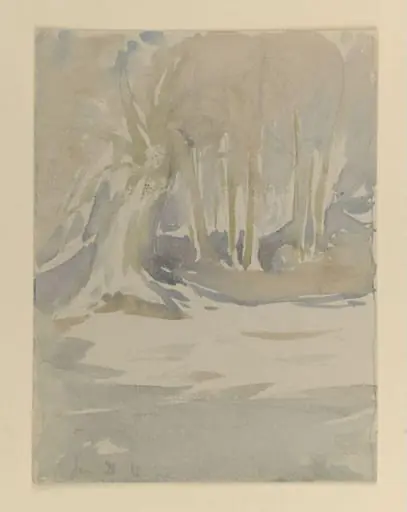
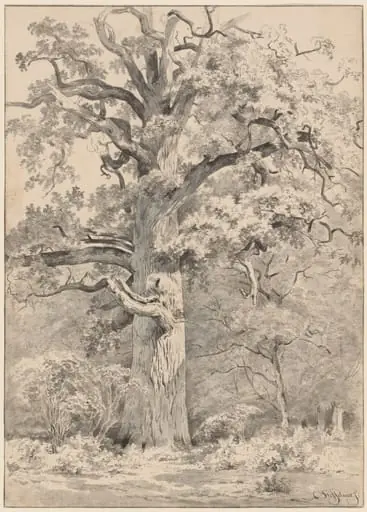
A tree trunk in a field at the edge of a wood
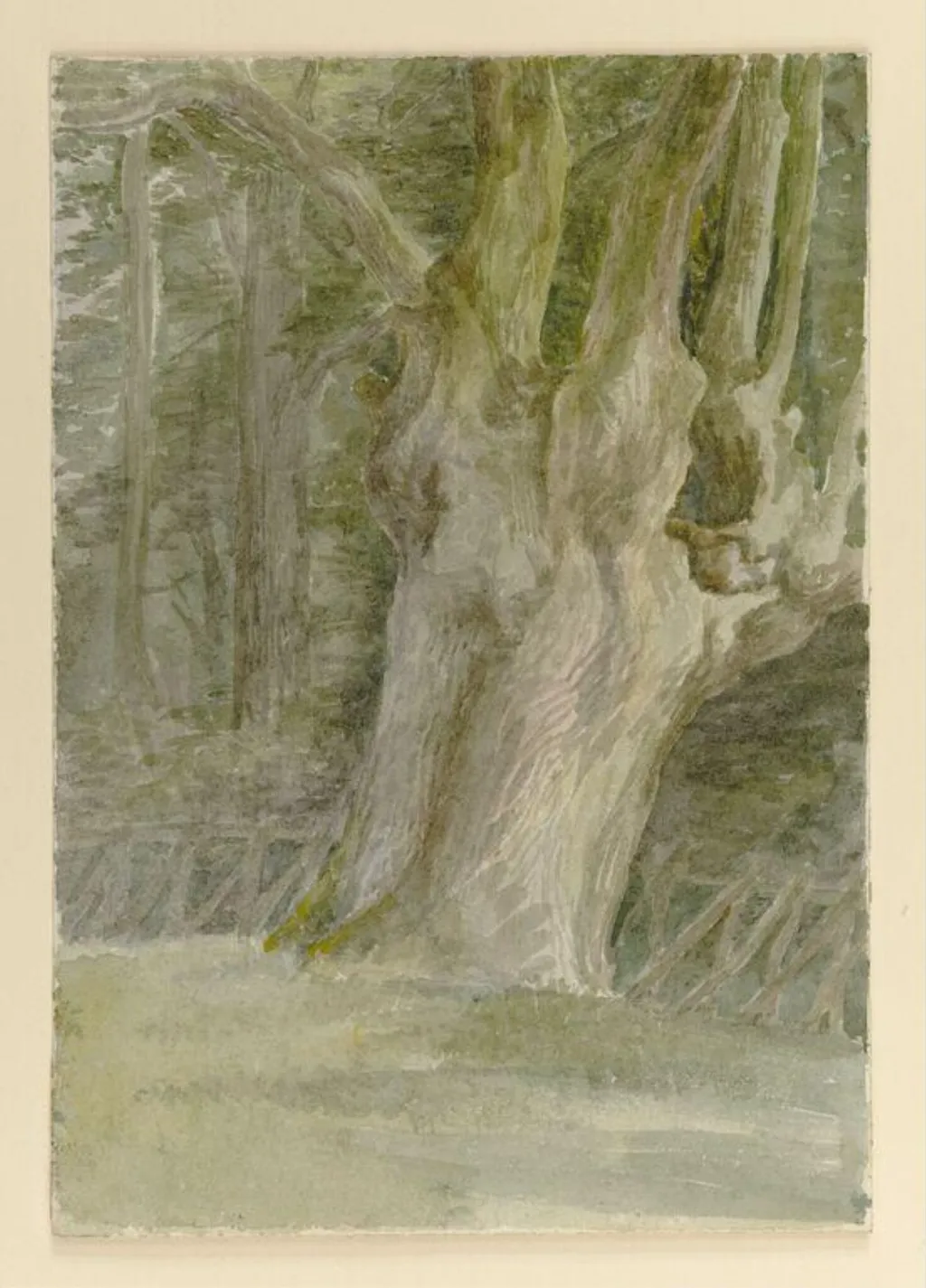
A tree trunk in a field at the edge of a wood is a watercolor work on paper by Beatrix Potter. It dates from 1850 and is held in the collection of the Victoria and Albert Museum.
About this work
Overview
Executed in delicate washes, the piece captures a single tree trunk at the edge of a woodland, emphasizing structural detail over romanticized scenery.
Beatrix Potter created this watercolour as part of her sustained engagement with natural observation, separate from her literary work. Executed in delicate washes, the piece captures a single tree trunk at the edge of a woodland, emphasizing structural detail over romanticized scenery. It reflects her scientific curiosity and disciplined approach to recording botanical forms, grounded in direct study rather than artistic convention.
Subject & Meaning
The painting isolates a tree trunk and its branching pattern, rejecting idealized landscapes in favor of anatomical accuracy. Potter was attentive to how limbs emerge from the trunk—not as straight extensions, but as curved, weighted growths shaped by gravity and sap flow. This focus reveals her belief that trees reveal their identity through growth patterns, even without leaves, making the trunk itself a subject of botanical study.
Technique & Style
Rendered in transparent watercolour, the work uses subtle gradations to suggest texture and volume without heavy outline. Potter’s brushwork is precise yet restrained, avoiding dramatic contrast in favor of quiet observation. The composition is tightly framed, eliminating background distraction to concentrate on the trunk’s form and the angles of its earliest branches, reflecting her scientific training and attention to detail.
History & Provenance
This watercolour is part of a larger collection of Potter’s natural studies held by the Victoria and Albert Museum. Created during the same period as her children’s books, it was not intended for publication but served as personal reference. Her 1937 letter to artist Delmar Banner, preserved in the same collection, confirms her ongoing commitment to studying tree morphology, linking this work to her later botanical reflections.
Context
In early 20th-century Britain, amateur naturalists like Potter contributed significantly to field biology, often working outside academic institutions. Her tree studies aligned with a broader interest in empirical observation, shared by mycologists and botanists. While her tales reached wide audiences, these watercolours reveal a quieter, more rigorous side of her practice—rooted in the same curiosity that shaped Peter Rabbit’s world.
Legacy
Potter’s tree studies, though lesser known than her illustrations, influenced later generations of naturalist artists and illustrators who valued accuracy over ornament. Her insistence on understanding growth patterns as key to identifying species remains relevant in botanical art. These works stand as quiet testaments to her belief that close looking, not imagination alone, reveals the truth of the natural world.
Own this work as a print
Artist & collection
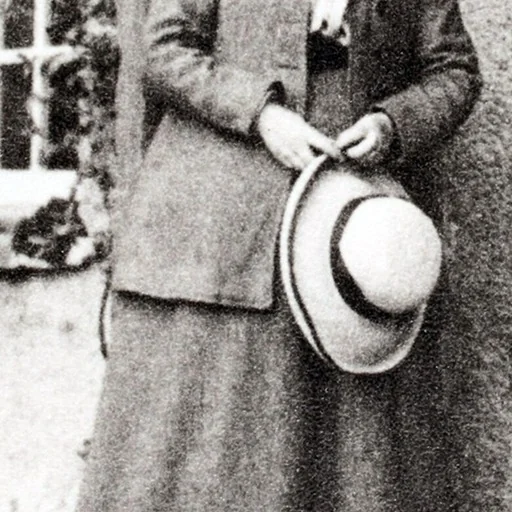
Artist
Helen Beatrix Heelis (née Potter; 28 July 1866 – 22 December 1943), usually known as Beatrix Potter ( BEE-ə-triks), was an English writer, illustrator, natural scientist, and conservationist.