Artwork
The little lizard, Bill, supported by two guinea-pigs
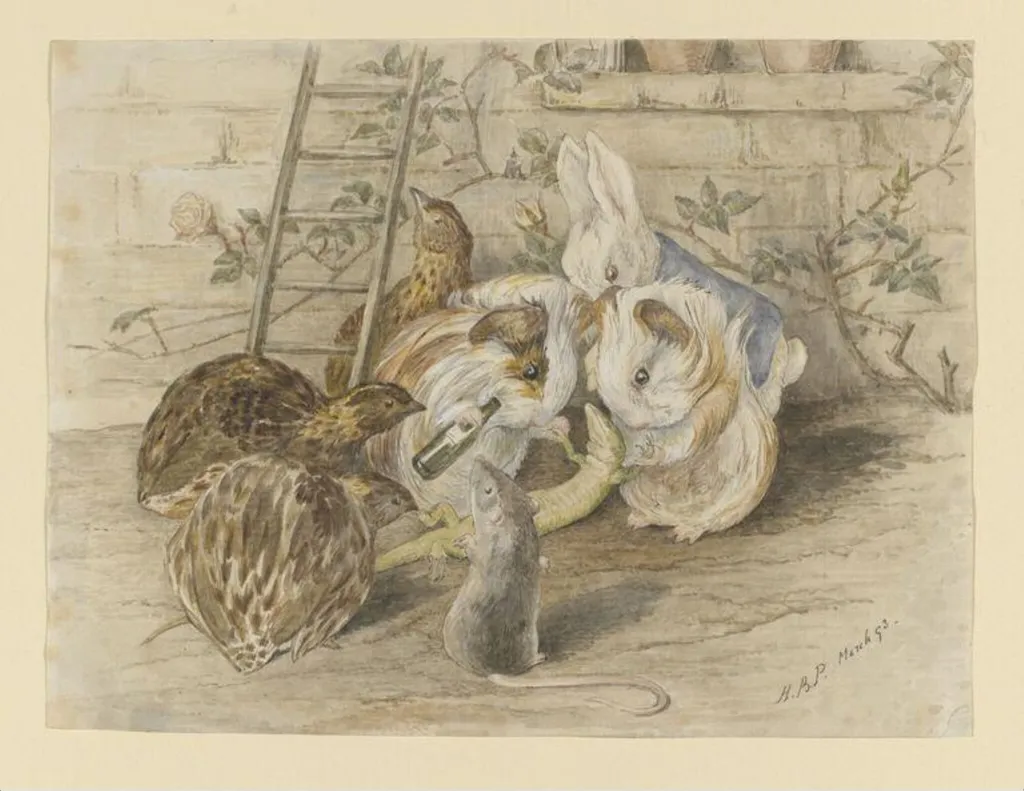
The little lizard, Bill, supported by two guinea-pigs is a watercolor work on paper by the Impressionist artist Beatrix Potter. It dates from 1893 and is held in the collection of the Victoria and Albert Museum. The work is a watercolour illustration enhanced with pen‑and‑ink, pencil underdrawing and touches of white.
About this work
Overview
The scene is set against a stone wall with a climbing rose, a ladder, and plant pots visible on a nearby shelf.
The work is a watercolour illustration enhanced with pen‑and‑ink, pencil underdrawing and touches of white. It portrays a green lizard lying on its back, surrounded by a collection of domestic animals—two long‑haired guinea pigs, a mouse, three guinea fowl, and a white rabbit wearing a blue jacket. The scene is set against a stone wall with a climbing rose, a ladder, and plant pots visible on a nearby shelf.
Subject & Meaning
The composition gathers a variety of small creatures in a single, intimate tableau, suggesting a playful or whimsical interaction. The lizard’s vulnerable position, supported by the guinea pigs, creates a sense of caretaking, while the surrounding animals observe, adding a narrative of communal concern or curiosity within an everyday domestic setting.
Technique & Style
The artist combines transparent watercolour washes with precise pen lines and a faint pencil sketch, allowing the forms to emerge gradually. White highlights accentuate the lizard’s scales, while the muted browns of the background contrast with the brighter greens and whites of the animals, producing a balanced, softly lit atmosphere without dramatic chiaroscuro.
History & Provenance
The piece entered the National Book League’s collection—now the Book Trust—through a donation by Leslie Linder in 1970. It formed part of the Linder Collection, which was loaned to the Victoria and Albert Museum for an extended period from 1989 until 2019, where it was displayed alongside other illustrative works.
Context
Created as a watercolour illustration, the work reflects mid‑twentieth‑century British illustration traditions that often blended natural observation with imaginative storytelling. The inclusion of domestic animals and a modest interior setting aligns with the era’s interest in everyday life rendered with gentle humor and detailed observation.
Artist & collection
Artist
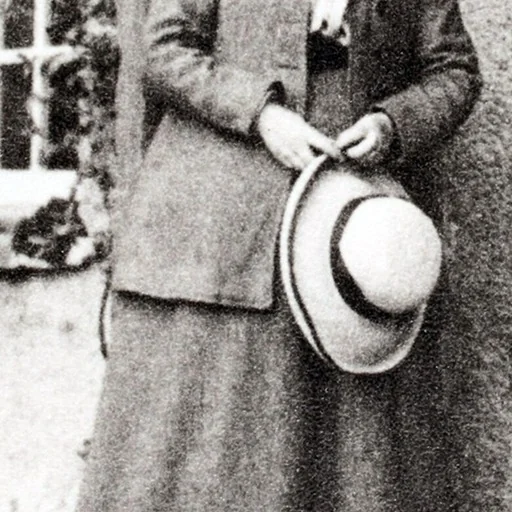
Helen Beatrix Heelis (née Potter; 28 July 1866 – 22 December 1943), usually known as Beatrix Potter ( BEE-ə-triks), was an English writer, illustrator, natural scientist, and conservationist.

 The Fox and the Grapes
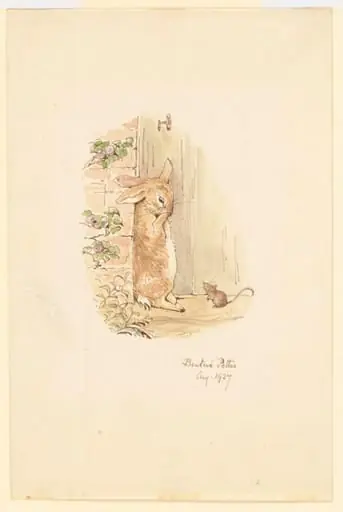 Peter by the door in the wall
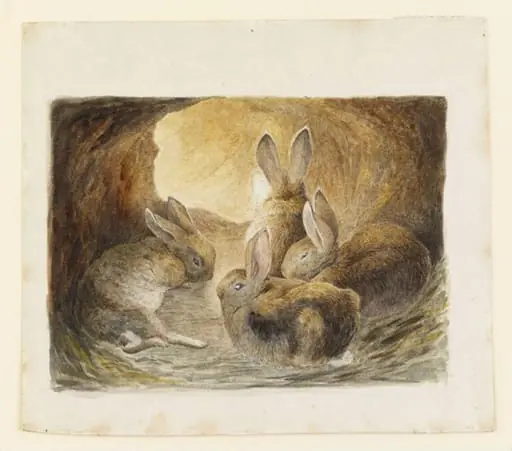 Four rabbits in a burrow
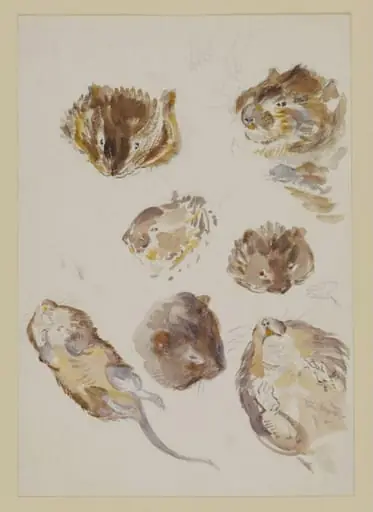 Studies of a field vole
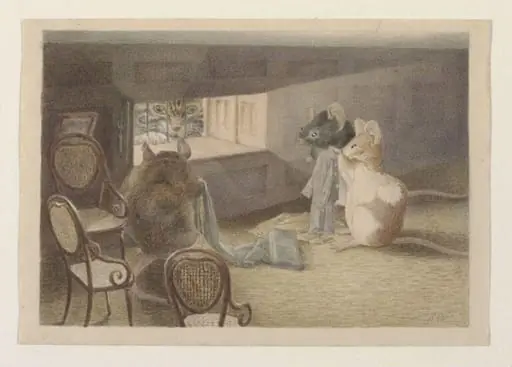 'Making coats for Gentlemen'
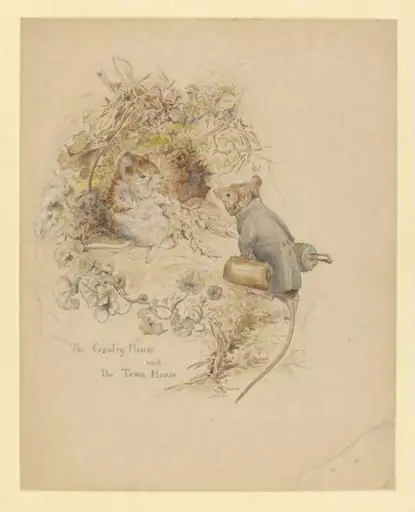 The Country Mouse and the Town Mouse
 Untitled
 'What are you at, my fine little Men?'
 The Rabbits' Christmas Party: Roasting Apples
 Guinea pigs gardening
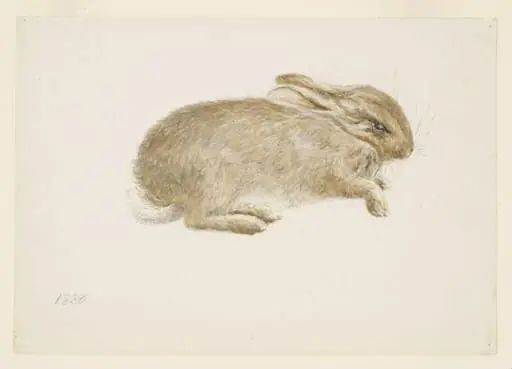 Untitled
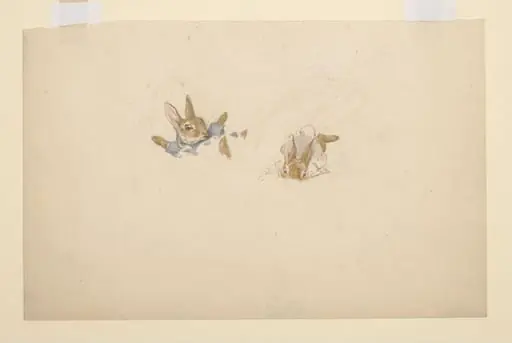 Rabbits falling into snow