Artwork
House in a steep-sided valley with a winding road
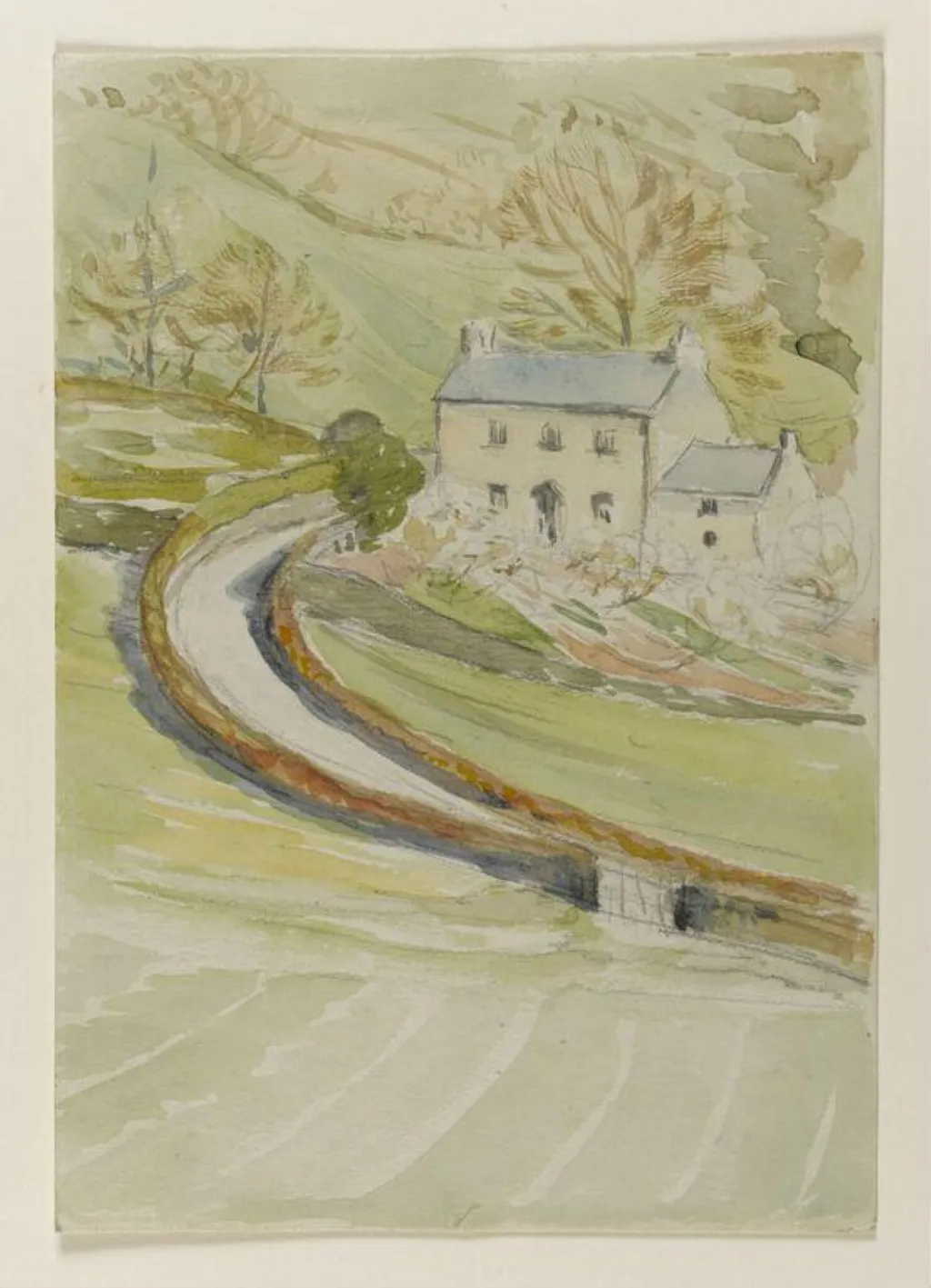
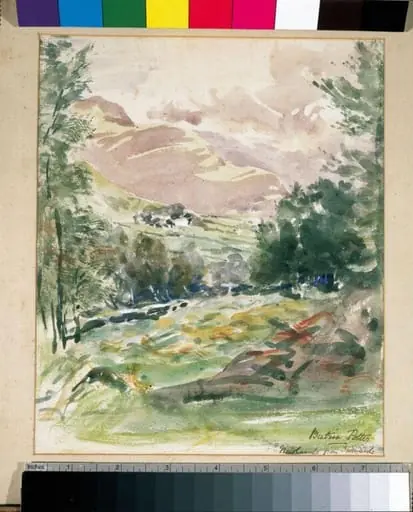
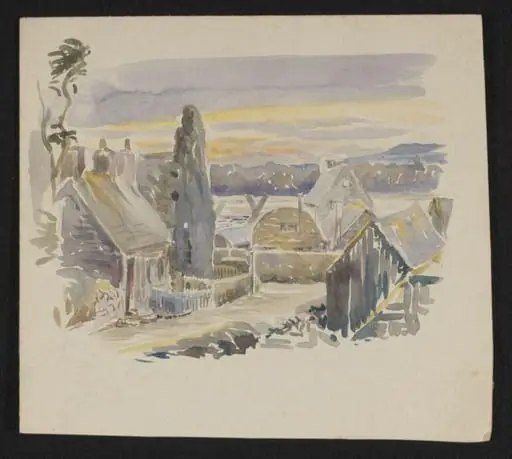
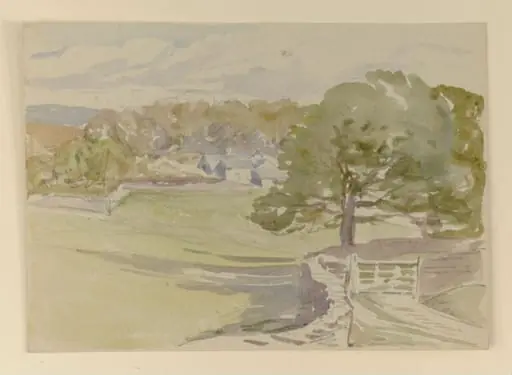
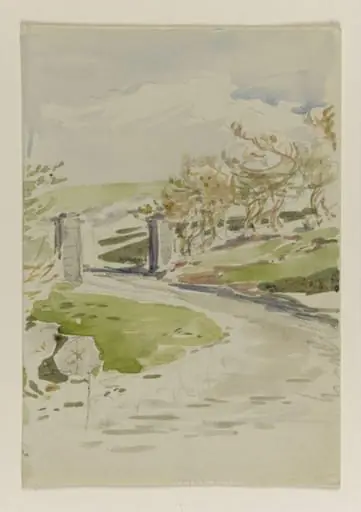
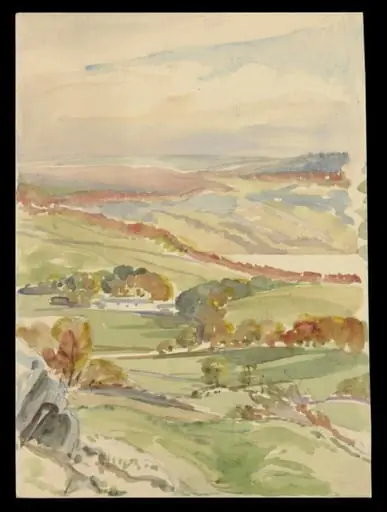
House in a steep-sided valley with a winding road is a watercolor work on paper by Beatrix Potter. It is held in the collection of the Victoria and Albert Museum. This watercolour, dated to the early 1900s, depicts a solitary house perched on a steep hillside, reached by a narrow, winding road.
About this work
Overview
Though not a finished illustration, the work belongs to a body of observational studies she made before incorporating similar views into her published tales.
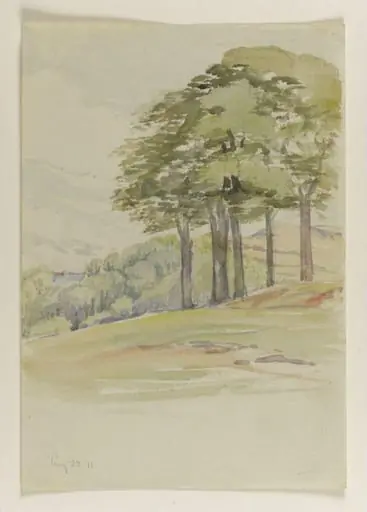
This watercolour, dated to the early 1900s, depicts a solitary house perched on a steep hillside, reached by a narrow, winding road. Executed in delicate washes, it reflects Beatrix Potter’s habit of sketching the Lake District landscape during family holidays. Though not a finished illustration, the work belongs to a body of observational studies she made before incorporating similar views into her published tales.
Subject & Meaning
The scene captures a quiet, isolated dwelling nestled in a valley, suggesting solitude and harmony with nature. The road’s serpentine path implies a journey, both physical and narrative, echoing the pacing of her children’s stories. While not definitively tied to a specific book, the composition aligns with the rural settings of tales like The Tale of Mrs Tiggy-Winkle, where landscape functions as a silent character.
Technique & Style
Potter employed transparent watercolour with precise, restrained brushwork, building form through layered washes rather than bold outlines. The composition emphasizes verticality and depth, using subtle tonal shifts to suggest the valley’s contours. Her attention to topographical accuracy reveals a naturalist’s eye, informed by field sketches rather than imaginative invention.
History & Provenance
Potter first visited the Lake District in 1885 and returned annually, eventually purchasing Hill Top Farm in 1905. This watercolour likely dates from her pre-marriage sketching trips, before she settled permanently in 1913 after marrying William Heelis. The work may have served as reference material for her illustrations, though its exact origin remains unconfirmed.
Context
During this period, Potter was transitioning from amateur naturalist to professional illustrator, using direct observation to ground her fictional worlds in real places. The Lake District’s terrain—its valleys, stone walls, and cottages—became integral to her storytelling. These sketches were not merely preparatory; they reflected her deepening connection to the region’s quiet, enduring character.
Legacy
Though unattributed in her published books, such studies underpin the authenticity of her illustrated landscapes. They reveal how Potter’s artistic practice was rooted in sustained engagement with place, transforming topography into narrative space. Today, these works are valued as quiet documents of her creative process, bridging observation and imagination.
Artist & collection
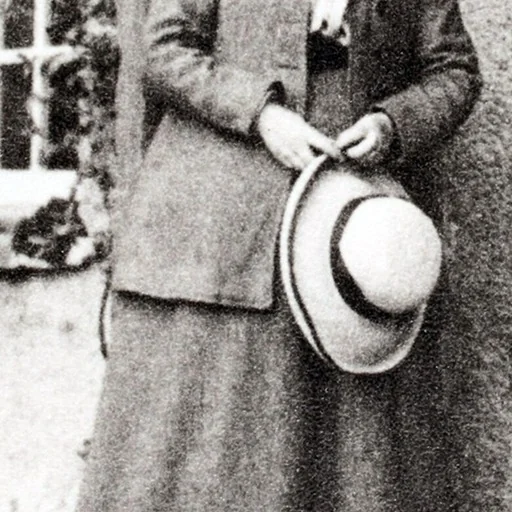
Artist
Helen Beatrix Heelis (née Potter; 28 July 1866 – 22 December 1943), usually known as Beatrix Potter ( BEE-ə-triks), was an English writer, illustrator, natural scientist, and conservationist.