Artwork
Shells and seaweed
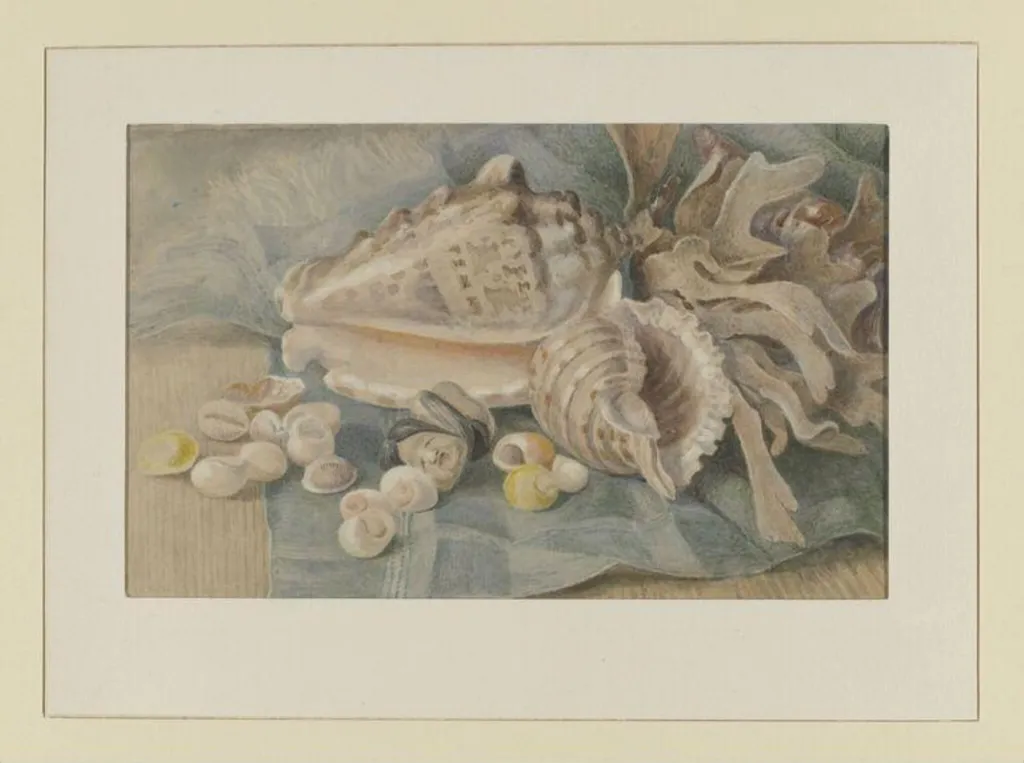
Shells and seaweed is a watercolor work on paper by the Impressionist artist Beatrix Potter. It dates from 1885 and is held in the collection of the Victoria and Albert Museum.
About this work
Overview
Created in 1885, this watercolour by Beatrix Potter presents a quiet still life of marine specimens arranged on a patterned textile.
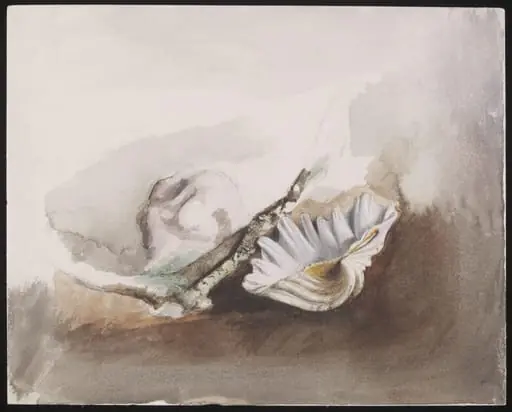
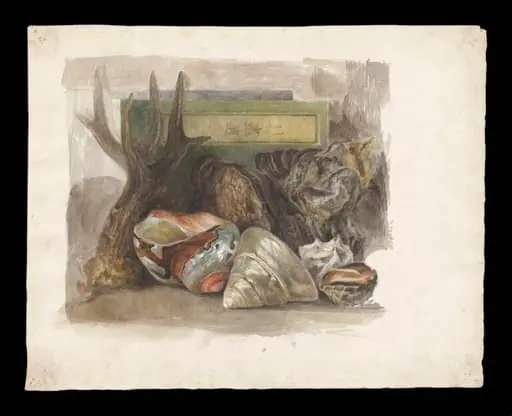
Created in 1885, this watercolour by Beatrix Potter presents a quiet still life of marine specimens arranged on a patterned textile. The composition gathers shells, seaweed, and two small Japanese netsuke carvings, rendered with precise yet delicate brushwork. The soft, translucent layers of watercolour evoke a muted, atmospheric tone, emphasizing texture over bold color. The scene reflects Potter’s early interest in natural forms and her engagement with objects collected from global sources.
Subject & Meaning
The arrangement includes a cone shell, triton, periwinkles, and cowries, alongside two netsuke masks—one comic, one tragic—possibly representing figures from Noh theatre or Shinto iconography. These objects, gathered from coastal and Asian sources, suggest an interest in cultural exchange and the aesthetic value of natural and crafted items. The placement of the masks among shells may imply a symbolic dialogue between nature and human artifice, though no explicit narrative is conveyed.
Technique & Style
Potter employed transparent watercolour washes to capture the subtle sheen of shells and the fragile, undulating forms of seaweed. Fine detailing in the ridges and spirals of the shells reveals her observational discipline, while the loose draping of seaweed introduces organic movement. The fabric’s geometric pattern contrasts with the irregular shapes of the natural objects, creating visual tension without disrupting the composition’s calm balance.
History & Provenance
The work entered the Linder Collection, assembled by Leslie Linder, who donated it to the National Book League in 1970. It remained part of a long-term loan to the Victoria and Albert Museum from 1989 until 2019, where it was displayed alongside other items from Potter’s personal collection. Its presence in this context underscores its role as a document of her private curiosity rather than a public artistic statement.
Context
In the 1880s, Potter was developing her skills as a naturalist illustrator, influenced by scientific drawing traditions and the Victorian fascination with collecting natural specimens. The inclusion of Japanese netsuke reflects broader European interest in East Asian art during this period. Unlike her later children’s books, this work reveals her engagement with non-narrative, observational art rooted in natural history and material culture.
Legacy
This watercolour remains a quiet testament to Potter’s early artistic development before she turned to illustration for children’s literature. It illustrates her capacity for detailed observation and her sensitivity to the aesthetic qualities of everyday collected objects. Though not widely exhibited, it contributes to understanding the breadth of her artistic interests beyond the well-known tales of Peter Rabbit.
Artist & collection
Artist
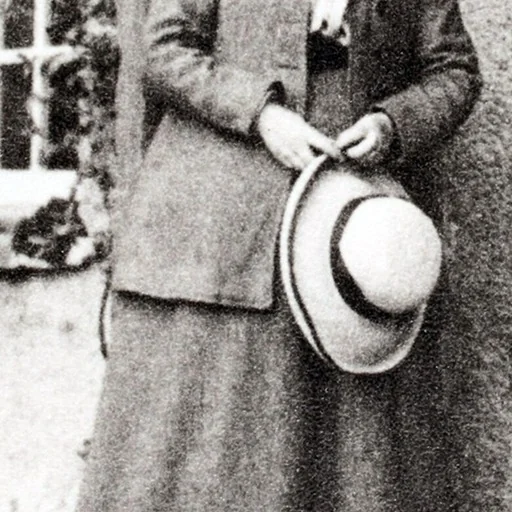
Helen Beatrix Heelis (née Potter; 28 July 1866 – 22 December 1943), usually known as Beatrix Potter ( BEE-ə-triks), was an English writer, illustrator, natural scientist, and conservationist.