Artwork
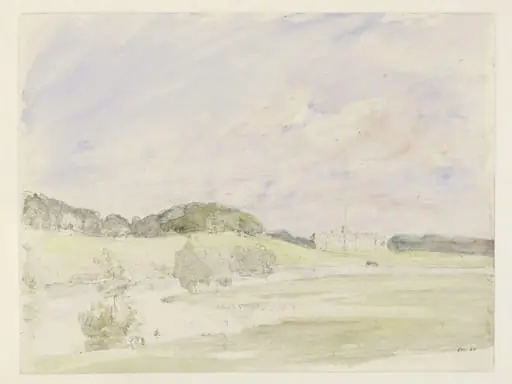
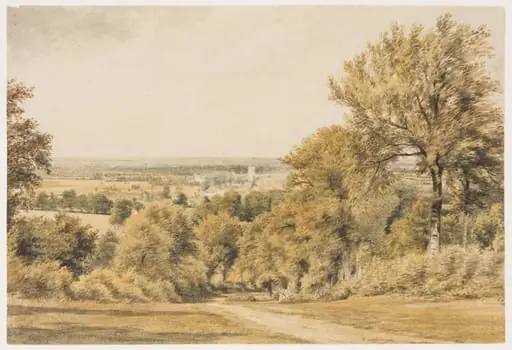
View from the drawing room window at Camfield Place
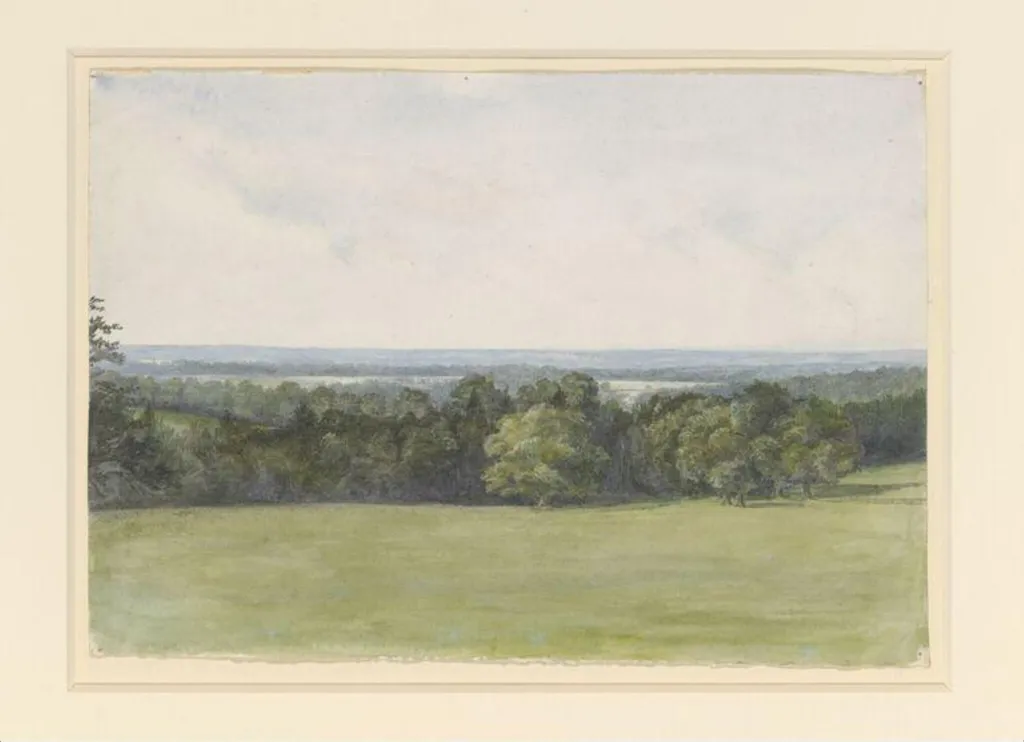
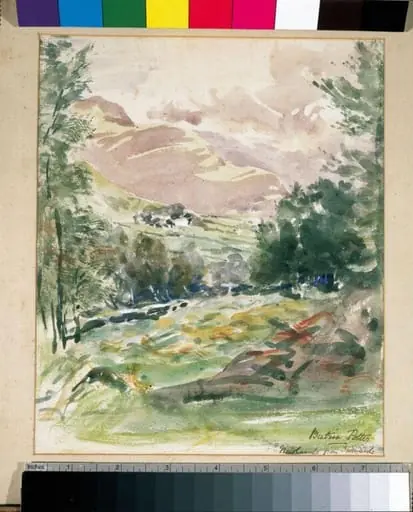
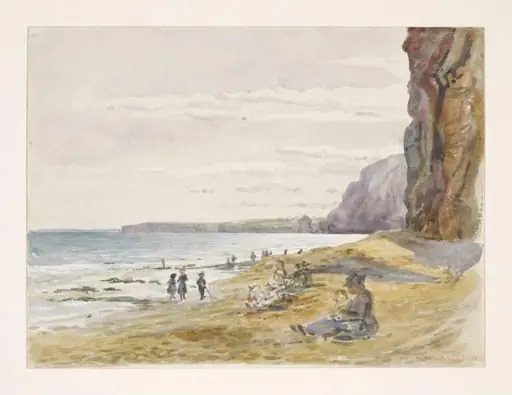
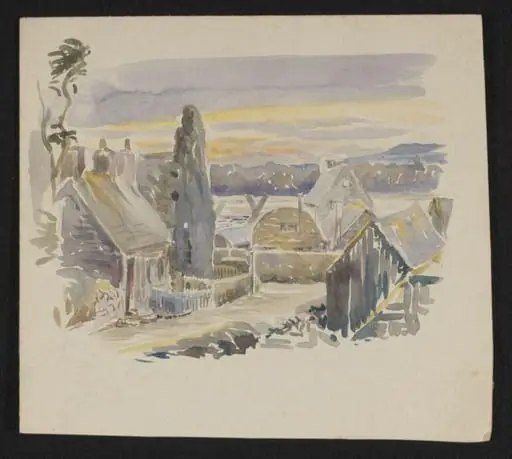
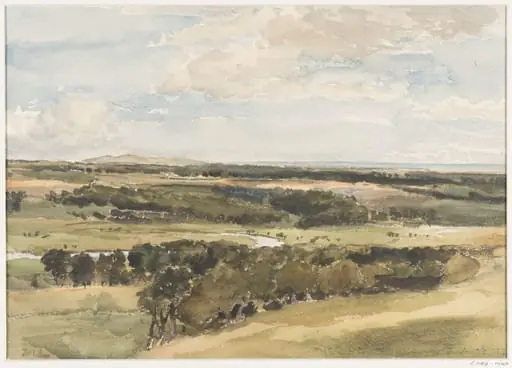
View from the drawing room window at Camfield Place is a watercolor work on paper by the Impressionist artist Beatrix Potter. It dates from 1884 and is held in the collection of the Victoria and Albert Museum.
About this work
Overview
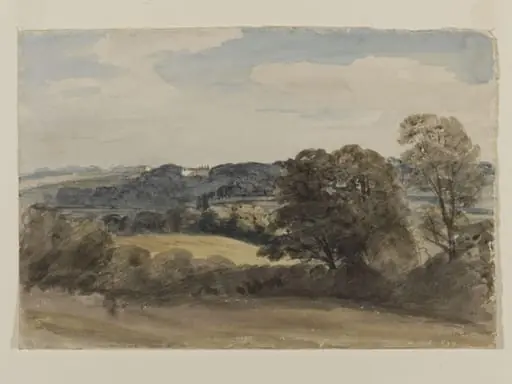
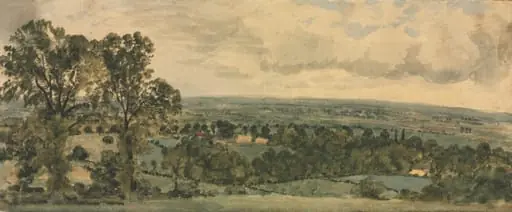
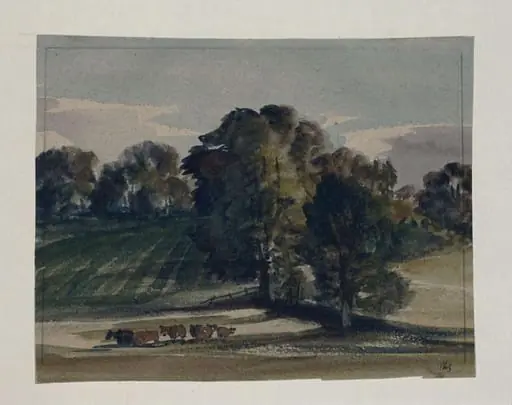
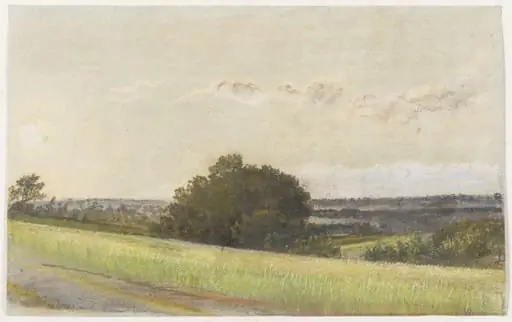
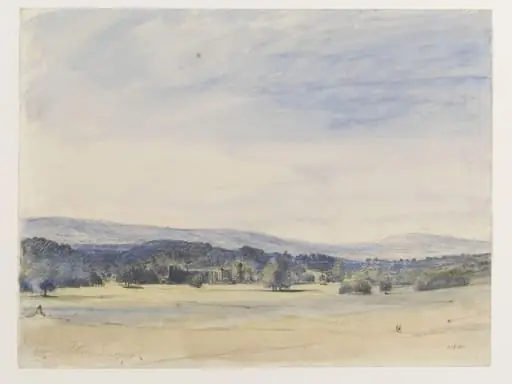
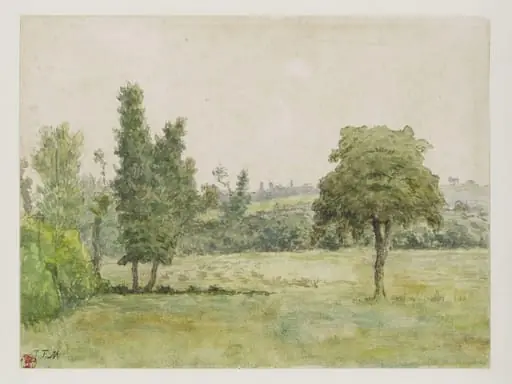
This watercolour by Beatrix Potter depicts a summer view from the drawing room window at Camfield Place, the Hertfordshire estate of her paternal grandparents.
This watercolour by Beatrix Potter depicts a summer view from the drawing room window at Camfield Place, the Hertfordshire estate of her paternal grandparents. Executed in delicate washes, the work captures the quiet expanse of rolling fields and dense foliage visible from the house. Potter, better known for her illustrated children’s stories, produced numerous topographical watercolours during her youth, many of which document places she held in personal regard.
Subject & Meaning
The scene reflects Potter’s deep emotional connection to Camfield Place, which she described in her journal as 'the place I love best in the world.' Rather than dramatizing the landscape, she presents it with quiet observation, emphasizing the stillness and natural order of the English countryside. The view is not idealized but rendered with intimate familiarity, suggesting a personal, almost private engagement with the land.
Technique & Style
Potter employed transparent watercolour with precise, controlled brushwork to build layers of green and earth tones. The foliage is suggested through soft washes and fine detailing, while the distant horizon remains lightly rendered to preserve atmospheric depth. Her technique shows the influence of topographical illustration and botanical drawing, combining accuracy with a restrained aesthetic that avoids sentimentality.
History & Provenance
Created during one of Potter’s frequent visits to Camfield Place in the late 19th or early 20th century, the work is part of a series of watercolours she made of the estate. It was retained within the family and later entered institutional collections, where it is now preserved alongside other personal and artistic materials documenting her life beyond publishing. Its companion piece, depicting the same house in mist, underscores her consistent interest in the site across seasons.
Context
During this period, Potter was developing her skills as a naturalist and illustrator, often sketching landscapes and flora during family holidays. Her watercolours of Camfield Place were not commissioned works but personal records, made alongside her scientific studies of fungi and her early drafts of animal tales. These landscapes reflect a broader Victorian tradition of amateur artistic practice among the educated middle class.
Legacy
Though overshadowed by her literary fame, Potter’s topographical watercolours remain significant as evidence of her observational discipline and aesthetic sensibility. They reveal a quiet, sustained engagement with place that informed the naturalistic settings of her later stories. Today, these works are studied for their technical precision and their role in understanding the environmental consciousness embedded in her creative world.
Artist & collection
Artist
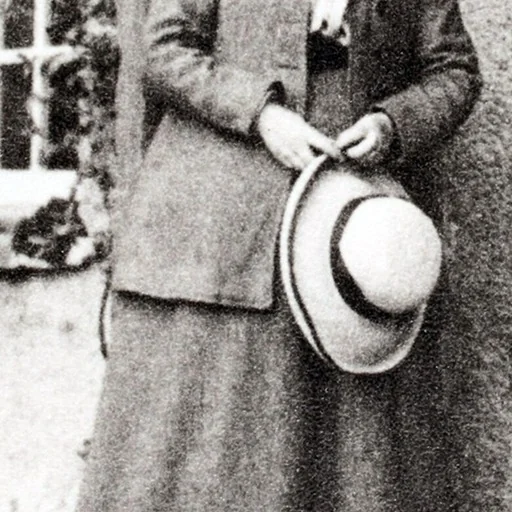
Helen Beatrix Heelis (née Potter; 28 July 1866 – 22 December 1943), usually known as Beatrix Potter ( BEE-ə-triks), was an English writer, illustrator, natural scientist, and conservationist.