Artwork
The Comte d'Artois and His Sister Mademoiselle Clotilde
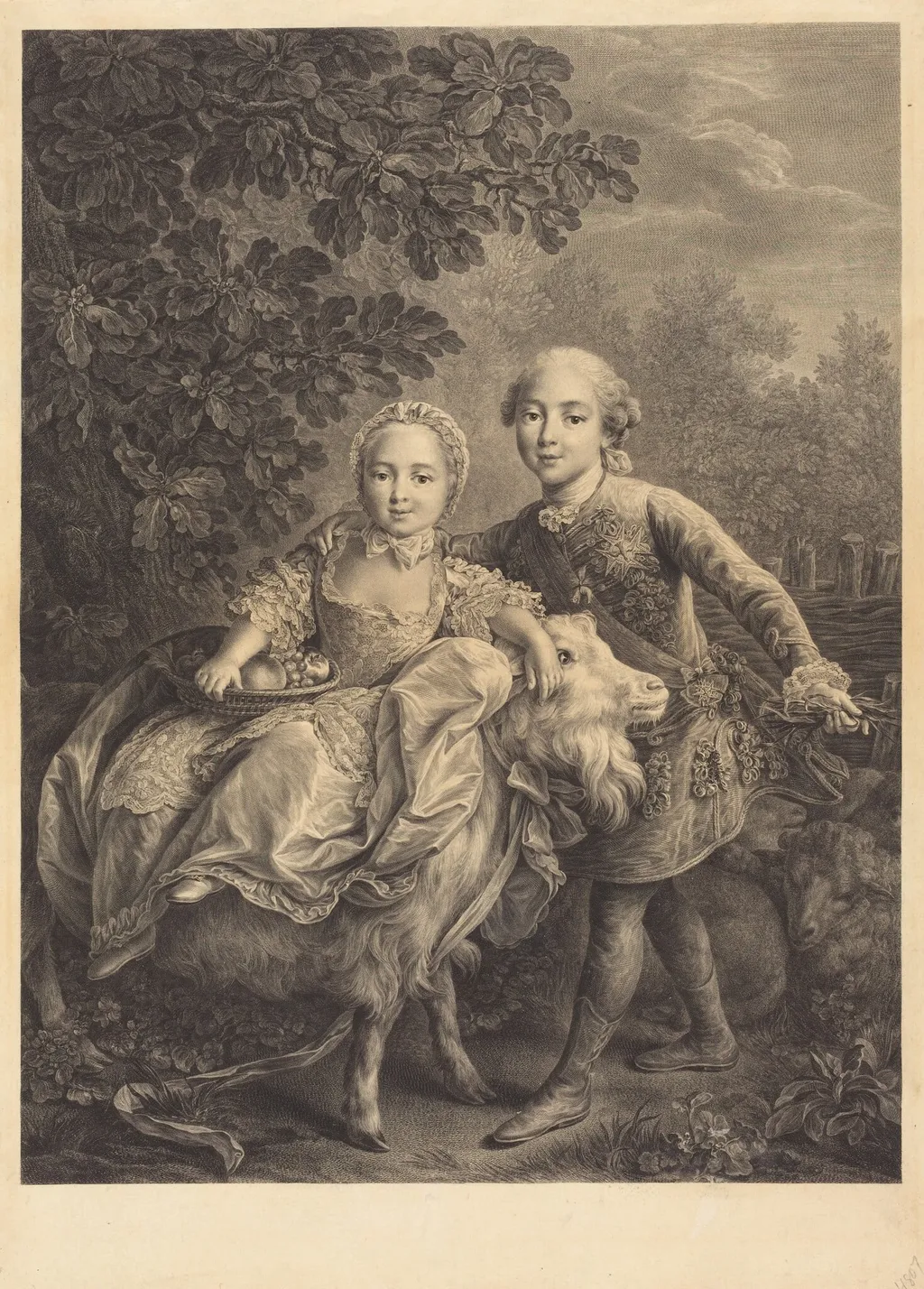
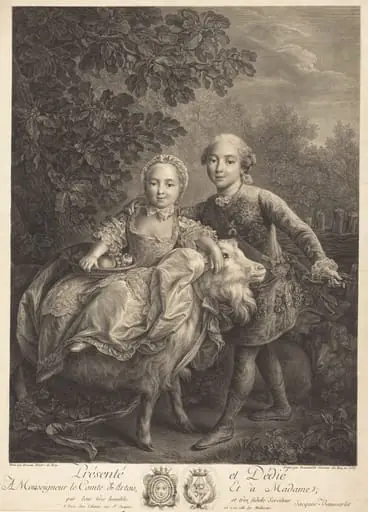
The Comte d'Artois and His Sister Mademoiselle Clotilde is an ink print by the Romanticist artist Jacques-Firmin Beauvarlet. It dates from 1767 and is held in the collection of the National Gallery of Art.
About this work
Overview
The Comte d'Artois and His Sister Mademoiselle Clotilde is an engraving created by Jacques-Firmin Beauvarlet in 1767, depicting the Comte and his sister in a garden setting.
Subject & Meaning
The engraving portrays two young nobles, the Comte d'Artois (later Charles X of France) and his sister Mademoiselle Clotilde, in a serene garden. The boy, adorned with a floral lapel pin and accompanied by a small dog, sits alongside his sister, who wears a lace-trimmed dress and a floral crown. Their attire and surroundings reflect their aristocratic status.
Technique & Style
Beauvarlet employed fine-line engraving techniques to achieve detailed, soft textures, particularly in the subjects' clothing and the dog's fur. This level of intricacy showcases the capabilities of engraving in capturing nuanced visual elements before the advent of photography.
History & Provenance
Created in 1767, the engraving's provenance and exhibition history are not detailed here, though its creation date situates it within the artistic and social landscape of pre-Revolutionary France.
Context
This work reflects 18th-century European portrait practices, emphasizing the depiction of nobility in idyllic settings. The choice of subjects highlights the artistic demand for portrayals of royal and aristocratic figures during this period.
Legacy
While specific influences or notable exhibitions of this engraving are not provided, it contributes to the broader legacy of Jacques-Firmin Beauvarlet's oeuvre and the historical record of 18th-century French engraving techniques.
Artist & collection


 Le duc de Chartres, son epouse et ses enfants
 L'amant pressant
 La promenade du soir
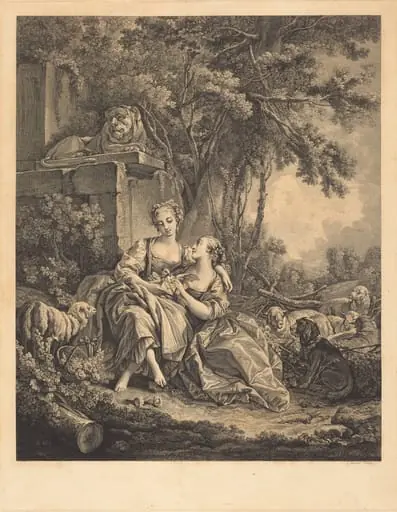 Les deux confidantes
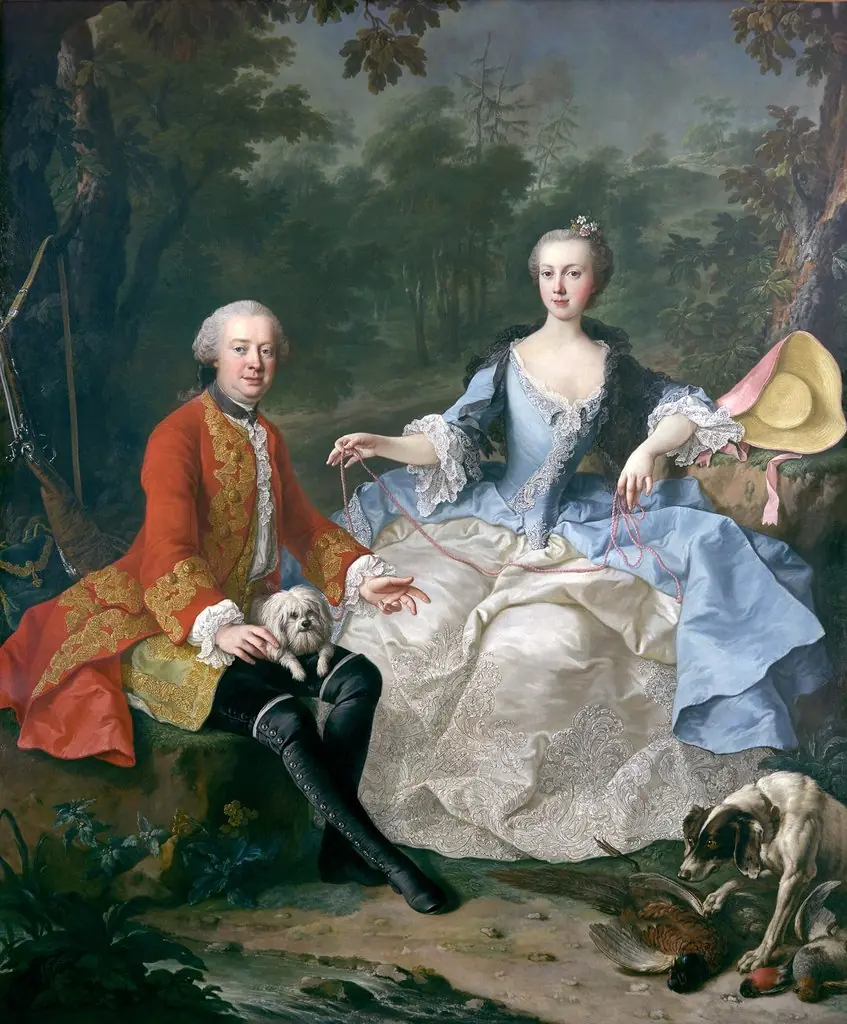 Count Giacomo Durazzo in the Guise of a Huntsman with His Wife
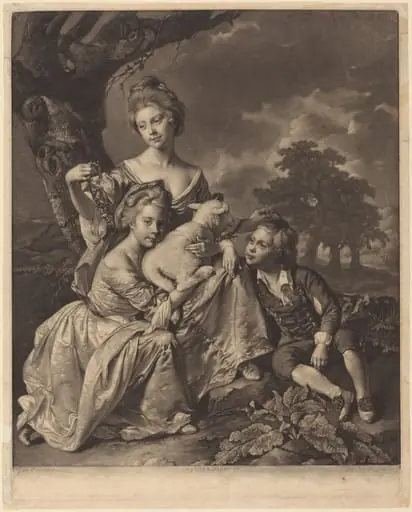 The Wright Family (The Bradshaw Children)
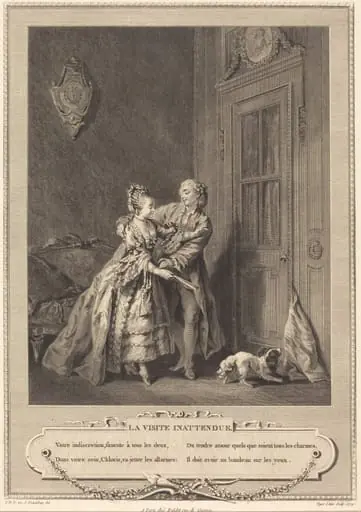 La visite inattendue
 Dame a sa toilette
 H Beard Print Collection
 H Beard Print Collection
 La soiree du Palais Royal