Artwork
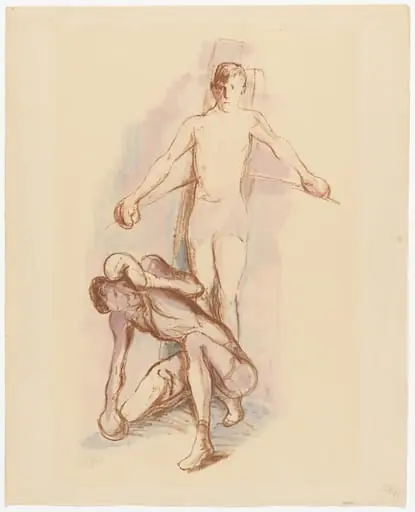
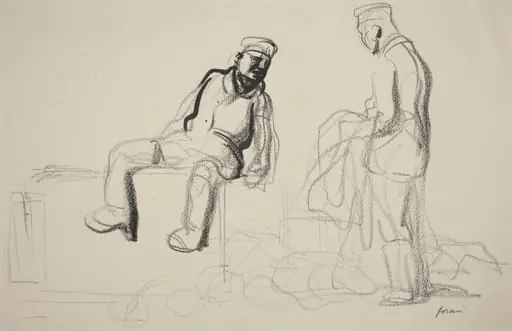
Studies of a Suffolk Labourer
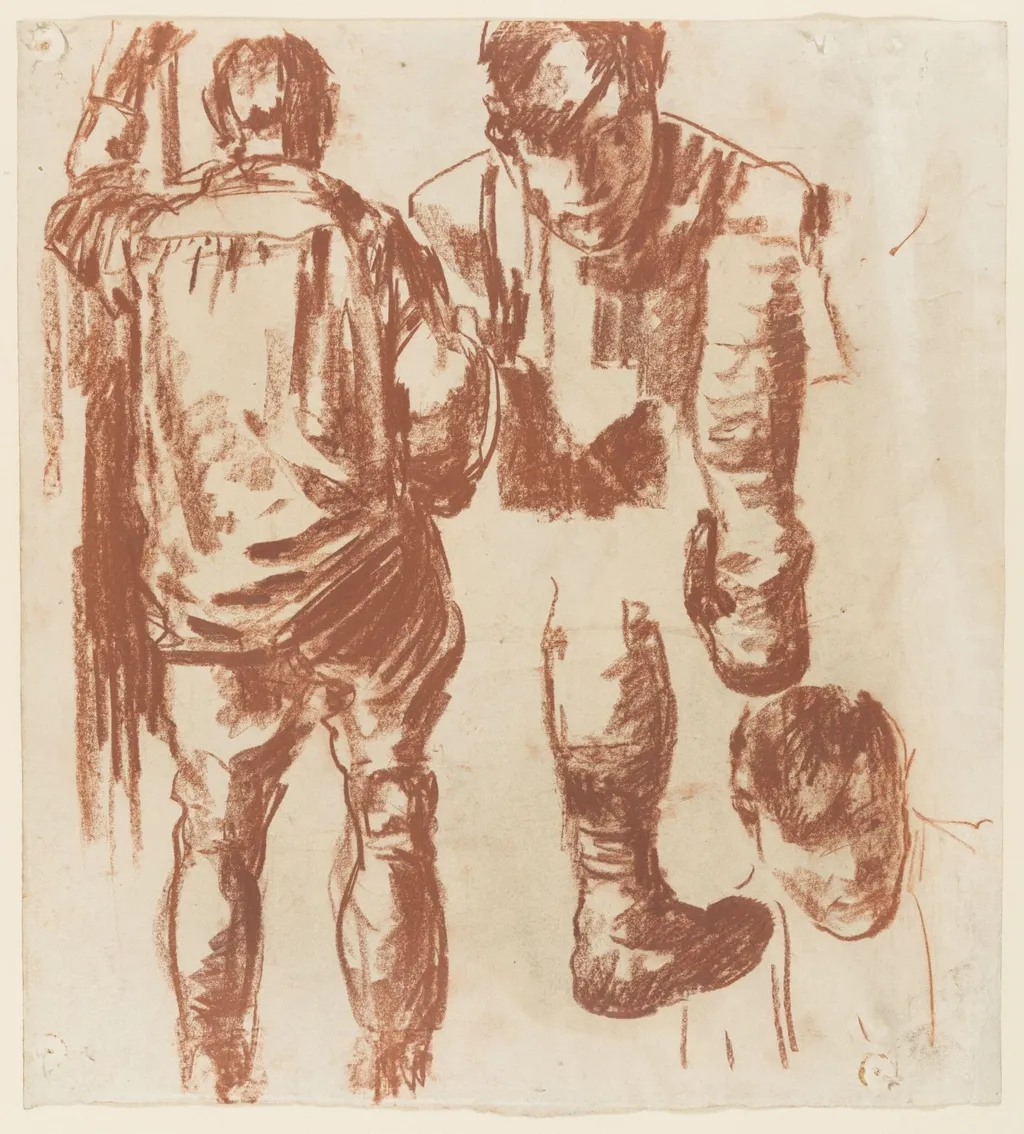
Studies of a Suffolk Labourer is a drawing by Harry Becker. It dates from 1920 and is held in the collection of the Victoria and Albert Museum.
About this work
Overview
The work captures fleeting moments of everyday life with minimal refinement, emphasizing observation over finish.
Created in 1920 by Harry Becker, this drawing is part of a series documenting rural laborers in Suffolk. Executed in pencil on paper, it resides in the Victoria and Albert Museum’s collection. The work captures fleeting moments of everyday life with minimal refinement, emphasizing observation over finish. Its informal quality reflects the artist’s practice of sketching directly from life in the field.
Subject & Meaning
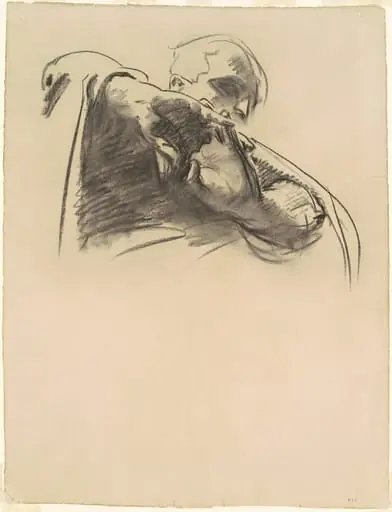
Two male figures stand in close proximity, one shirtless with arms crossed, the other dressed in simple work attire. Their postures suggest rest or quiet conversation after labor. The absence of context or narrative detail focuses attention on physical presence and posture, conveying dignity in ordinary stillness. The figures are not idealized; their worn clothing and unposed stance ground the image in lived experience.
Technique & Style
Becker employed rapid, uneven pencil strokes, leaving areas of the paper bare to suggest form rather than define it. Shading is sparse and gestural, with no attempt at smooth tonal transitions. The sketchy lines convey movement and immediacy, as if drawn in real time. This approach prioritizes expressive energy over precision, aligning with observational drawing traditions of the early 20th century.
History & Provenance
The drawing entered the Victoria and Albert Museum’s collection in the 20th century as part of a broader acquisition of Becker’s studies of rural workers. It was likely made during extended visits to Suffolk, where Becker documented agricultural laborers. No record of prior ownership exists, suggesting it was retained by the artist or acquired directly from his estate.
Context
In the aftermath of World War I, there was renewed interest in documenting rural life as industrialization reshaped the British countryside. Becker’s drawings contributed to this movement, offering unembellished records of laborers whose way of life was fading. His work stood apart from romanticized depictions, favoring direct observation over sentimentality.
Legacy
Becker’s Suffolk studies remain valued for their unvarnished realism and technical restraint. While not widely exhibited, they are referenced in academic discussions of British documentary drawing. The work exemplifies how sketching served as both artistic practice and social record, influencing later generations focused on authentic representation of working-class life.
Artist & collection
Artist
Harry Becker made quiet, hardworking scenes of rural Suffolk in watercolor and drawing from about 1885 to 1928.