Artwork
Etude (Le rameur)
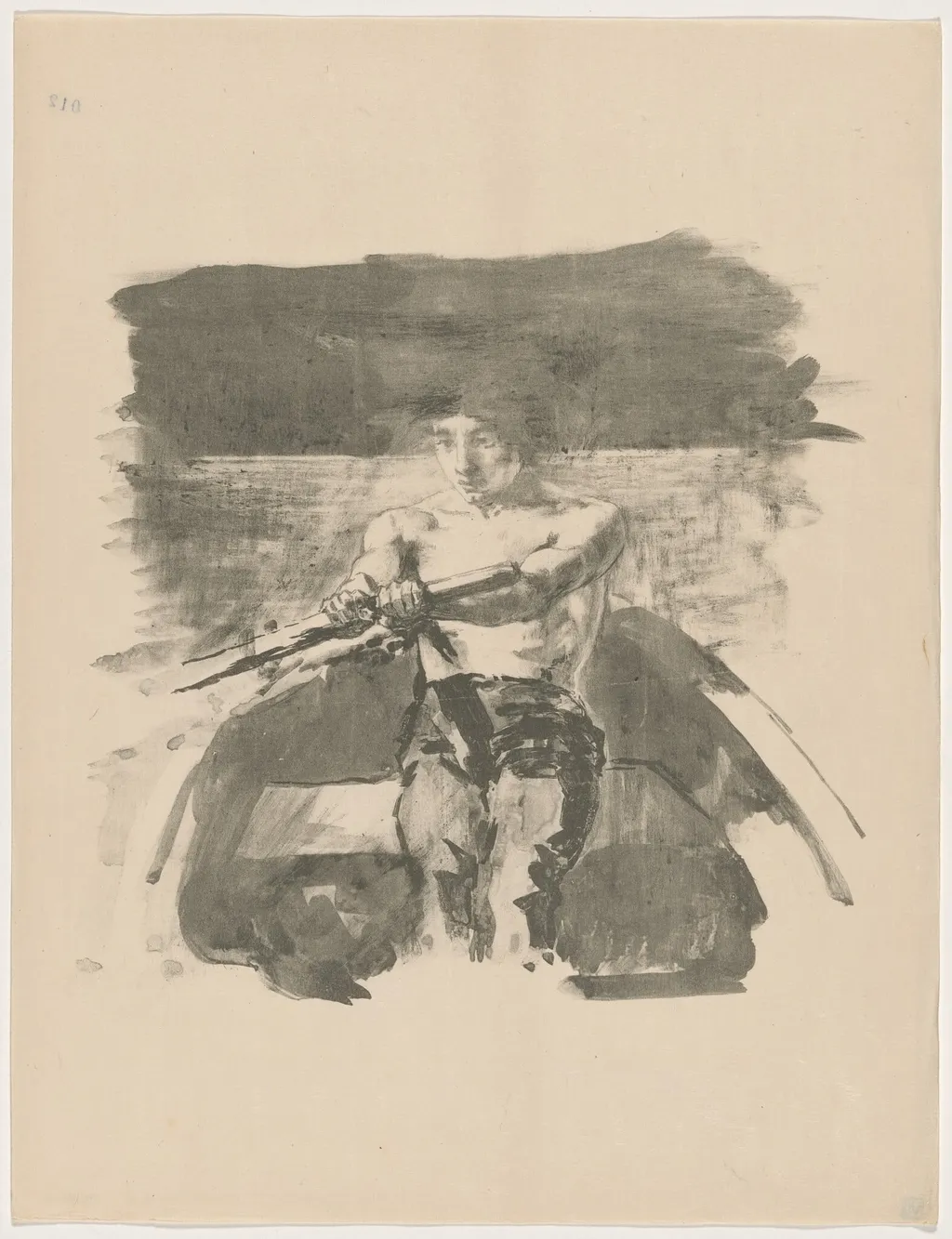
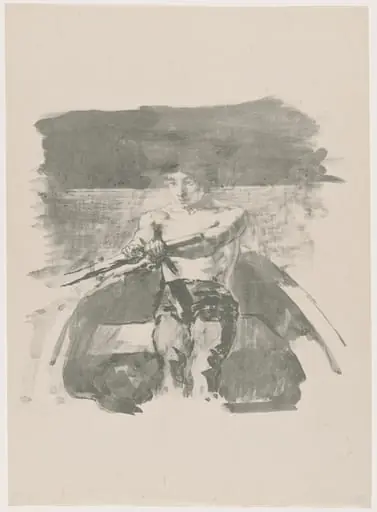
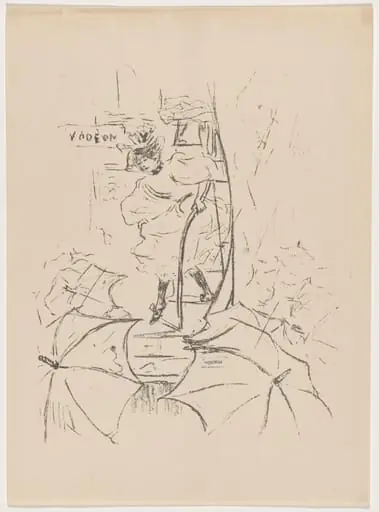
Etude (Le rameur) is an ink print by the Impressionist artist Alexandre Lunois. It dates from 1895 and is held in the collection of the National Gallery of Art.
About this work
Overview
Created in 1895 by Alexandre Lunois, Etude (Le rameur) is a lithograph executed in green-black ink on thin Japanese paper. It captures a solitary rower in motion, rendered not as a polished composition but as a spontaneous observational study. The work’s modest scale and raw execution reflect its function as a preparatory sketch, emphasizing immediacy over finish.
Subject & Meaning
The figure, engaged in the physical act of rowing, is depicted mid-stroke with a quiet intensity. His face remains composed, contrasting with the strain evident in his posture and the turbulent water surrounding the boat. The scene conveys quiet labor, not heroism—focusing on the rhythm of effort rather than narrative drama. The absence of context deepens the sense of isolation.
Technique & Style
The paper’s pale surface remains largely untouched, enhancing the sketch’s ephemeral quality and emphasizing the artist’s focus on gesture over refinement.
Lunois employed loose, rapid lithographic strokes to suggest movement and texture. The ink’s green-black tone, applied with minimal detail, creates a muted atmosphere. The sky is reduced to a faint smudge, while the water is rendered with agitated marks. The paper’s pale surface remains largely untouched, enhancing the sketch’s ephemeral quality and emphasizing the artist’s focus on gesture over refinement.
History & Provenance
The work originates from Lunois’s practice of making observational studies, likely during time spent near waterways. Its survival as a printed impression suggests it was retained within the artist’s circle or among collectors interested in process-oriented works. No public record of early exhibitions or ownership exists, indicating it was never intended for public display.
Context
In the late 19th century, artists increasingly valued sketches as autonomous expressions rather than mere preparatory steps. Lunois’s lithograph aligns with this trend, reflecting a broader interest in capturing transient moments and physical exertion. The medium of lithography allowed for direct, tactile mark-making, making it well-suited to such informal studies.
Legacy
Etude (Le rameur) remains a quiet example of late 19th-century artistic practice, valued for its honesty and economy. It contributes to understanding how artists like Lunois used printmaking to explore form and motion without the pressure of finality. Though not widely known, it exemplifies the significance of the sketch in the evolution of modern visual language.
Artist & collection