Artwork
In the Park, Dark
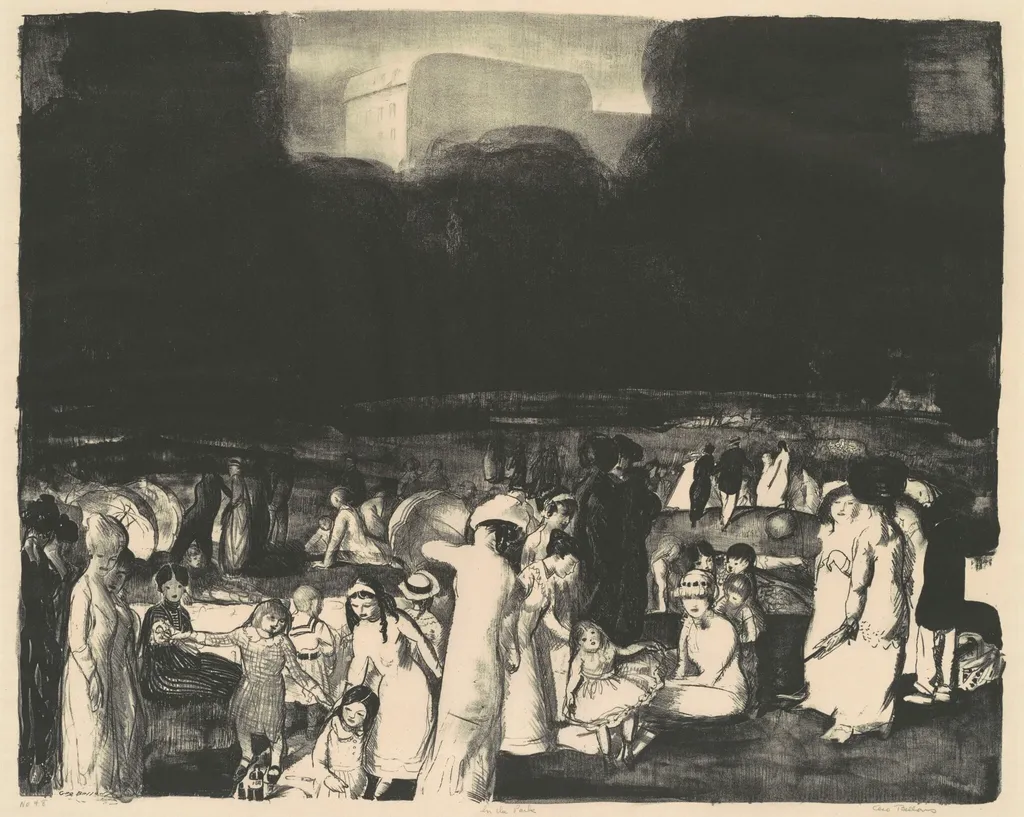
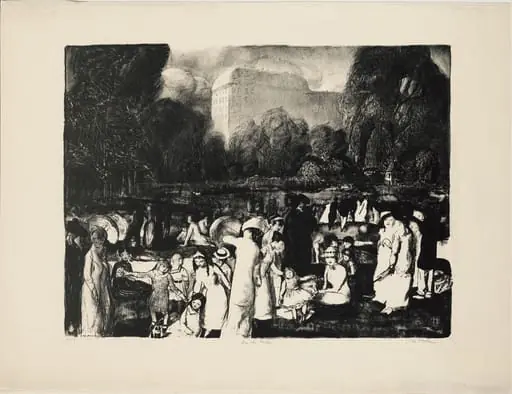
In the Park, Dark is an ink print by George Bellows. It dates from 1916 and is held in the collection of the National Gallery of Art.
About this work
Overview
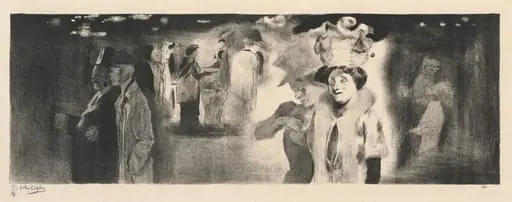
The print captures a nocturnal urban park teeming with quiet movement—figures strolling, seated, or pausing under dim ambient light.
In the Park, Dark is a 1916 lithograph by George Bellows, rendered in black ink on wove paper. The print captures a nocturnal urban park teeming with quiet movement—figures strolling, seated, or pausing under dim ambient light. The composition avoids detail in favor of strong, simplified forms, emphasizing atmosphere over precision. The absence of color and the dominance of black ink heighten the sense of nightfall and solitude amid public life.
Subject & Meaning
The scene portrays ordinary people engaged in evening leisure, suggesting a slice of urban routine rather than a staged event. Umbrellas, bags, and infants hint at daily life’s rhythms, while the lack of facial detail universalizes the figures. The darkness surrounding them evokes isolation within crowds, a recurring theme in Bellows’s work, where public spaces become intimate stages for anonymous human presence.
Technique & Style
Bellows employed lithography to achieve sharp, gestural black lines that define forms with minimal strokes. The heavy contrast between inked figures and the untouched paper background mimics the effect of a fleeting glance under low light. The rough, energetic lines convey motion and spontaneity, aligning with Ashcan School aesthetics that favored immediacy over polish, turning technical constraints into expressive tools.
History & Provenance
Created in 1916, this print emerged during Bellows’s peak period of graphic work, when he increasingly turned to printmaking to explore urban themes beyond his paintings. It was likely produced in a small edition, common for lithographs of the era. The work entered museum collections in the mid-20th century, valued for its concise depiction of early 20th-century city life and its technical economy.
Context
In the 1910s, American artists like Bellows sought to depict modern life without idealization. Urban parks, once symbols of refinement, were now seen as spaces of diverse, unvarnished social interaction. Lithography offered a democratic medium—accessible and reproducible—allowing artists to reach broader audiences with candid portrayals of everyday scenes, countering academic traditions.
Legacy
The print exemplifies Bellows’s contribution to American printmaking, demonstrating how lithography could convey emotional weight through restraint. Its influence is seen in later realist printmakers who embraced darkness and silhouette to evoke mood. Though not widely exhibited, it remains a key example of how early 20th-century artists used print media to document the quiet pulse of city life.
Artist & collection
Artist
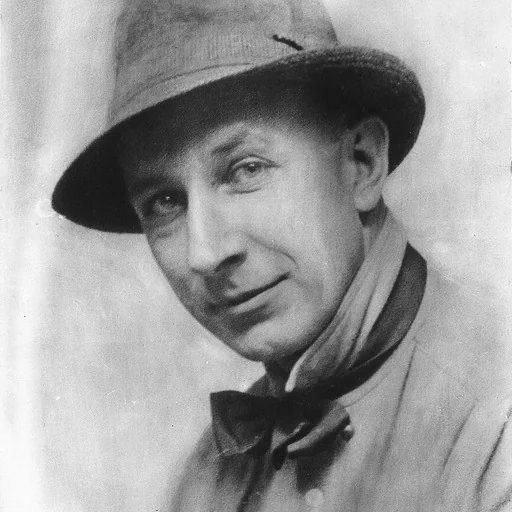
George Wesley Bellows (August 12 or August 19, 1882 – January 8, 1925) was an American realist painter, known for his bold depictions of urban life in New York City.