Artwork
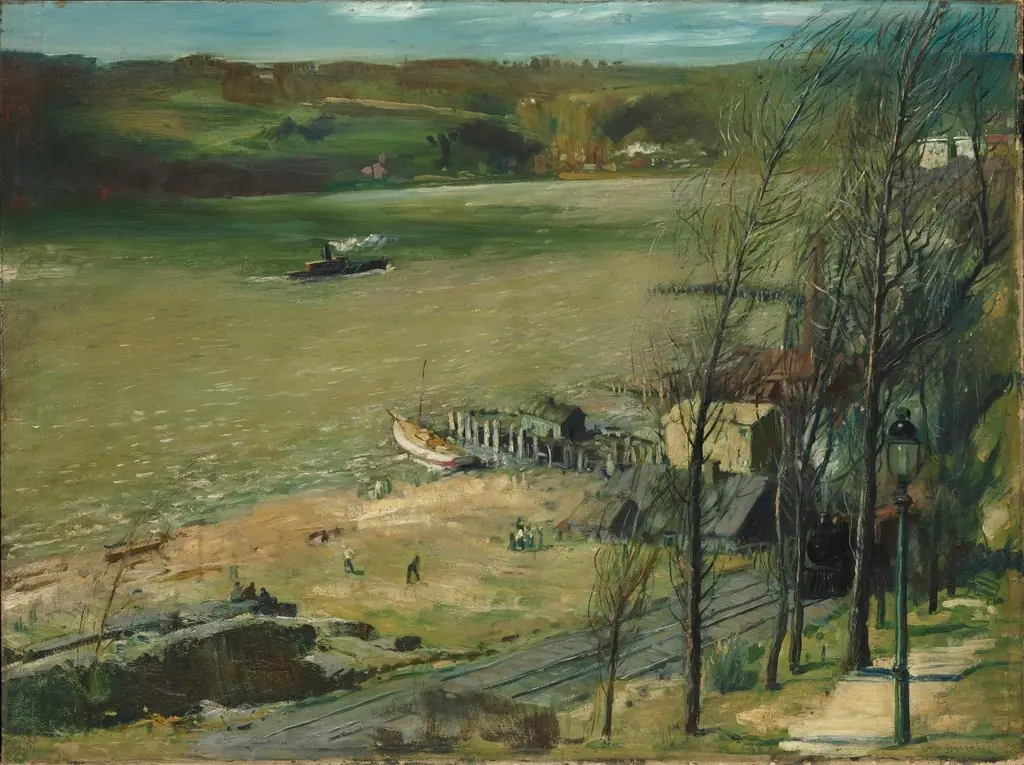
Study for "Riverfront No. 1"
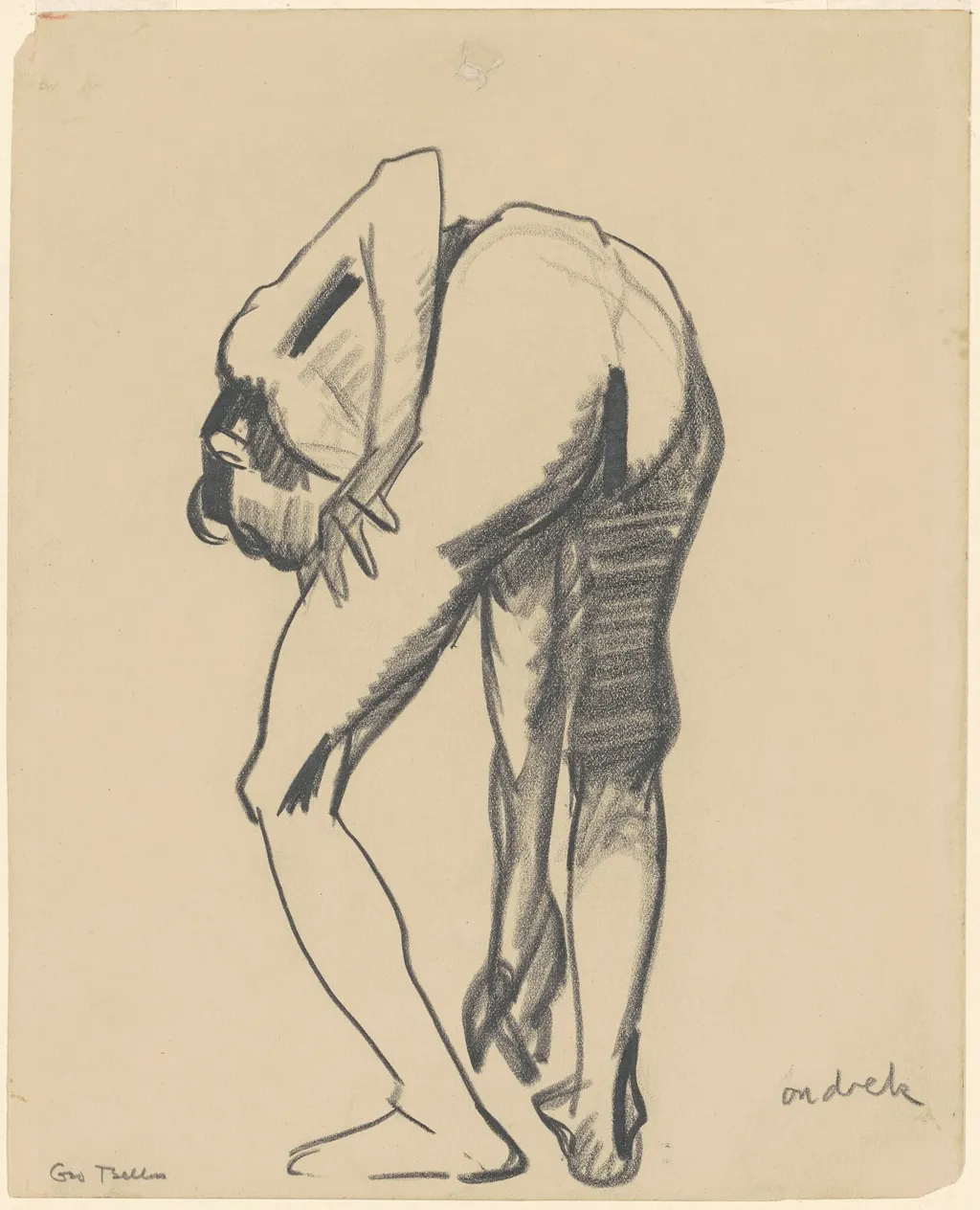
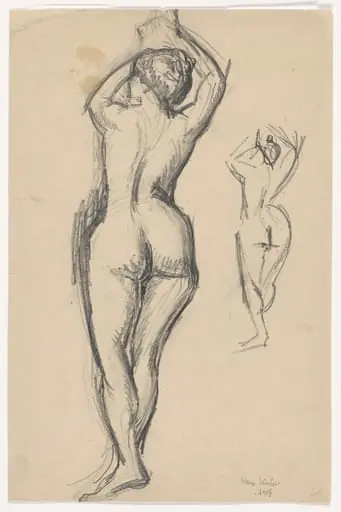
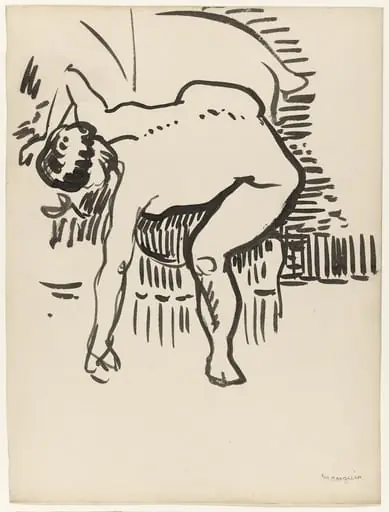
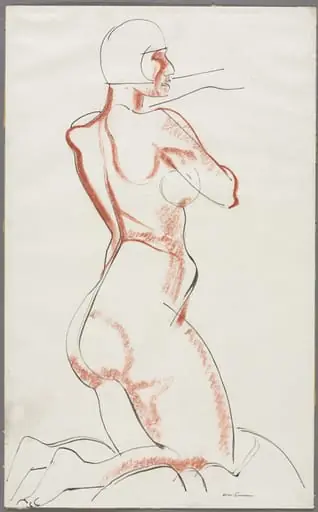
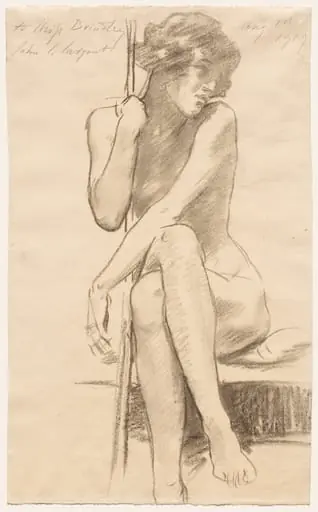
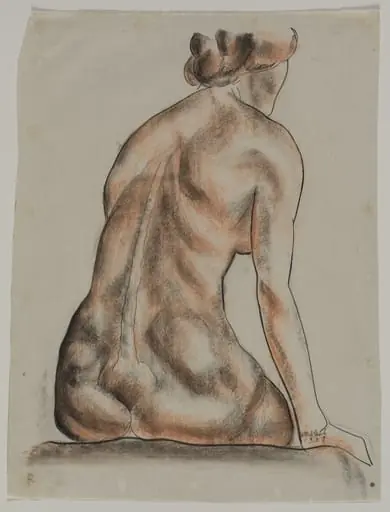
Study for "Riverfront No. 1" is a crayon drawing by George Bellows. It dates from 1915 and is held in the collection of the National Gallery of Art.
About this work
Overview
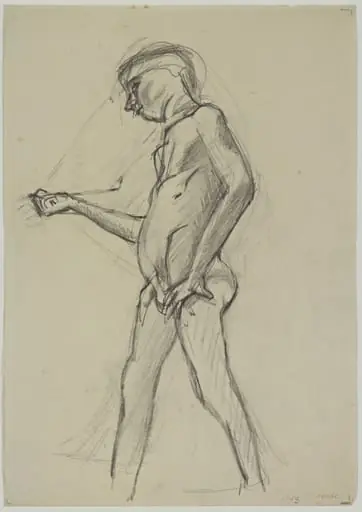
George Bellows produced this conté crayon drawing on wove paper around 1915 as a preparatory study for his later work titled “Riverfront No. 1.” The piece functions as a quick, gestural sketch, capturing the essential pose and movement of a figure that would be elaborated in the finished painting.
Subject & Meaning
The drawing depicts a solitary figure seen from behind and in profile, slightly bent forward. The person’s arms are crossed behind the head, and one hand grasps a cloth or scarf, suggesting a moment of pause or contemplation within an urban riverside setting.
Technique & Style
Bellows employed a soft conté crayon, allowing him to blend tones smoothly and render both deep shadows on the body and lighter, more tentative strokes for the fabric. The lines are loose and rapid, emphasizing the dynamism of the pose rather than fine detail.
History & Provenance
Created circa 1915, the study was likely kept by Bellows as a working reference for the larger composition. Its survival provides insight into the artist’s preparatory process during a prolific period of his career focused on New York’s waterfront scenes.
Artist & collection
Artist
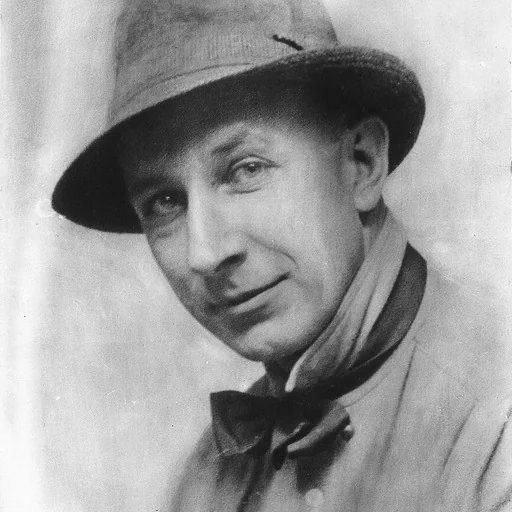
George Wesley Bellows (August 12 or August 19, 1882 – January 8, 1925) was an American realist painter, known for his bold depictions of urban life in New York City.