Artwork
Reiterschlacht
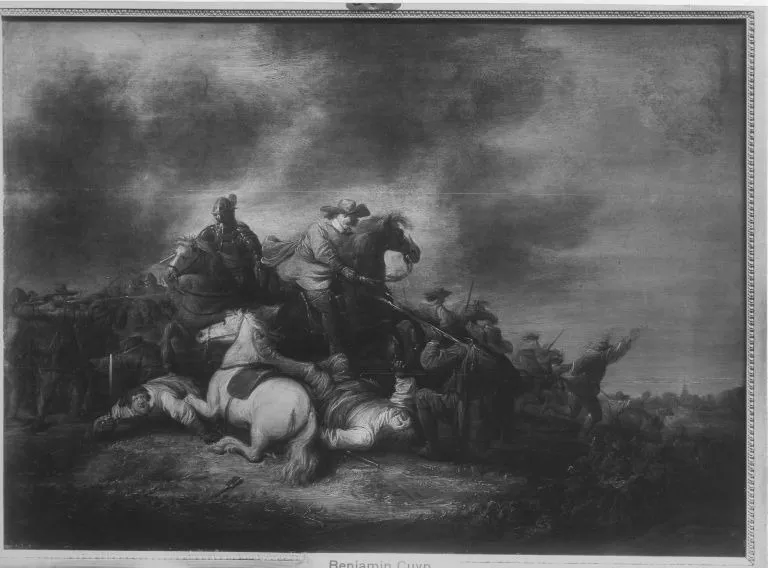
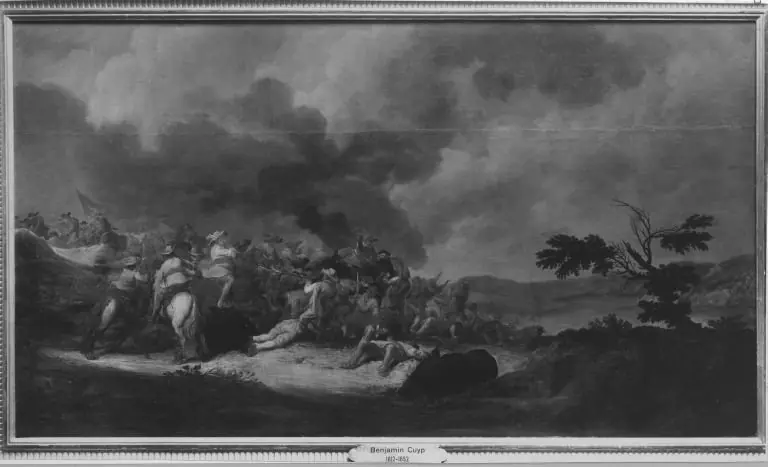
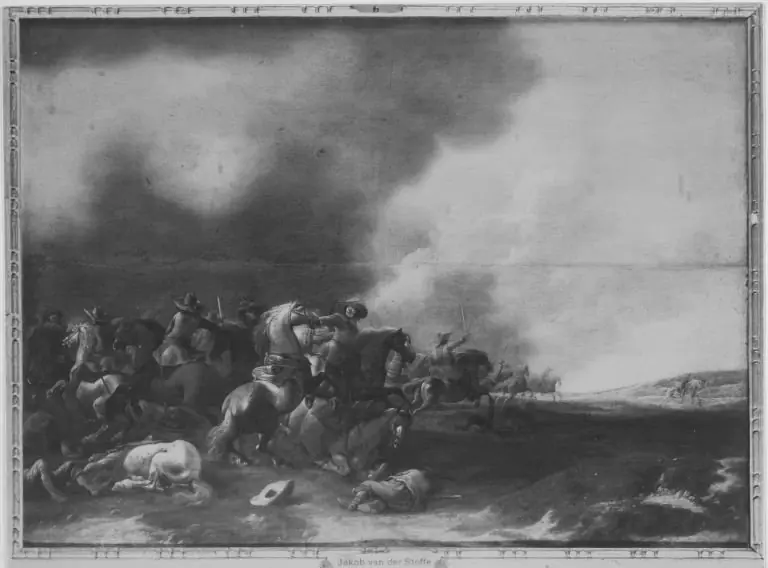
Reiterschlacht is an unspecified painting by the Dutch Golden Age artist Benjamin Gerritsz Cuyp. It dates from 1632 and is held in the collection of the Bavarian State Painting Collections.
About this work
Overview
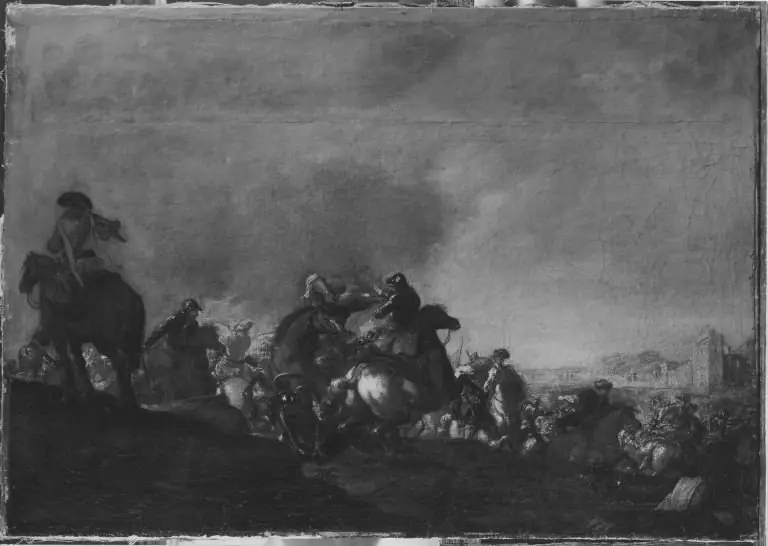
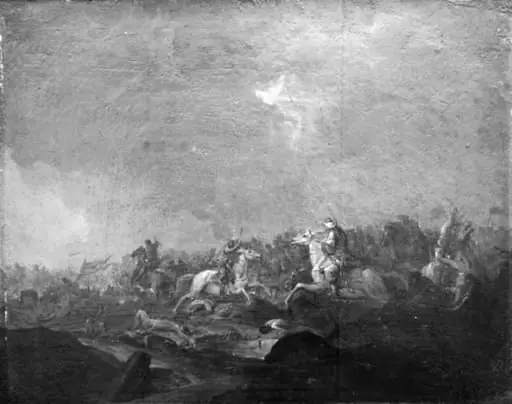
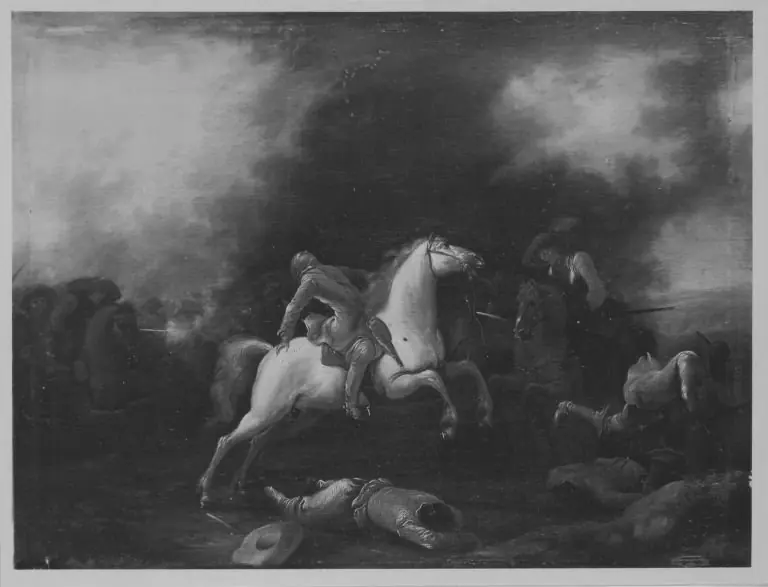
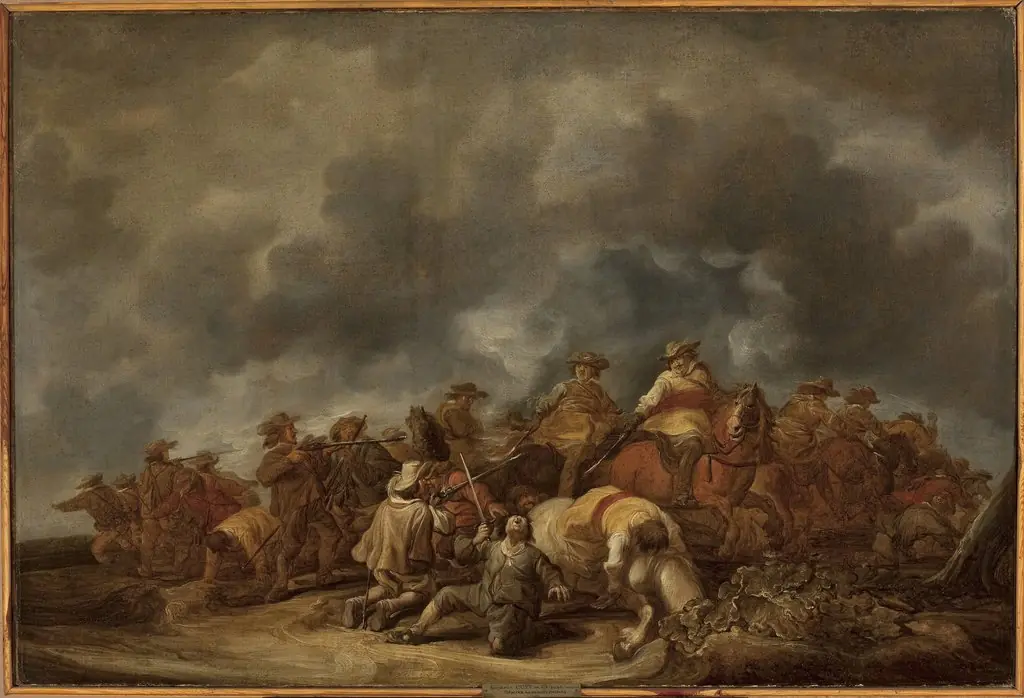
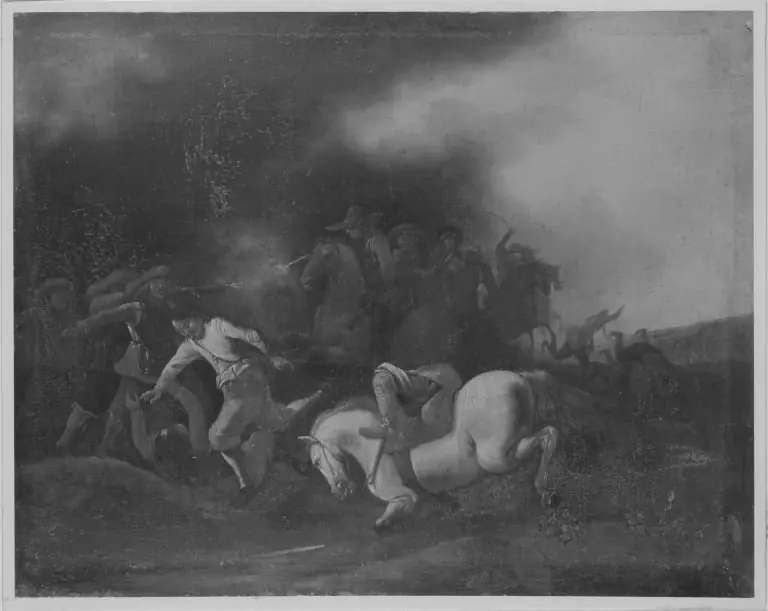
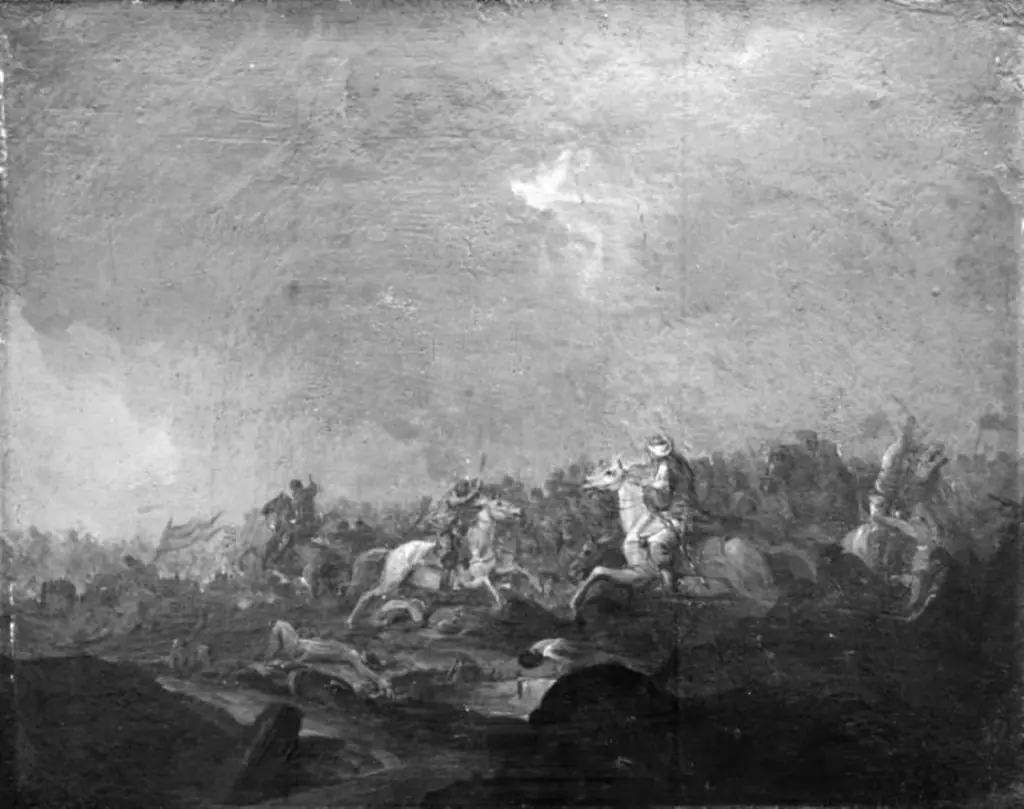
Painted in 1632 by Benjamin Gerritsz Cuyp, Reiterschlacht captures a moment of violent chaos in a cavalry skirmish. The work is part of the Alte Pinakothek’s collection in Munich. Its composition centers on a fallen horse and rider, rendered with intense physicality and emotional weight. The scene avoids glorification, instead focusing on the raw disruption of battle.
Subject & Meaning
The painting portrays a single, violent incident within a larger mounted conflict. A man in the foreground, clutching a spear, reacts to the collapse of his mount, whose limbs sprawl unnaturally. Other riders recede into the background, suggesting the broader disorder of combat. The scene conveys the unpredictability and brutality of warfare, not its heroism.
Technique & Style
Cuyp employs bold, fluid brushwork to convey motion and tension. A restrained palette of browns, grays, and muted earth tones dominates, enhancing the somber mood. Chiaroscuro defines forms through sharp contrasts between shadow and light, particularly around the fallen horse, lending sculptural weight to the figures and deepening spatial depth.
History & Provenance
The painting has remained in institutional hands since at least the 19th century, entering the Alte Pinakothek’s collection through documented acquisitions. Its attribution to Cuyp has been consistently supported by stylistic analysis and archival records. No significant alterations or restorations are recorded in modern scholarship.
Context
Created during the Thirty Years’ War, the work reflects contemporary Dutch interest in military subjects, even as the Netherlands remained relatively unscathed. Cuyp, influenced by Italian and Flemish battle scenes, adapted these traditions to emphasize visceral realism over narrative spectacle, aligning with emerging Dutch naturalism.
Legacy
Reiterschlacht stands as a rare example of Cuyp’s early battle imagery, distinguishing his oeuvre from his more common pastoral works. While not widely reproduced, it is recognized in academic studies for its unflinching depiction of equestrian violence and its contribution to 17th-century Dutch genre painting.
Artist & collection