Artwork
Peisaj de munte cu vite
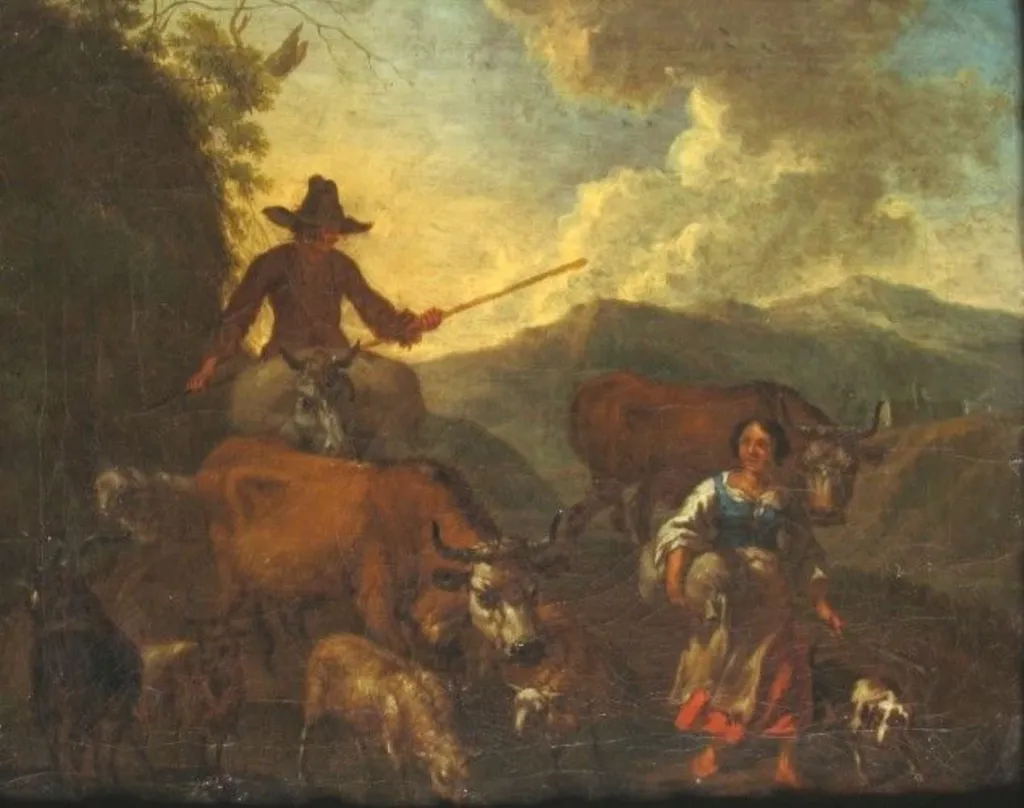
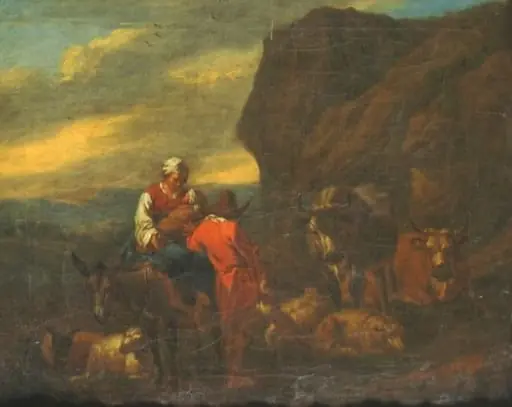
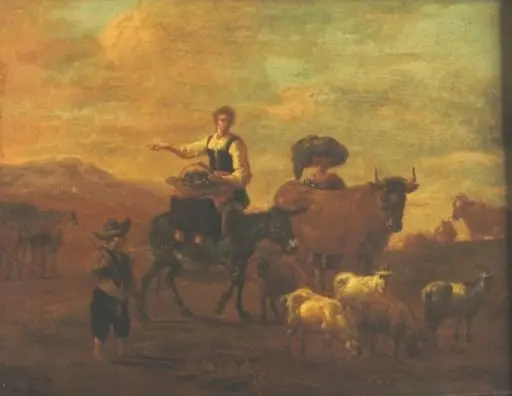
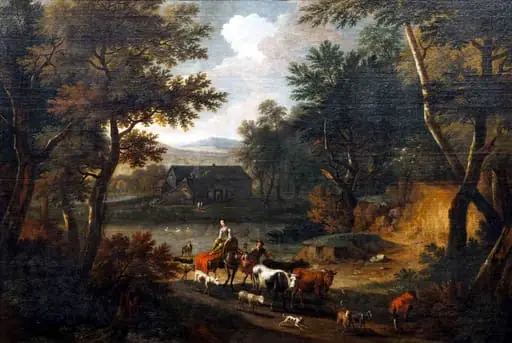
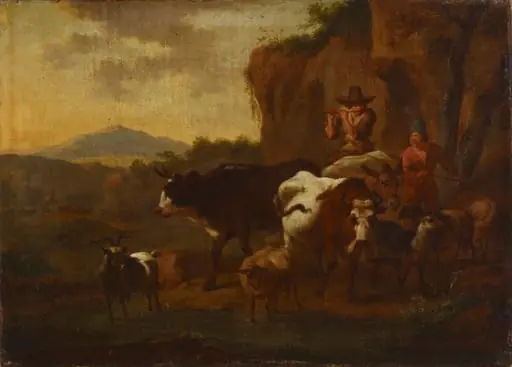
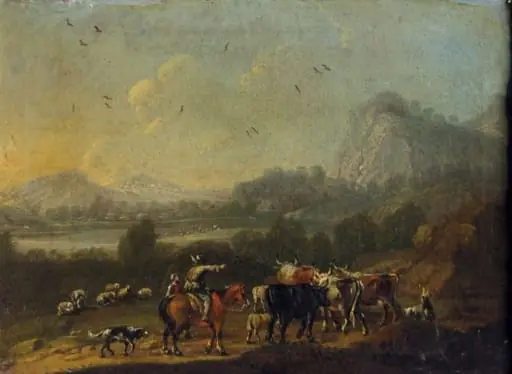
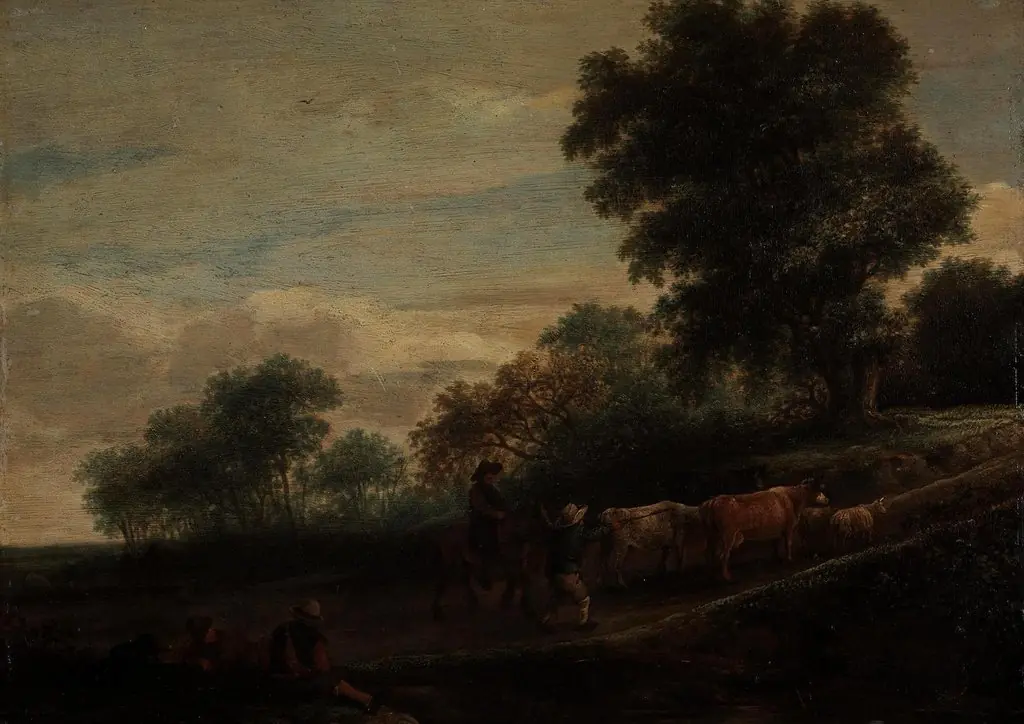
Peisaj de munte cu vite is an unspecified painting by the Baroque artist Nicolas (Claes) Pietersz Berchem. It is held in the collection of the Brukenthal National Museum. This work depicts a rural scene in which a man guides livestock across a rolling hillside, accompanied by a woman carrying a bundle.
About this work
Overview
This work depicts a rural scene in which a man guides livestock across a rolling hillside, accompanied by a woman carrying a bundle. The composition emphasizes quiet movement and daily labor, rendered with attention to naturalistic detail. The atmosphere is subdued, with a pale, overcast sky and distant, blurred hills that recede into soft focus, reinforcing a sense of stillness and solitude.
Subject & Meaning
The figures represent ordinary rural life, engaged in the routine task of herding animals. The man’s wide-brimmed hat and the woman’s distinctive dress suggest regional attire, grounding the scene in a specific cultural context. No dramatic narrative is present; instead, the painting conveys dignity in mundane labor, reflecting an unembellished view of agricultural existence.
Technique & Style
The artist employs chiaroscuro to model the figures and animals with subtle gradations of light and shadow, giving them volume against the flat, muted landscape. Fur on the cows is rendered with textured brushwork to suggest weight and movement, while the background remains hazy, minimizing detail to enhance spatial depth. The palette is restrained, dominated by earth tones and pale sky hues.
History & Provenance
The painting’s origin is not documented in public records, and no known exhibition history or collector lineage has been established. It is attributed to an anonymous or lesser-known regional artist, likely active in the late 19th or early 20th century, based on stylistic conventions and costume details. Its survival suggests it was kept within a local family or community context.
Context
The scene aligns with broader European traditions of rural realism, where artists turned away from idealized landscapes to depict everyday life in the countryside. In regions with strong pastoral economies, such imagery served as both record and quiet tribute to agrarian labor, often produced outside major urban art centers and rarely exhibited publicly.
Legacy
Though not widely known or reproduced, the work contributes to a quiet archive of regional visual culture. Its focus on unglamorized labor and naturalistic rendering offers insight into how rural communities saw themselves, separate from metropolitan artistic trends. It remains a modest but tangible artifact of vernacular artistic practice.
Artist & collection
Artist
Nicolas (Claes) Pietersz Berchem
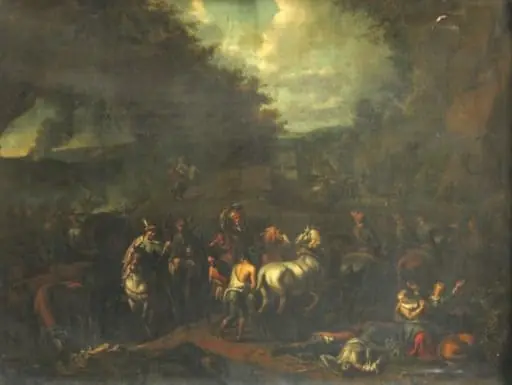
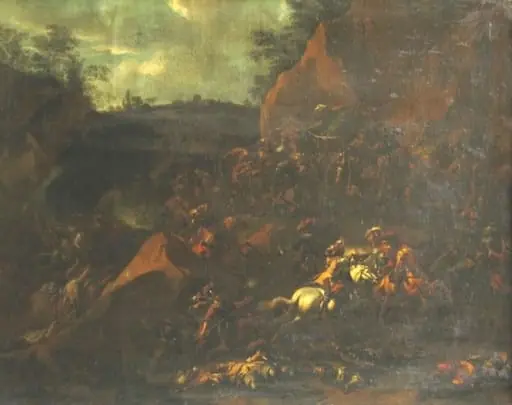
Nicolas (Claes) Pietersz Berchem painted peaceful landscapes and dramatic battle scenes full of rocky paths, herds, and rustic figures.