Artwork
Peisaj cu păstori și țărănci ; pandant: Peisaj cu vite
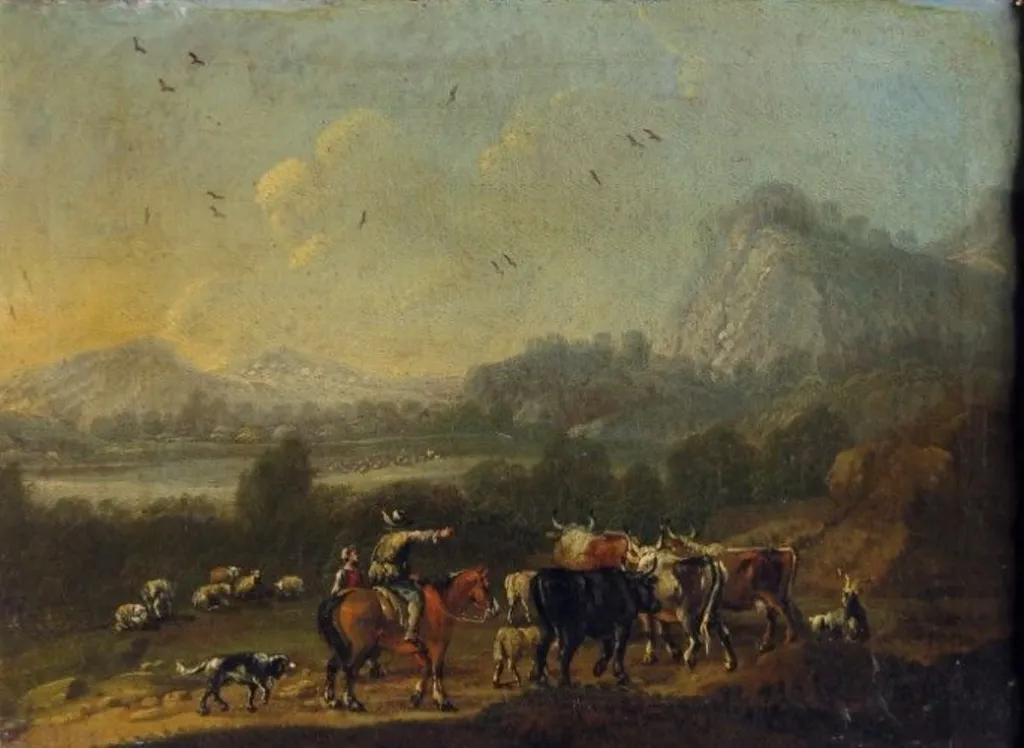
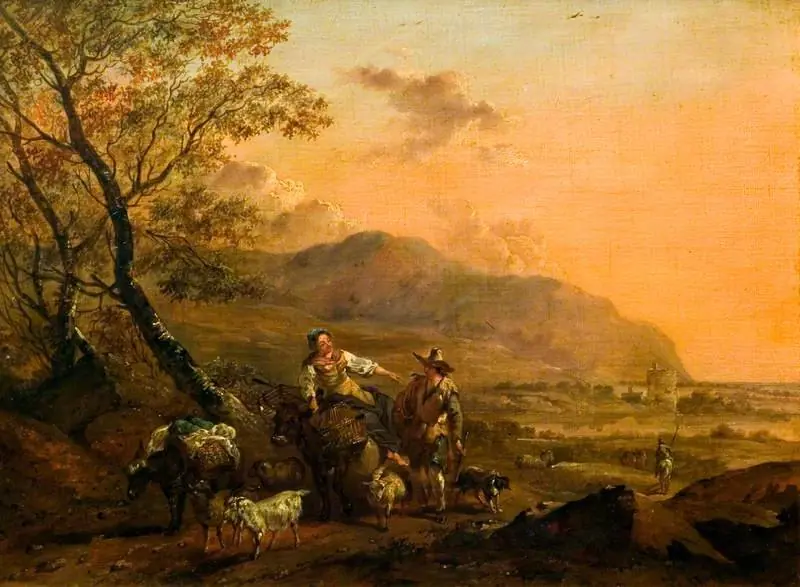
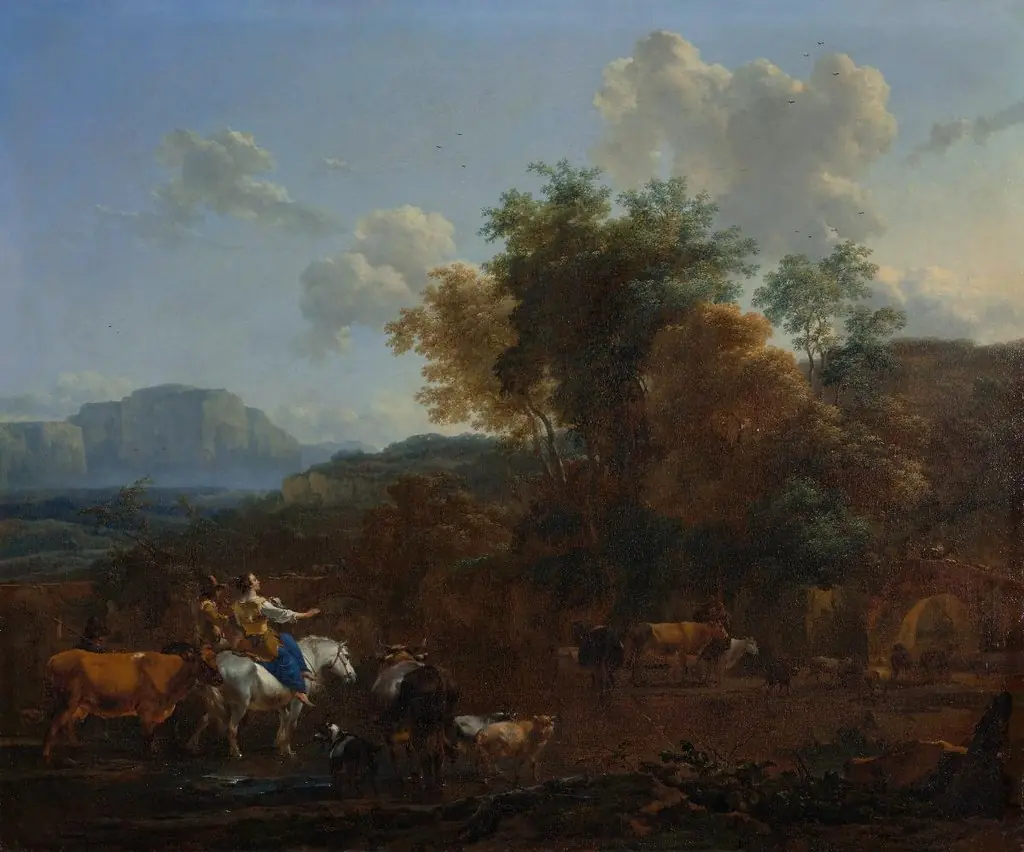
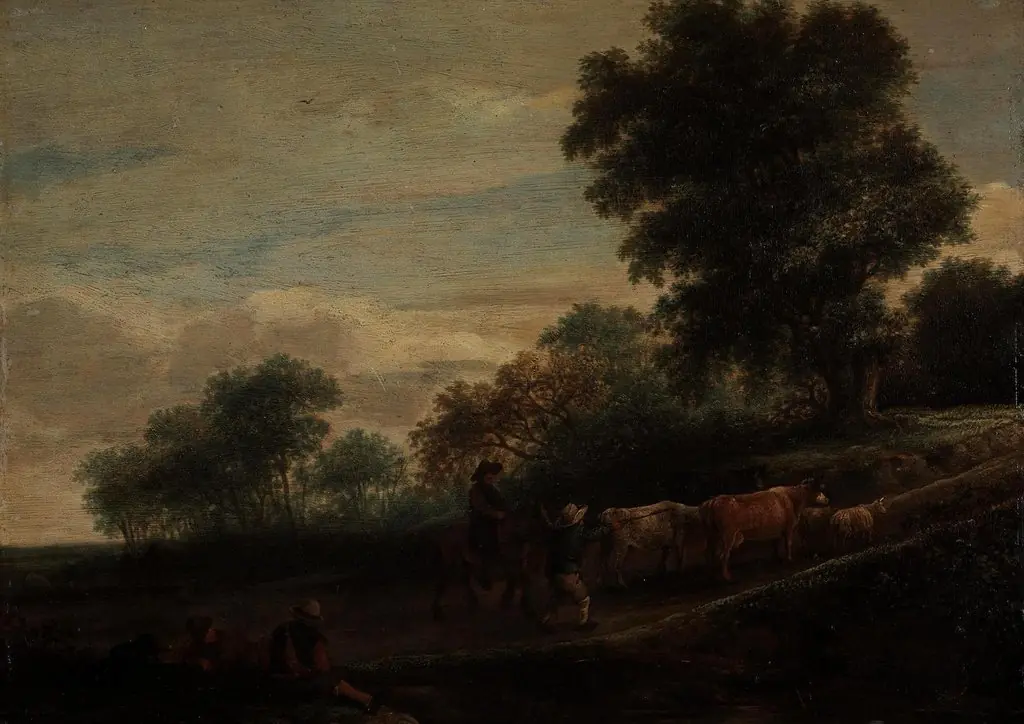
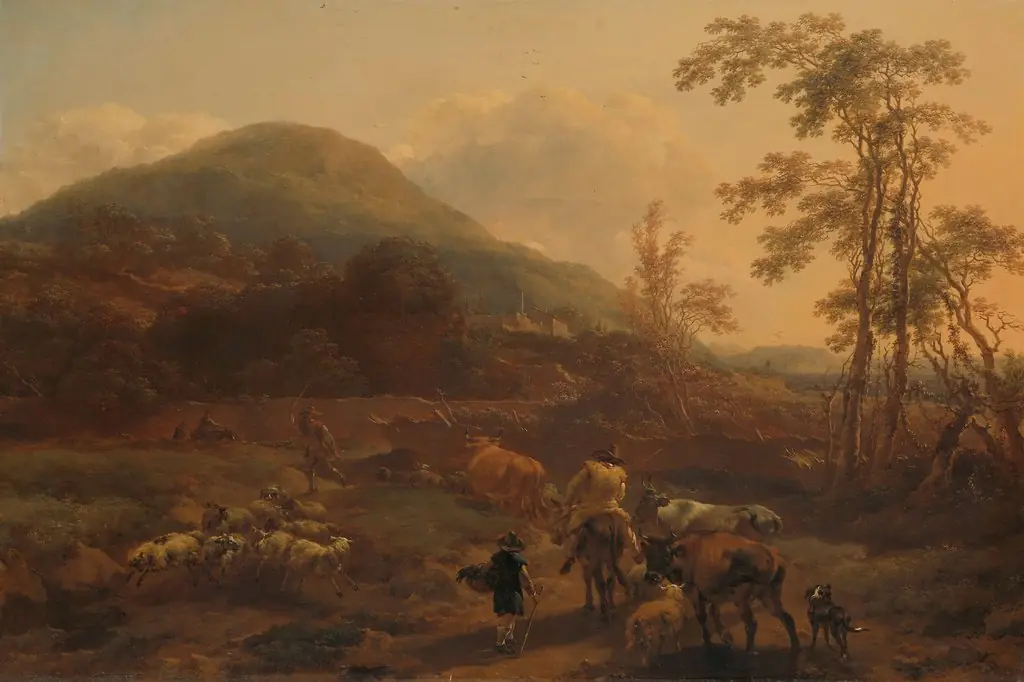
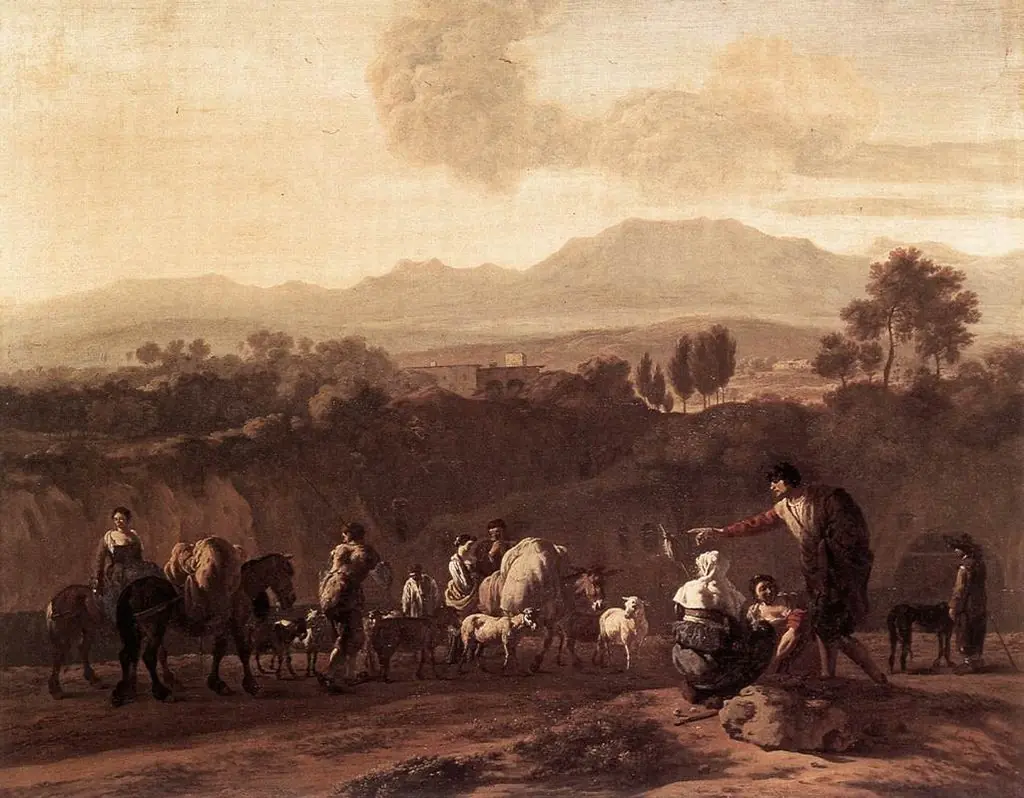
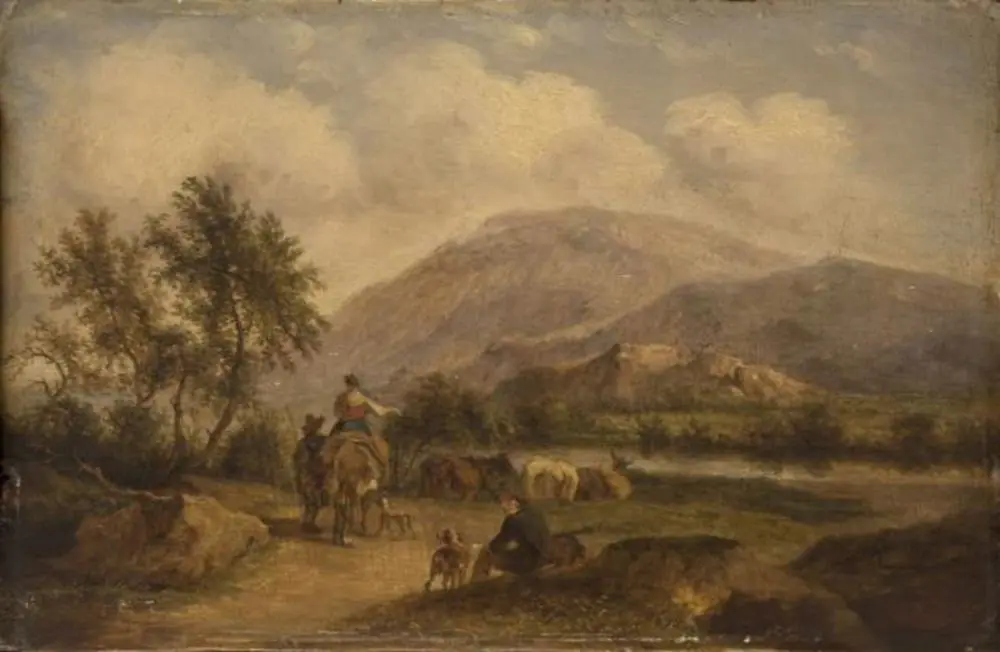
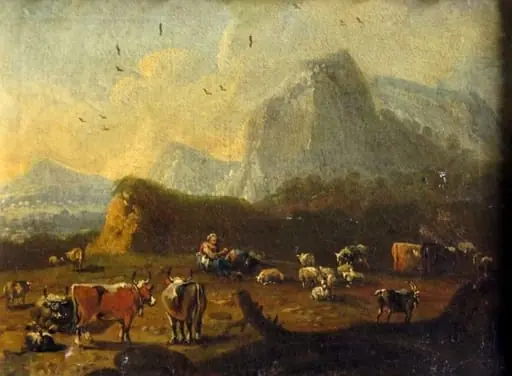
Peisaj cu păstori și țărănci ; pandant: Peisaj cu vite is an unspecified painting by the Baroque artist Johann Ferdinand Kien. It is held in the collection of the Brukenthal National Museum. This pair of landscape paintings depicts rural life in a tranquil, unidealized setting.
About this work
Overview
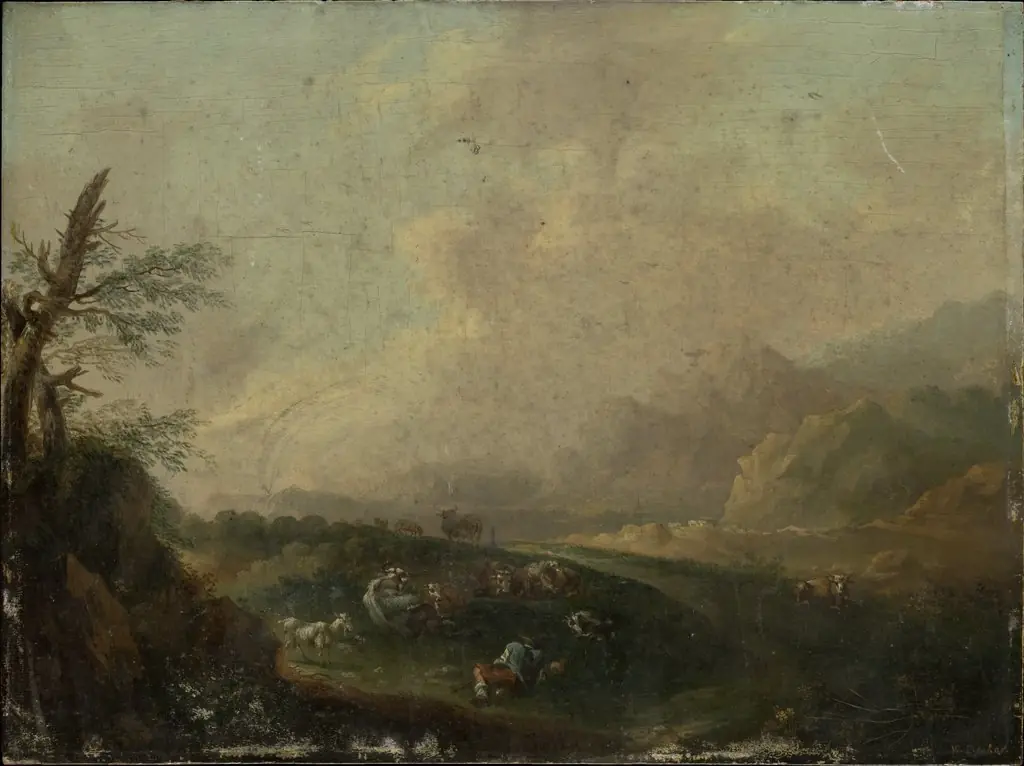
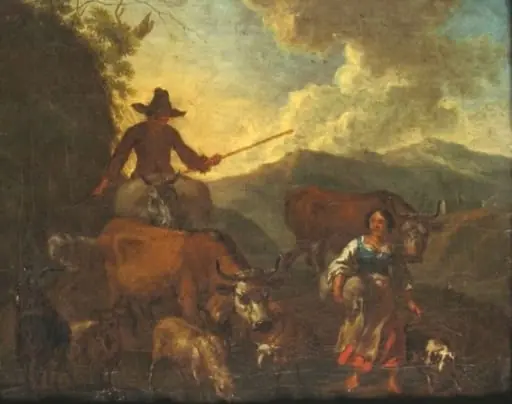
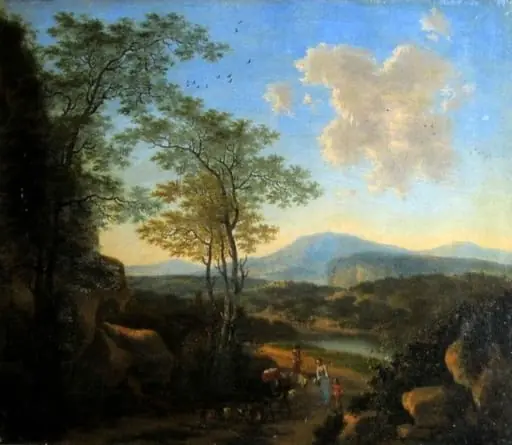
One panel shows shepherds and peasants guiding cattle and horses along a winding path, while the other portrays livestock in a similar pastoral environment.
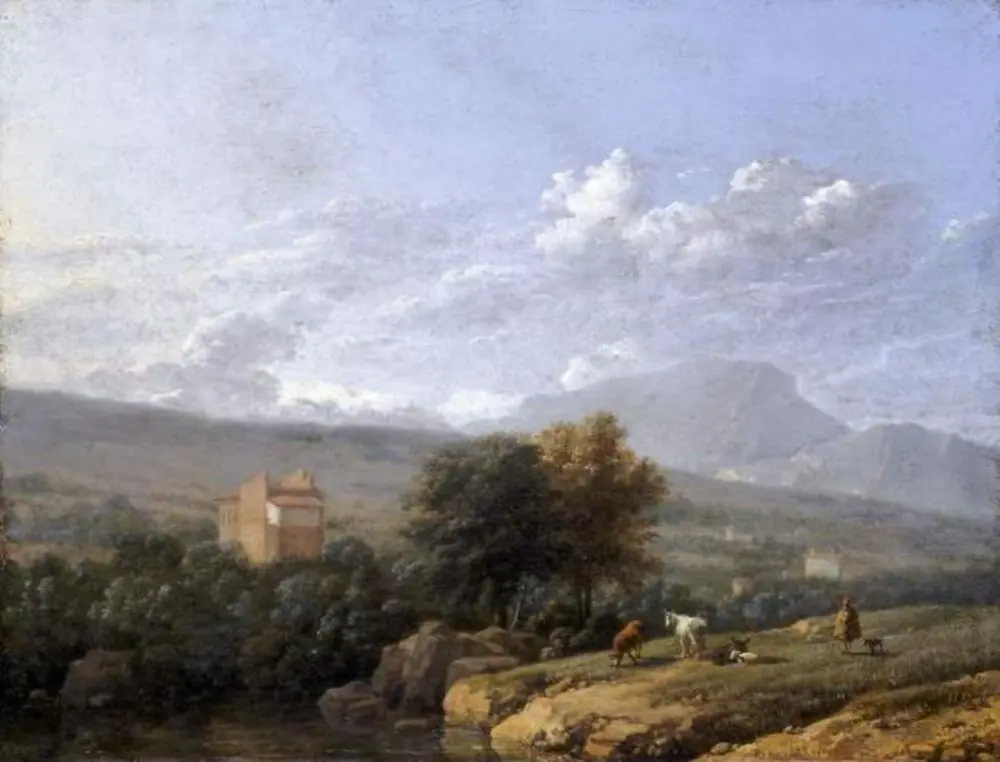
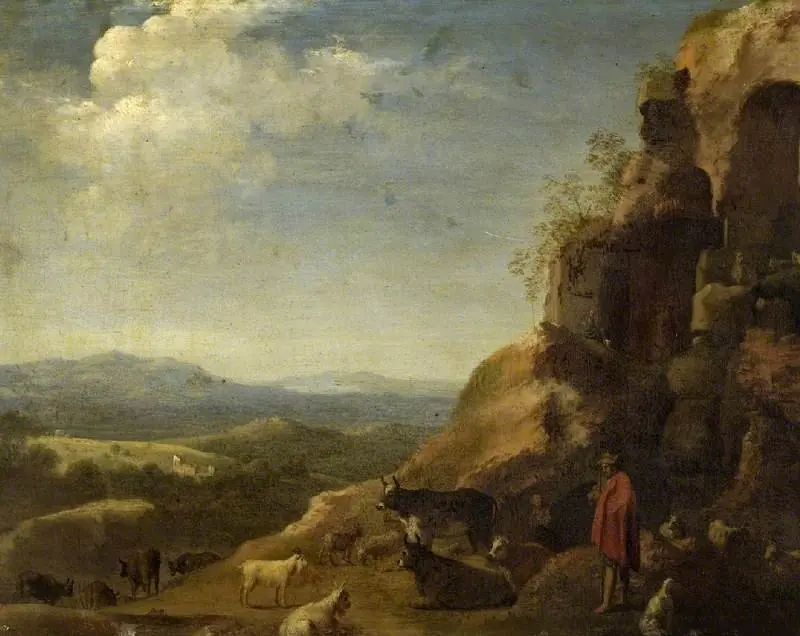
This pair of landscape paintings depicts rural life in a tranquil, unidealized setting. One panel shows shepherds and peasants guiding cattle and horses along a winding path, while the other portrays livestock in a similar pastoral environment. Both works emphasize quiet movement and natural harmony, with no dramatic events or human interaction beyond the act of herding. The compositions are grounded in observation rather than narrative.
Subject & Meaning
The scenes focus on everyday labor in the countryside, portraying shepherds and farmers as part of the landscape rather than its center. The presence of animals, a dog, and birds suggests a rhythm of daily life untouched by urban influence. The absence of architectural or symbolic elements implies a preference for authenticity over allegory, reflecting a quiet reverence for the routines of rural existence.
Technique & Style
The artist employs chiaroscuro to model forms through subtle shifts in light and shadow, enhancing the three-dimensionality of animals and terrain. Brushwork is restrained, avoiding overt texture in favor of atmospheric cohesion. The sky, hills, and river are rendered with soft transitions, creating a sense of depth without theatrical contrast. Light falls naturally, as if observed at a specific hour, reinforcing the scene’s quiet realism.
History & Provenance
The paintings are attributed to a 19th-century Romanian artist active in regional landscape traditions. They were likely created as a matched pair, possibly for private collection or local patronage. Their survival suggests they remained within domestic or regional contexts, avoiding major institutional acquisition until later. No documented exhibitions or critical reception from the artist’s lifetime are known.
Context
These works emerged during a period when Romanian artists increasingly turned to native landscapes and peasant life as subjects, moving away from imported academic styles. While urban centers embraced historical or mythological themes, rural scenes like these reflected a growing cultural interest in authentic local identity. Similar imagery appeared in folk art and illustrated publications, though this version remains more subdued and observational.
Legacy
The paintings contribute to a modest but persistent tradition of Romanian landscape painting that prioritizes quiet observation over grandeur. They are not widely reproduced or studied internationally, but within national collections, they serve as examples of early naturalism in rural depiction. Their preservation underscores a regional commitment to documenting everyday environments before industrialization transformed them.
Artist & collection
Artist
Johann Ferdinand Kien painted quiet landscapes with shepherds and farm women set against soft hills.