Artwork
Odalisk
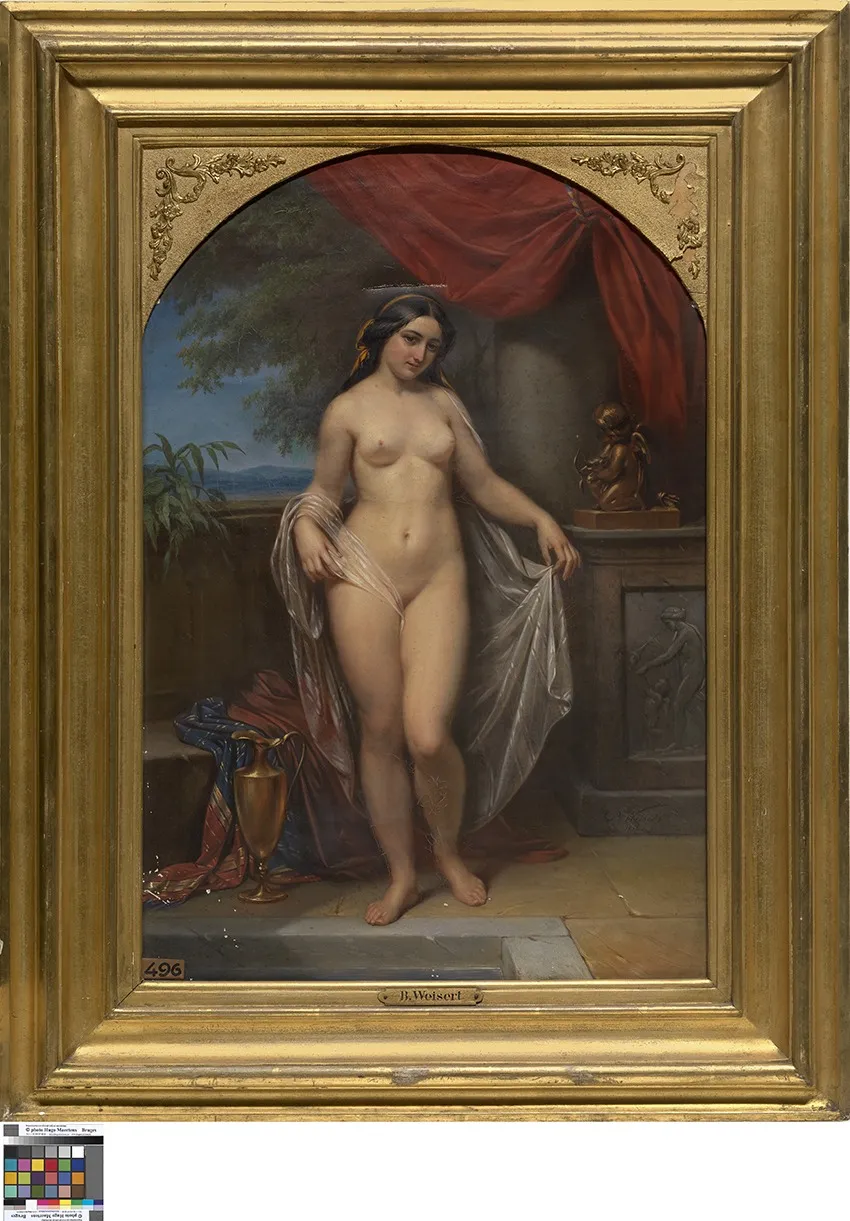
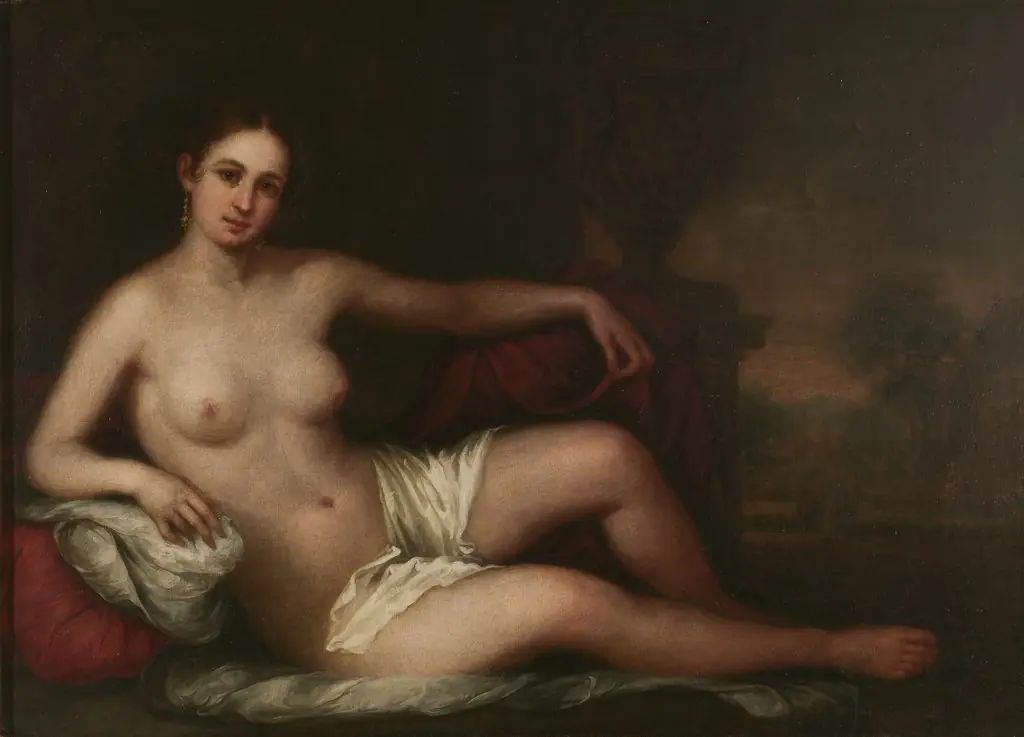
Odalisk is an oil painting by the Biedermeier artist Bernard Pieter Weiser. It dates from 1852 and is held in the collection of the Groeningemuseum.
About this work
Overview
Odalisk is an 1852 oil painting by Bernard Pieter Weiser, depicting a solitary female figure within an interior space. The work is part of the collection at the Groeningemuseum in Bruges. It presents a quiet, unadorned moment centered on a nude woman, surrounded by objects that suggest domestic opulence without overt narrative. The composition emphasizes stillness and restrained elegance.
Subject & Meaning
The draped cloth, the statue, and the plant imply a private, intimate setting—perhaps a harem interior reimagined through a European lens.
The figure, an odalisque, is portrayed not as a sexualized exotic, but as a contemplative presence. Her lowered gaze and composed posture invite introspection rather than spectacle. The draped cloth, the statue, and the plant imply a private, intimate setting—perhaps a harem interior reimagined through a European lens. The absence of dramatic action shifts focus to the quiet dignity of the figure and the atmosphere of the space.
Technique & Style
Weiser employs soft, muted tones with careful attention to texture: the sheen of the white cloth, the grain of the wooden pedestal, the matte surface of the trophy. Light falls evenly, avoiding strong shadows, enhancing the calm mood. Brushwork is precise yet unobtrusive, favoring clarity over theatricality. The palette—dominated by white, gold, and deep red—creates harmony without contrast, reinforcing the painting’s serene tone.
History & Provenance
Painted in 1852, the work entered the Groeningemuseum’s collection in the late 19th century. Its provenance is documented through museum records, though little is known of its early ownership or exhibition history. Unlike many contemporary Orientalist works, it received minimal public attention during Weiser’s lifetime, remaining a quiet presence in the museum’s holdings.
Context
In mid-19th-century Europe, the odalisque was a common motif in Orientalist art, often tied to fantasies of the East. Weiser’s version diverges from the norm: there is no harem servant, no viewer’s gaze implied, no exotic props. Instead, the figure is isolated, introspective, and culturally ambiguous. The work reflects a quieter, more personal engagement with the theme, distinct from the grand narratives of contemporaries like Ingres.
Legacy
Odalisk remains a subtle example of how the odalisque motif could be stripped of spectacle and reoriented toward psychological stillness. While not widely reproduced or studied, its presence in the Groeningemuseum offers a counterpoint to more flamboyant Orientalist works. It endures as a quiet meditation on privacy, form, and the quiet dignity of the solitary figure.
Artist & collection