Artwork
Perseus and Andromeda
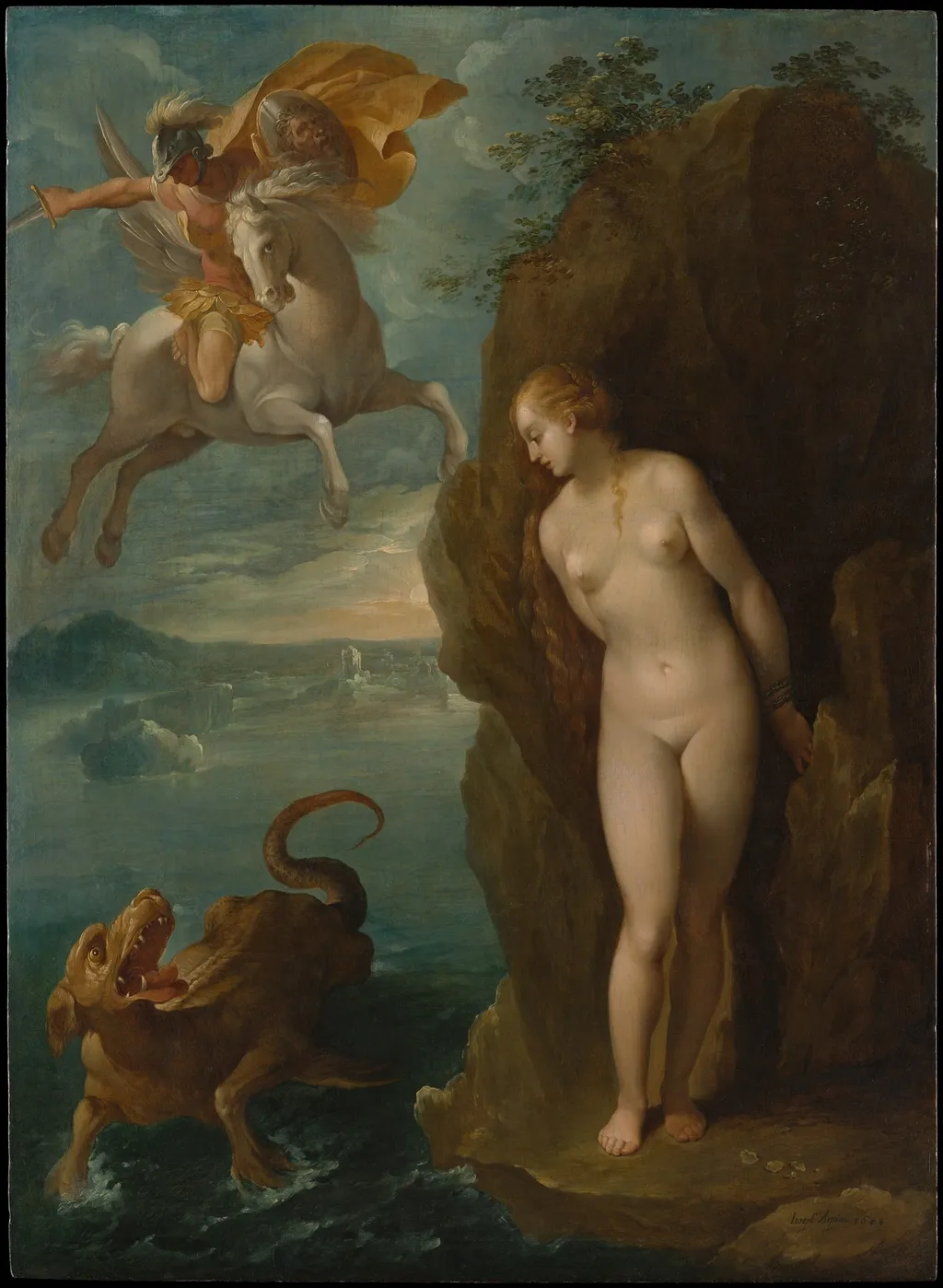
Perseus and Andromeda is an oil painting by the Early Baroque Italian artist Bernardino Cesari. It dates from 1600 and is held in the collection of the Metropolitan Museum of Art.
About this work
Overview
Bernardino Cesari's oil painting, Perseus and Andromeda, completed in 1600, captures a pivotal moment from classical mythology.
Bernardino Cesari's oil painting, Perseus and Andromeda, completed in 1600, captures a pivotal moment from classical mythology. This dramatic work, rendered in oil, is currently housed at The Metropolitan Museum of Art. It features the legendary hero Perseus in his iconic act of rescuing Andromeda from a monstrous sea creature, a narrative frequently explored in art history for its themes of heroism and salvation.
Subject & Meaning
The painting vividly portrays the climactic rescue of Andromeda. Chained to a rocky shore as a sacrifice, the nude princess faces a monstrous sea beast emerging from the waves. Above this perilous scene, the hero Perseus descends on his winged steed, Pegasus, sword poised to strike. The composition emphasizes the imminent confrontation and the vulnerability of Andromeda, setting a high-stakes mythological drama.
Technique & Style
Cesari employs a dramatic artistic approach to heighten the narrative's intensity. The artist's use of chiaroscuro is prominent, with strong contrasts between illuminated figures and deep shadows that amplify the tension and action. Bold, expressive brushstrokes contribute to a dynamic sense of movement and energy, particularly in the depiction of the charging hero and the thrashing monster, drawing the viewer into the unfolding conflict.
Own this work as a print
Artist & collection