Artwork
The New Market in Dresden
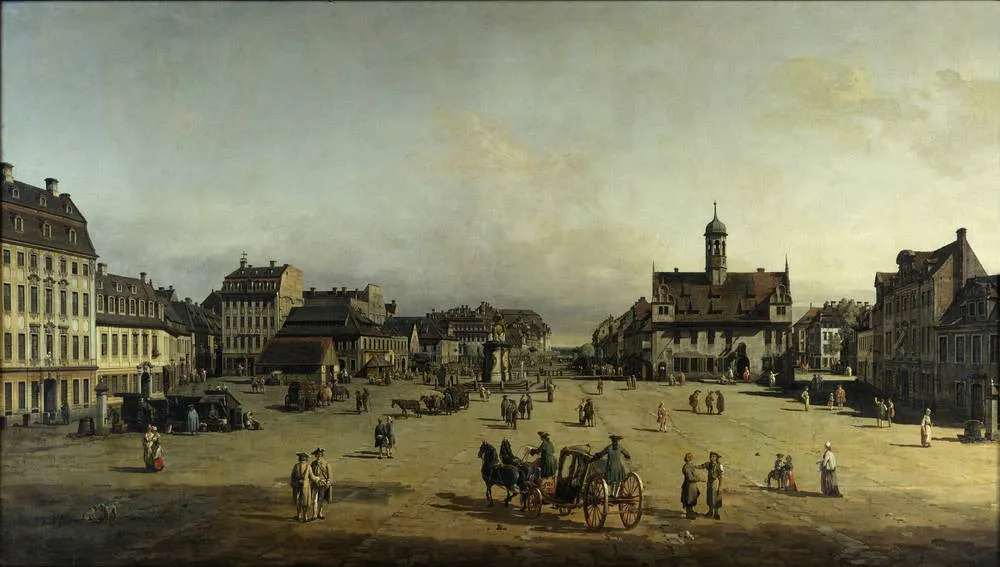
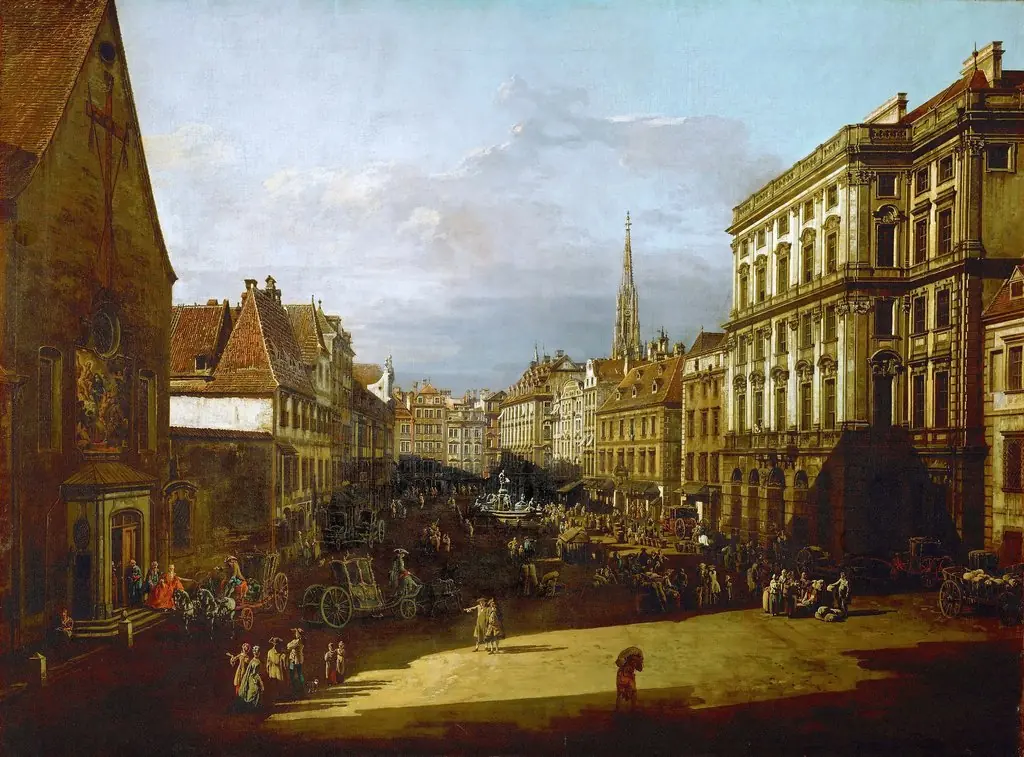
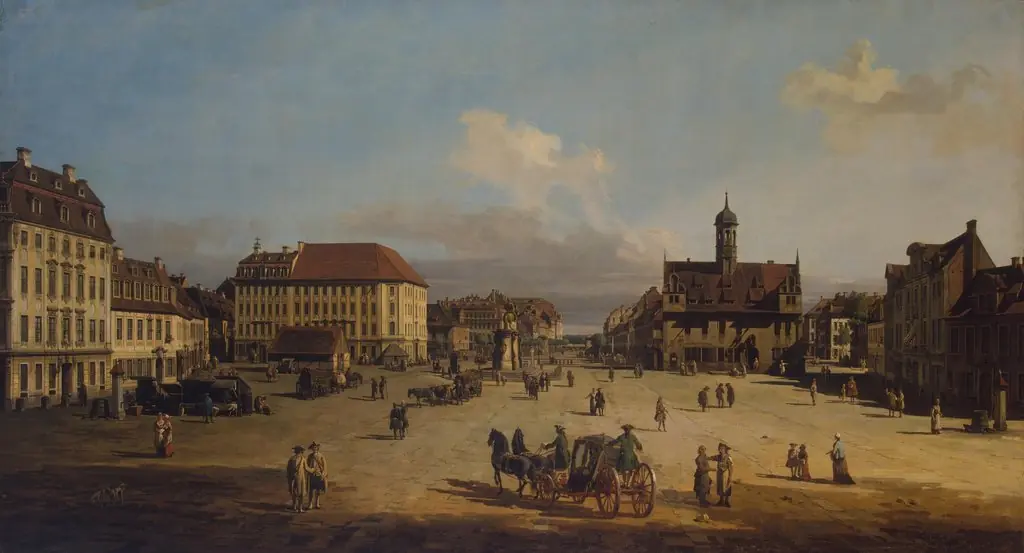
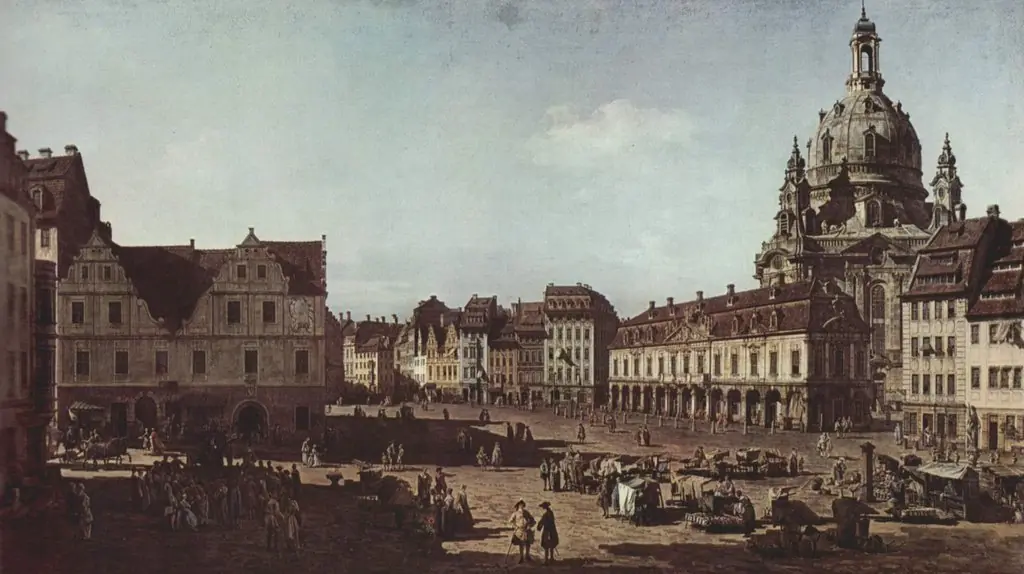
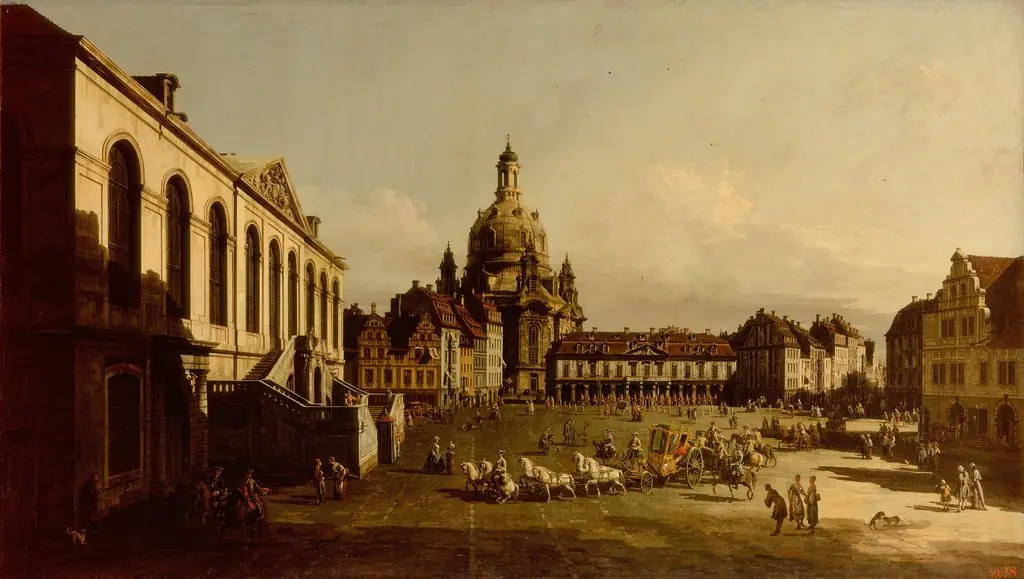
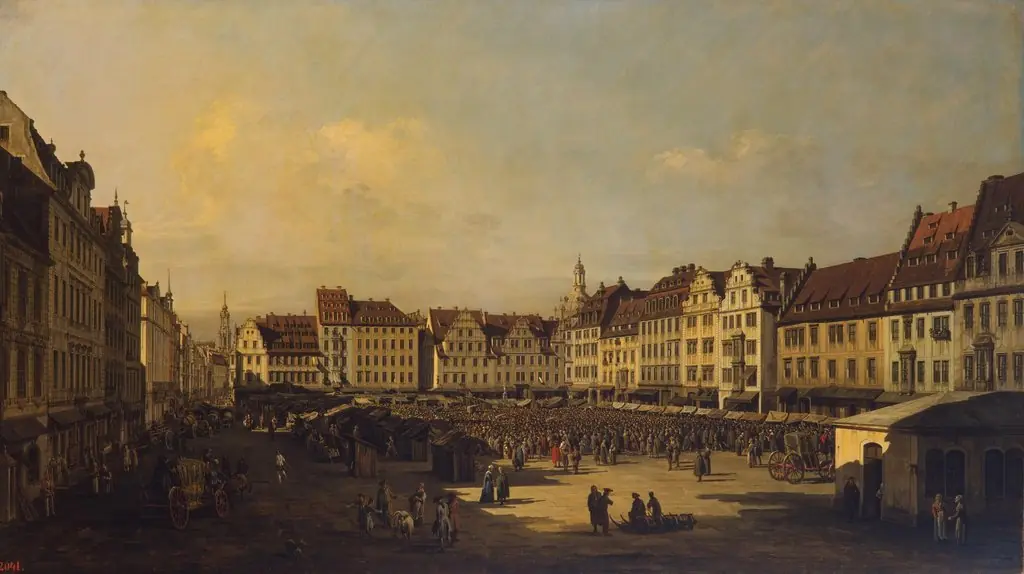
The New Market in Dresden is an oil painting by the Rococo painting artist Bernardo Bellotto. It dates from 1750 and is held in the collection of the Staatliche Kunstsammlungen Dresden.
About this work
Overview
Painted around 1750, The New Market in Dresden is an oil on canvas work by Bernardo Bellotto, capturing a lively urban square in the Saxon capital.
Painted around 1750, The New Market in Dresden is an oil on canvas work by Bernardo Bellotto, capturing a lively urban square in the Saxon capital. The painting is part of the Gemäldegalerie Alte Meister’s collection in Dresden, where it remains on public display. Bellotto, known for his precise cityscapes, rendered this scene with careful attention to architectural detail and atmospheric perspective, reflecting his role as a documentarian of 18th-century European urban life.
Subject & Meaning
The scene depicts a weekday market in Dresden’s Neuer Markt, a central public space where commerce and daily life converged. Figures move between stalls and a horse-drawn cart, suggesting routine economic activity. The composition avoids idealization, instead presenting a grounded view of civic order and pedestrian motion. The painting serves as a record of the city’s social rhythm, emphasizing the interplay between architecture and human presence rather than narrative drama.
Technique & Style
Bellotto employed chiaroscuro to model forms and define spatial depth, using sharp contrasts between light and shadow to animate the facades and cobblestones. His brushwork is precise, particularly in rendering the ornate gables and tiled roofs of surrounding buildings. The perspective is calculated and linear, aligning with the conventions of veduta painting, where accuracy in architectural representation takes precedence over expressive flourish.
History & Provenance
Commissioned during Bellotto’s tenure as court painter to Augustus III of Saxony, the work was likely created to affirm the cultural prestige of Dresden. It remained in royal collections until the 19th century, when it entered the Gemäldegalerie Alte Meister. Its survival through wars and political upheavals underscores its status as a valued historical document, preserved as part of Saxony’s artistic heritage.
Context
Painted during the height of the Saxon court’s patronage of the arts, the work reflects Dresden’s status as a center of Enlightenment-era urban development. Bellotto’s depictions of the city were part of a broader trend among Northern European artists to record urban landscapes with topographical fidelity. His approach aligned with the interests of rulers seeking to document their domains with scientific precision.
Legacy
Bellotto’s Dresden views, including this one, became reference points for later reconstructions of the city after its destruction in World War II. His attention to architectural detail allowed historians to reconstruct lost buildings with accuracy. The painting endures not as a decorative piece but as a calibrated record of urban form, influencing both art historical study and urban restoration efforts in the 20th century.
Artist & collection

Artist
Bernardo Bellotto, was an Italian urban landscape painter or vedutista, and printmaker in etching famous for his vedute of European cities – Dresden, Vienna, Turin, and Warsaw.