Artwork
View of the Grand Canal: Santa Maria della Salute and the Dogana from Campo Santa Maria Zobenigo
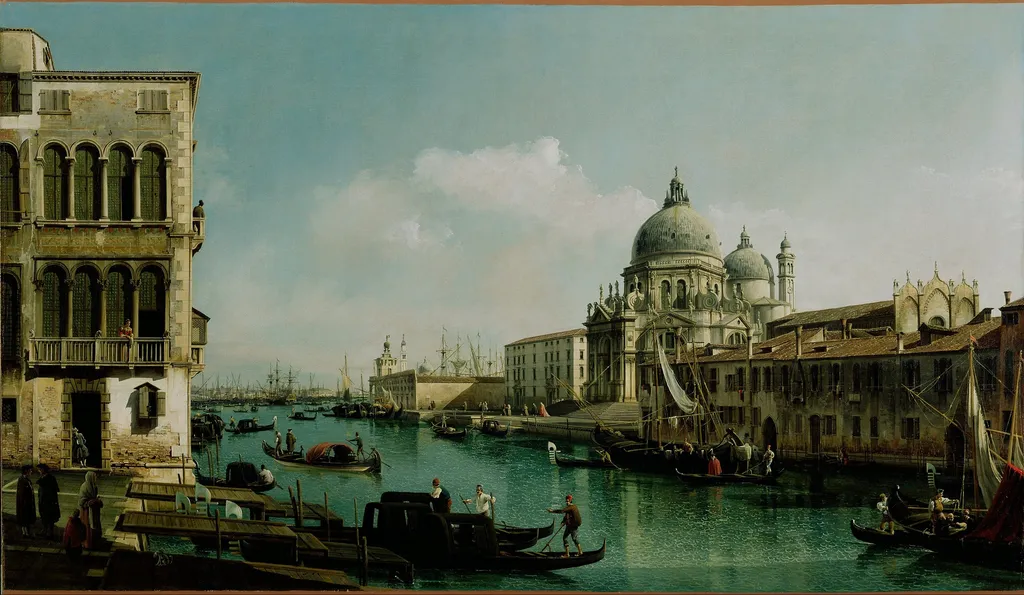
View of the Grand Canal: Santa Maria della Salute and the Dogana from Campo Santa Maria Zobenigo is an oil painting by the Rococo painting artist Bernardo Bellotto. It dates from 1743 and is held in the collection of the J. Paul Getty Museum.
About this work
Overview
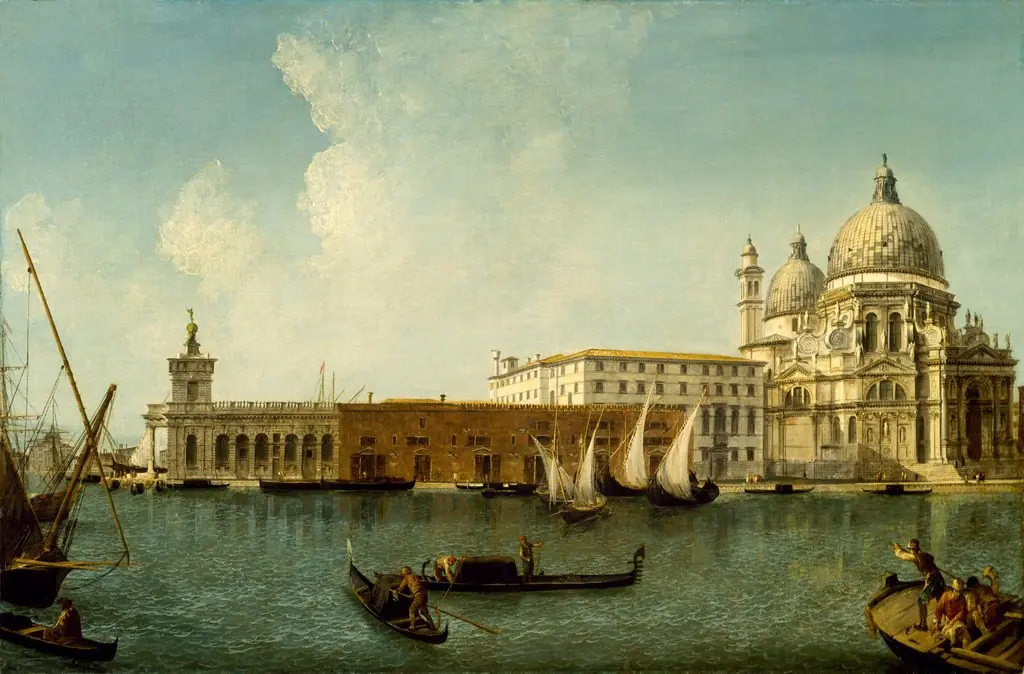
Bernardo Bellotto’s 1743 oil painting presents a panoramic view of Venice’s Grand Canal, centered on the striking silhouette of Santa Maria della Salute and the customs house (Dogana) as seen from Campo Santa Maria Zobenigo. The canvas captures the bustling waterway with gondolas and smaller vessels, rendered in a balanced composition that guides the eye from the architectural foreground to the distant skyline.
Subject & Meaning
The work documents a specific urban vista, juxtaposing the monumental Baroque church of Santa Maria della Salute with the functional stone customs building, both emblematic of Venice’s religious and commercial life. By populating the canal with everyday boat traffic, Bellotto emphasizes the city’s reliance on maritime commerce and the interplay between sacred space and civic infrastructure.
Technique & Style
Fine brushwork delineates the arched windows, balcony, and dome, while subtle gradations of light create depth across the water’s surface.
Executed in oil on canvas, the painting showcases Bellotto’s meticulous attention to architectural detail and atmospheric perspective. Fine brushwork delineates the arched windows, balcony, and dome, while subtle gradations of light create depth across the water’s surface. The artist’s palette of muted earth tones punctuated by luminous sky highlights reflects the Venetian school’s emphasis on realism.
History & Provenance
Created in 1743, the canvas entered the collection of the J. Paul Getty Museum, where it remains on display. Its acquisition history traces back to European private collections before being purchased by the museum in the mid‑20th century, illustrating the work’s journey from a Venetian studio to an American public institution.
Context
Bellotto, a nephew of Canaletto, was renowned for his vedute—detailed city views—that catered to the Grand Tour market. This painting aligns with that tradition, offering foreign patrons an accurate visual record of Venice’s iconic landmarks during the mid‑18th century, a period when the city’s political power was waning but its cultural allure persisted.
Artist & collection
Artist
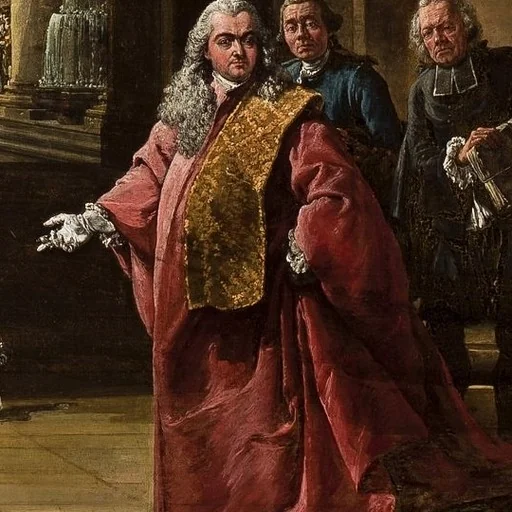
Bernardo Bellotto, was an Italian urban landscape painter or vedutista, and printmaker in etching famous for his vedute of European cities – Dresden, Vienna, Turin, and Warsaw.

 View of the Dogana and Santa Maria della Salute
 View of the Grand Canal toward the Punta della Dogana
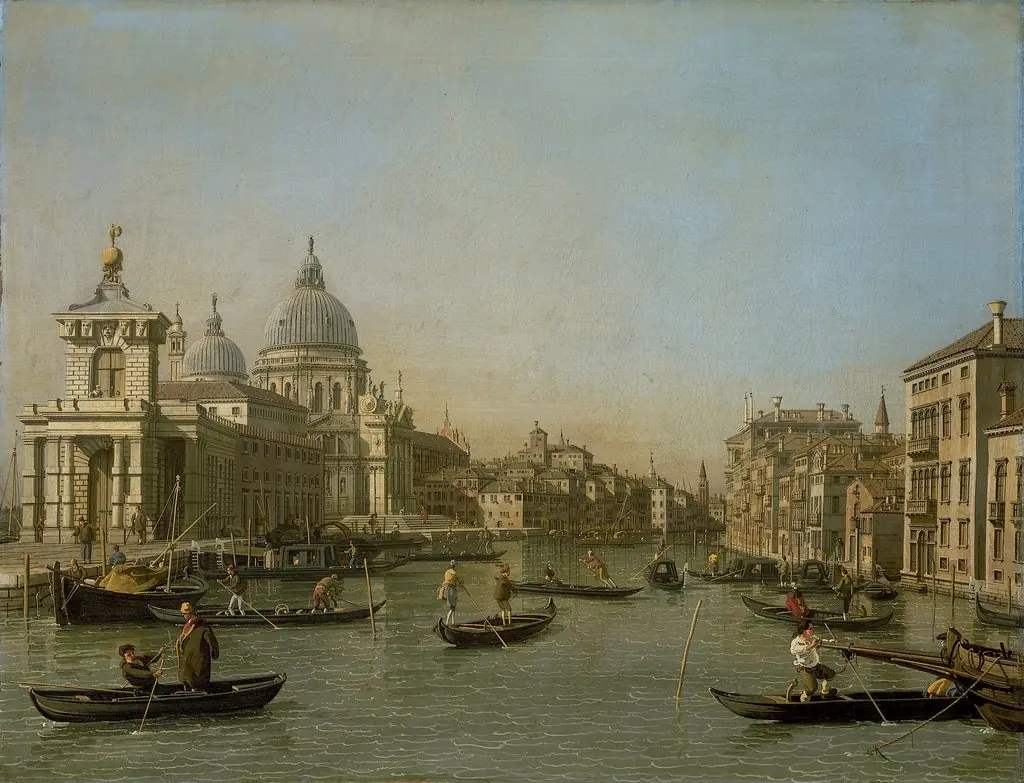 The Entrance to the Grand Canal at the Punta della Dogana and Santa Maria della Salute
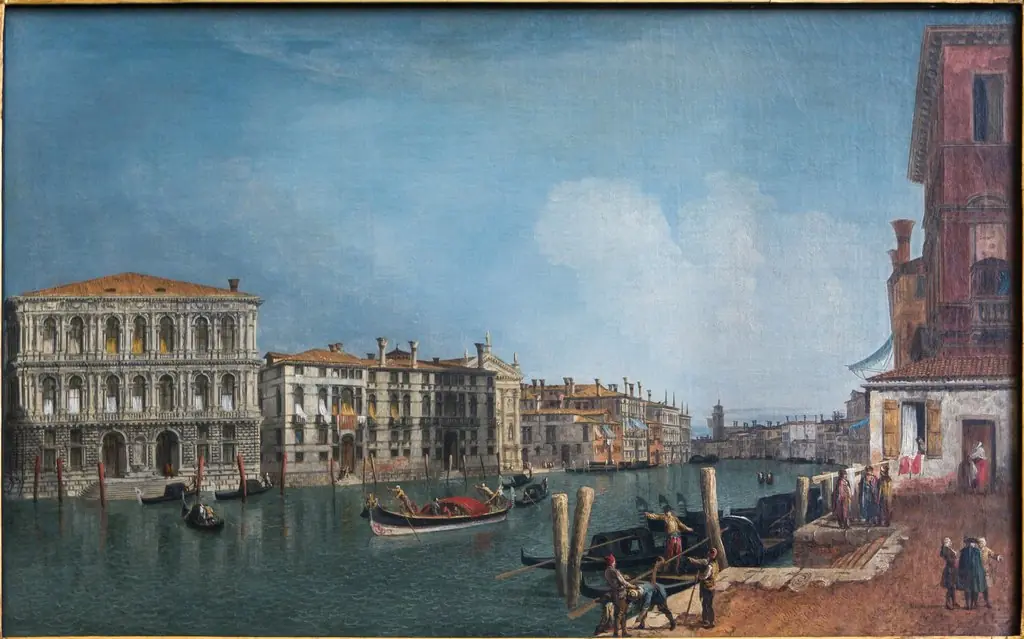 View of the Grand Canal near Cà Pesaro
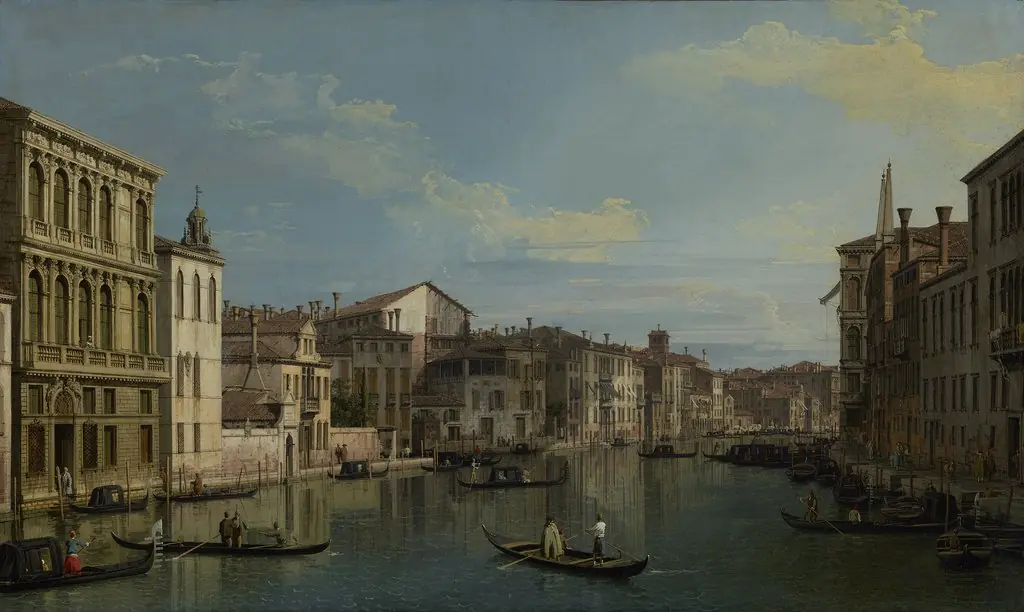 The Grand Canal in Venice from Palazzo Flangini to Campo San Marcuola
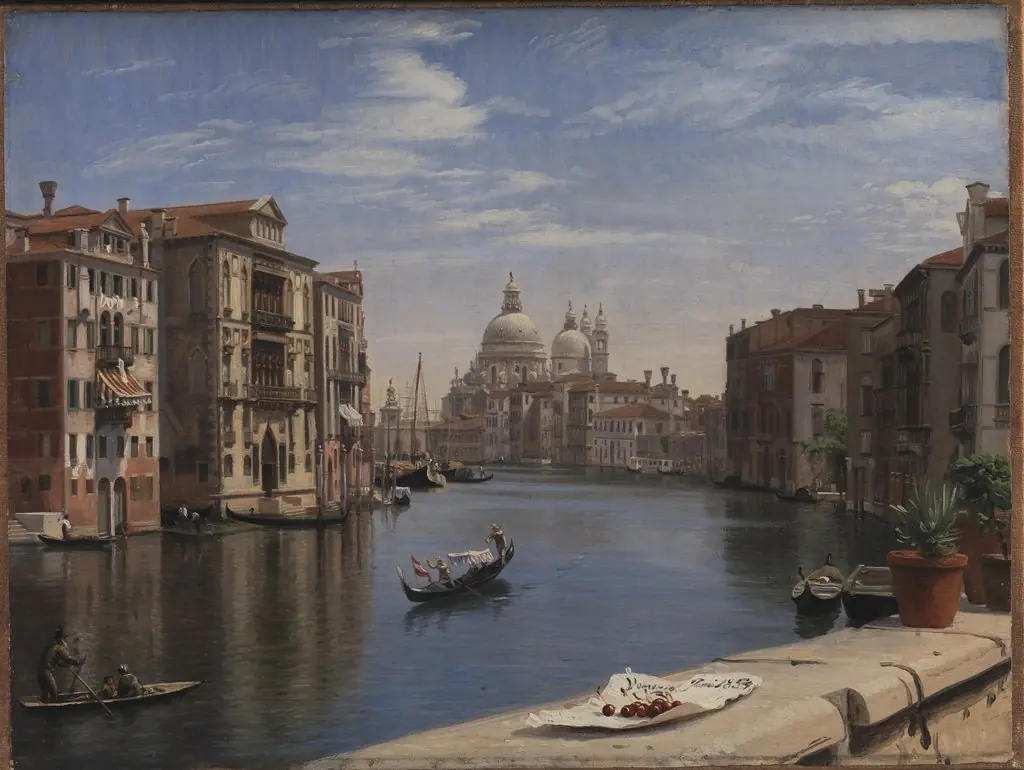 View of the Grand Canal, Venice. In the Background S. Maria della Salute
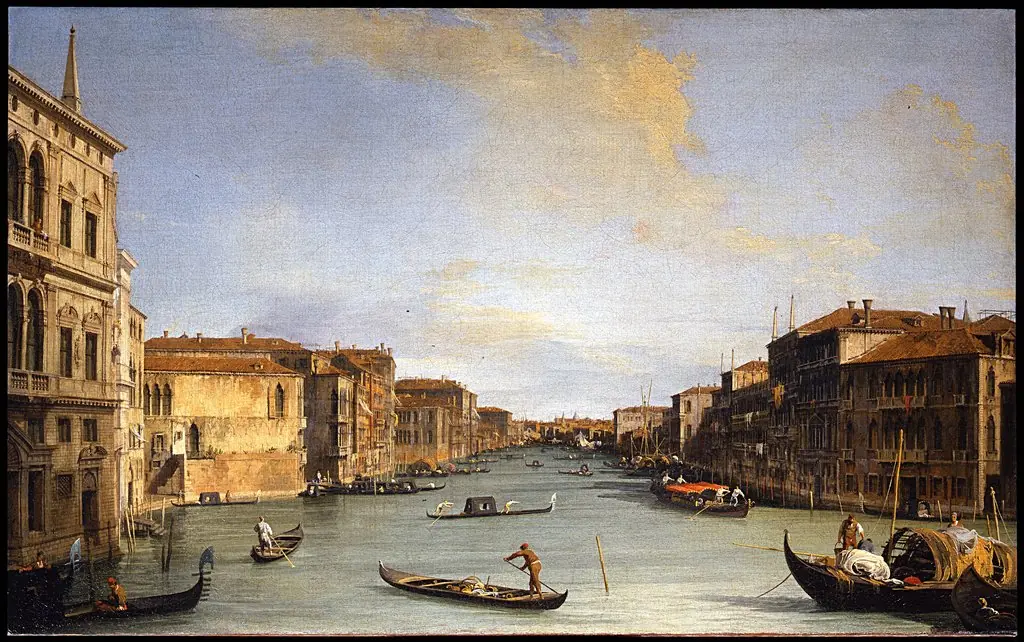 View of the Grand Canal
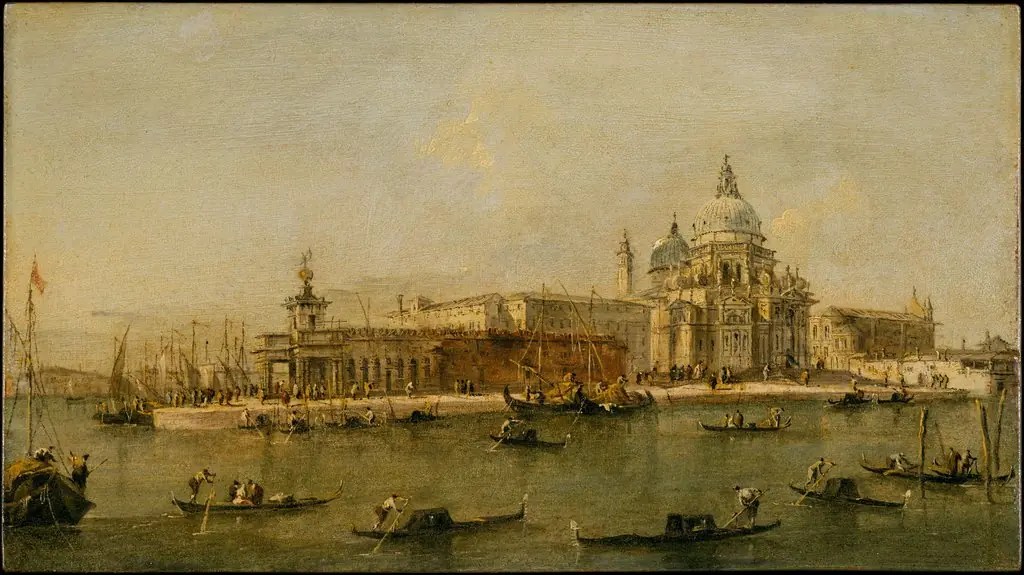 Venice: The Dogana and Santa Maria della Salute
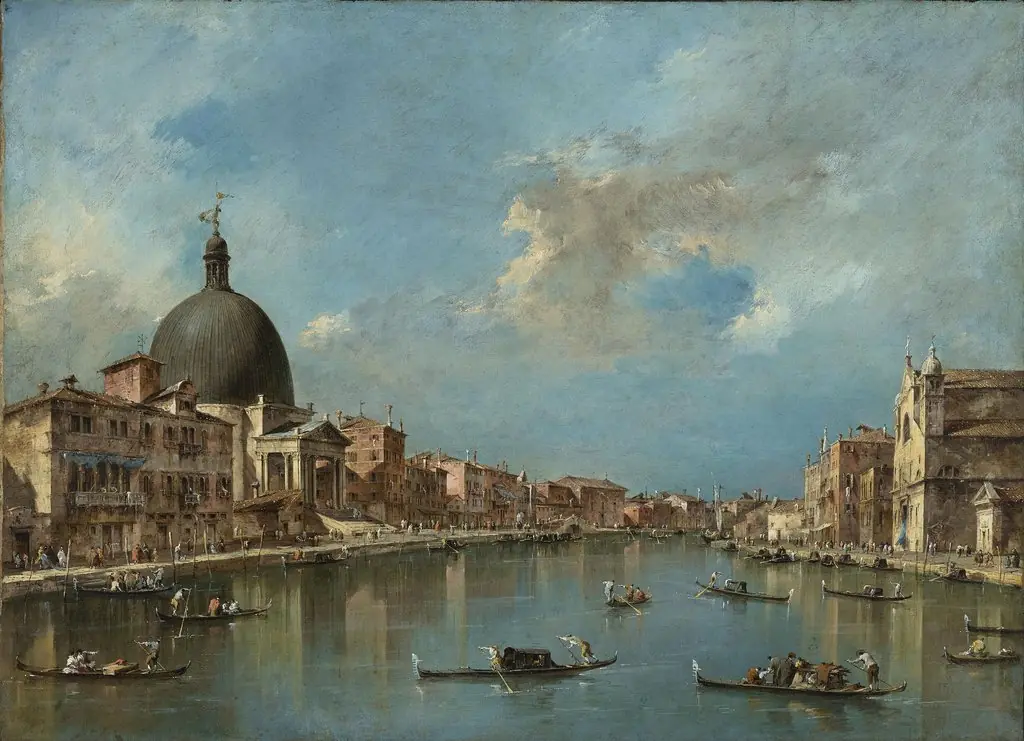 The Grand Canal with San Simeone Piccolo and Santa Lucia
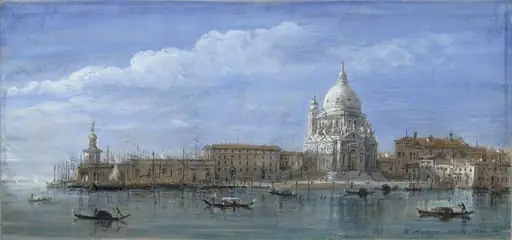 The Grand Canal and the Church of Santa Maria della Salute, Venice