Artwork
Erminia und der verwundete Tancred
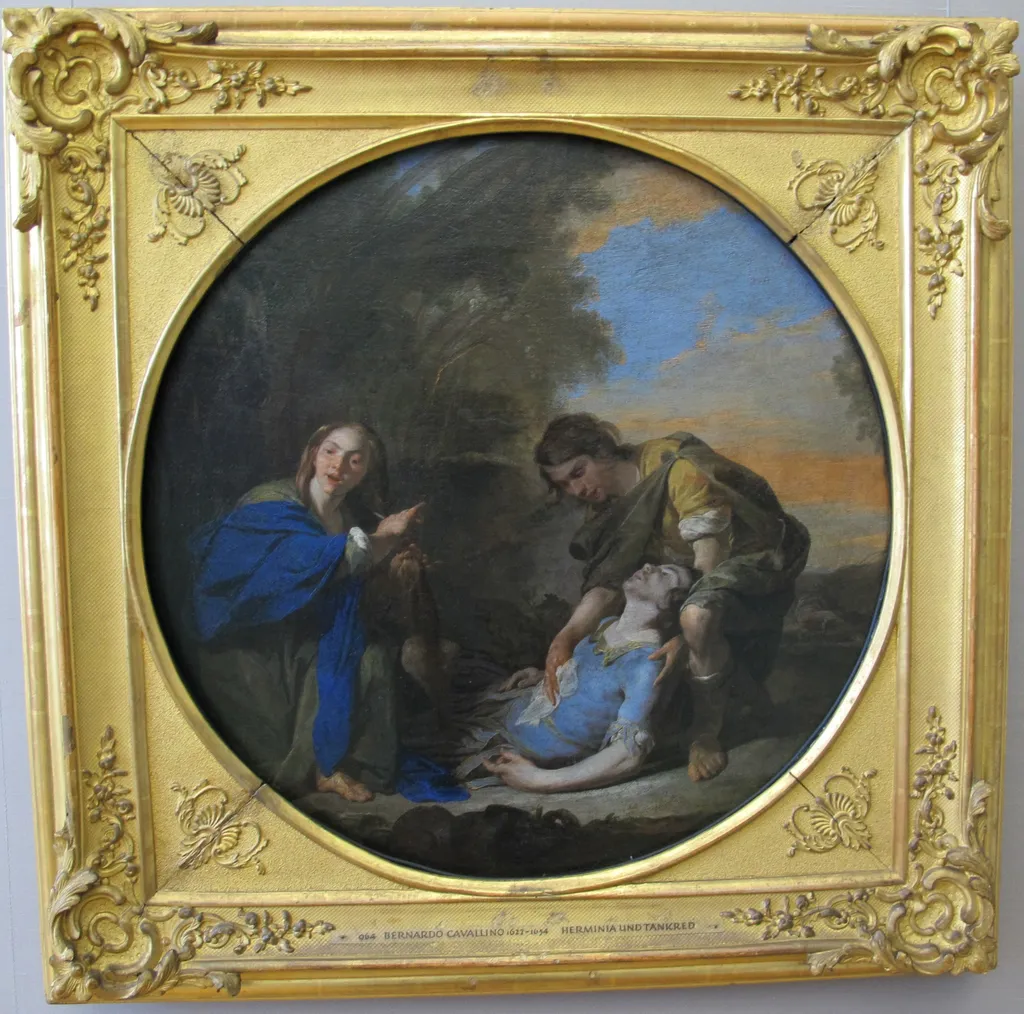
Erminia und der verwundete Tancred is an unspecified painting by the Early Baroque Italian artist Bernardo Cavallino. It dates from 1650 and is held in the collection of the Bavarian State Painting Collections.
About this work
Overview
Bernardo Cavallino’s early‑Baroque canvas, dated circa 1650, portrays a dramatic episode from Torquato Tasso’s epic *Gerusalemme liberata*. The composition centers on a wounded Tancred lying on the ground, attended by the grieving Erminia, while a third figure gestures toward the scene. A small dog and a distant, dusky landscape complete the setting, lending a solemn atmosphere to the work.
Subject & Meaning
The narrative captures the moment when Erminia, a captive of the Crusaders, discovers the injured Tancred on the battlefield and tends to his wounds, embodying themes of compassion and chivalric loyalty. The gesture of the left‑hand figure, pointing toward the fallen warrior, underscores the tension between duty and emotion, while the surrounding nature hints at the transience of conflict.
Technique & Style
Cavallino blends the stark chiaroscuro associated with Caravaggisti with a softer, theatrical palette, employing muted tones that model forms through delicate light. The brushwork is fine and detailed, especially in the rendering of fabrics and the canine’s fur, while the background’s fading trees and sunset are suggested with loose, atmospheric strokes, creating depth without overwhelming the central drama.
History & Provenance
Created in Naples during Cavallino’s mature period, the painting entered the collection of the Alte Pinakothek in Munich in the 19th century, where it remains on display. Its acquisition reflects the museum’s interest in Italian Baroque works and contributes to the broader representation of Neapolitan painting within the institution’s holdings.
Context
Cavallino, a pupil of Massimo Stanzione, operated in a milieu where Caravaggio’s tenebrism met the refined elegance of Flemish portraiture, notably the influence of Anthony van Dyck. This synthesis is evident in the work’s dramatic lighting and the graceful, almost courtly demeanor of the figures, situating the painting within the transitional currents of mid‑17th‑century Italian art.
Artist & collection

Artist
Bernardo Cavallino (25 August 1616 – 1656) was an Italian painter and draughtsman.

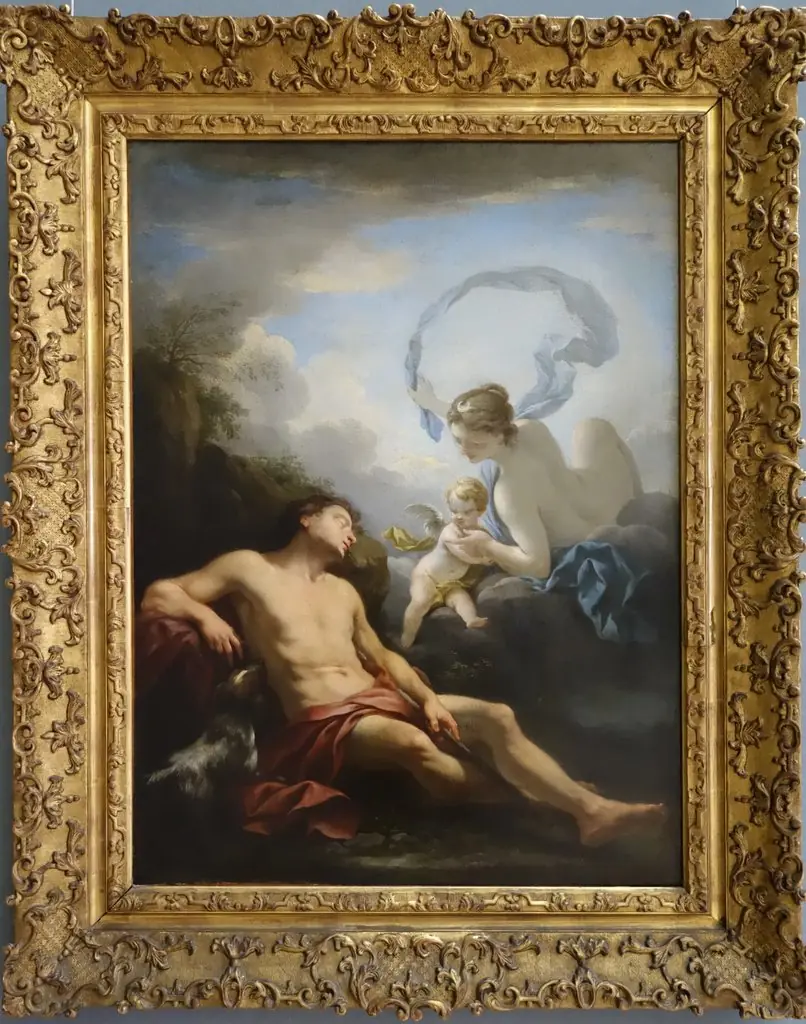 Diana and Endymion
 Tobias cu îngerul
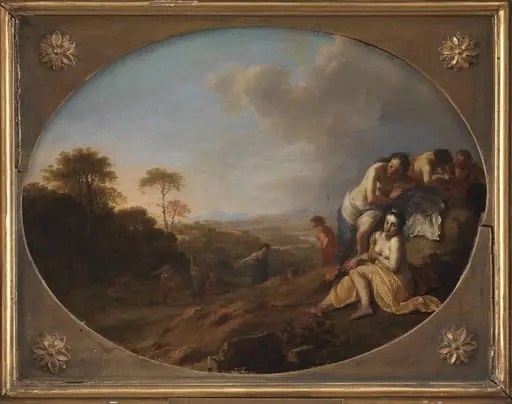 Nymphs in a Landscape
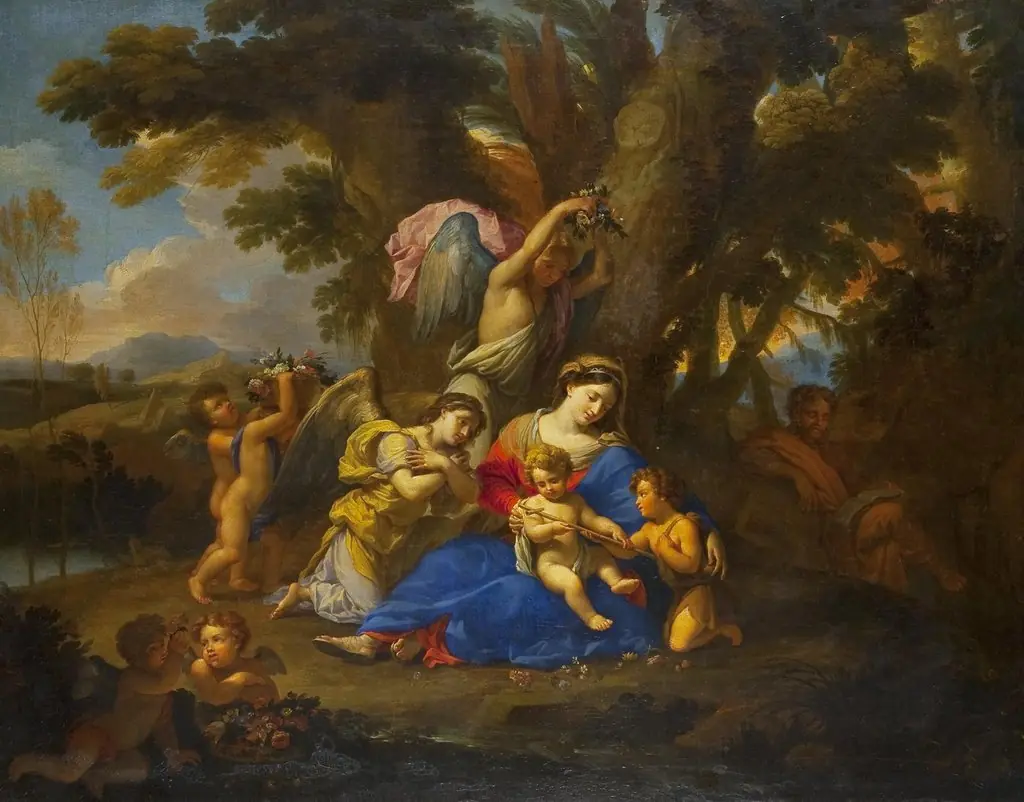 Madonna and Christ Child, with St John the Baptist and Angels
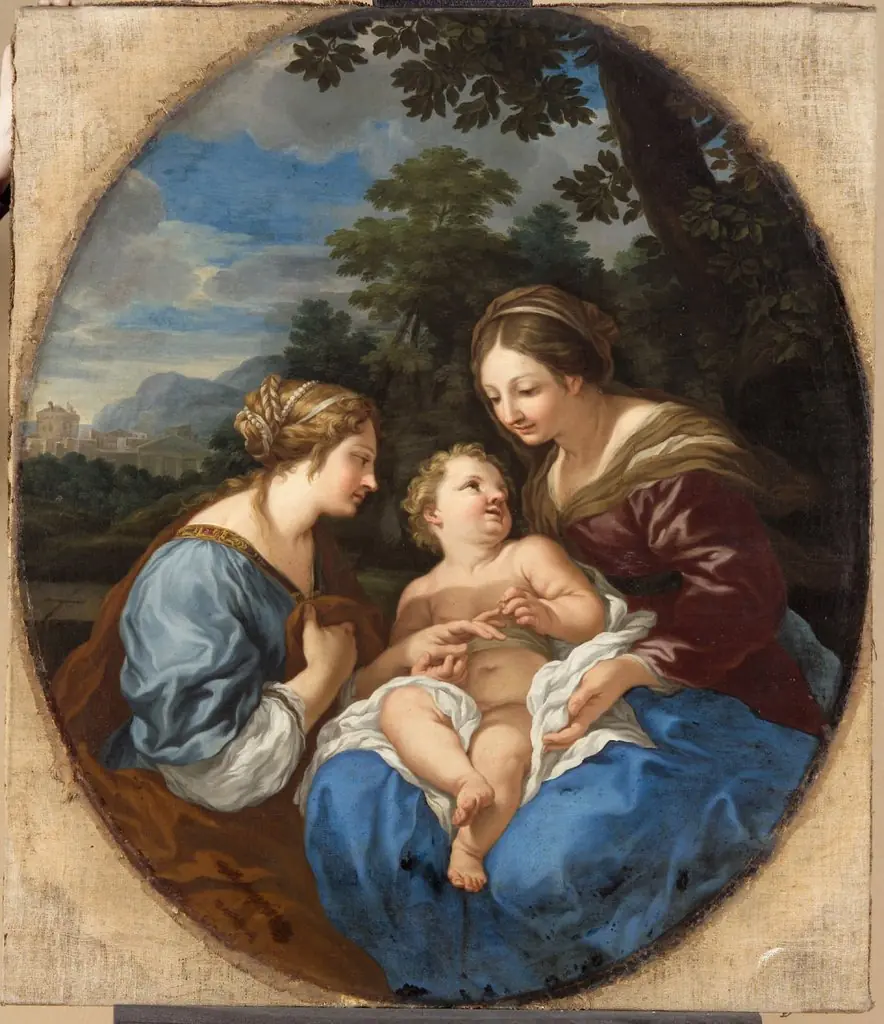 Mystic marriage of Saint Catherine of Alexandria
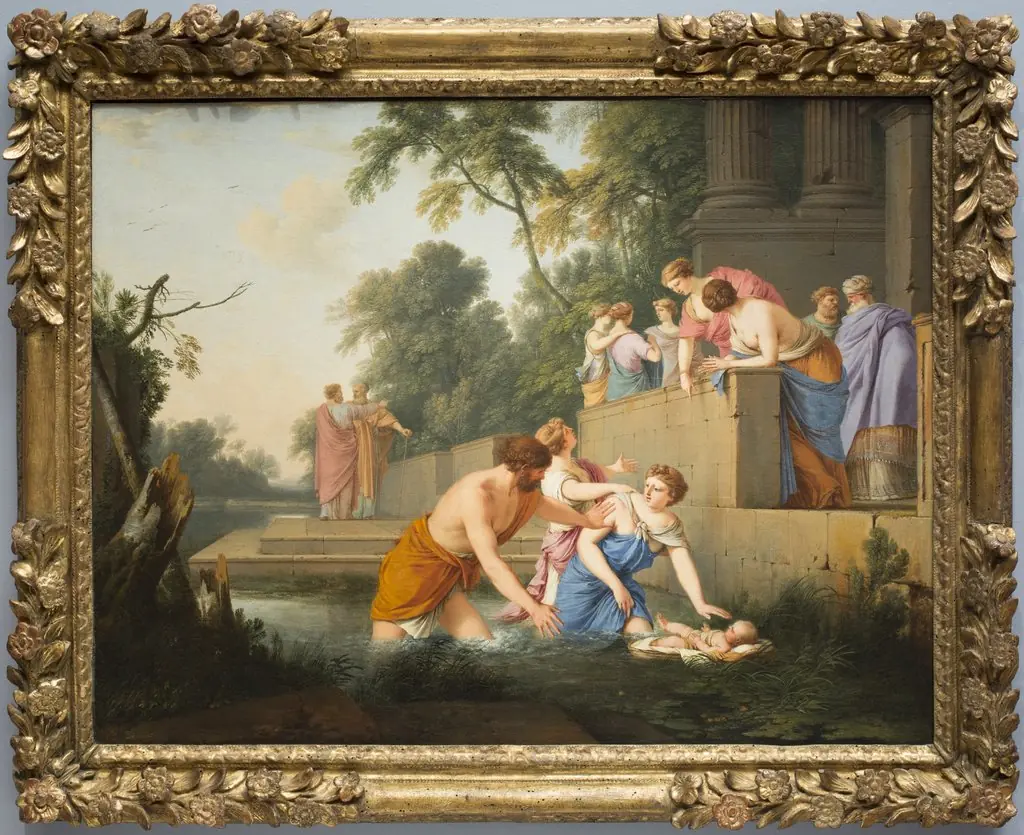 The Finding of Moses
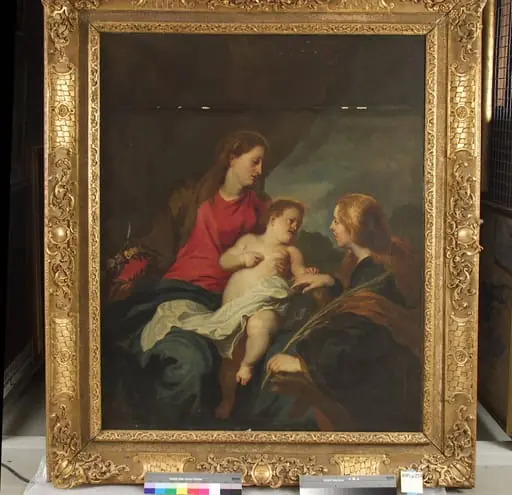 The Mystic Marriage of St Catherine of Alexandria
 Den hellige Familie
 Pharaoh's Daughter Finds Moses
 Cephise cuts the sleeping Cupids' Wings
 The entombment