Artwork
Saint Agatha
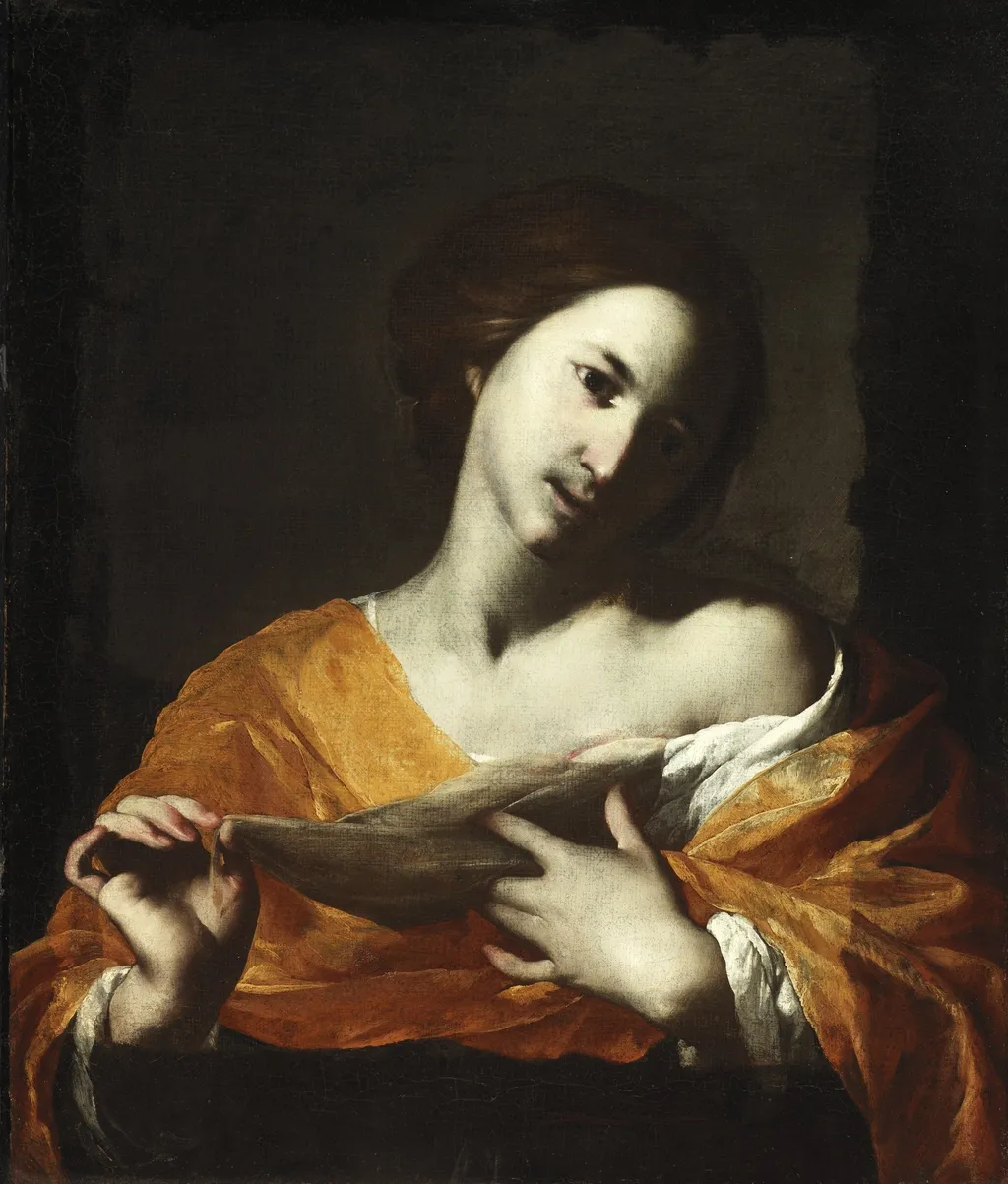
Saint Agatha is an oil painting by the Early Baroque Italian artist Bernardo Cavallino. It dates from 1640 and is held in the collection of the Detroit Institute of Arts.
About this work
Overview
Painted in 1640 by Bernardo Cavallino, this oil on canvas depicts Saint Agatha, a Christian martyr venerated for her faith under persecution.
Painted in 1640 by Bernardo Cavallino, this oil on canvas depicts Saint Agatha, a Christian martyr venerated for her faith under persecution. Executed in Naples during the early Baroque period, the work reflects Cavallino’s synthesis of local Neapolitan traditions and northern European influences, particularly from Anthony van Dyck. It is now held in the collection of the Detroit Institute of Arts.
Subject & Meaning
Saint Agatha is shown moments after her torture, having had her breasts severed as punishment for refusing to renounce her faith. She holds the instrument of her suffering—a knife—while her exposed chest and serene expression convey both physical trauma and spiritual transcendence. Her downward gaze and hand resting on her chest suggest inward devotion, transforming violence into quiet sanctity.
Technique & Style
Cavallino employs chiaroscuro to model the figure with soft, sculptural volume against a deep, unbroken background. The white garment and golden shawl catch subtle light, enhancing tactile realism without overt drama. Facial features are rendered with delicate precision, and the composition avoids theatrical gestures, favoring stillness and psychological depth over spectacle.
History & Provenance
Created during Cavallino’s mature period in Naples, the painting likely originated as a private devotional piece for a religious patron. It entered the Detroit Institute of Arts’ collection in the 20th century, having passed through several European collections before its acquisition. Its provenance reflects the broader circulation of southern Italian Baroque works among collectors.
Context
In mid-17th-century Naples, religious imagery emphasized emotional immediacy and physical suffering as pathways to divine grace. Cavallino’s approach diverged from the harsh tenebrism of Caravaggio, instead favoring a lyrical gentleness influenced by van Dyck’s portraiture. This painting aligns with a regional trend of humanizing saints through intimate, contemplative poses.
Legacy
Though less widely known than his contemporaries, Cavallino’s treatment of Saint Agatha exemplifies a nuanced strand of Baroque piety that prioritized inner resolve over outward spectacle. The work contributes to understanding how Neapolitan artists adapted northern sensibilities to local devotional needs, influencing later generations in southern Italy.
Own this work as a print
Artist & collection

Artist
Bernardo Cavallino (25 August 1616 – 1656) was an Italian painter and draughtsman.