Artwork
The Drawing Lesson (Berthe Morisot Drawing with Her Daughter)
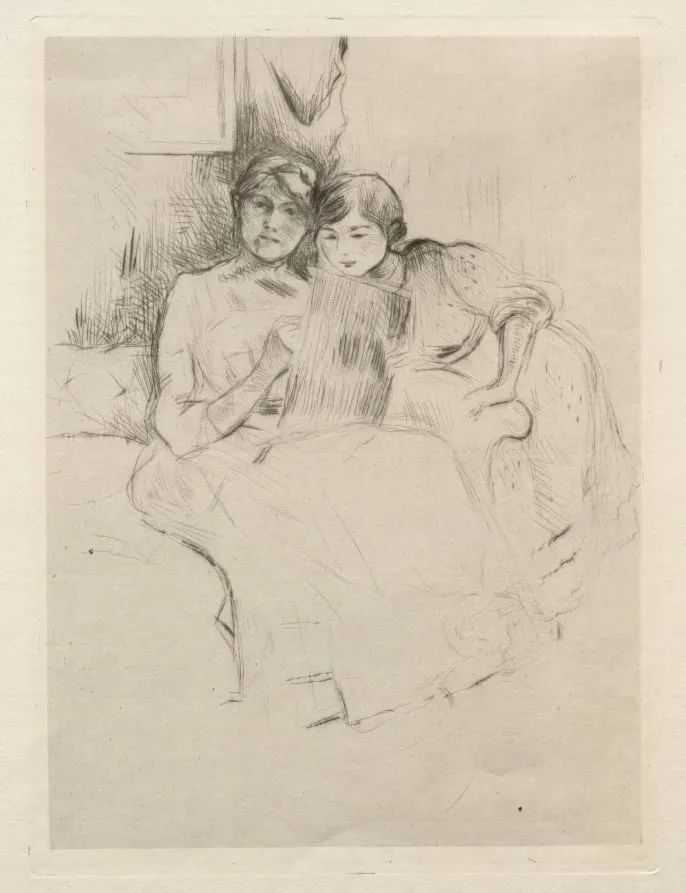
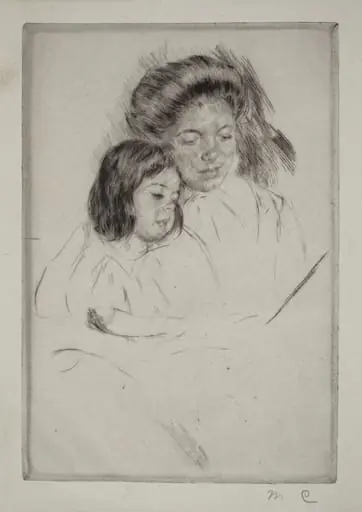
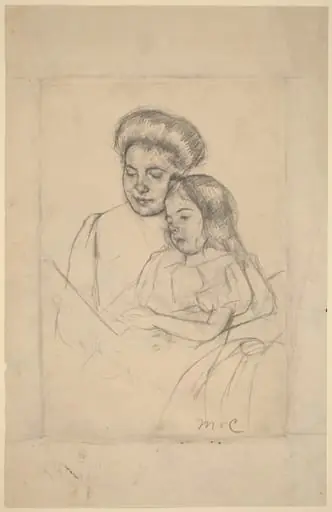
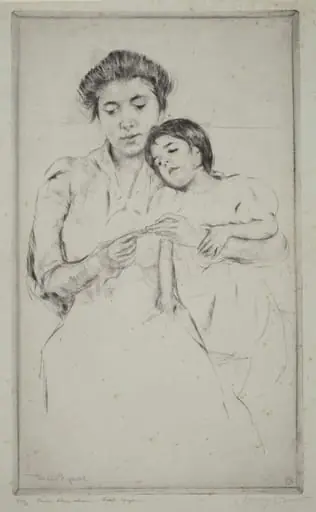
The Drawing Lesson (Berthe Morisot Drawing with Her Daughter) is a print by the Impressionist artist Berthe Morisot. It dates from 1889 and is held in the collection of the Cleveland Museum of Art.
About this work
Overview
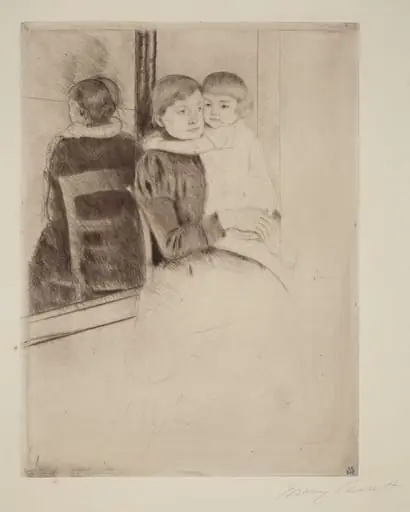
Created between 1887 and 1889, this drypoint by Berthe Morisot captures a quiet domestic moment: the artist sketching while her daughter Julie watches.
Created between 1887 and 1889, this drypoint by Berthe Morisot captures a quiet domestic moment: the artist sketching while her daughter Julie watches. Made using a sharp tool to incise lines into a copper plate, the work reflects Morisot’s brief but significant engagement with printmaking. The composition feels intimate, as if the viewer has stepped into a private studio, invited into the silent rhythm of creation.
Subject & Meaning
Morisot depicts herself at work, her gaze meeting the viewer’s directly, as though drawing them into the scene. Her daughter, Julie, leans in closely, absorbed in the act of observation. The image suggests a transmission of artistic attention—from mother to child, and from artist to spectator—blurring the boundaries between creator, subject, and witness in a quiet, unspoken dialogue.
Technique & Style
Using drypoint, Morisot scratched fine, expressive lines directly into a copper plate, creating soft, velvety textures and subtle tonal gradations. The technique’s immediacy suited her intimate subject, allowing spontaneous, gestural marks that convey the tenderness of the moment. The lack of heavy shading and the focus on contour emphasize the quietude of the scene, aligning with her broader Impressionist sensibility.
History & Provenance
Morisot produced a small body of prints during the late 1880s, influenced by her friendships with Mary Cassatt and Stéphane Mallarmé, both advocates of printmaking as a serious artistic medium. This particular plate was likely printed in a limited run during her lifetime. The work entered the Cleveland Museum of Art’s collection in the 20th century, where it remains a rare example of her graphic work.
Context
In the late 19th century, women artists often faced barriers to formal training and public exhibition. Morisot turned to domestic spaces as both subject and studio, using printmaking as a private yet legitimate avenue for artistic expression. This work reflects broader shifts in artistic practice, where personal, everyday moments gained value as subjects worthy of serious attention.
Legacy
Morisot’s drypoint stands as a quiet testament to the role of women in shaping modern art beyond the canvas. Its focus on maternal creativity and the act of looking challenges traditional hierarchies of artistic authority. Though few of her prints survive, this work continues to inform discussions on intimacy, gender, and the domestic as artistic terrain.
Artist & collection

Artist
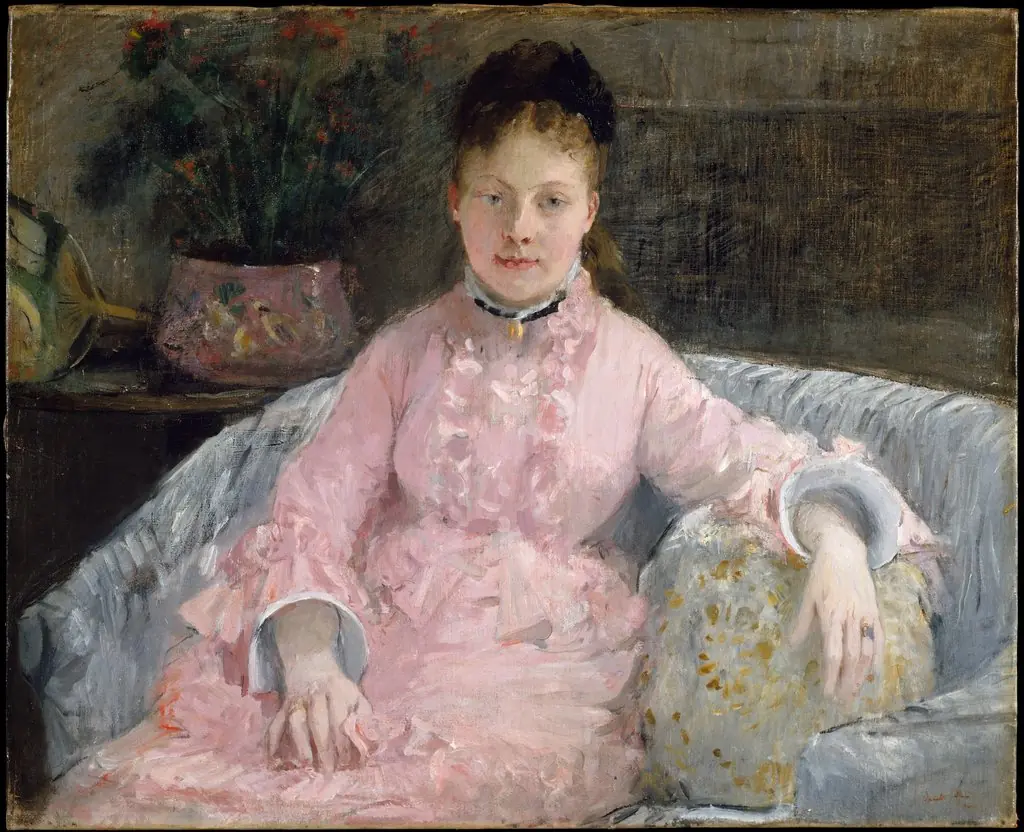
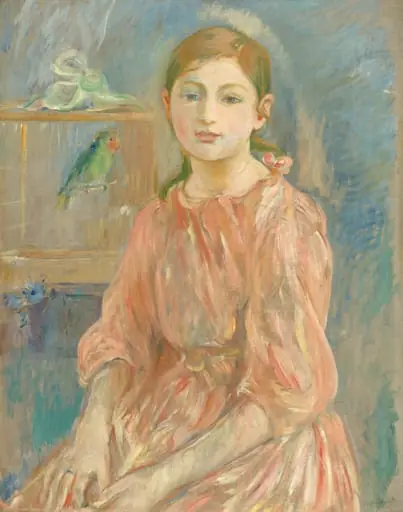
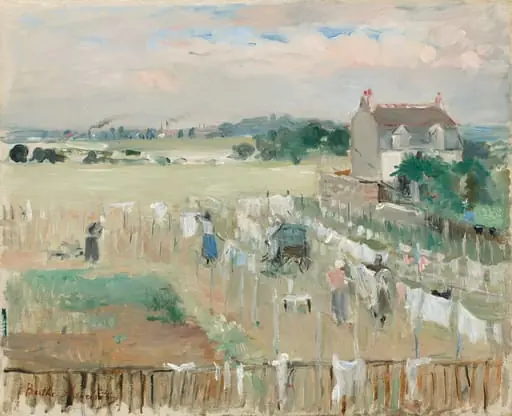
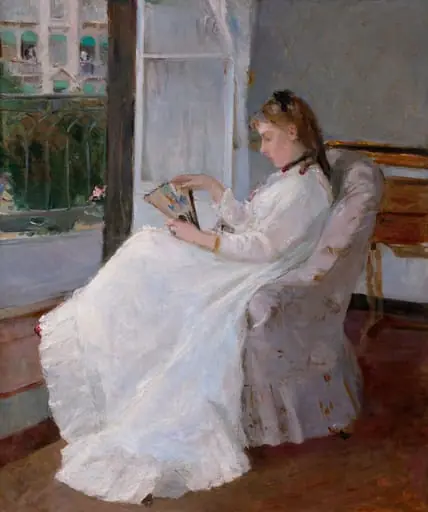
Berthe Marie Pauline Morisot (French: ; 14 January 1841 – 2 March 1895) was a French painter, printmaker and a member of the circle of painters in Paris who became known as the Impressionists.