Artwork
Elsie Reading to Emma, Second Stone
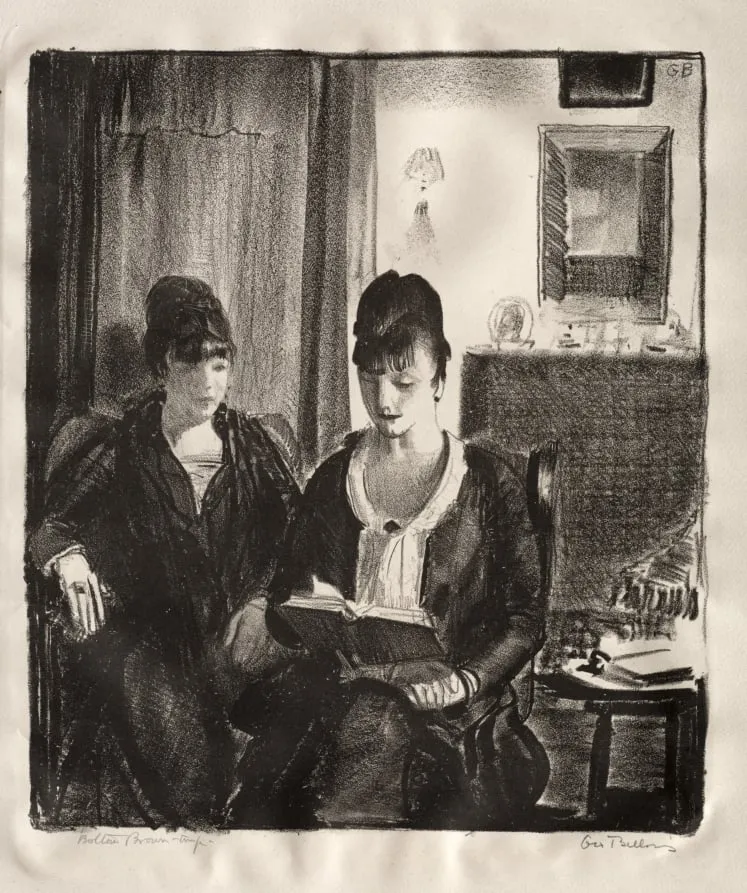
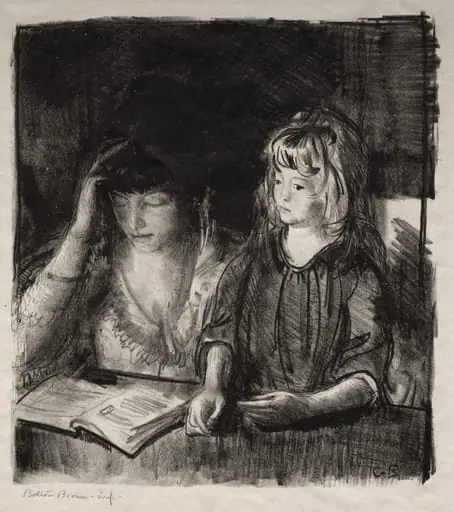
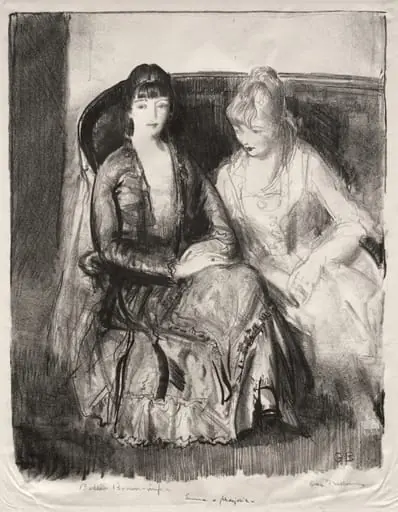
Elsie Reading to Emma, Second Stone is a print by George Bellows. It dates from 1921 and is held in the collection of the Cleveland Museum of Art.
About this work
Overview
It reflects Bellows’ sustained interest in ordinary life, rendered with emotional restraint rather than dramatic energy.
Created in 1921, *Elsie Reading to Emma, Second Stone* is a print by George Bellows, made near the end of his career. Unlike his earlier urban scenes, this work turns inward, capturing a private moment between two women. It reflects Bellows’ sustained interest in ordinary life, rendered with emotional restraint rather than dramatic energy. The piece belongs to a series of intimate domestic studies he produced in his final years.
Subject & Meaning
The scene depicts an older woman reading aloud to a young girl in a modest interior. The act of reading suggests transmission of knowledge or comfort, framed by stillness rather than narrative drama. The child’s leaning posture conveys attention, while the reader’s face remains in shadow, emphasizing anonymity and quiet devotion. The intimacy of the moment resists grand symbolism, focusing instead on the quiet rhythm of daily care.
Technique & Style
Bellows employed tonal contrast to guide focus: a warm lamp illuminates the book and the child’s face, while the reader recedes into shadow. Lines are economical, forms simplified, and texture suggested rather than detailed. The print medium allowed for strong black-and-white contrasts, enhancing the mood of quiet solitude. His style here is subdued compared to his earlier, more vigorous brushwork, favoring clarity and emotional nuance.
History & Provenance
The work was produced in 1921 as part of Bellows’ late-period exploration of domestic themes. It was printed in limited editions, likely for private collectors and institutions. The Cleveland Museum of Art holds one of the known impressions, acquired during the mid-20th century. Its provenance reflects Bellows’ growing recognition in American print circles, though it never achieved the public prominence of his paintings.
Context
In the early 1920s, Bellows shifted from bustling cityscapes to quieter, interior subjects, influenced by personal changes and a broader cultural turn toward introspection after World War I. This piece aligns with a trend among American artists to explore domesticity and familial bonds, moving away from the social realism of his youth. The work reflects a personal, rather than political, engagement with everyday life.
Legacy
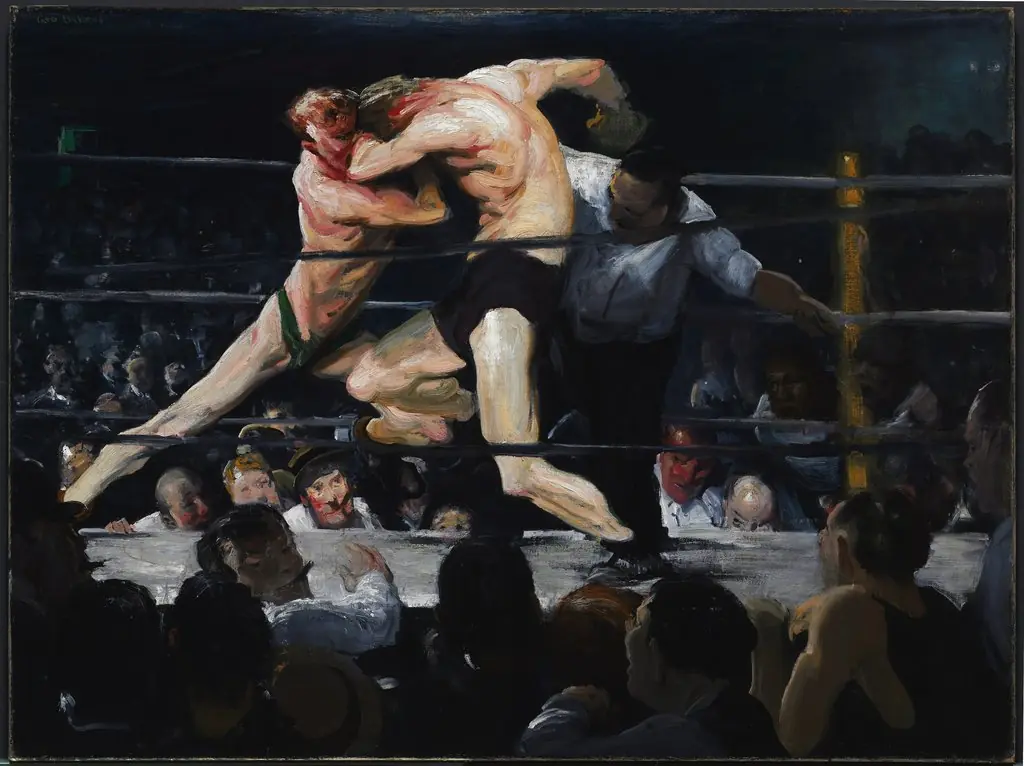
Though less discussed than Bellows’ boxing scenes or urban riots, *Elsie Reading to Emma* remains a significant example of his late aesthetic. It demonstrates his ability to convey emotional depth through minimal means. The print contributes to understanding his evolution as an artist who, even in quiet moments, sustained a commitment to truthful, unembellished observation of human presence.
Artist & collection
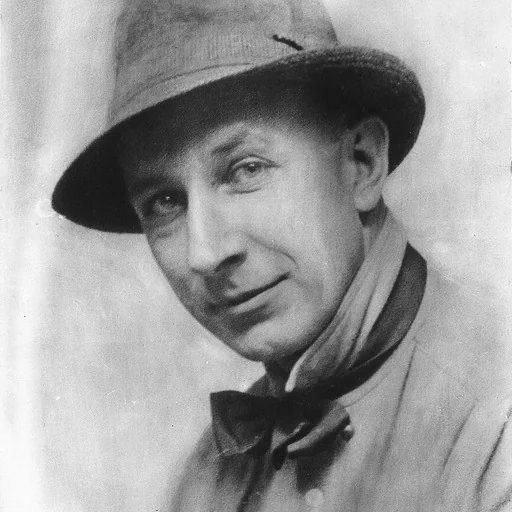
Artist
George Wesley Bellows (August 12 or August 19, 1882 – January 8, 1925) was an American realist painter, known for his bold depictions of urban life in New York City.