Artwork
La Sulina
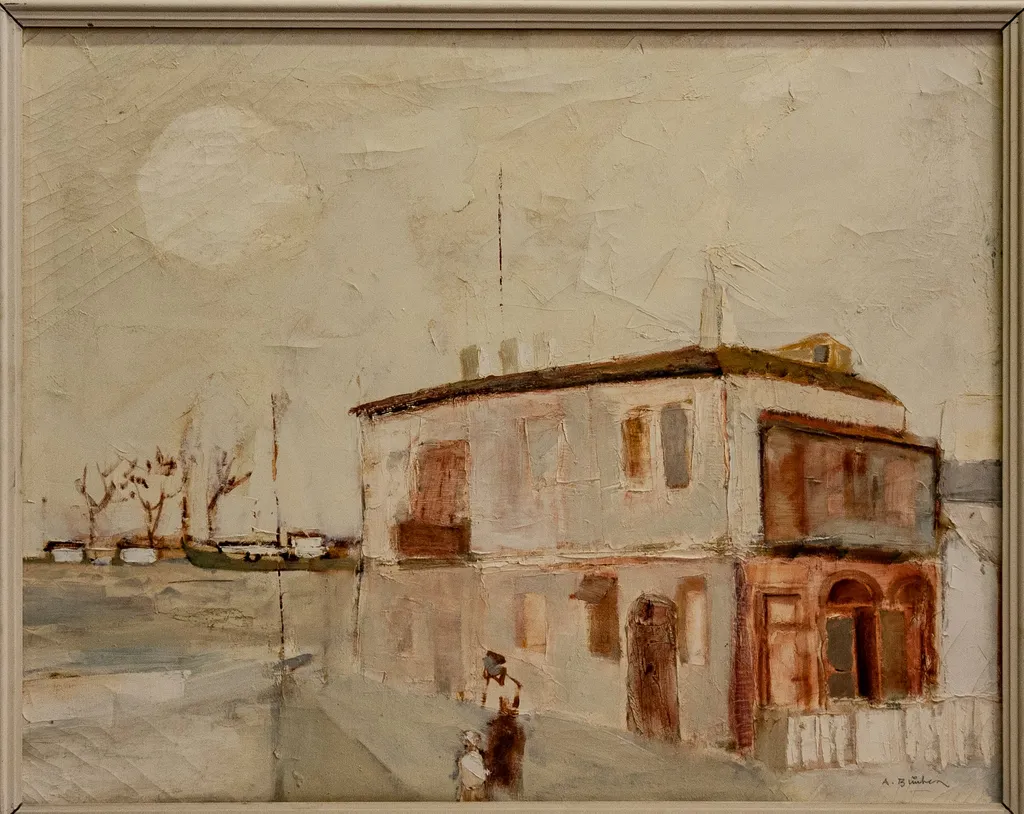
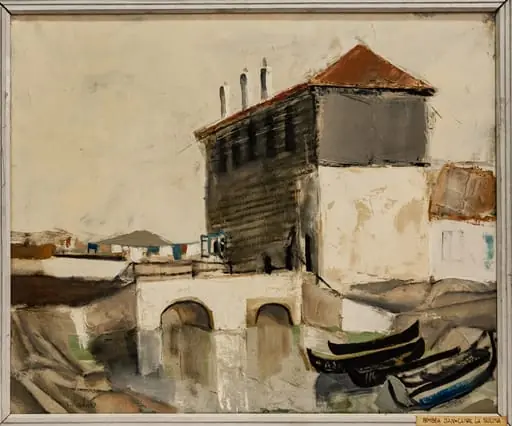
La Sulina is an unspecified painting by Dan Bimbea. It is held in the collection of the Gavrila Simion Eco-Museum Research Institute Tulcea.
About this work
Overview
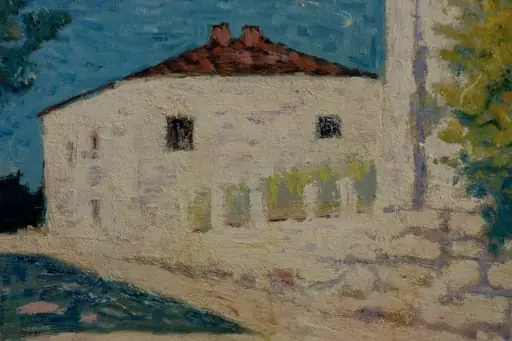
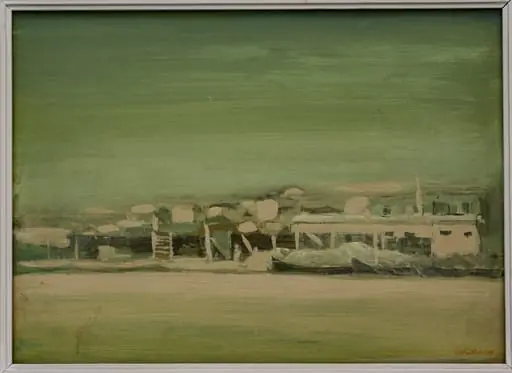
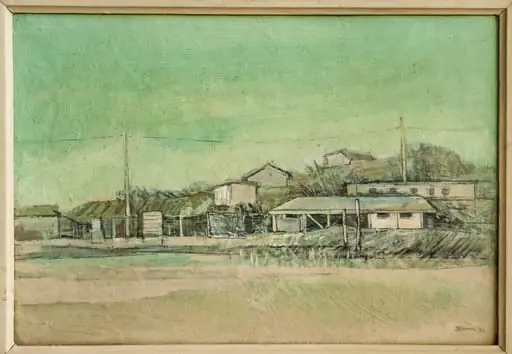
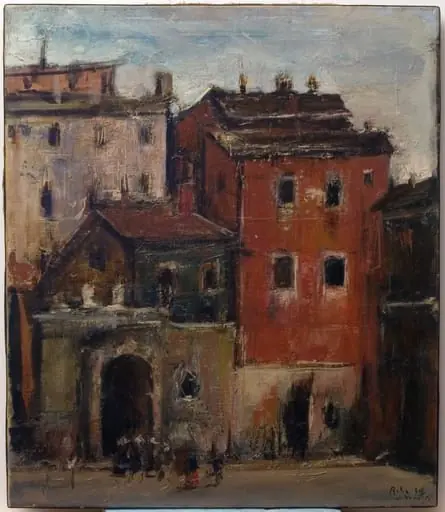
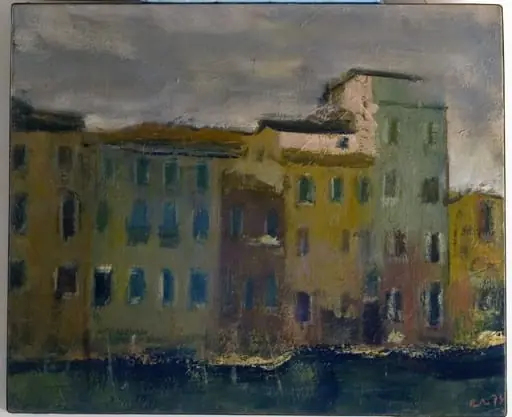
La Sulina is a landscape painting that captures a quiet moment by water, centered on a modest dwelling.
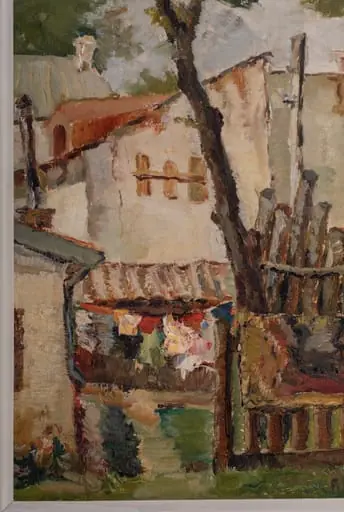
La Sulina is a landscape painting that captures a quiet moment by water, centered on a modest dwelling. The composition emphasizes stillness through balanced elements: the house, figures, and natural surroundings are arranged to guide the eye gently across the scene. The palette favors soft, earthy tones, reinforcing a mood of quietude. Brushwork remains loose yet deliberate, suggesting immediacy without sacrificing harmony.
Subject & Meaning
The painting portrays a solitary house near water, with a few individuals standing nearby, their presence subtle and unobtrusive. No narrative is overt; instead, the scene invites contemplation of everyday solitude. The figures do not interact, nor do they dominate the space, allowing the environment to feel inhabited yet undisturbed. The work suggests a quiet dignity in ordinary life, away from urban bustle.
Technique & Style
The artist employs loose, fluid brushstrokes that convey movement without chaos. Colors are muted—warm grays, soft ochres, and pale blues—creating cohesion between structure and landscape. There is no sharp definition; edges blend naturally, as if seen through atmospheric haze. This approach avoids detail in favor of emotional resonance, aligning with impressionistic tendencies while retaining a personal, restrained voice.
History & Provenance
The painting’s origins are tied to the Romanian artist Dan Bimbea, who worked primarily in the mid-20th century. Though little documentation exists, its title, La Sulina, references a port town on the Danube Delta, suggesting a direct connection to the region’s quiet waterways. The work likely emerged from personal sketches or local observations, reflecting a regional aesthetic rather than a formal movement.
Context
Created during a period when Romanian art was navigating between realism and modernist experimentation, La Sulina stands apart by its quiet focus on place over ideology. It aligns with regional painters who sought to capture rural and riverside life without grandeur or political framing. The work reflects a broader interest in intimate landscapes, common among artists seeking authenticity beyond state-sanctioned themes.
Legacy
Though not widely exhibited outside Romania, La Sulina contributes to a quieter strand of 20th-century Romanian painting that values atmosphere over spectacle. It remains a reference point for those studying regional identity in art, particularly in how everyday scenes can convey emotional depth without narrative drama. Its influence is seen in later artists who prioritize mood and place over formal innovation.
Artist & collection
Artist
Dan Bimbea painted scenes of the Danube delta in the early 20th century. His oils like Canal la Sulina and La Sulina capture the river’s wide, still waters and fishing life in soft, muted tones, while prints such as…
Museum
Gavrila Simion Eco-Museum Research Institute Tulcea
Continue through works from the same source collection.