Artwork
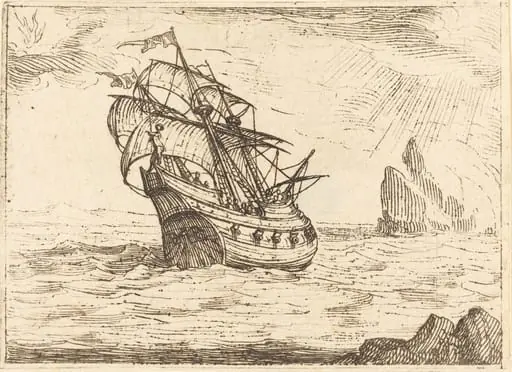
Two Three-Master Ships off a Coastline
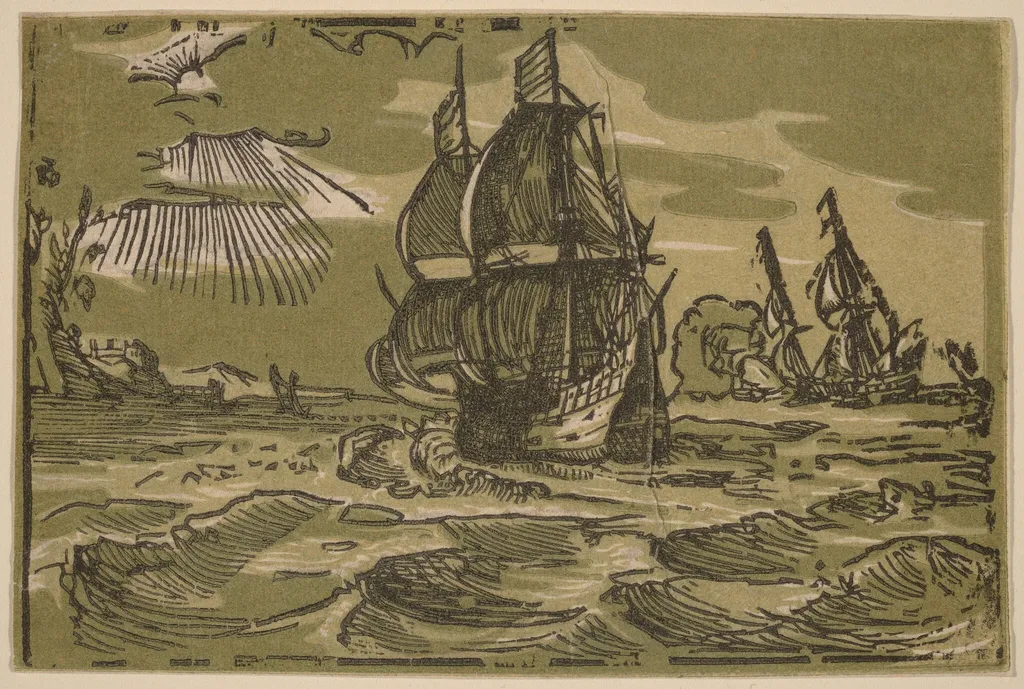
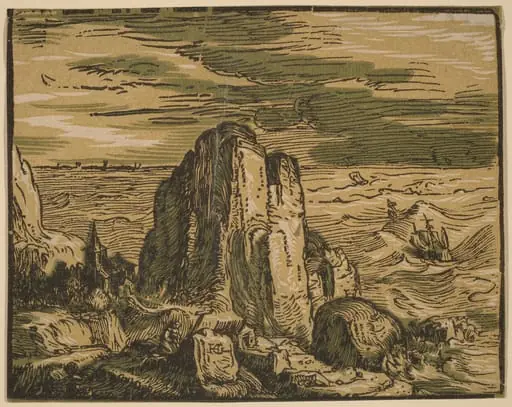
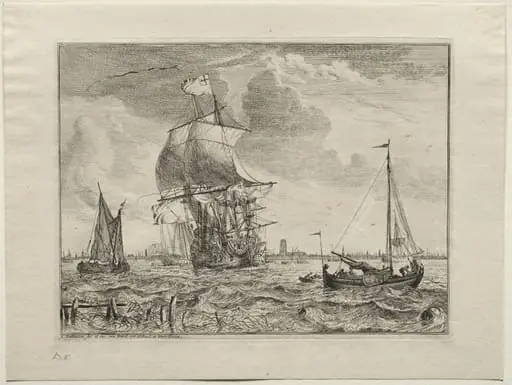
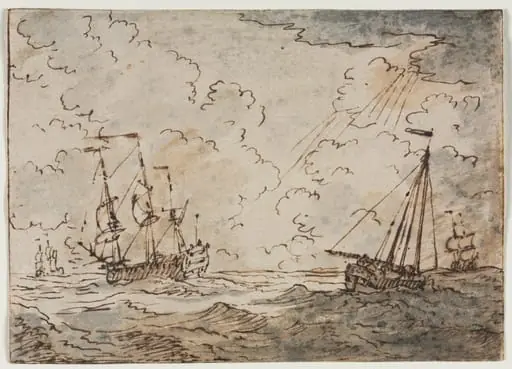
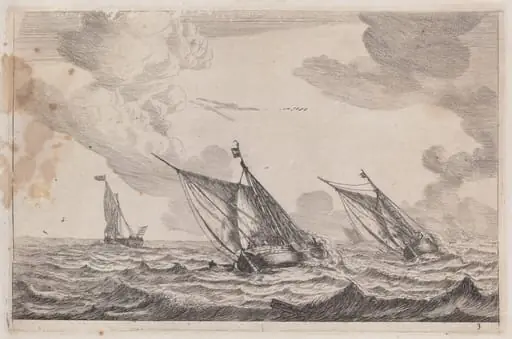
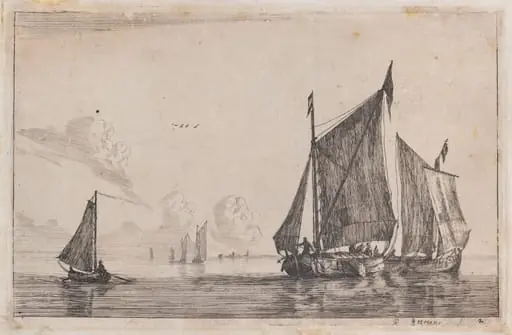
Two Three-Master Ships off a Coastline is an ink print by the Baroque artist Willem Jansz. Blaeu. It dates from 1600 and is held in the collection of the National Gallery of Art. Created around 1600 by Willem Jansz.
About this work
Overview
Rendered in only two ink tones—olive and black—it relies on contrast and line to suggest form and atmosphere.
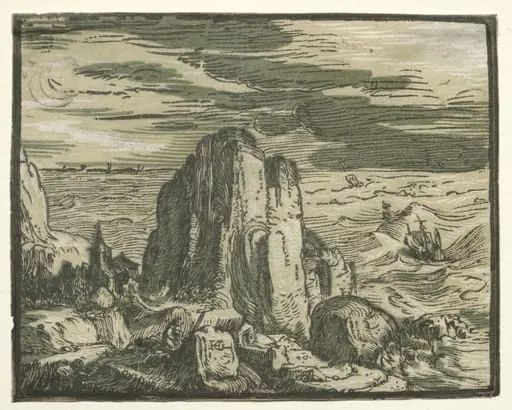
Created around 1600 by Willem Jansz. Blaeu, this chiaroscuro woodcut depicts two large three-masted ships near a rugged shoreline. Rendered in only two ink tones—olive and black—it relies on contrast and line to suggest form and atmosphere. The technique, uncommon in pure landscape or maritime scenes at the time, demonstrates an early experiment in tonal depth using carved woodblocks rather than color.
Subject & Meaning
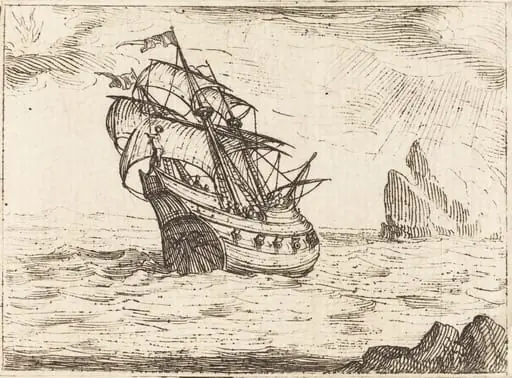
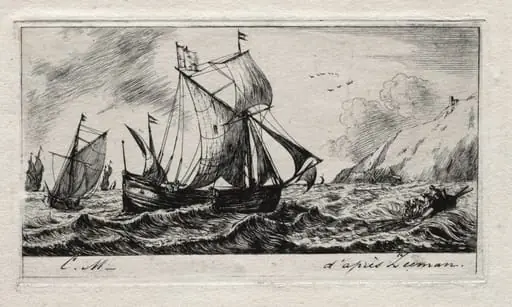
The two ships, fully rigged and under sail, appear to navigate turbulent waters near a rocky coast. Their presence suggests maritime activity—possibly trade or exploration—while the stormy sky and crashing waves imply danger or resilience. No human figures are visible, shifting focus to the vessels’ vulnerability against nature’s force, a quiet commentary on seafaring life in the early 17th century.
Technique & Style
The print employs chiaroscuro woodcut, a method using multiple carved blocks to layer tones of olive and black. Shading is achieved through cross-hatching and varying line density, creating volume without color. The texture of waves and rock is rendered with sharp, angular strokes, while the sky’s depth emerges from sparse, irregular marks. This approach prioritizes atmospheric effect over detail, aligning with Northern European print traditions of the period.
History & Provenance
Produced during Blaeu’s early career in Amsterdam, this print likely served as a study or standalone image rather than part of a larger atlas. Few examples survive, and its origin is tied to Blaeu’s workshop, which later became renowned for cartographic publications. Its existence reflects the period’s interest in translating navigational knowledge into visual form, bridging science and art.
Context
In early 17th-century the Netherlands, maritime themes were central to cultural identity. While most prints of the era focused on maps or port scenes, this work isolates ships within a natural environment, emphasizing mood over geography. It aligns with broader trends in Northern European printmaking that explored light, weather, and the sublime in everyday subjects, anticipating later landscape traditions.
Legacy
Though not widely reproduced, this woodcut exemplifies Blaeu’s technical curiosity beyond cartography. It stands as a rare instance where a mapmaker applied printmaking techniques to evoke emotion in a natural scene. Its restrained palette and emphasis on tone influenced later Dutch printmakers interested in atmospheric effects, contributing to the evolution of monochromatic marine imagery.
Artist & collection