Artwork
Marine
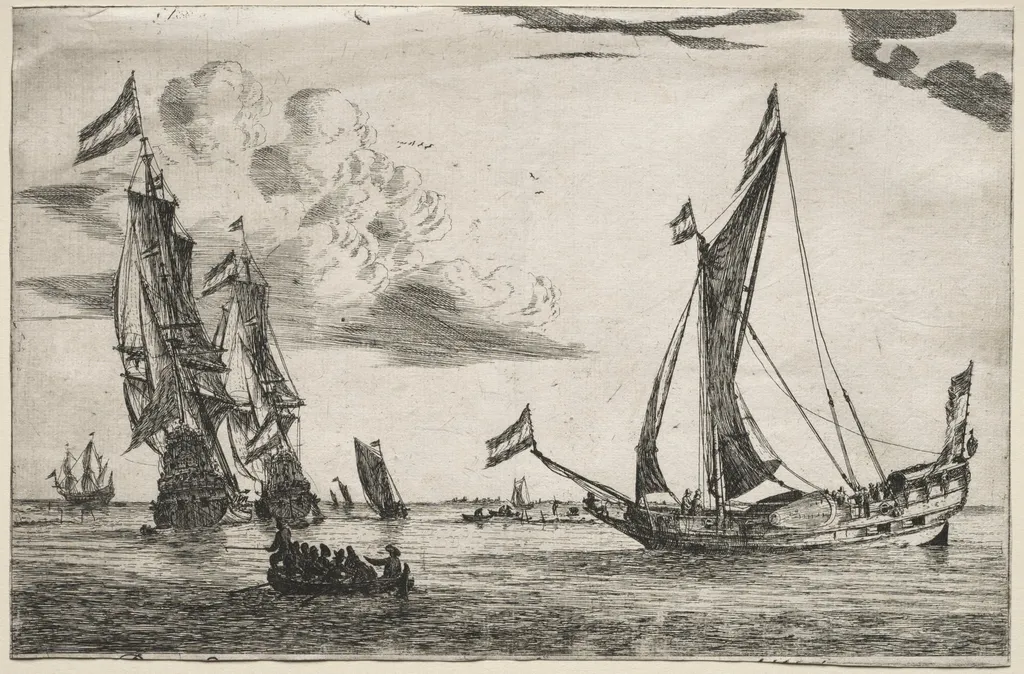
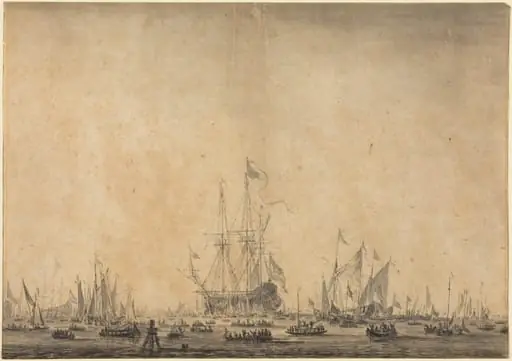
Marine is a print by Abraham Zeeman. It dates from 1732 and is held in the collection of the Cleveland Museum of Art.
About this work
Overview
A smaller boat in the foreground suggests human activity, grounding the scene in everyday seafaring life.
Marine, dated around 1732, is a print by Dutch artist Abraham Zeeman depicting a quiet maritime scene. It is part of the collection at The Cleveland Museum of Art. The composition centers on a large vessel under full sail, set against a calm sea and overcast sky. A smaller boat in the foreground suggests human activity, grounding the scene in everyday seafaring life. The work balances stillness with subtle motion, evoking the rhythm of oceanic travel.
Subject & Meaning
The painting presents a moment of pause in maritime labor, focusing on the ship’s passage rather than action or peril. The presence of the smaller vessel implies coastal trade or fishing, hinting at the economic undercurrents of 18th-century Dutch seafaring. Without dramatic conflict or narrative, the work emphasizes the quiet dignity of sea travel, reflecting a cultural appreciation for the sea as both livelihood and natural force.
Technique & Style
Zeeman employs loose, fluid brushwork to suggest wind and water, avoiding rigid detail in favor of atmospheric effect. A restrained palette of blues and grays unifies the scene, while subtle shifts in tone create depth through chiaroscuro. Light breaks through the clouds with soft intensity, modeling the ship’s sails and hull without harsh contrast. The technique conveys movement through suggestion rather than precision, aligning with Dutch marine traditions of the period.
History & Provenance
Created in the early 1730s, the work entered The Cleveland Museum of Art’s collection through documented acquisition, though earlier ownership records are not publicly detailed. As a print, it may have been one of multiple impressions produced from an original painting or etching plate. Its survival in good condition suggests careful preservation, likely within private Dutch or Northern European collections before its 20th-century institutional acquisition.
Context
Zeeman worked during a period when Dutch marine art remained influential despite shifting artistic trends. While grand naval battles had dominated earlier generations, artists like him turned to quieter, observational scenes reflecting daily maritime life. This shift mirrored broader societal interests in commerce, navigation, and the natural world, aligning with Enlightenment-era values of observation and restraint over spectacle.
Legacy
Marine stands as an example of the quiet, observational strand of Dutch marine painting that persisted into the 18th century. Though Zeeman is not widely known today, works like this contribute to understanding the evolution of seascapes beyond dramatic narratives. Its presence in a major American museum underscores its role as a representative artifact of Northern European print culture and maritime visual tradition.
Artist & collection

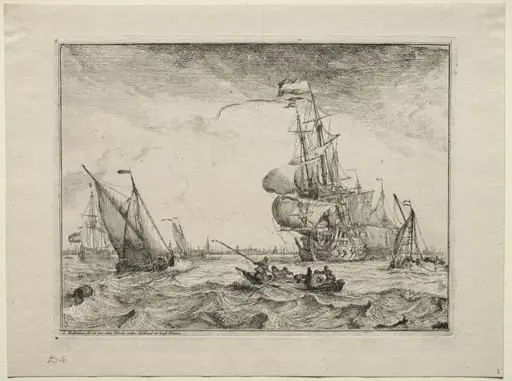 Ships Under Full Sail
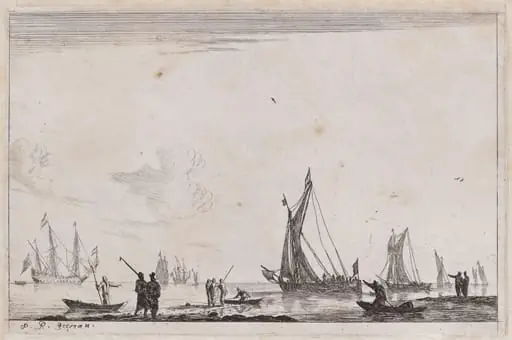 Inland Waterway with Two Galliots at the Right
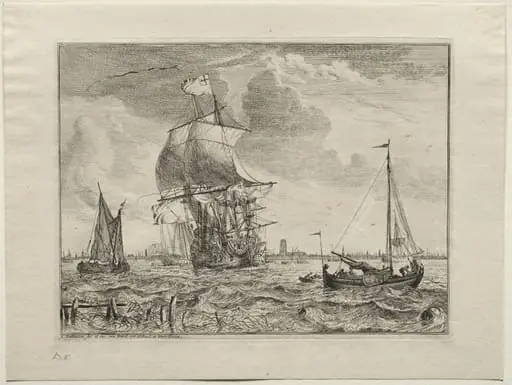 Marine Scene with Amsterdam in the Distance
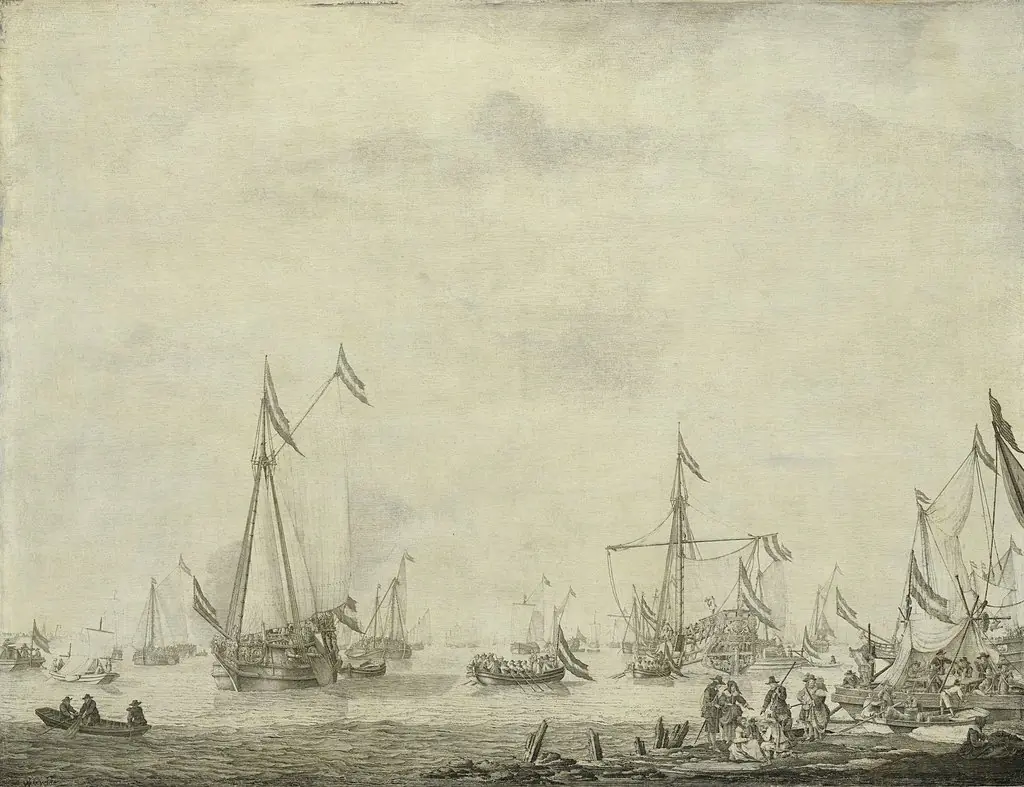 The prince's yacht and the sate yacht leaving Moerdijk with Charles II of England on board, 1660
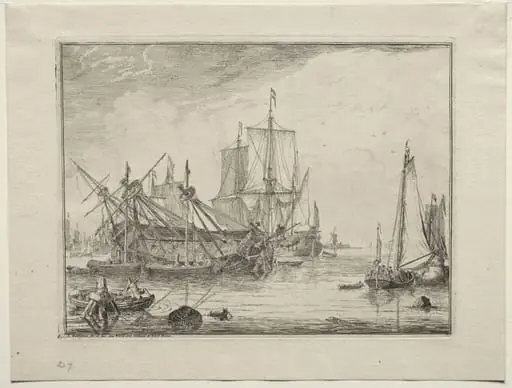 Ships Under Repair
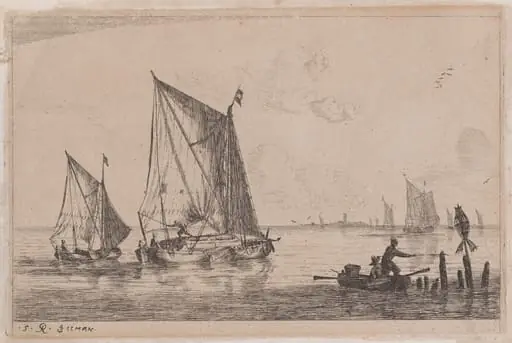 A "Duinopschuit," a Smaller Sailing Boat, and a Rowboat
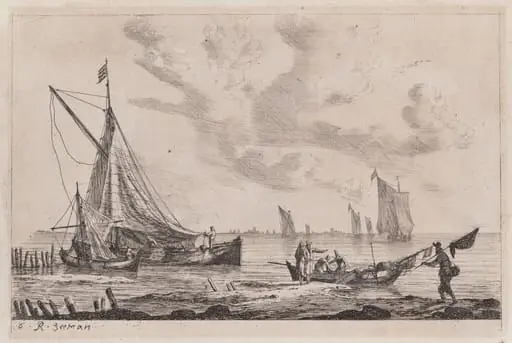 Shore of Inland Waterway with a Ketch, Two Smaller Boats, and Fisherman
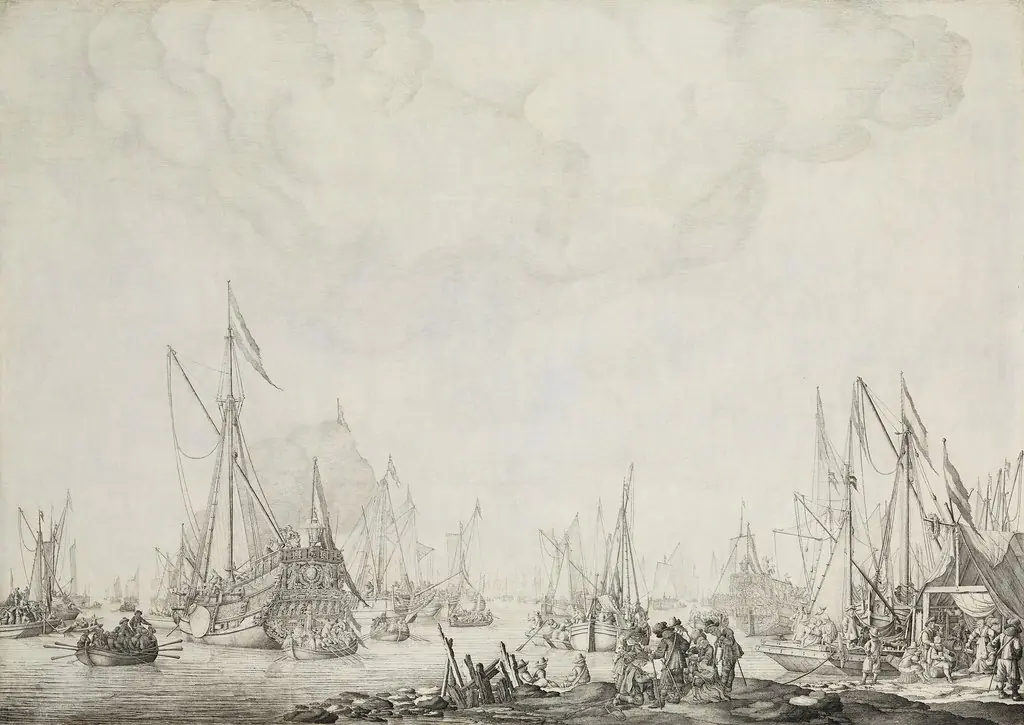 The prince's yacht and the state yacht, presumably awaiting the arrival of Charles II of England near Moersdijk, 1660
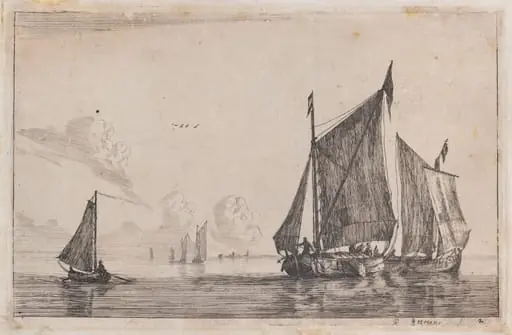 Three Sailing Vessels on Calm Waters
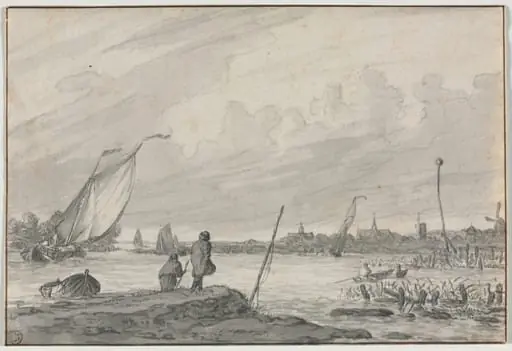 View of Alkmaar with Boats
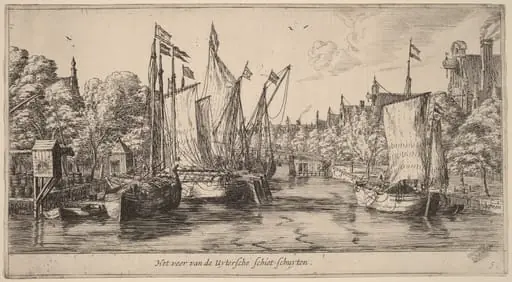 The Ferry to Utrecht (Het veer van der Uytersche schiet-schuyten)
 Marine