Artwork
Menalcas Watching Women Dance
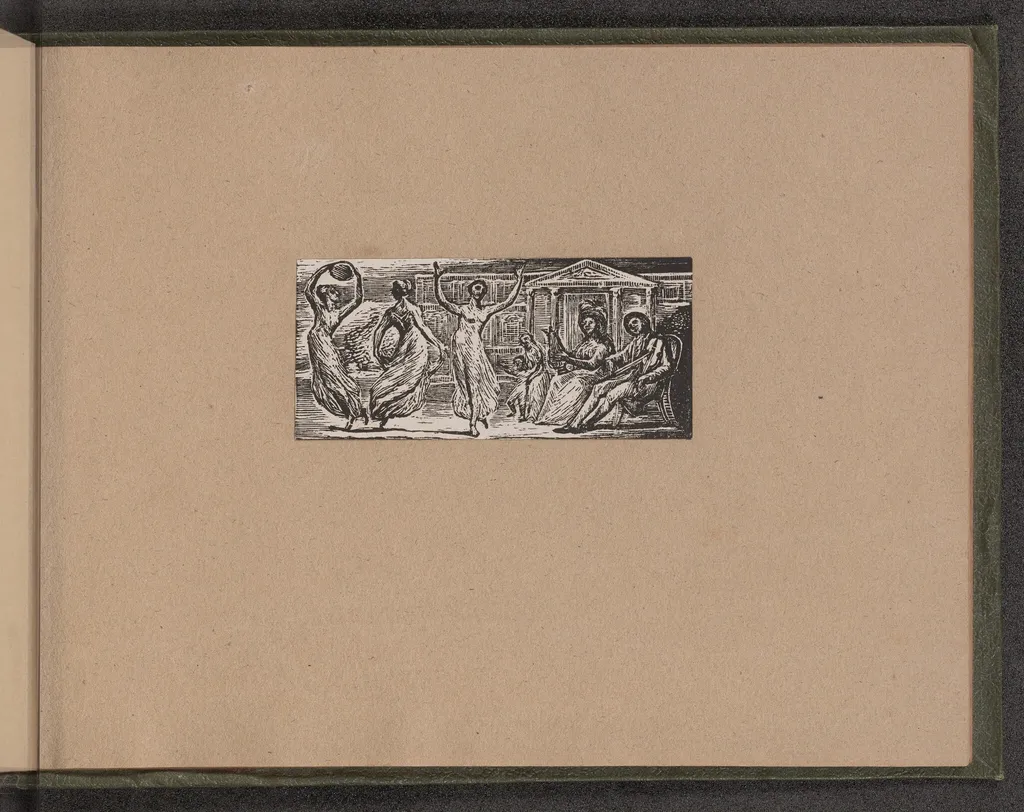
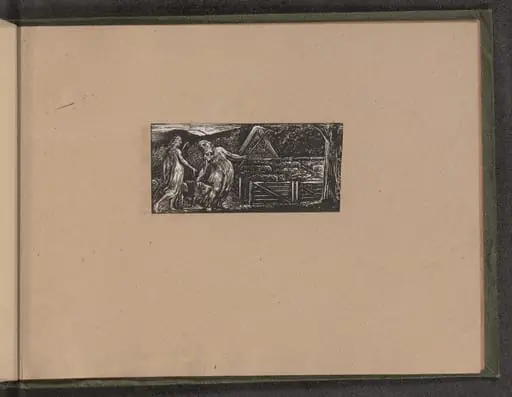
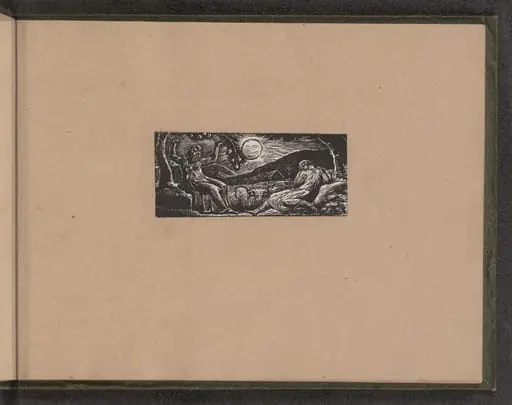
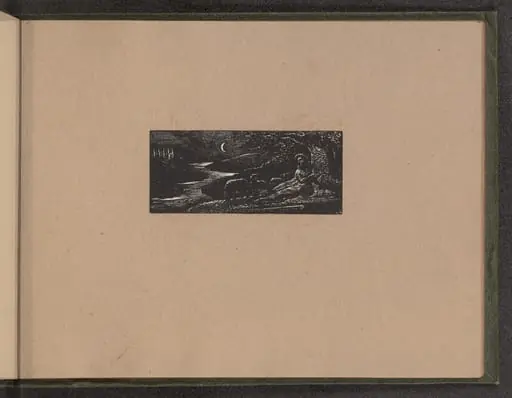
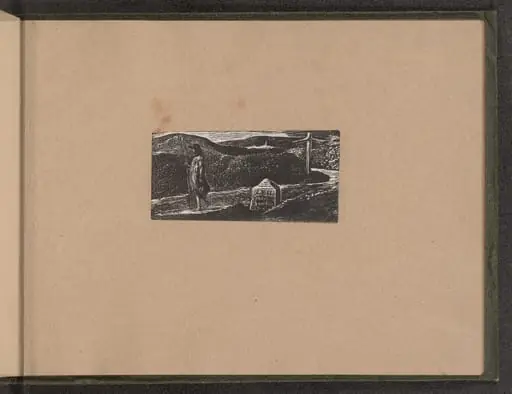
Menalcas Watching Women Dance is an ink print by the Romanticist artist William Blake. It dates from 1821 and is held in the collection of the National Gallery of Art.
About this work
Overview
Menalcas Watching Women Dance is a wood engraving created by William Blake in 1821. This print exemplifies Blake's characteristic fusion of poetic and visual elements, hallmarked by symbolic depth and imaginative expression.
Subject & Meaning
The engraving portrays a joyful scene of women dancing in flowing robes before a columned building, observed by a man (Menalcas) from the right. The atmosphere conveys celebration and vitality.
Technique & Style
Blake employed bold lines, dark shading, and cross-hatching in the wood engraving, achieving a sense of depth, texture, and dynamic energy that captures the movement of the dancers.
History & Provenance
Produced in 1821, during a period when Blake's work was not widely recognized, the engraving is part of his later output that would posthumously establish him as a key Romantic-era artist.
Context
Reflecting Blake's lifelong practice in London (except for a brief period in Felpham), this work integrates his dual talents in poetry and art, characteristic of his unique artistic voice.
Legacy
Menalcas Watching Women Dance contributes to Blake's posthumous reputation as a seminal figure in Romantic visual art and poetry, appreciated for its rich symbolism and imaginative power.
Artist & collection
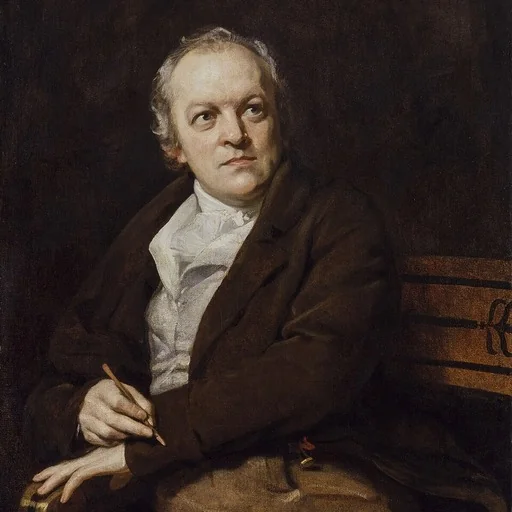
Artist
William Blake (28 November 1757 – 12 August 1827) was an English poet, painter and printmaker.