Artwork
The Compassion of Pharoah's Daughter
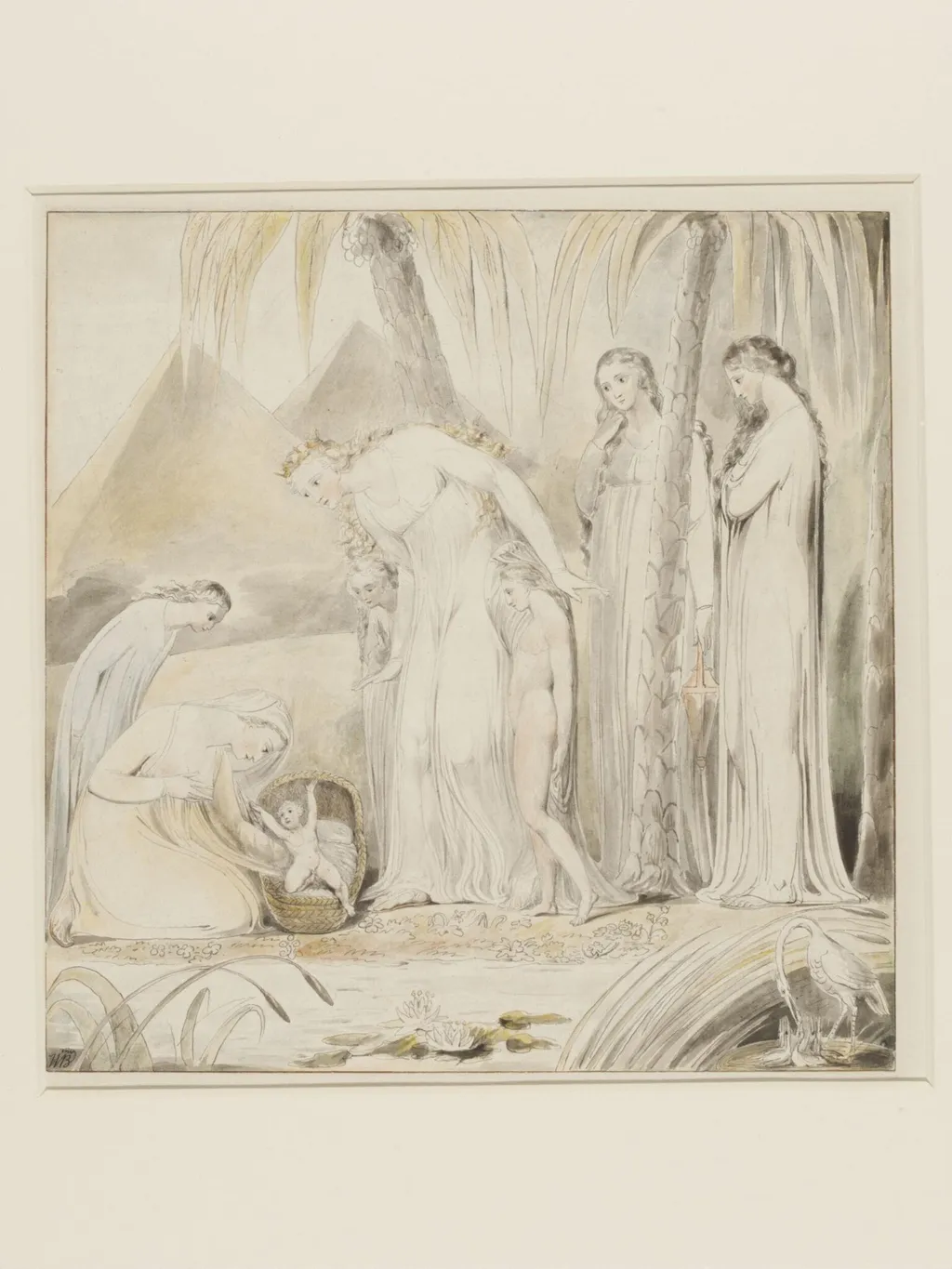
The Compassion of Pharoah's Daughter is a watercolor work on paper by the British Romanticist artist William Blake. It dates from 1805 and is held in the collection of the Victoria and Albert Museum.
About this work
Overview
The Compassion of Pharaoh’s Daughter is a watercolour on paper created by William Blake in 1805, characterized by a dreamy, misty depiction of a group of figures surrounding a kneeling woman with a baby in a basket.
Subject & Meaning
The scene illustrates a biblical narrative where Pharaoh’s daughter discovers Moses as an infant. The composition conveys a sense of gentle compassion through the interactions of the figures, with one woman offering a supportive hand and others observing with care.
Technique & Style
Blake employed light, loose brushstrokes to achieve a hazy, ethereal effect. The predominantly pale colour palette (whites, grays, soft blues) enhances the quiet, mysterious ambiance of the piece, with soft focus in the background (featuring trees and a distant mountain).
History & Provenance
Originally part of the collections of T. Butts, Captain Butts, and W. Graham Robertson, the work was sold at Christie’s auction house in 1949 (Lot 6) and subsequently documented in *The Blake Collection of W. Graham Robertson* (1952).
Context
This work reflects Blake’s unique blend of artistic and poetic expression, characteristic of his broader oeuvre that often explored biblical themes through innovative visual and literary means.
Legacy
As part of Blake’s watercolour output, *The Compassion of Pharaoh’s Daughter* contributes to the artist’s reputation for capturing nuanced emotional scenes within a distinctive, dreamlike aesthetic.
Artist & collection
Artist
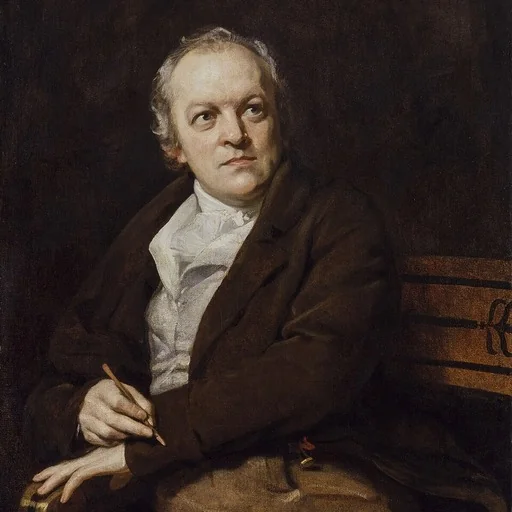
William Blake (28 November 1757 – 12 August 1827) was an English poet, painter and printmaker.

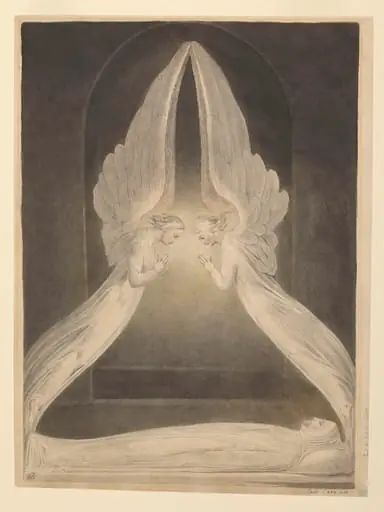 The Angels hovering over the body of Christ in the Sepulchre
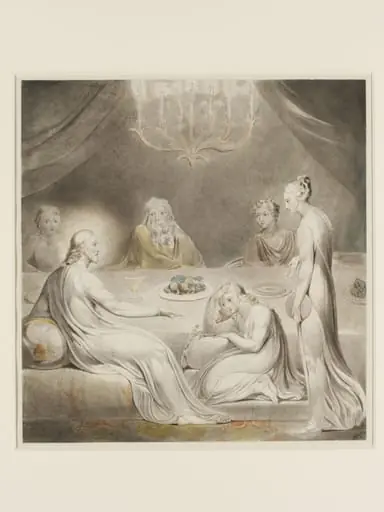 Christ in the house of Martha and Mary
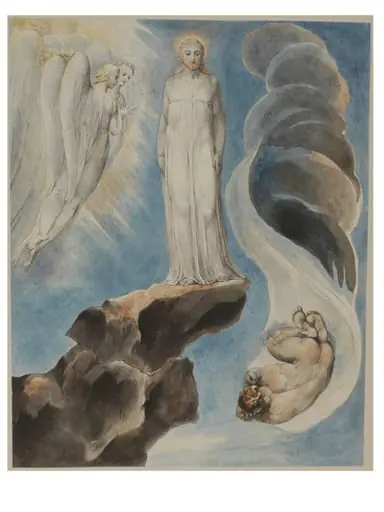 The Third Temptation
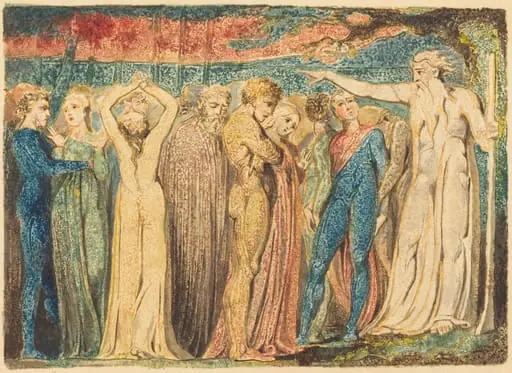 Joseph of Arimathea Preaching to the Britons
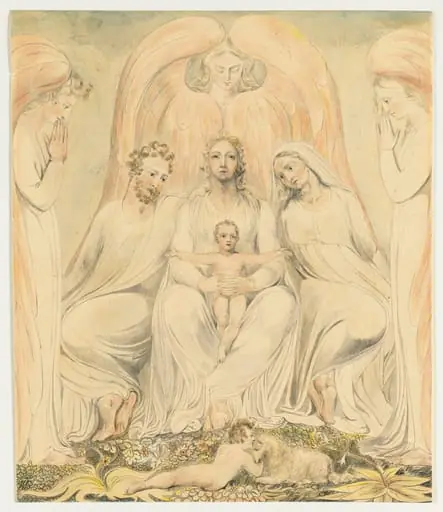 The Holy Family (Christ in the Lap of Truth)
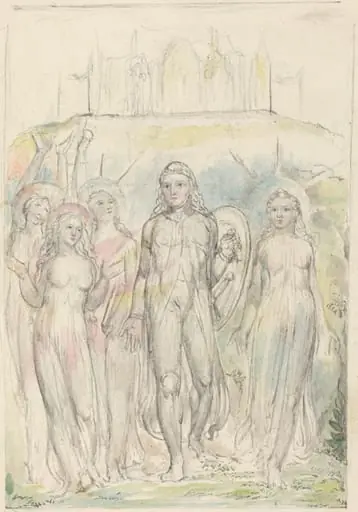 Christian with the Shield of Faith, Taking Leave of His Companions
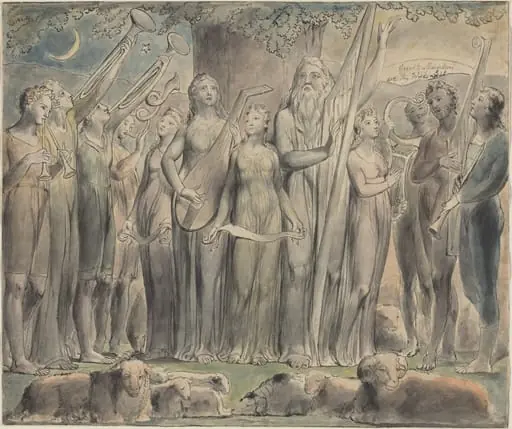 Job and His Family Restored to Prosperity
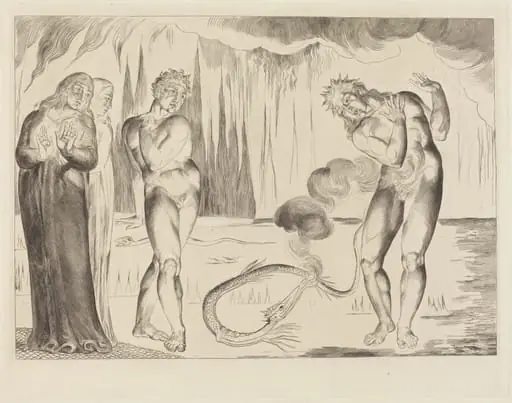 The Circle of the Thieves; Buoso Donati Attacked by the Serpent
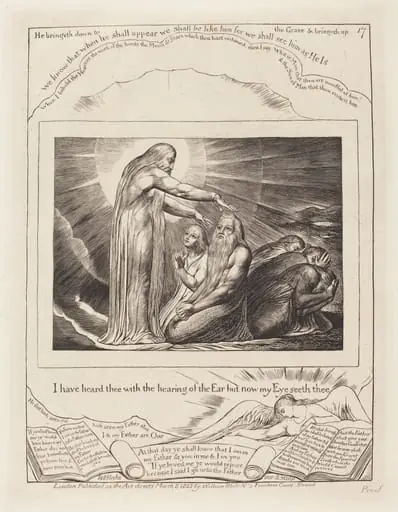 The Vision of God