Artwork
Helsinki etelästä
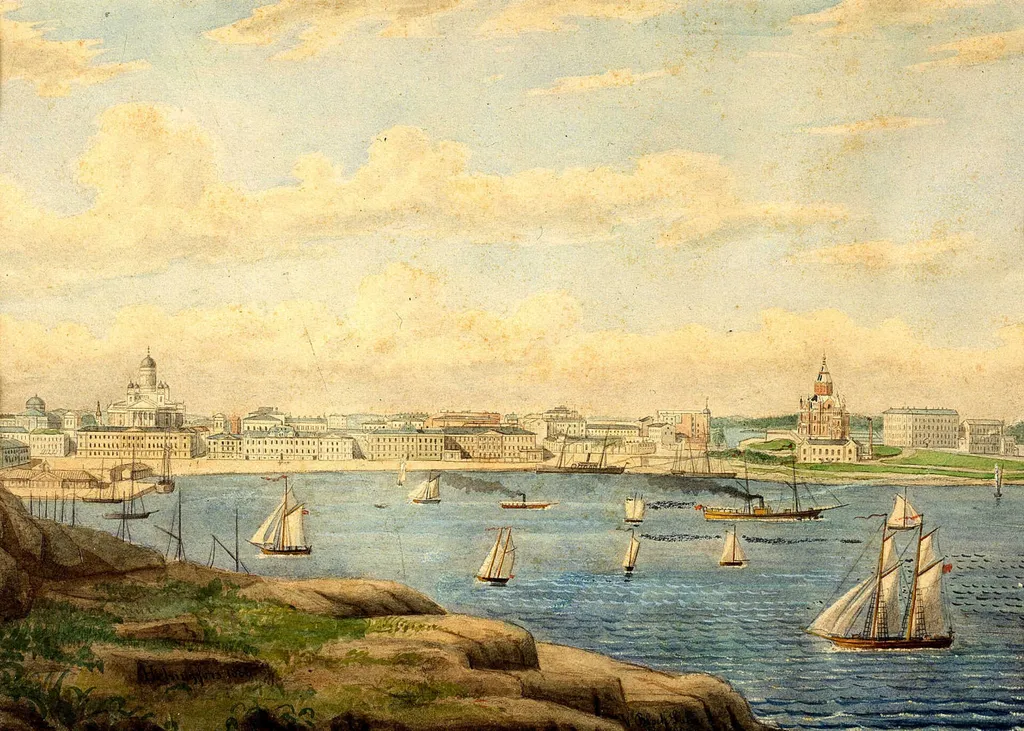
Helsinki etelästä is a drawing by Bloch Suhr V. It is held in the collection of the Helsinki City Museum. This drawing presents a view of a coastal urban scene from the south, featuring a wide expanse of water dotted with numerous vessels.
About this work
Overview
This drawing presents a view of a coastal urban scene from the south, featuring a wide expanse of water dotted with numerous vessels.
This drawing presents a view of a coastal urban scene from the south, featuring a wide expanse of water dotted with numerous vessels. Low buildings line the shoreline, while taller structures, including a domed church, rise in the distance. The sky is softly rendered with minimal cloud cover, contributing to a calm yet active atmosphere. The composition emphasizes movement and density, suggesting a thriving port environment.
Subject & Meaning
The scene depicts a harbor teeming with maritime activity, likely a commercial or naval port. The presence of many boats and clustered architecture implies economic vitality and daily life centered on waterborne trade. The domed church may indicate a significant religious or civic landmark, anchoring the city’s identity. The view from the south suggests a deliberate framing of the urban core as seen from the water.
Technique & Style
The drawing employs light, fluid linework to suggest form without heavy shading. Buildings and boats are simplified but distinguishable, conveying detail through arrangement rather than precision. The sky is left largely unmodeled, enhancing the sense of openness. The lack of strong contrast or texture points to a quick observational sketch, possibly made on-site.
History & Provenance
Though the drawing is labeled 'Helsinki etelästä'—'from the south of Helsinki'—the architectural features, particularly the domed church, align more closely with Saint Petersburg’s skyline. This discrepancy suggests either a misattribution or a confusion in labeling, possibly from a later cataloger. No documented provenance or artist is associated with the work.
Context
In the early 19th century, Helsinki was a growing capital under Russian rule, but its harbor lacked the scale and architectural grandeur seen here. Saint Petersburg, by contrast, was a major imperial port with prominent domes and dense waterfront development. The drawing’s visual cues more accurately reflect the latter city’s character during its peak as a naval and commercial hub.
Legacy
The drawing remains an anonymous record of a coastal urban landscape, valued for its observational clarity rather than artistic innovation. Its mislabeling highlights the challenges of attributing 19th-century topographical sketches. As a document of maritime urbanism, it contributes to broader studies of port city imagery in pre-photographic visual culture.
Artist & collection
Artist
This Finn sketched the city from a distance, often from a café window or a park bench, as if the buildings needed to shrink in his notebook before they made sense.

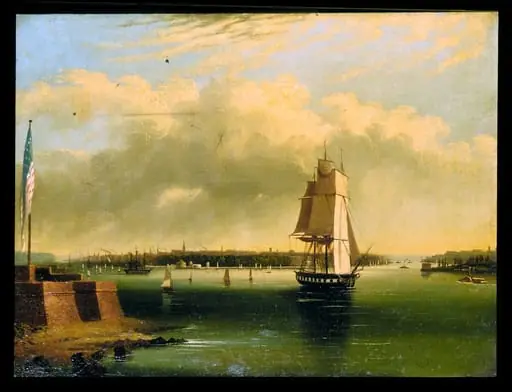 Bay and Harbor of New York from Bedlow's Island
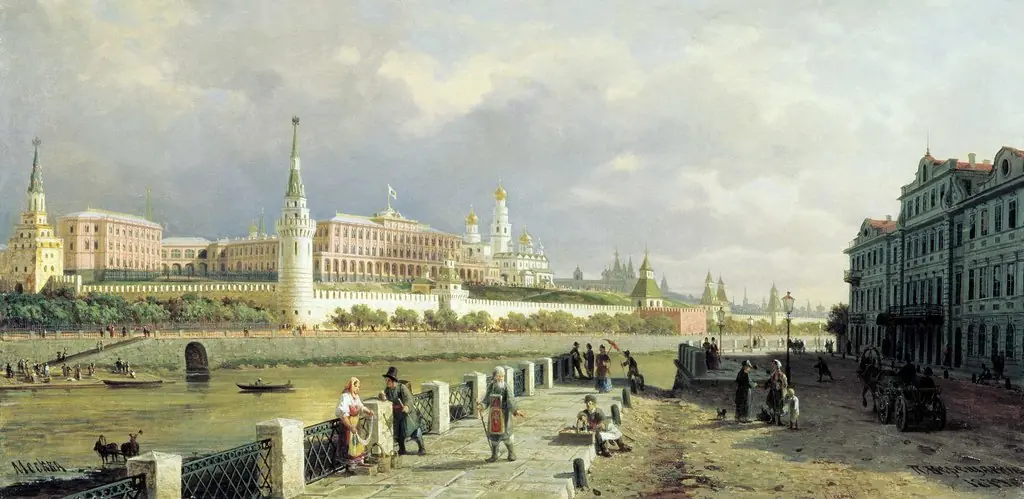 View of the Moscow Kremlin
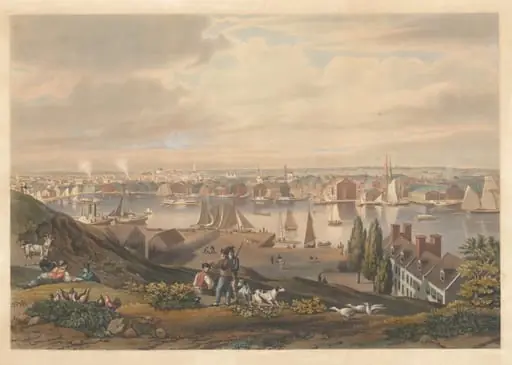 Baltimore from Federal Hill
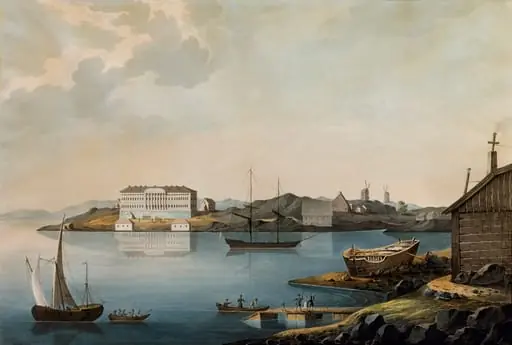 Katajanokka
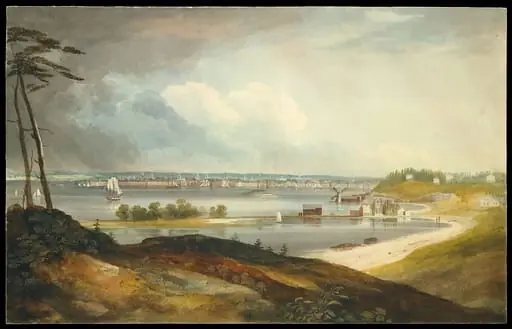 New York from the Heights near Brooklyn
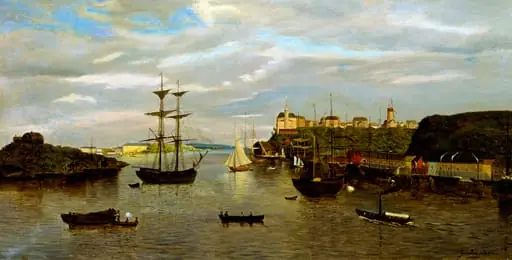 Näkymä Kaivopuistoon ja Viaporiin Eteläsataman suunnasta
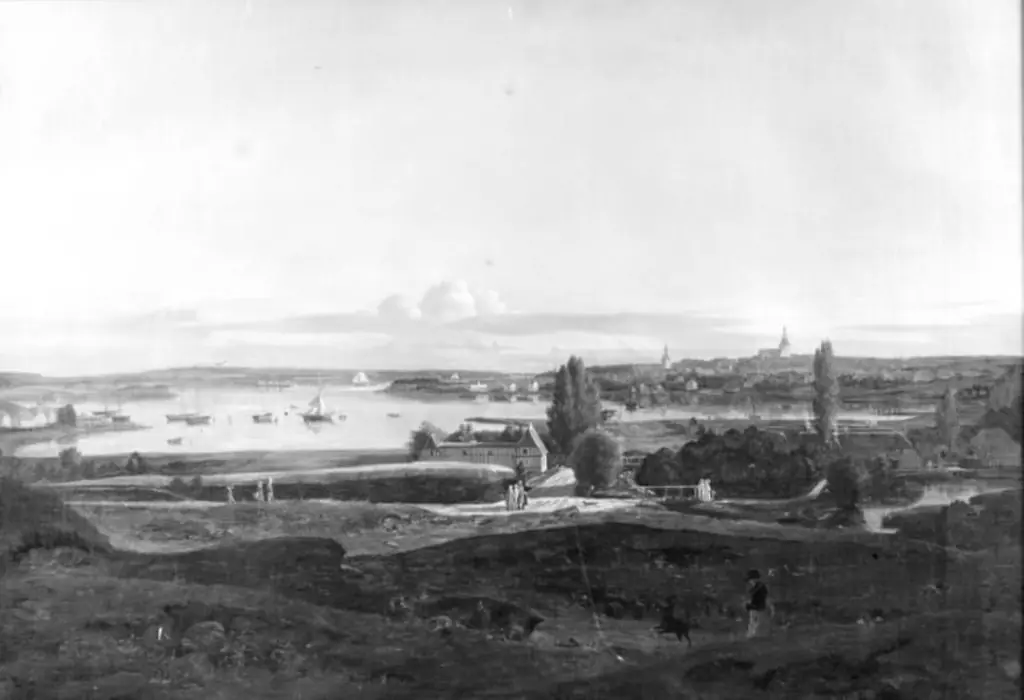 Et parti fra Svendborg, set fra Ørkel Slotsbanke
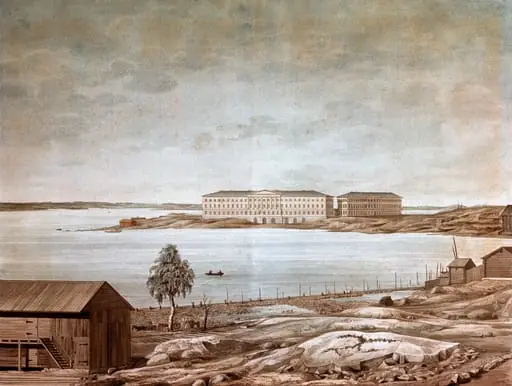 Meriväen kasarmi Katajanokalla Pohjoissatamasta nähtynä
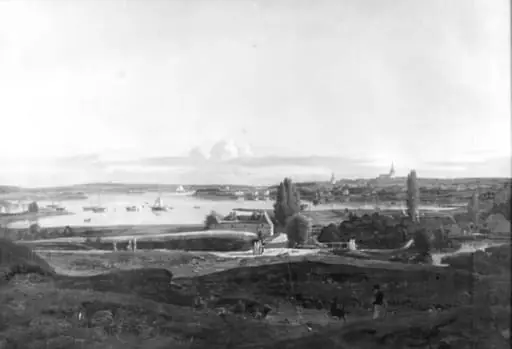 Et parti fra Svendborg, set fra Ørkel Slotsbanke
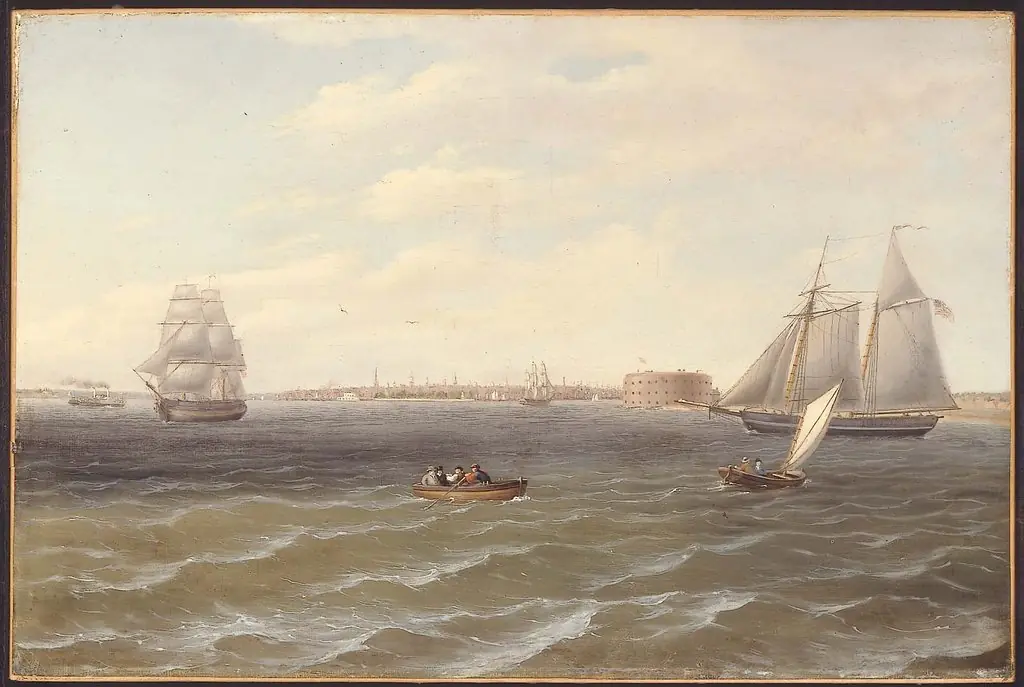 New York Harbor