Artwork
Studies for the Virgin and Child (recto)
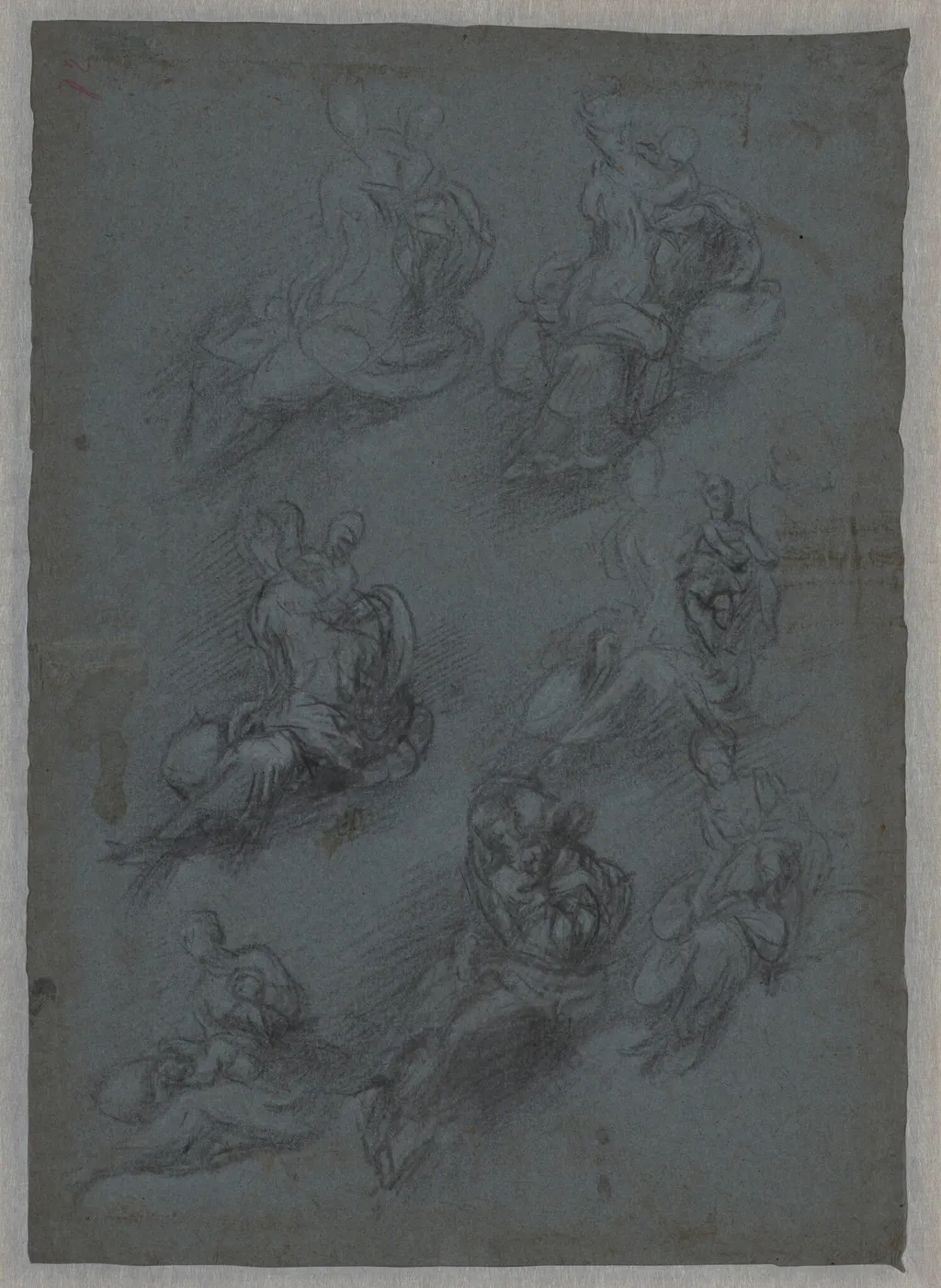
Studies for the Virgin and Child (recto) is a chalk drawing by the Renaissance artist Camillo Boccaccino. It dates from 1532 and is held in the collection of the National Gallery of Art.
About this work
Overview
Executed in black chalk with selective white heightening on a blue laid paper, the work records a preliminary exploration of a religious composition.
Camillo Boccaccino’s drawing titled *Studies for the Virgin and Child* dates to around 1532. Executed in black chalk with selective white heightening on a blue laid paper, the work records a preliminary exploration of a religious composition. The sketch survives as a fragmentary study, offering insight into the artist’s preparatory process during his brief career in Cremona and the broader Lombard region.
Subject & Meaning
The composition centers on the Virgin and Child, a theme recurrent in Boccaccino’s oeuvre. Though the figures are rendered in swift, gestural strokes, their arrangement suggests a devotional intimacy, with the infant cradled by the mother. The study’s airy, almost suspended quality hints at a spiritual elevation, aligning with the theological emphasis of early‑sixteenth‑century Catholic art.
Technique & Style
Boccaccino employs a monochrome palette of black chalk, accentuated by white highlights that catch the eye against the cool blue ground. The lines are loose and suggestive, allowing forms to emerge without full contouring. This approach reflects the Mannerist tendency toward expressive draftsmanship, where exaggerated poses and softened edges convey movement and emotional tension.
History & Provenance
Created during the artist’s productive period in the early 1530s, the drawing remained in private collections before entering a museum holding of Northern Italian drawings. Boccaccino’s early death in 1546 limited his output, making surviving works such as this study valuable for tracing his influence on contemporaneous Lombard painters.
Context
The work belongs to a broader Renaissance practice of using preparatory sketches to refine complex religious scenes. In Lombardy, artists combined local traditions with emerging Mannerist aesthetics, and Boccaccino’s study exemplifies this synthesis. The blue laid paper, a common support in the region, provides a subtle tonal foundation that enhances the chalk’s contrast.
Artist & collection

Artist
Camillo Boccaccino (Italian: ; 1511 – 4 January 1546) was an Italian painter and draughtsman, active mainly in Cremona and the region of Lombardy who painted in a Mannerist style.

![Studies of Figures [verso], by Anicet Charles Gabriel Lemonnier](https://artifactworldgallery.com/img/anicet-charles-gabriel-lemonnier--studies-of-figures-verso--2ae0ee2ea775e42c-w320.webp) Studies of Figures [verso]
Studies of Figures [verso]![Sheet of Studies with the Drunken Pan and Nymphs [verso], by Jacob Jordaens](https://artifactworldgallery.com/img/jacob-jordaens--sheet-of-studies-with-the-drunken-pan-and-nymphs-verso--7da29549b59c490a-w320.webp) Sheet of Studies with the Drunken Pan and Nymphs [verso]
Sheet of Studies with the Drunken Pan and Nymphs [verso]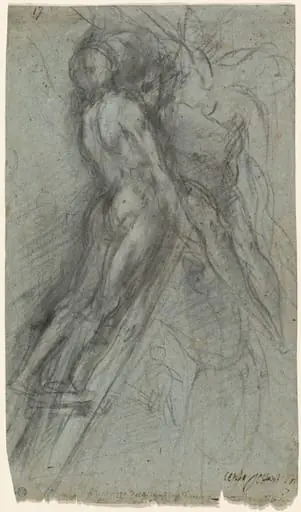 The Descent from the Cross
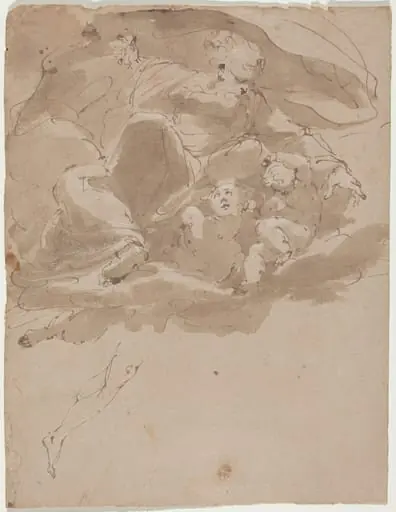 God the Father with Angels
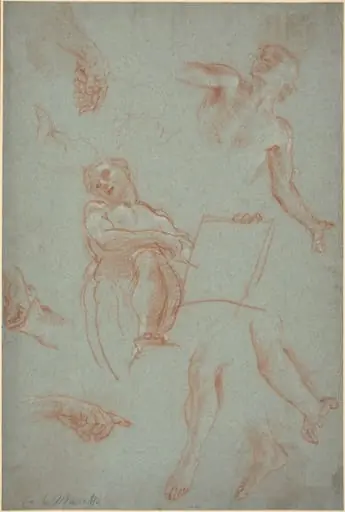 Sheet of Studies with Figures, Hands, and Feet
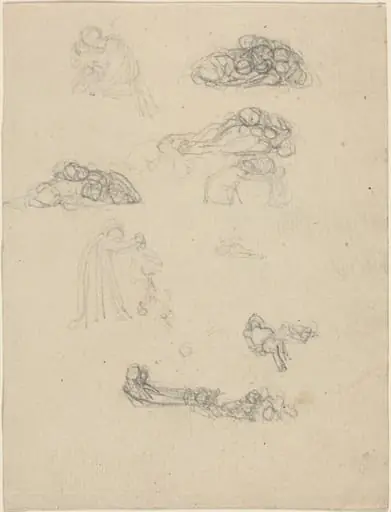 Sheet of Studies
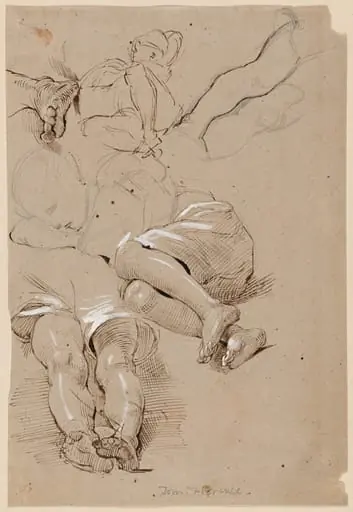 Tom -- Florence
 Classical Figures Gathered around an Urn
 Satyr Holding a Roundel
![Saint Matthew and Saint Jerome [verso], by Correggio](https://artifactworldgallery.com/img/correggio--saint-matthew-and-saint-jerome-verso--233cd3c0f2701d8c-w320.webp) Saint Matthew and Saint Jerome [verso]
Saint Matthew and Saint Jerome [verso] Studies of the Virgin and Child with Saints
 Sketches of Virgin and Child