Artwork
God the Father with Angels
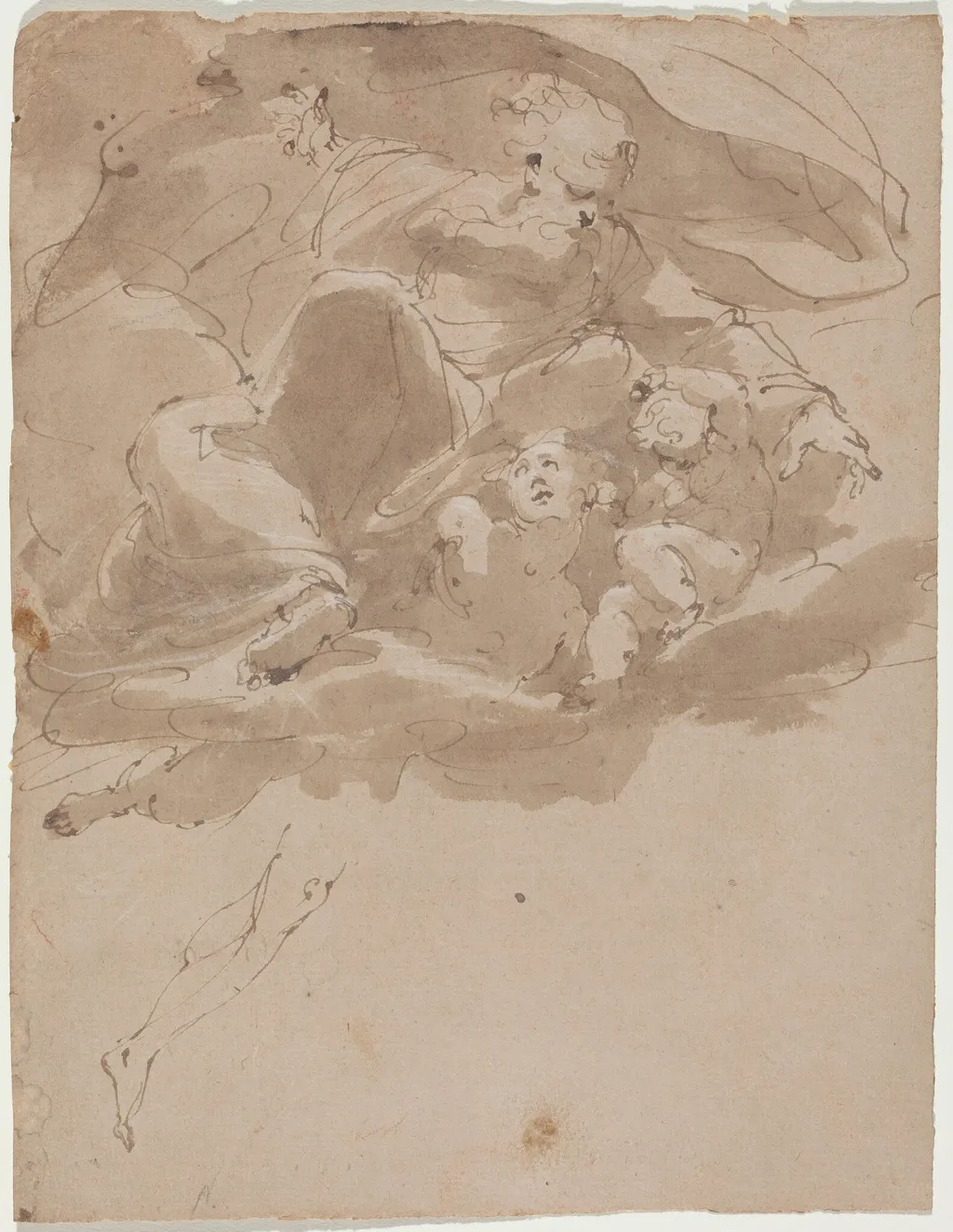
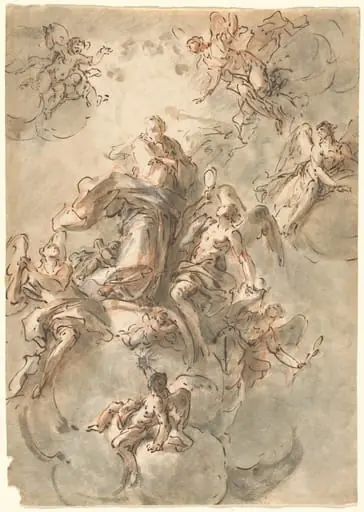
God the Father with Angels is an ink drawing by the Baroque artist Italian 17th Century. It dates from 1601 and is held in the collection of the National Gallery of Art. This drawing, executed in pen and brown ink with wash, depicts God the Father surrounded by a dynamic assembly of angels.
About this work
Overview
Rendered as a rapid study, it captures a moment of divine presence through loose, expressive lines rather than refined detail.
This drawing, executed in pen and brown ink with wash, depicts God the Father surrounded by a dynamic assembly of angels. Rendered as a rapid study, it captures a moment of divine presence through loose, expressive lines rather than refined detail. The use of wash creates a luminous, atmospheric haze, suggesting celestial space without defining it literally. The work reflects an artist’s exploratory process, prioritizing movement and mood over finish.
Subject & Meaning
The composition centers on God the Father as a bearded, elevated figure, emerging from a swirling mass of angels. Rather than a doctrinal scene, it conveys the ineffable nature of the divine through motion and abstraction. The indistinct faces and fluid forms emphasize spiritual presence over individual identity, aligning with devotional traditions that sought to evoke awe rather than literal representation.
Technique & Style
The artist employed quick, scratchy pen strokes to define forms, while thin brown washes softened the background into a glowing, cloud-like expanse. The technique favors spontaneity: lines are uncorrected, forms suggest rather than describe. This approach reveals the drawing’s function as a preparatory study, where energy and gesture took precedence over polished detail, characteristic of Baroque sketching practices.
History & Provenance
Though the artist’s identity is not specified in the provided details, the work aligns with 17th-century Italian or Flemish drawing traditions. Such studies were often kept by artists for personal reference or shared among workshop members. Its survival suggests it was valued for its expressive power, even as an unfinished exercise, possibly linked to larger commissions involving celestial themes.
Context
In the Baroque period, religious imagery increasingly emphasized emotional intensity and dynamic movement to inspire devotion. Drawings like this served as visual experiments for altarpieces or frescoes, where swirling clouds and radiant figures conveyed divine intervention. This piece reflects a broader trend of using sketch-like immediacy to capture the sublime, bridging preparatory work and monumental religious art.
Legacy
As a study, this drawing exemplifies how Baroque artists used informal media to explore complex theological ideas with fluidity and urgency. Its unpolished quality reveals the creative process behind grander works, offering insight into how divine subjects were visualized through gesture and atmosphere. Such sketches influenced later generations by demonstrating that spiritual power could be suggested, not merely depicted.
Artist & collection

Artist
This Italian artist worked in the 17th century, making engravings, ink drawings, and oil paintings.

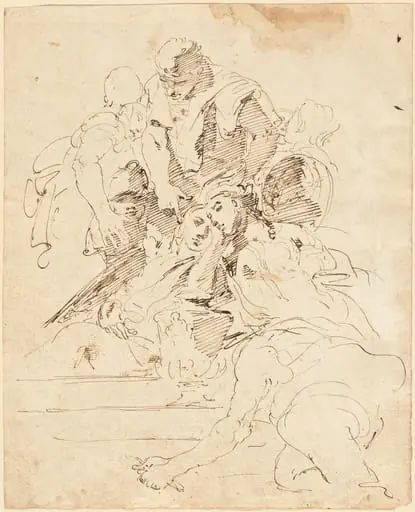 Classical Figures Gathered around an Urn
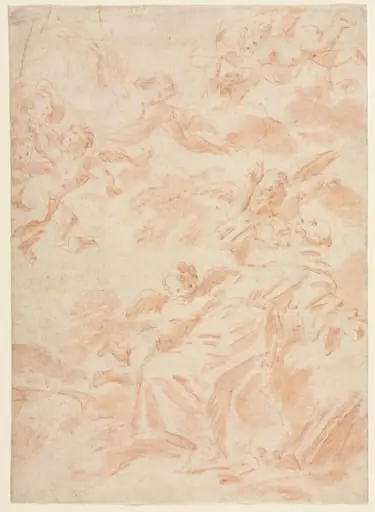 The Stigmatization of Saint Francis
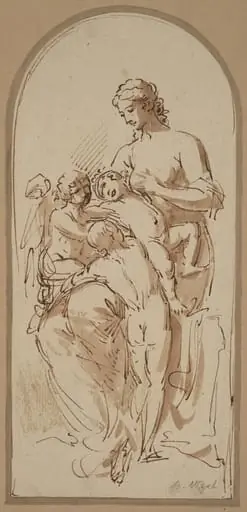 Charity
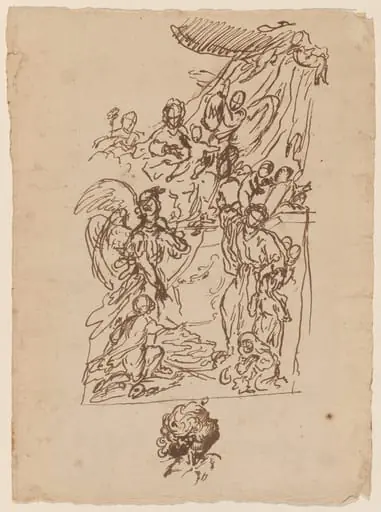 The Madonna and Child Seated on a Dais with Tobias and the Angel and a Saint Presenting Two Children
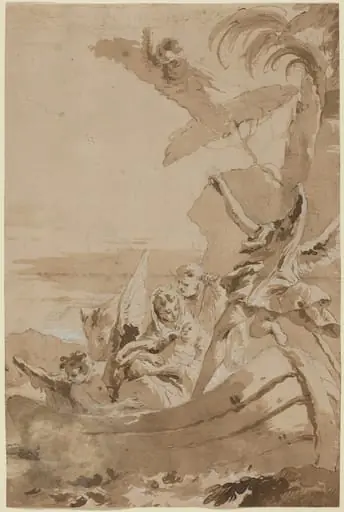 The Flight into Egypt with the Holy Family and Two Angels in a Skiff
![Holy Family [recto], by Donato Creti](https://artifactworldgallery.com/img/donato-creti--holy-family-recto--7e3a584f7b6c5852-w320.webp) Holy Family [recto]
Holy Family [recto]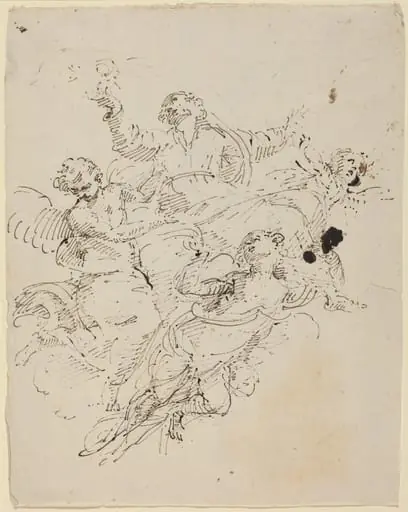 The Ascension of the Virgin
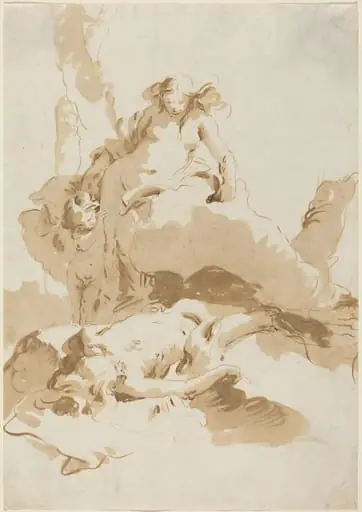 Venus and Cupid Discovering the Body of Adonis
 Virgin of the Immaculate Conception
 The Glorification of a Prelate