Artwork
Kaningarra
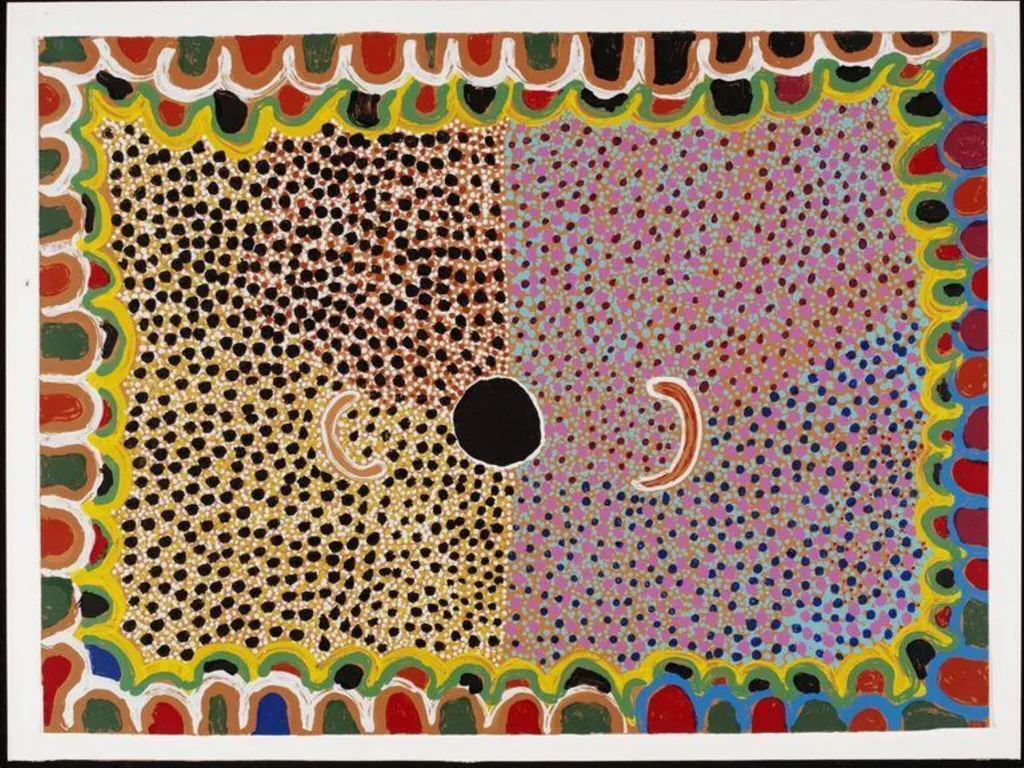
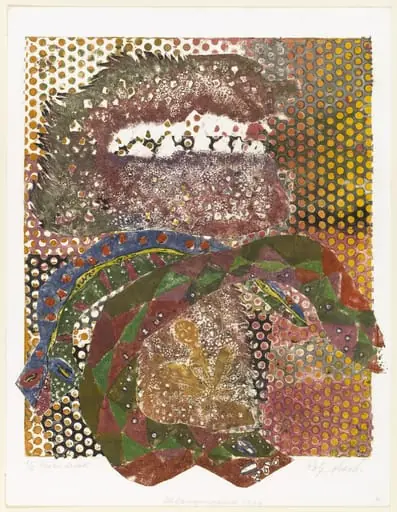
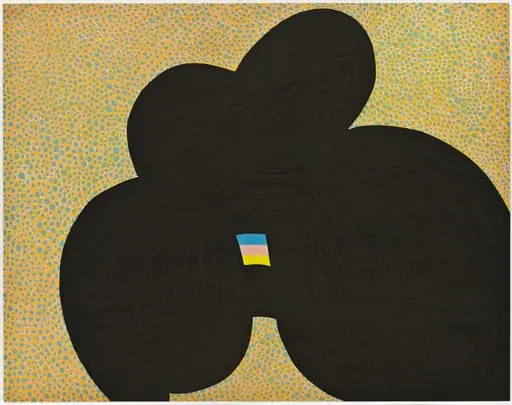
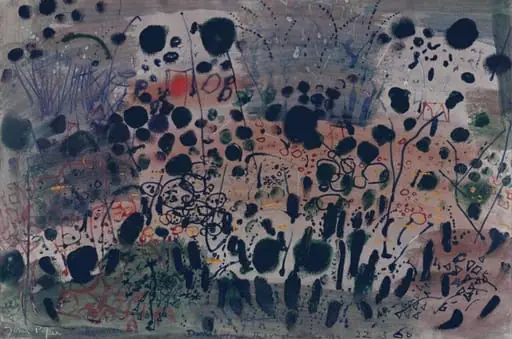
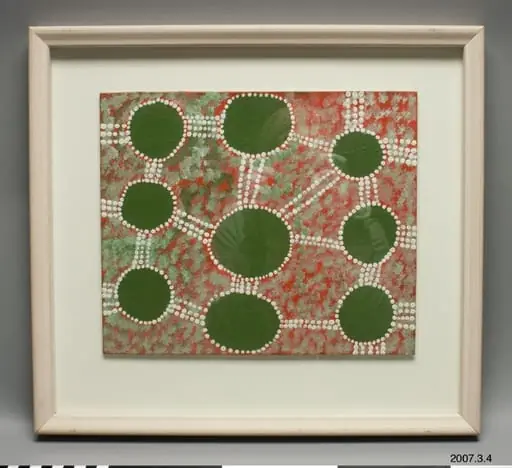
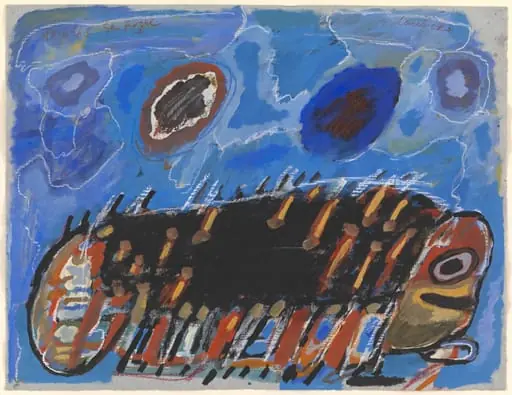
Kaningarra is a print by Susie Bootja Bootja Napangarti. It dates from 2002 and is held in the collection of the Victoria and Albert Museum.
About this work
Overview
The title, meaning 'Love Magic,' refers to ceremonial practices surrounding courtship and relational dynamics.
In 2002, Australian printmakers Theo Tremblay and Basil Hall produced the portfolio 'Yilpinji' in collaboration with Aboriginal artists from the Kimberley region. The title, meaning 'Love Magic,' refers to ceremonial practices surrounding courtship and relational dynamics. Rather than depicting figures directly, the prints use abstract marks to convey movement, rest, and ritual activity, rooted in ancestral narratives tied to land and place.
Subject & Meaning
The portfolio explores the social and spiritual dimensions of courtship through symbolic landscapes. Each image encodes traditional knowledge—such as the digging of waterholes or the gathering of bush onions—not as literal scenes but as encoded traces of action. These patterns reflect the interconnectedness of human behavior, natural resources, and ancestral law, where love and survival are inseparable.
Technique & Style
The prints employ fine linework and layered color to suggest terrain and activity without figurative representation. Small boomerang-shaped marks indicate where people sat, while a central black disc denotes a waterhole. Delicate flecks of lilac, blue, and white evoke bush onions and stones; curved bands of color at the edges suggest distant hills illuminated by sunset. The style prioritizes symbolic economy over realism.
History & Provenance
'Yilpinji' was produced at the Australian Print Workshop in Melbourne, under the guidance of Tremblay and Hall. It features works by artists from the Balgo region, including Susie Bootja Bootja, whose contribution depicts a resting couple after water collection. The portfolio was part of a broader initiative to document and disseminate Indigenous visual narratives through collaborative printmaking.
Context
The work emerges from a tradition in which land is not merely setting but active participant in myth. Dreaming stories, passed orally and visually, govern social conduct and environmental knowledge. By translating these into print, the artists preserved non-verbal codes of belonging and responsibility, aligning with broader efforts to affirm Aboriginal epistemologies outside Western artistic frameworks.
Legacy
'Yilpinji' remains a significant example of Indigenous printmaking that resists anthropological representation. Its abstract language affirms the validity of Aboriginal visual systems on their own terms. The portfolio continues to be studied for its integration of ceremonial knowledge, material innovation, and cross-cultural collaboration in contemporary Australian art.
Artist & collection
Artist
Susie Bootja Bootja Napangarti
Susie Bootja Bootja Napaltjarri was an Australian Indigenous artist from the Western Desert region.