Artwork
Untitled
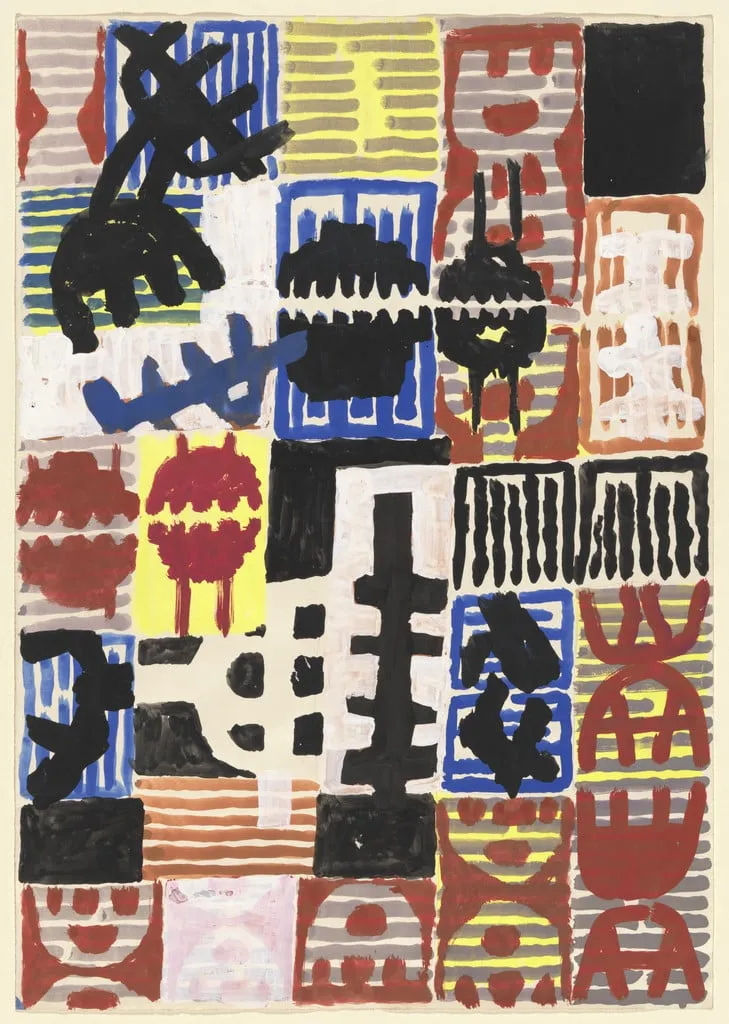
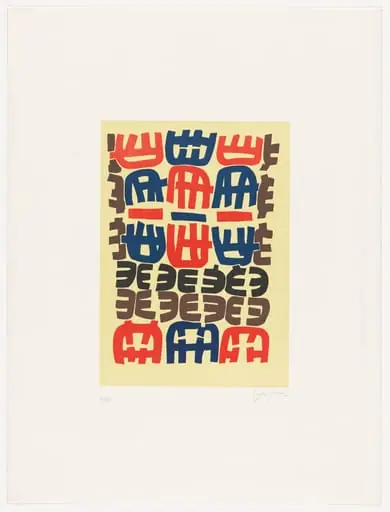
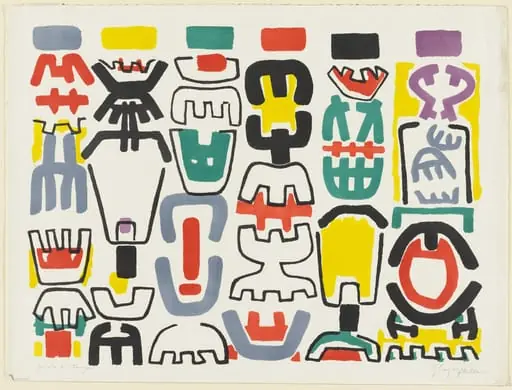
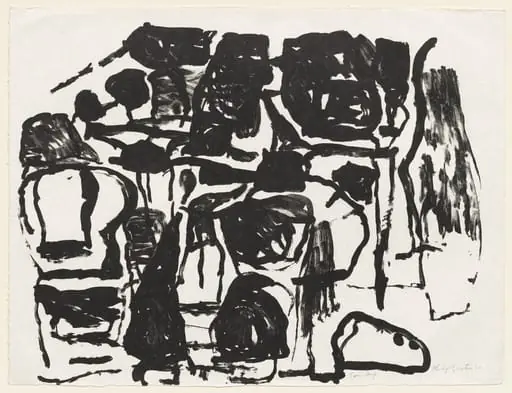
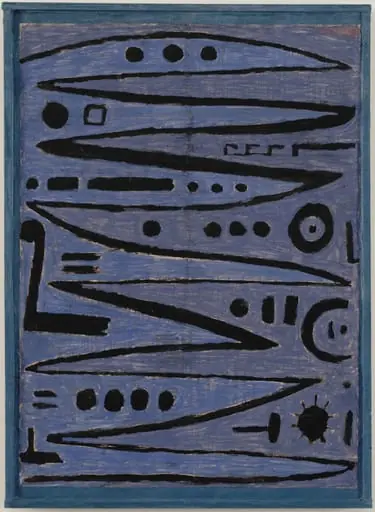
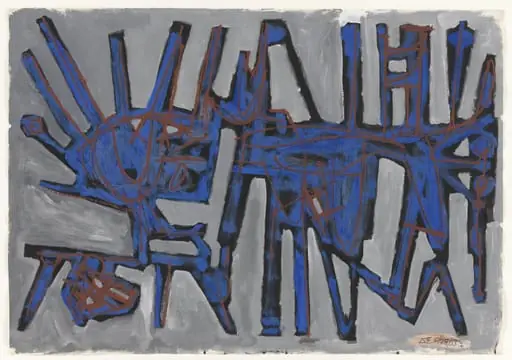
Untitled is a gouache drawing by Giuseppe Capogrossi. It dates from 1953 and is held in the collection of the Museum of Modern Art.
About this work
Overview
The medium’s opaque, water-based quality allows for both saturated color and visible brushwork, contributing to its tactile, uneven surface.
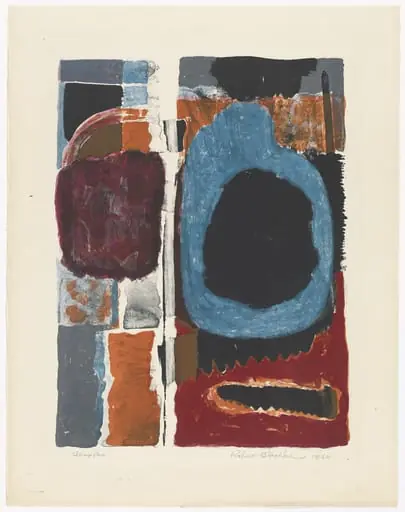
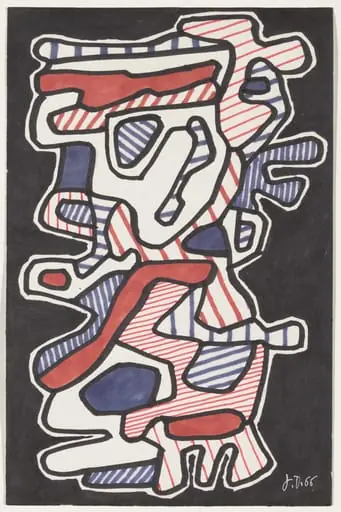
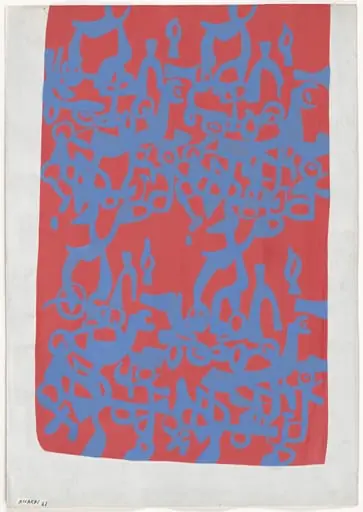
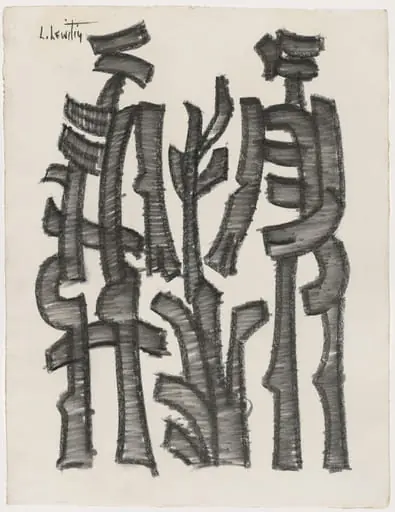
Created in 1953, this gouache on paper work by Giuseppe Capogrossi is part of The Museum of Modern Art’s collection. It belongs to a series of abstract compositions that reject figurative representation in favor of dynamic, non-referential forms. The medium’s opaque, water-based quality allows for both saturated color and visible brushwork, contributing to its tactile, uneven surface. The piece resists clear narrative or symbolism, emphasizing instead the interplay of shape and pigment.
Subject & Meaning
No identifiable subject emerges from the composition. Instead, fragmented shapes—some suggestive of faces or architectural elements—float without hierarchy or spatial logic. These forms do not cohere into a recognizable scene but instead evoke a sense of visual tension. The work invites perception without offering resolution, reflecting Capogrossi’s interest in autonomous visual language rather than symbolic content.
Technique & Style
Gouache was applied in thick, irregular strokes, allowing pigment to soak into the paper’s surface and create areas of opacity and translucency. Bold black lines cut across the composition, fragmenting color fields and defining irregular contours. Colors—red, blue, yellow—are applied with little blending, producing sharp contrasts that vibrate against one another. The technique prioritizes immediacy over refinement, emphasizing gesture and material presence.
History & Provenance
The work was produced during a period when Capogrossi was refining his abstract vocabulary, moving away from earlier symbolic motifs toward pure formal experimentation. It entered The Museum of Modern Art’s collection in the mid-20th century as part of its broader effort to document postwar European abstraction. Its acquisition reflects institutional interest in non-representational art from Italy during the 1950s.
Context
Made in the aftermath of World War II, the piece aligns with European movements seeking new visual languages beyond traditional representation. While not tied to a specific group, Capogrossi’s work shares affinities with Art Informel and Tachisme, emphasizing spontaneity and materiality. His use of abstract signs responded to broader cultural shifts toward individual expression and the rejection of prewar ideological art forms.
Legacy
This work exemplifies Capogrossi’s contribution to postwar Italian abstraction, influencing later artists interested in non-narrative form and material experimentation. Its presence in MoMA’s collection situates it within international dialogues on abstraction, helping to broaden recognition of non-French and non-American contributions to mid-century modernism. The piece remains a reference point for studies of gesture and color in postwar drawing.
Artist & collection