Artwork
Frontispiece for Callot's "The New Testament"
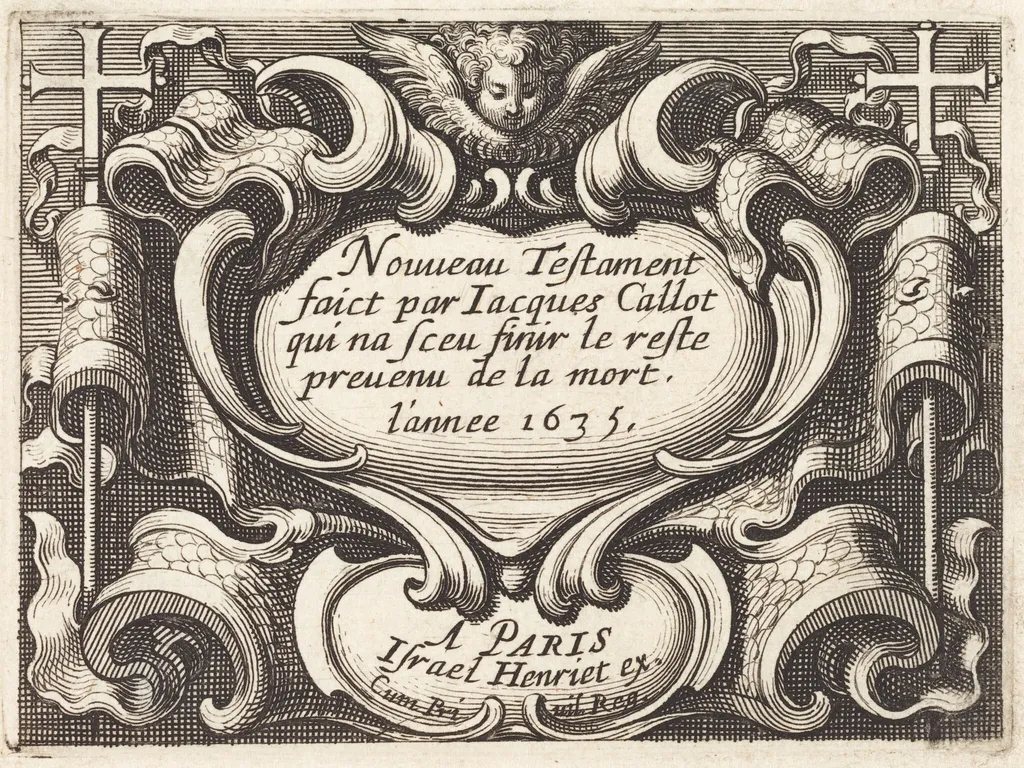
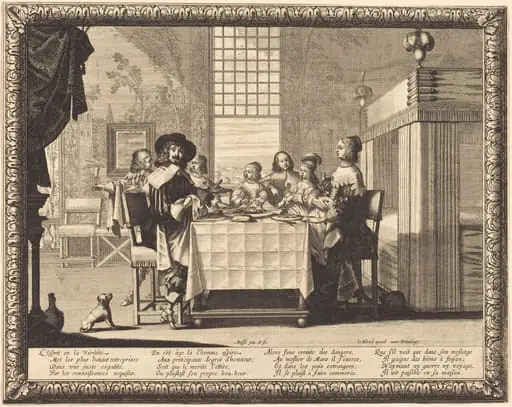
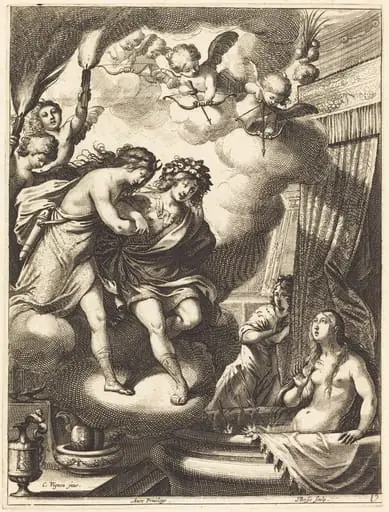
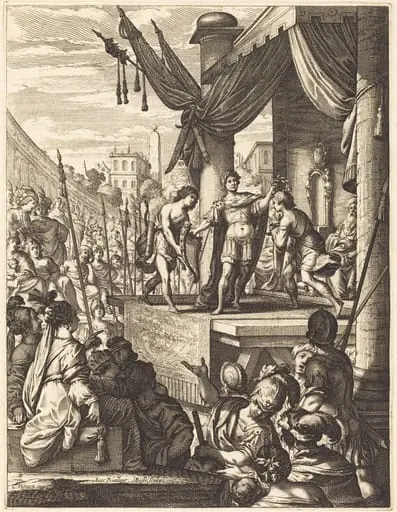
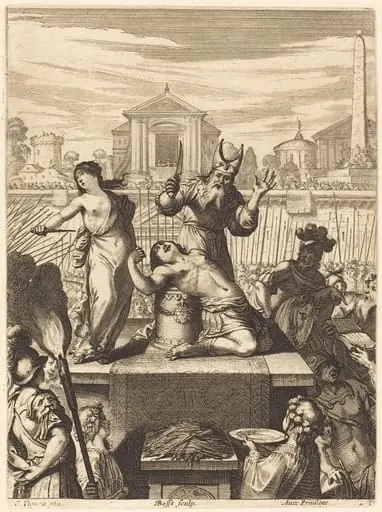
Frontispiece for Callot's "The New Testament" is an ink print by the Baroque artist Abraham Bosse. It dates from 1635 and is held in the collection of the National Gallery of Art.
About this work
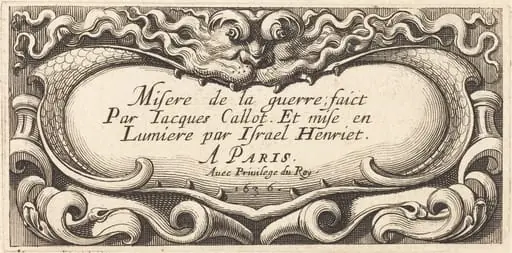
This print shows a fancy border with swirling lines and tiny faces peeking out.
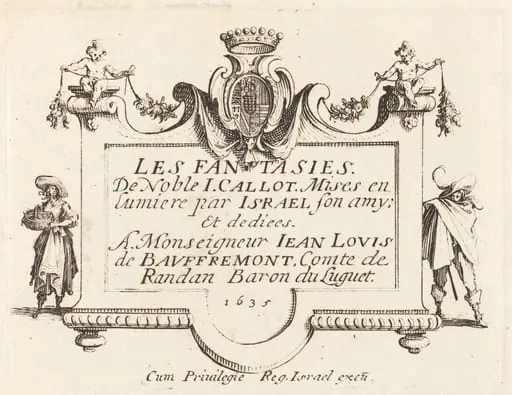
This print shows a fancy border with swirling lines and tiny faces peeking out. In the center, a wreath holds a banner with French text. The edges look like they’re made of leaves and curls, all carved into the page.
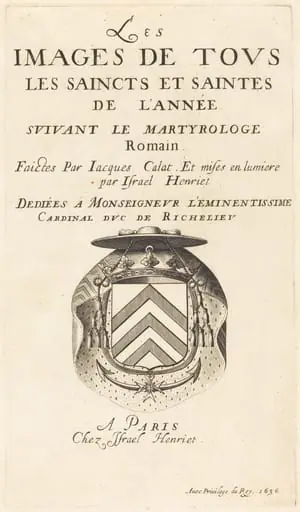
The text says this is a Bible—*The New Testament*—made by someone named Callot. The artist who drew this border, Abraham Bosse, signed it in 1635.
Next, look up etching to see how artists like Bosse made prints like this.
Overview
Abraham Bosse produced the frontispiece for Jacques Callot’s 1635 edition of The New Testament as an etching, a technique he mastered and frequently employed. This print functioned as the opening image of the volume, introducing its sacred content through intricate ornamentation rather than a literal biblical scene. Bosse’s signature and the date appear on the work, affirming his authorship within the collaborative publishing context of early modern France.
Subject & Meaning
The frontispiece does not illustrate a narrative from the New Testament but instead presents a decorative frame centered on a banner inscribed with the title and publisher’s name. Surrounding the text are ornamental motifs—swirling vines, leafy borders, and small masked faces—that evoke Renaissance traditions of emblematic design. These elements signal the volume’s religious purpose while emphasizing craftsmanship and textual authority.
Technique & Style
Bosse employed fine-line etching to achieve delicate, intricate detail across the entire surface. The border features densely carved arabesques and micro-figures, demonstrating his precision with the burin and acid-resistant ground. The style reflects the influence of Mannerist ornamentation, prioritizing rhythmic line and decorative complexity over spatial depth or naturalism, typical of his graphic work.
History & Provenance
Created in 1635 for Callot’s published edition of the New Testament, the frontispiece was part of a broader effort to elevate religious texts through high-quality printmaking. Bosse, already recognized for his technical skill, contributed to the visual identity of the publication, aligning with contemporary trends that treated printed books as objects of artistic merit. The print’s survival in multiple collections attests to its early reception.
Context
In mid-17th-century France, illustrated Bibles were produced for both devotional and commercial audiences. Publishers commissioned artists like Bosse to design frontispieces that combined textual clarity with visual prestige. His border design reflects the period’s fusion of print culture, religious publishing, and the rising status of the graphic arts as a refined discipline distinct from painting.
Legacy
Bosse’s frontispiece exemplifies the role of printmakers in shaping the aesthetics of early modern books. While not a narrative image, its elaborate design influenced later title pages and religious publications. His technical approach to etching became a reference point for subsequent generations of engravers, particularly in the use of ornamental framing to convey solemnity and authority.
Artist & collection

Artist
Abraham Bosse (c. 1604 – 14 February 1676) was a French artist, mainly as a printmaker in etching, but also in watercolour.