Artwork
The Intaglio Printers
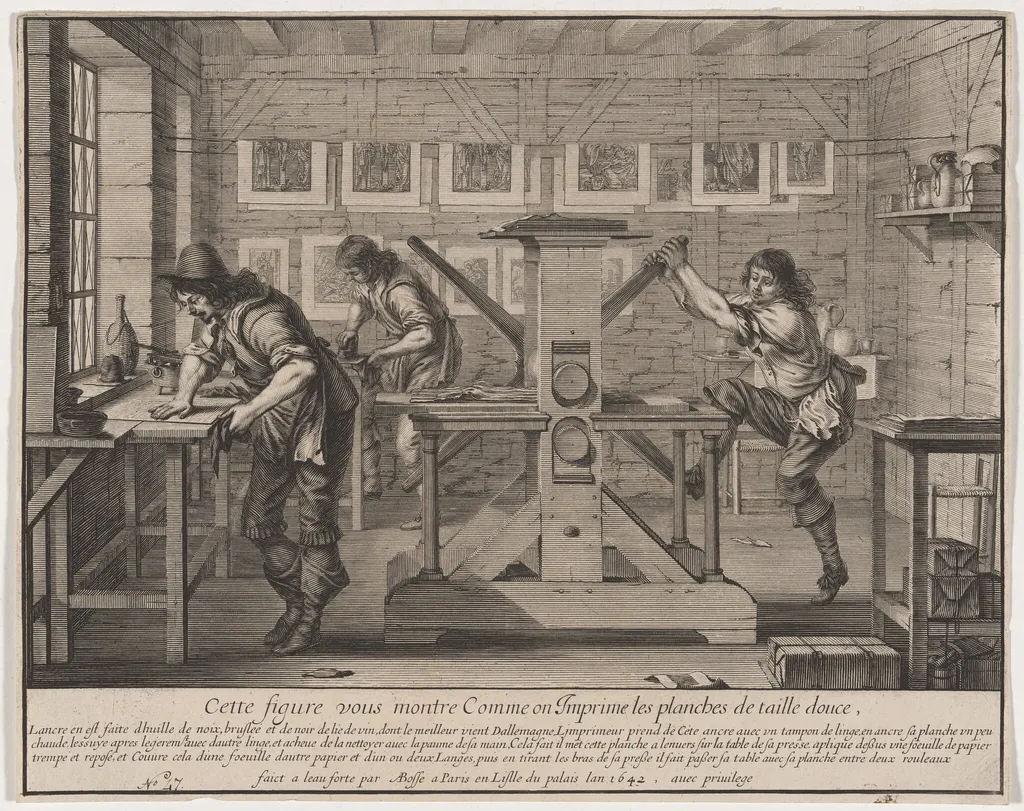
The Intaglio Printers is an ink print by the Baroque artist Abraham Bosse. It dates from 1642 and is held in the collection of the National Gallery of Art.
About this work
Overview
Created in 1642 by French artist Abraham Bosse, this etching on laid paper captures the labor of intaglio printmaking. Bosse, a skilled practitioner of the medium, rendered the scene with precise line work and careful attention to the tools and gestures of the trade. The image serves as both a documentary record and a quiet tribute to the craft of print production in early modern France.
Subject & Meaning
The scene depicts three artisans engaged in the meticulous process of printing from engraved copper plates. Each figure is absorbed in a specific task—inking, transferring, or adjusting the press—suggesting a division of skilled labor. The absence of grandeur or spectacle emphasizes the dignity of manual work, presenting printmaking not as spectacle but as a disciplined, collaborative practice.
Technique & Style
The composition is tightly framed, focusing attention on hands and implements, reflecting Bosse’s training in the detailed traditions of Parisian printmaking.
Bosse employed fine, controlled etching lines to render textures: the grain of the paper, the sheen of ink, the metal of tools. A single shaft of light falls across the wall, heightening the contrast between shadow and detail without dramatic effect. The composition is tightly framed, focusing attention on hands and implements, reflecting Bosse’s training in the detailed traditions of Parisian printmaking.
History & Provenance
Bosse produced this print during a period of growing interest in documenting artisanal trades. It was likely circulated among fellow printmakers and patrons familiar with the technical process. While its early ownership is undocumented, it entered institutional collections in the 19th or early 20th century, where it is now preserved as a record of pre-industrial print technology.
Context
In mid-17th century France, printmaking was both an art and a commercial craft. Bosse’s work coincided with the rise of illustrated books and the professionalization of print shops. His depiction aligns with contemporary efforts to systematize and legitimize artisanal knowledge, mirroring broader cultural shifts toward valuing technical expertise over mere decoration.
Legacy
The print remains a key visual source for understanding the mechanics of intaglio printing before industrialization. Bosse’s unembellished approach influenced later documentation of craft processes. Though not widely reproduced in his lifetime, it is now referenced in studies of print history and the material culture of art production.
Artist & collection

Artist
Abraham Bosse (c. 1604 – 14 February 1676) was a French artist, mainly as a printmaker in etching, but also in watercolour.

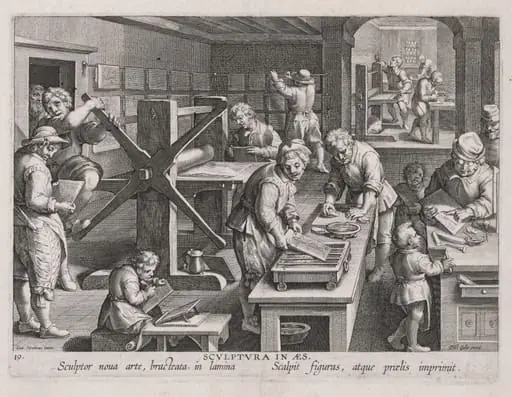 Sculptura in Aes, The Workshop of an Engraver
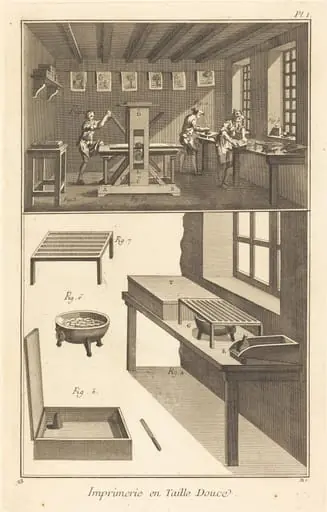 Imprimerie en Taille Douce: pl. I
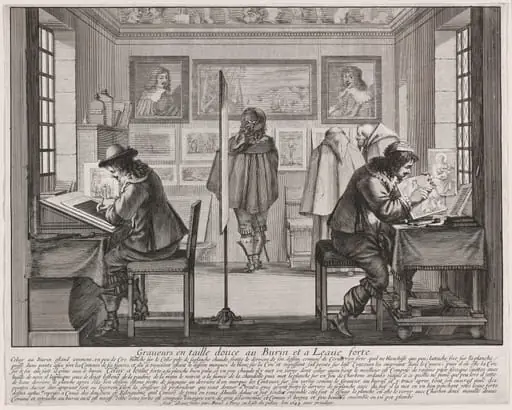 Graveurs en taille douce au burin et à l'eau forte (Copper Plate Engravers and Etchers)
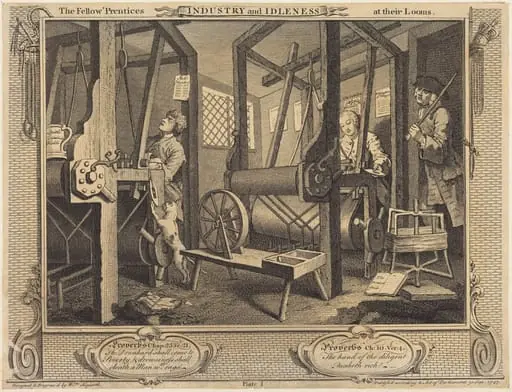 The Fellow 'Prentices at Their Looms
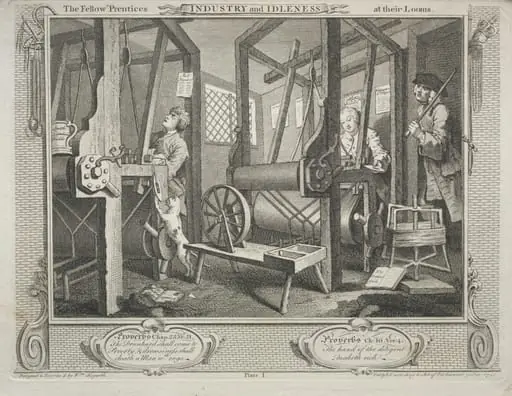 Industry and Idleness: The Fellow Prentices at their Looms
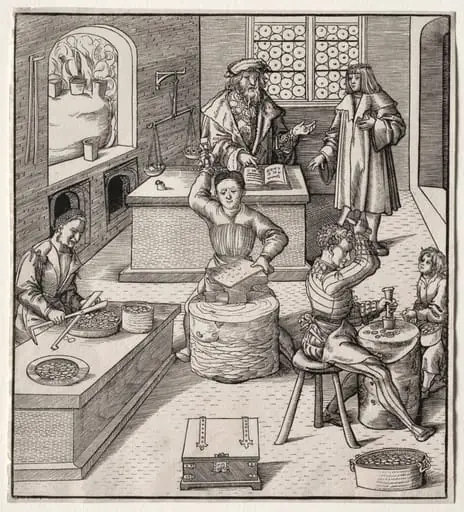 Young Maximilian in the Mint
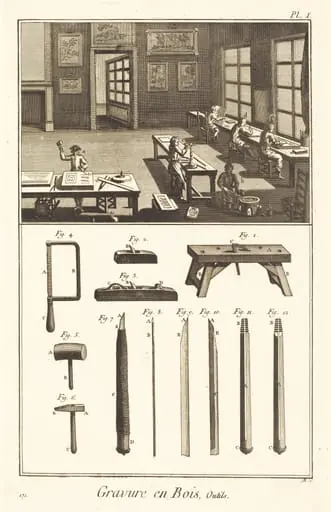 Gravure en Bois, Outils: pl. I
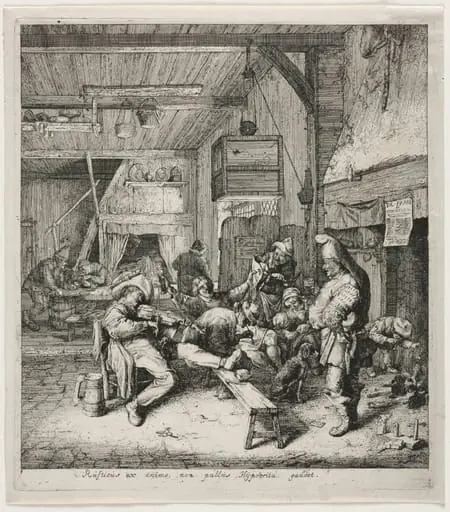 Violin Player Seated in the Inn
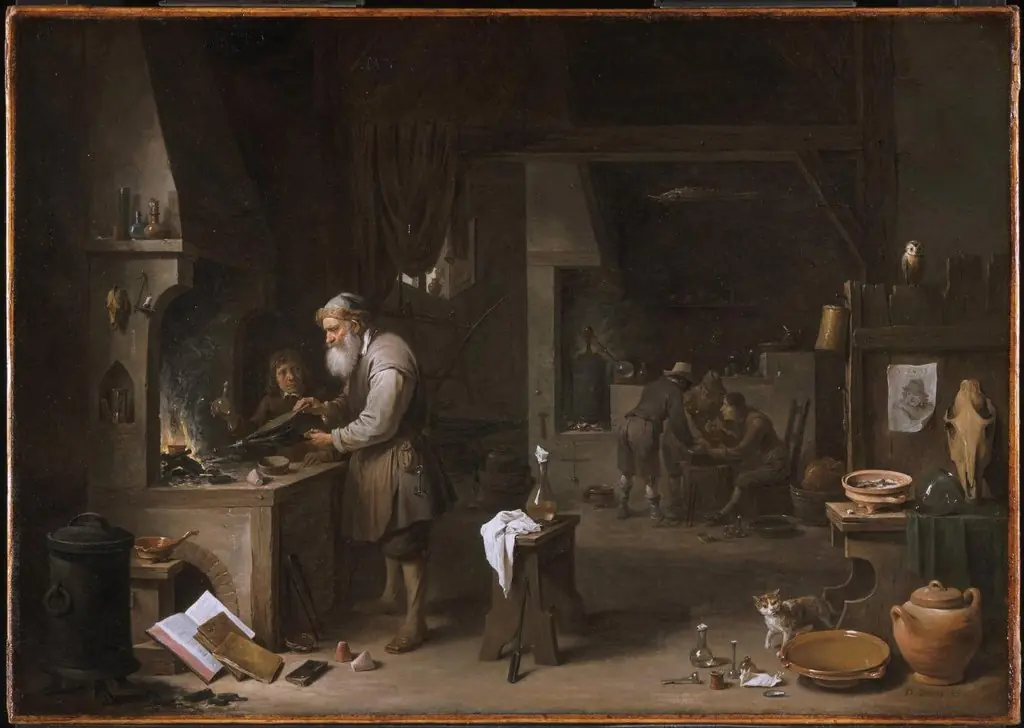 The Alchemist
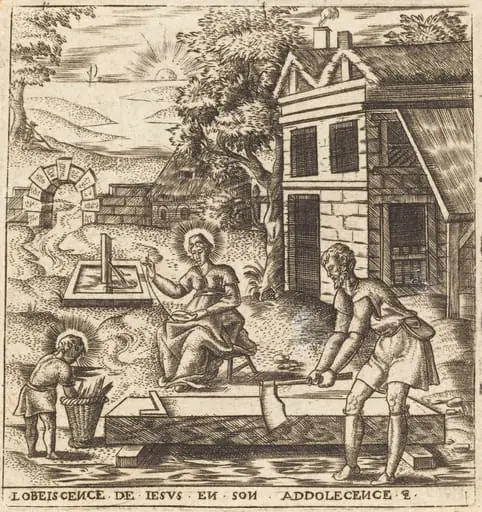 Jesus the Obedient Son
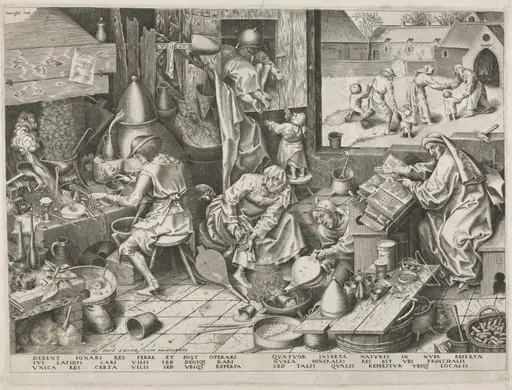 Alchemist
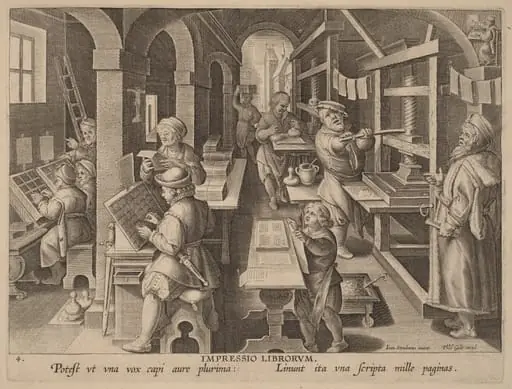 Impressio Liborum (Printing Books)