Artwork
The Feast Celebrating the Return of the Prodigal Son
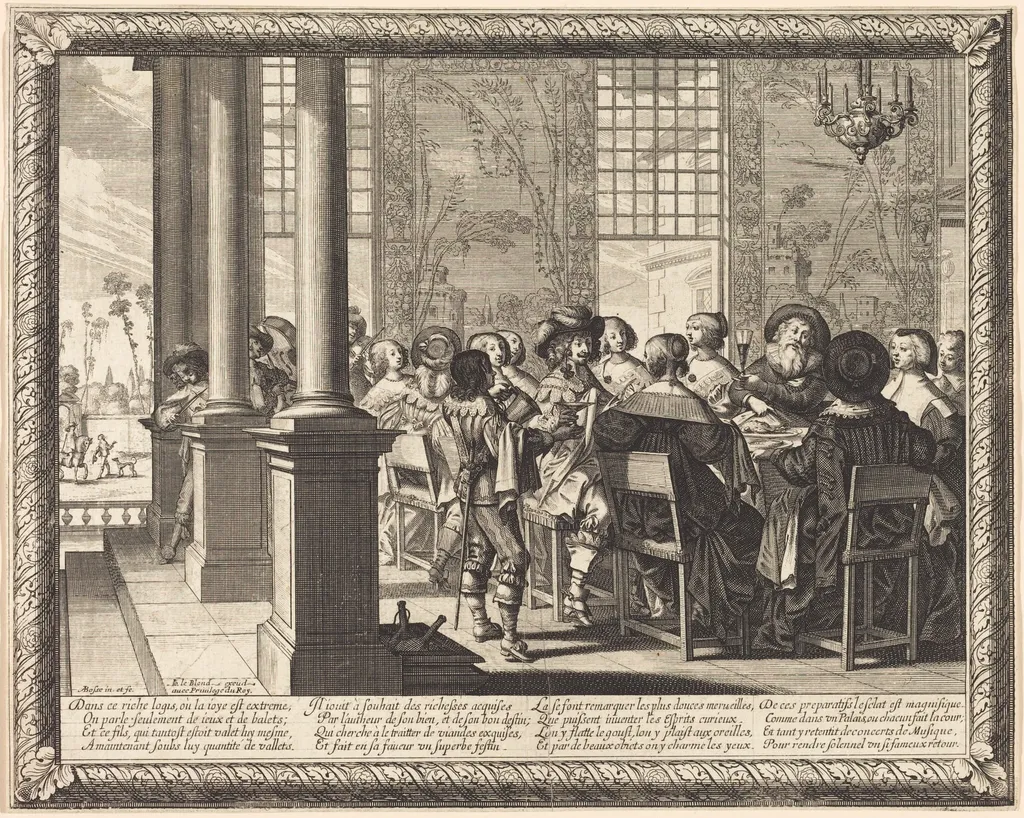
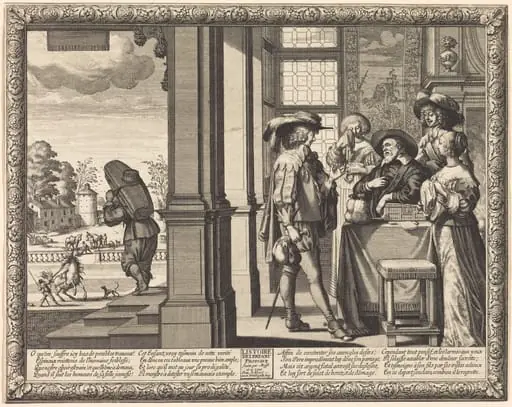
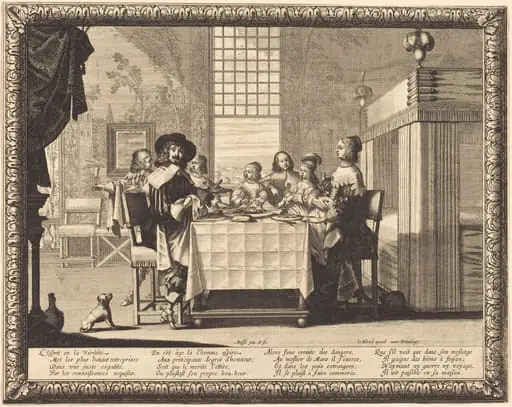
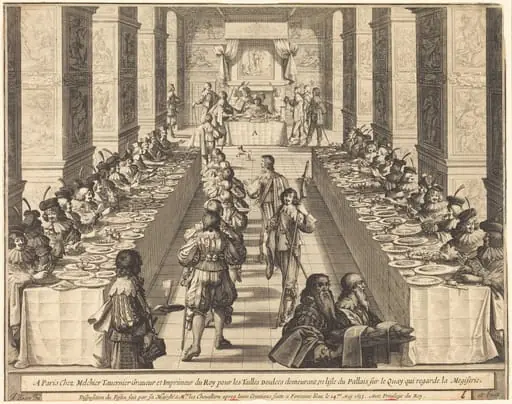
The Feast Celebrating the Return of the Prodigal Son is an ink print by the Baroque artist Abraham Bosse. It dates from 1639 and is held in the collection of the National Gallery of Art.
About this work
Overview
The composition captures a crowded interior, emphasizing movement and interaction among figures, typical of 17th-century Northern European printmaking.
Created in 1639 by French printmaker Abraham Bosse, this engraving illustrates a moment from the biblical parable of the prodigal son. Bosse, known for his precise line work and domestic scenes, rendered the celebration in fine detail using traditional engraving techniques. The composition captures a crowded interior, emphasizing movement and interaction among figures, typical of 17th-century Northern European printmaking.
Subject & Meaning
The scene portrays the father’s joyful welcome of his returned son, as described in Luke 15. Guests gather around a laden table, some playing music, others offering food, while the prodigal stands quietly among them. The presence of a small dog and the pipe held by a central figure suggest everyday life infused with ritual. The moment conveys forgiveness and communal restoration, rendered without overt religious symbolism, grounding the sacred in the domestic.
Technique & Style
Bosse employed fine, controlled engraving lines to model form and depth, creating a sense of volume in clothing, architecture, and facial expressions. The intricate cross-hatching defines shadows and textures, from the carved wall panels to the folds of fabric. Tall arched windows with iron bars and ornate moldings frame the space, demonstrating his attention to architectural detail and his mastery of tonal gradation through line alone.
History & Provenance
The print was produced during Bosse’s most active period in Paris, when he was documenting contemporary social life alongside biblical themes. It was likely circulated among educated patrons familiar with both scripture and emerging print culture. No early ownership records are widely documented, but its survival in multiple museum collections suggests it was valued for its technical precision and narrative clarity.
Context
In 17th-century France, printmaking served both artistic and didactic purposes. Bosse’s work aligned with a broader trend of illustrating moral tales through accessible imagery. His focus on interior scenes and middle-class settings reflected growing interest in domestic virtue and social order. This engraving fits within a corpus of prints that translated religious stories into relatable, contemporary environments.
Legacy
Bosse’s engraving contributed to the standardization of narrative printmaking in early modern Europe. His clear composition and detailed rendering influenced later artists working in etching and line engraving. While not widely reproduced today, the work remains a reference for scholars studying how biblical narratives were visually adapted for secular audiences in the 1600s.
Artist & collection

Artist
Abraham Bosse (c. 1604 – 14 February 1676) was a French artist, mainly as a printmaker in etching, but also in watercolour.