Artwork
Hendrik Hondius
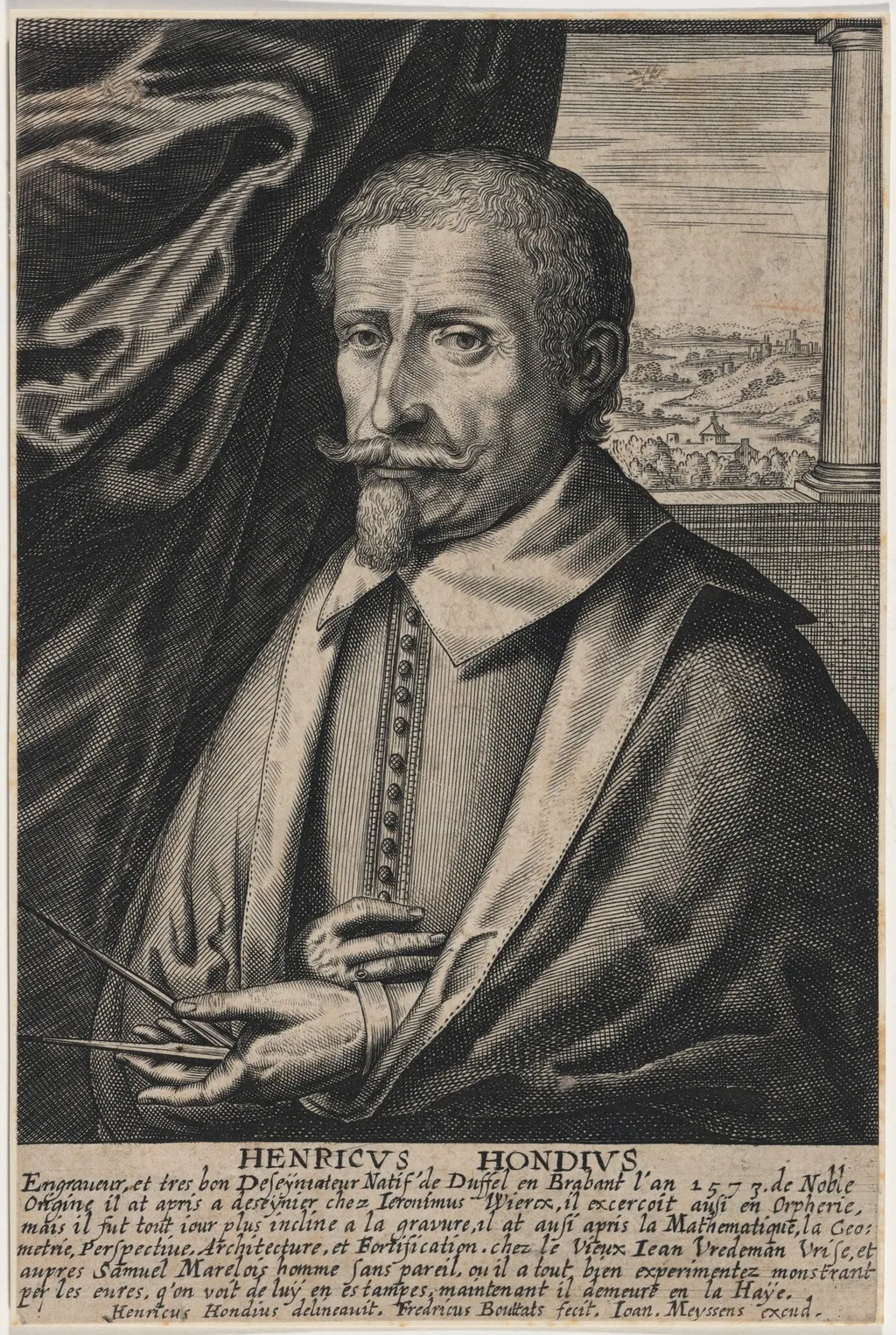
Hendrik Hondius is an ink print by the Baroque artist Frederick Bouttats II. It dates from 1643 and is held in the collection of the National Gallery of Art.
About this work
Overview
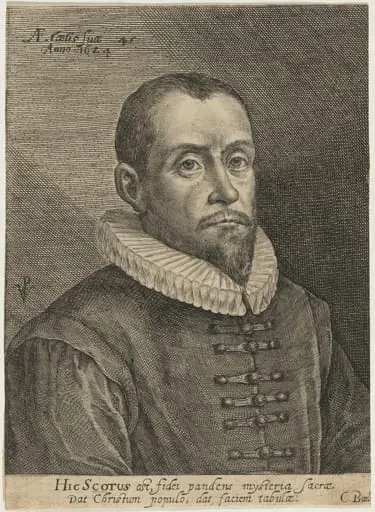
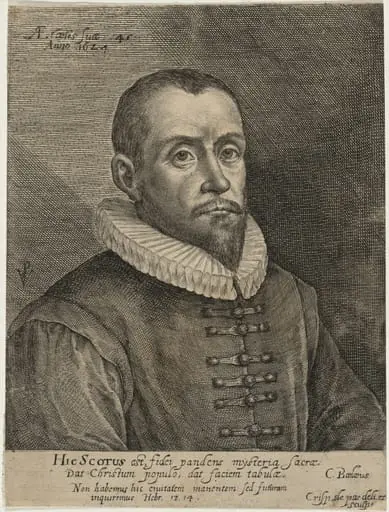
The print, executed in 1643 by the Flemish engraver Frederick Bouttats II, presents a monochrome portrait of Hendrik Hondius, a noted Dutch engraver. Rendered in black ink on paper, the image shows the sitter in a dark, buttoned coat, his facial hair prominent, and a sheet of paper held in his right hand. A modest landscape with buildings, a river and a clouded sky recedes behind him.
Subject & Meaning
The portrait identifies the figure by the inscription “HENRICUS HONDIUS” at the top, emphasizing his professional identity as a skilled engraver. The inclusion of a paper suggests his work with printed matter, while the restrained background underscores a focus on the individual’s scholarly and artistic stature rather than narrative content.
Technique & Style
Bouttats employed the traditional engraving method, incising fine lines into a metal plate to produce a range of tonal values. The crisp hatching delineates the texture of the coat and facial hair, while broader strokes convey the atmospheric sky. The overall style reflects the precise, linear aesthetic typical of mid‑seventeenth‑century Northern European portrait prints.
History & Provenance
Created in the mid‑1600s, the print likely served as a commemorative image for Hondius’s contemporaries, circulating among collectors of printed portraiture. The artist’s signature appears on the plate, confirming authorship, and the work has been documented in several catalogues of early modern engravings, indicating its preservation within institutional collections.
Artist & collection