Artwork
Artus Wolfart
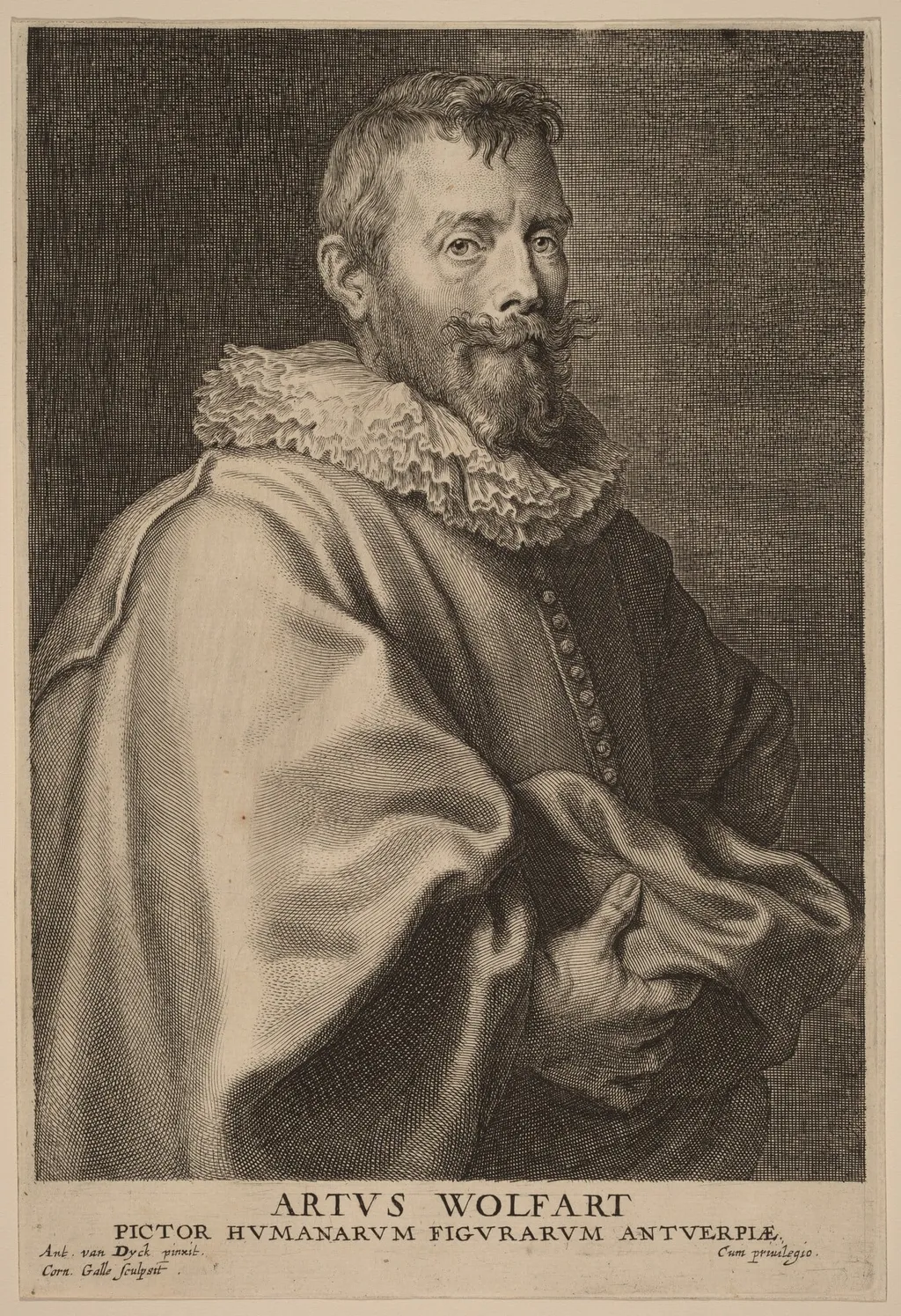
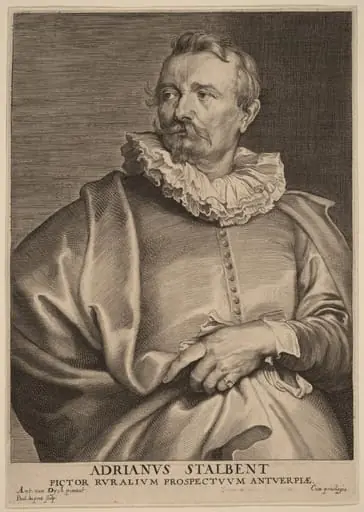
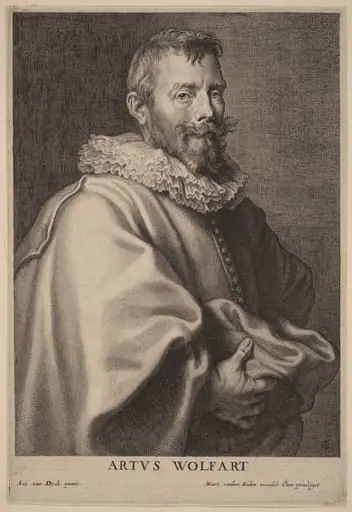
Artus Wolfart is an ink print by the Baroque artist Cornelis Galle I. It dates from 1634 and is held in the collection of the National Gallery of Art.
About this work
Overview
Created around 1634, this black-and-white engraving by Cornelis Galle the Elder depicts a man named Artus Wolfart.
Created around 1634, this black-and-white engraving by Cornelis Galle the Elder depicts a man named Artus Wolfart. Executed with fine, controlled lines, the portrait captures the subject’s aged features and solemn demeanor. Galle, trained in Antwerp and Rome, specialized in reproductive and original prints, and this work exemplifies his precision in translating human form into engraved copperplate.
Subject & Meaning
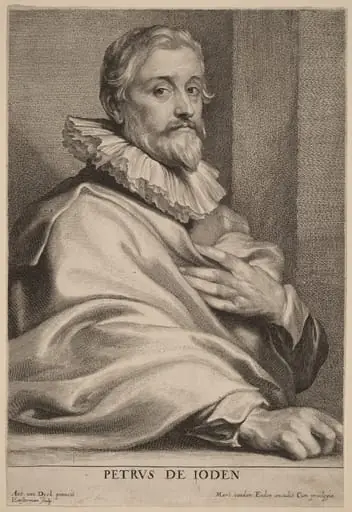
The sitter, Artus Wolfart, is portrayed with quiet dignity, his hands resting on his chest and his gaze directed away from the viewer. The detailed rendering of his beard, wrinkles, and high-collared garment suggests a man of substance, possibly a scholar or civic figure. The inscription confirms his identity, but no overt symbolism or narrative context is provided, leaving the portrait as a straightforward record of appearance and status.
Technique & Style
Galle employed the engraving technique, using a burin to incise fine lines into a copper plate, which was then inked and pressed onto paper. The texture of skin, fabric, and hair is rendered through delicate cross-hatching and varied line weight. His style reflects the Northern European tradition of meticulous detail, emphasizing realism over idealization, with no color or tonal gradation beyond the contrast of ink and paper.
History & Provenance
Cornelis Galle the Elder, born in Antwerp in 1576, trained under his father Philip Galle and spent formative years in Rome studying classical and Renaissance models. Upon returning to Antwerp, he operated as both engraver and printseller. This portrait likely originated as part of a series of contemporary figures, though no documented ownership history precedes its modern appearance in collections.
Context
In early 17th-century Antwerp, portraiture in print flourished alongside the city’s thriving publishing industry. Artists like Galle catered to a market interested in likenesses of local notables, often derived from drawings or paintings. Engravings served as accessible, reproducible records of identity, bridging the gap between elite painting and broader public circulation of images.
Legacy
Galle’s work contributed to the standardization of portrait engraving in the Low Countries, influencing later generations of printmakers. While not widely celebrated as a groundbreaking artist, his technical discipline and consistent output helped preserve the visual record of his time. This portrait remains a quiet example of how printmaking sustained individual recognition beyond the canvas.
Artist & collection

Artist
Cornelis Galle the Elder (1576 – 29 March 1650), a younger son of Philip Galle, was born at Antwerp in 1576, and was taught engraving by his father.

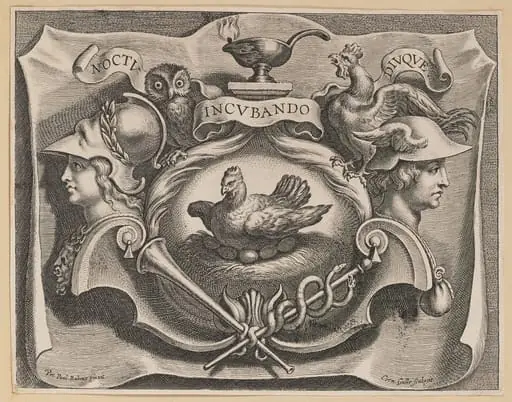 Vignette for the Title Page of Martinus Bonacina, Opera Omnia
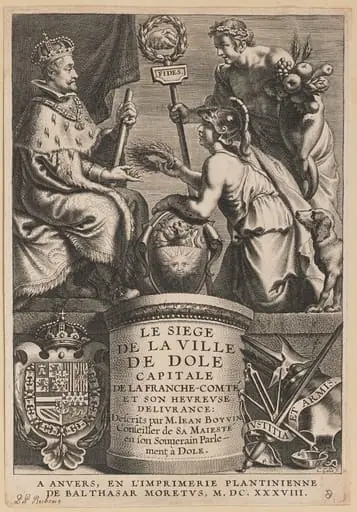 Title Page for Jean Boyvin, Le Siege de la Ville de Dole
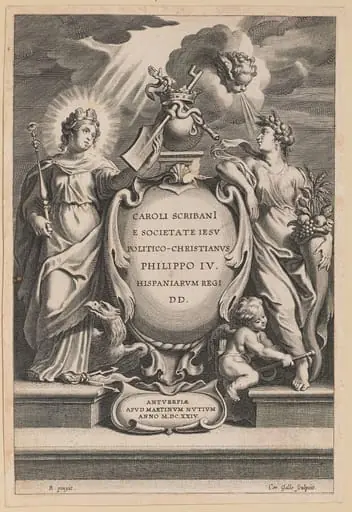 Title Page for Carolus Scribani, Politico-Christianus
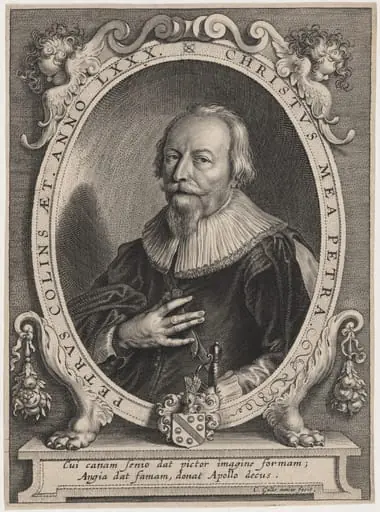 Petrus Collins
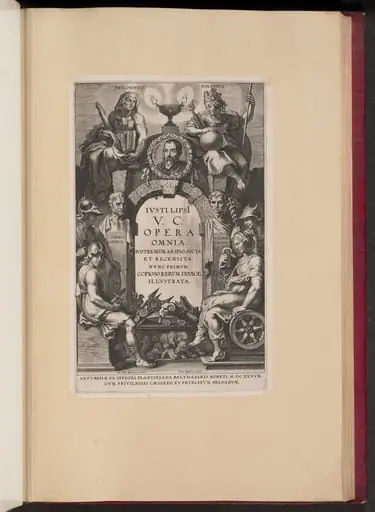 Title Page for Justus Lipsius, Opera Omnia, I
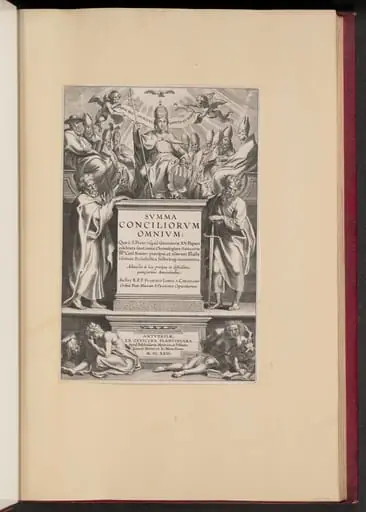 Title Page for F. Longo a Coriolano's "Svmma Conciliorvm Omnivm"
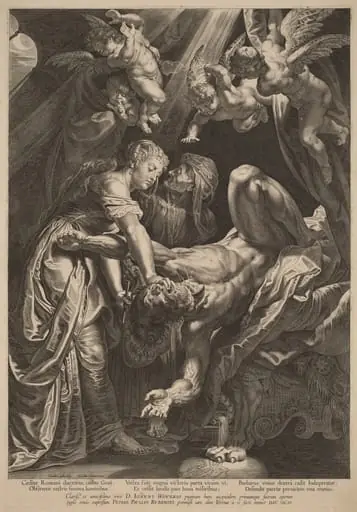 Judith Beheading Holofernes
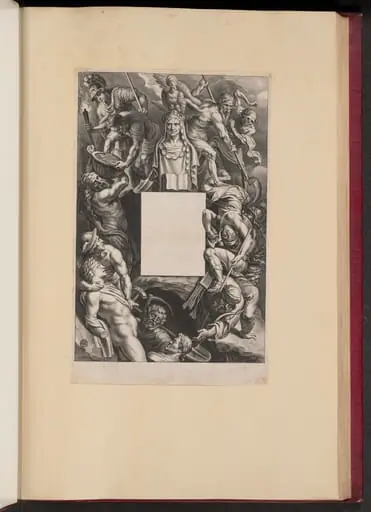 Title Page for Hubert Goltzius, Romanae et Graecae Antiqvitatis Monvmenta (Opera Omnia, I)