Artwork
Coastal Landscape
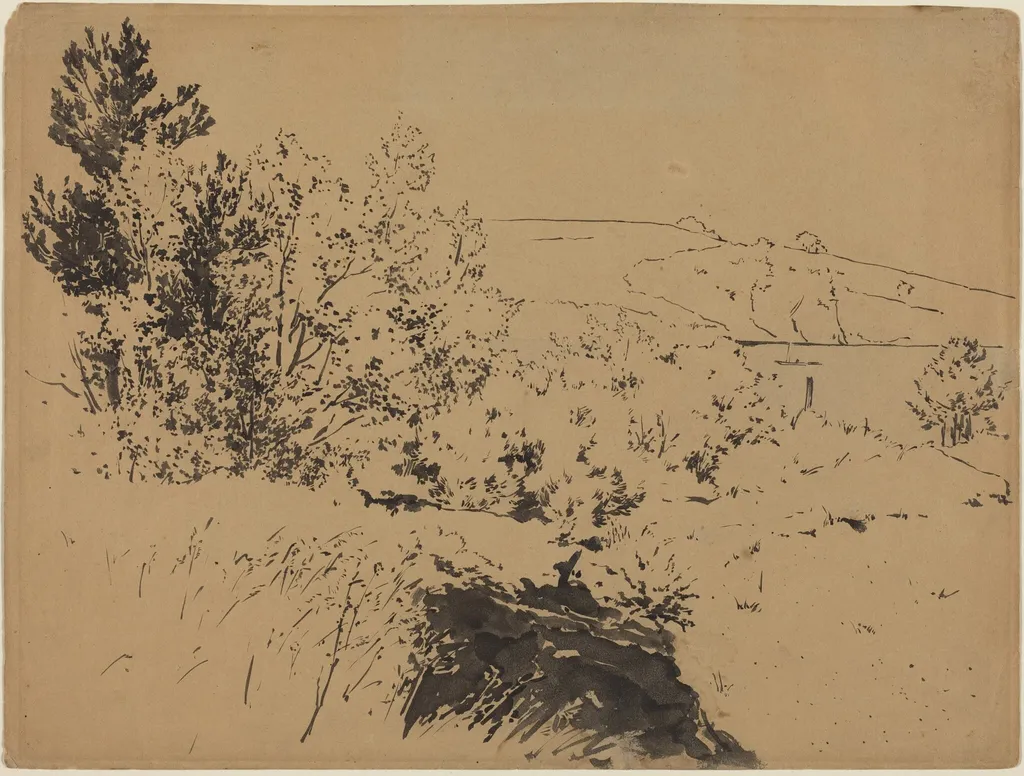
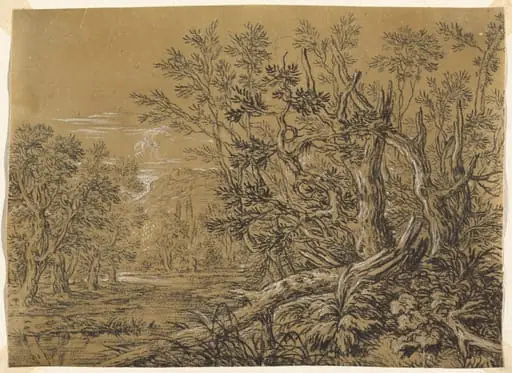
Coastal Landscape is an ink drawing by the Romanticist artist Félix Bracquemond. It dates from 1874 and is held in the collection of the National Gallery of Art. Created in 1874, this ink and wash drawing by Félix Henri Bracquemond captures a windswept coastal scene on brown wove paper.
About this work
Overview
Created in 1874, this ink and wash drawing by Félix Henri Bracquemond captures a windswept coastal scene on brown wove paper.
Created in 1874, this ink and wash drawing by Félix Henri Bracquemond captures a windswept coastal scene on brown wove paper. Executed with a brush, the work combines bold black lines with a subtle, faded blue wash, emphasizing atmosphere over detail. Its sketch-like quality reflects the artist’s interest in spontaneous observation and the transient effects of nature, aligning with broader 19th-century shifts in drawing practices.
Subject & Meaning
The scene depicts a barren shoreline under turbulent conditions—twisted branches, sparse vegetation, and implied motion suggest a storm’s passage or the force of sea winds. There is no human presence; the focus lies in nature’s raw, unmediated energy. The faint blue wash evokes a hazy sky or distant sea, reinforcing a mood of quiet isolation and elemental force rather than narrative.
Technique & Style
Bracquemond employed loose, uneven ink strokes to mimic the irregularity of wind and wave motion. The brown paper serves as a mid-tone ground, allowing the dark ink to pop while the thin blue wash adds depth without definition. The absence of cross-hatching or heavy shading underscores a preference for immediacy and fluidity, characteristic of his experimental approach to drawing as a direct response to nature.
History & Provenance
This drawing emerged during a period when Bracquemond was deeply engaged in printmaking revival and Japanese aesthetic influences. Though not widely exhibited in his lifetime, it reflects his personal studio practice rather than commissioned work. Its survival suggests it was retained within his circle, possibly by family or close associates, including his wife, the painter Marie Bracquemond.
Context
In the 1870s, French artists increasingly turned to drawing as a medium for direct expression, moving away from academic finish. Bracquemond’s work intersected with early Impressionist concerns—capturing fleeting moments and natural light—while his exposure to Japanese prints informed his flattened space and rhythmic line. This piece exemplifies how such influences merged in private, experimental works outside formal exhibitions.
Legacy
Though less known than his contemporaries, Bracquemond’s drawings contributed to the redefinition of sketching as a legitimate artistic language. His use of unconventional materials and emphasis on spontaneity influenced later generations interested in the expressive potential of line and wash. This work stands as a quiet testament to his role in bridging traditional draftsmanship with modern sensibilities.
Artist & collection

Artist
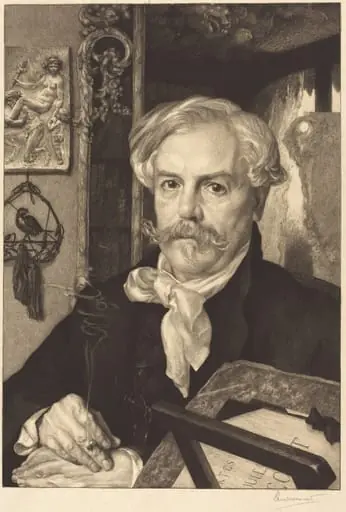
Félix Henri Bracquemond (French pronunciation: ; 22 May 1833 – 29 October 1914) was a French painter, etcher, and printmaker.

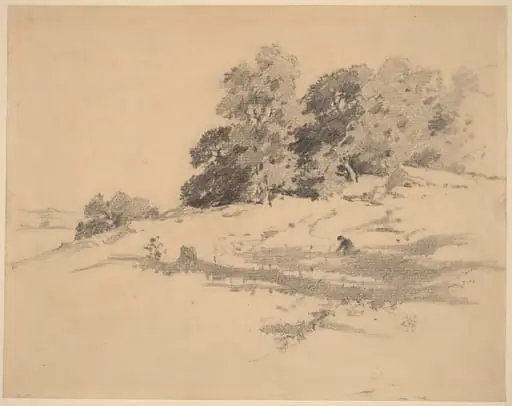 Landscape near Washington, Connecticut
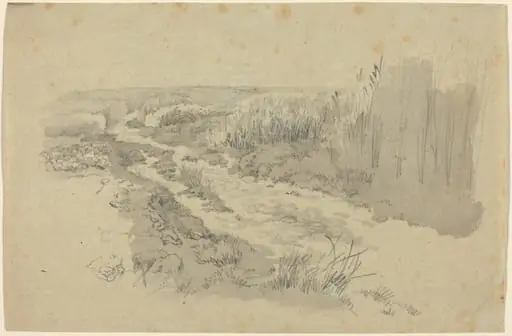 A Path through Fields near Leipzig
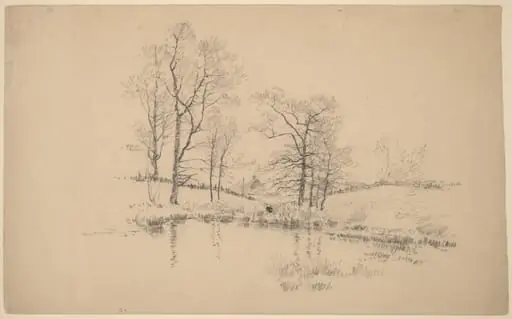 Meadow Pond, New York
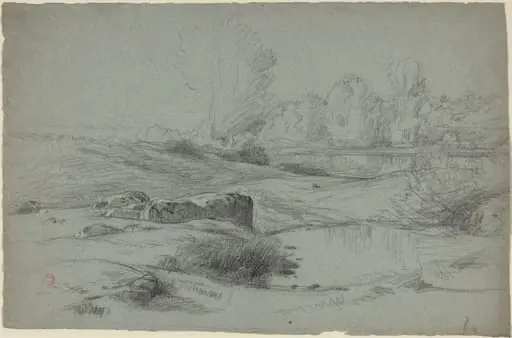 A Rocky Meadow by a River
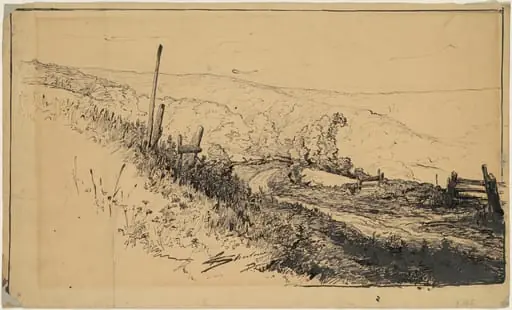 A Road in the Hills Near Dordrecht
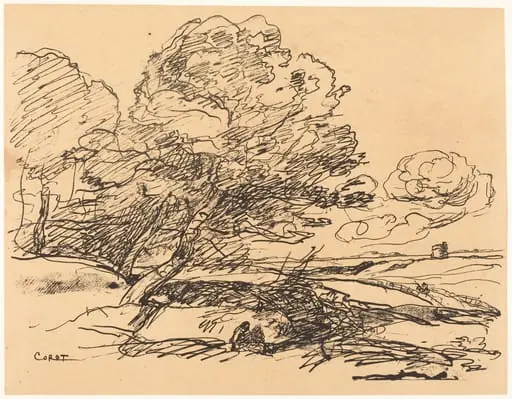 The Lonely Tower (La Tour isolee)
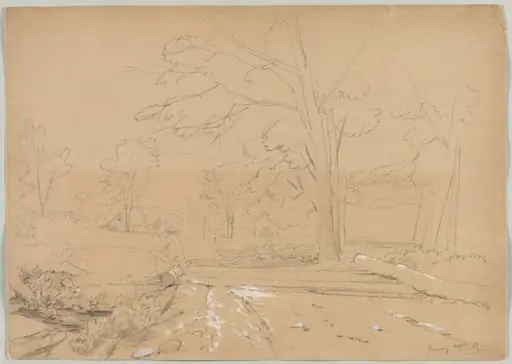 Landscape with Man Fishing, Conway, New Hampshire
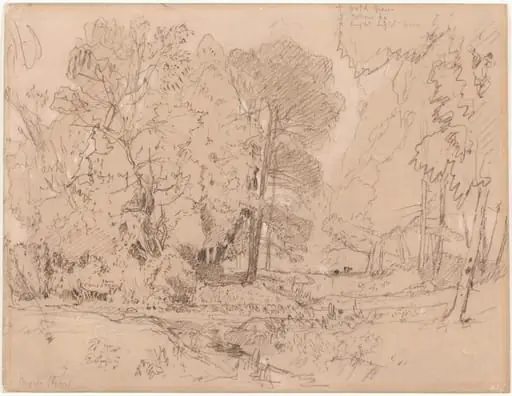 Wooded Landscape
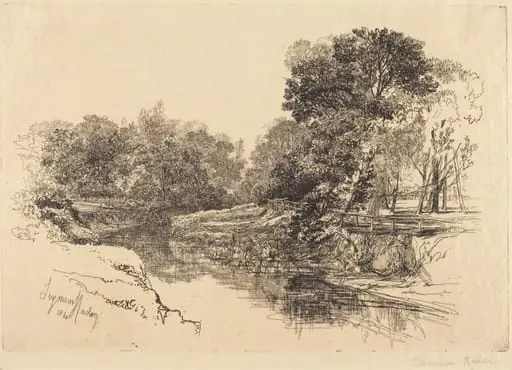 A River in Ireland
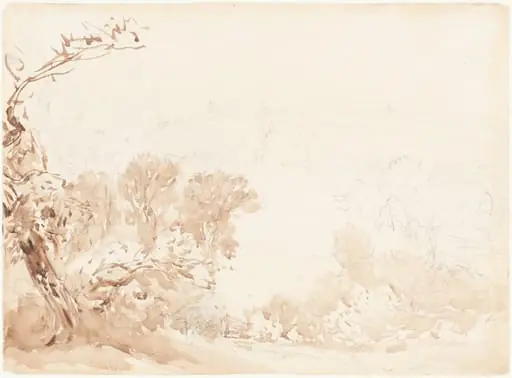 Hillside and Trees
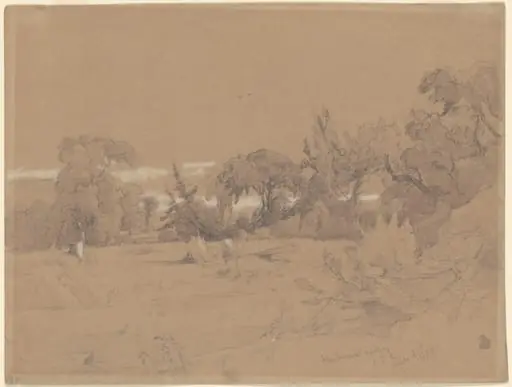 Sherberne Valley
 Stream through an Ancient Forest