Artwork
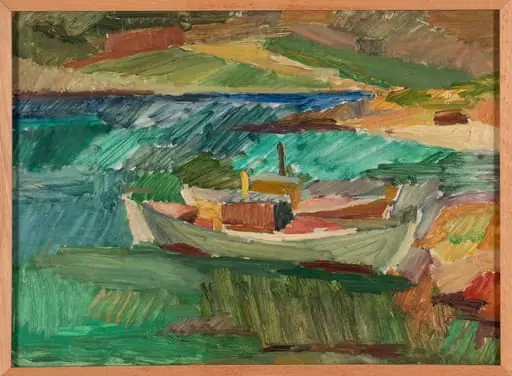
Landscape- Andros-fouskothalasia
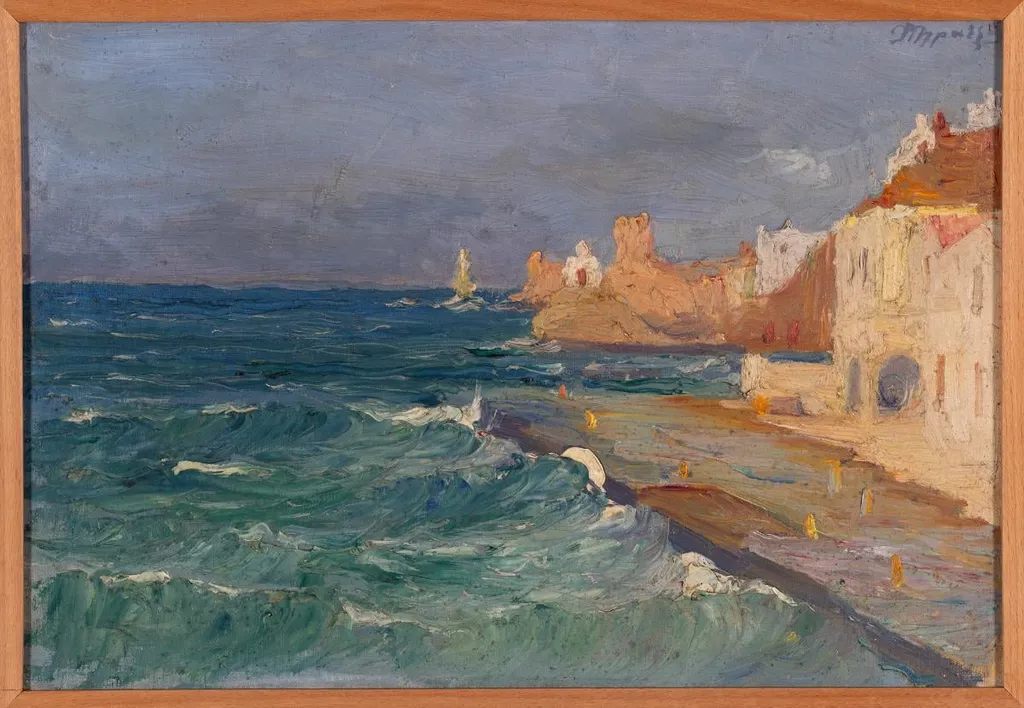
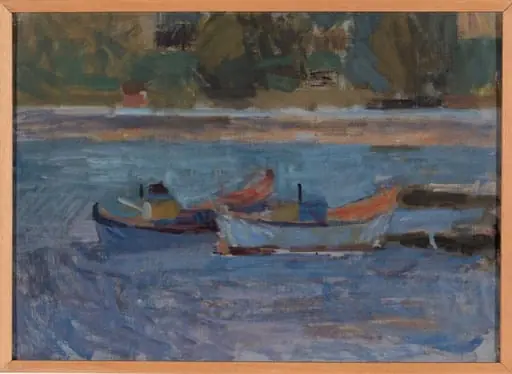
Landscape- Andros-fouskothalasia is an unspecified painting by Braesas Dimitrios. It is held in the collection of the Athens School of Fine Arts.
About this work
Overview
The work is rendered in oil or similar medium with pronounced impasto, emphasizing materiality over idealized detail.
This landscape painting, attributed to Braesas Dimitrios, depicts a coastal scene on the Greek island of Andros. It is part of the collection at the Museum of Ethnography. The composition centers on a rugged shoreline meeting turbulent water, with minimal human presence beyond a single distant sailboat and a modest structure on the right. The work is rendered in oil or similar medium with pronounced impasto, emphasizing materiality over idealized detail.
Subject & Meaning
The scene captures a quiet, unidealized moment of island life—neither pastoral nor dramatic. The rocky shore, choppy sea, and modest architecture suggest a working coastal environment rather than a tourist view. The lone sailboat implies local activity, while the building’s simple form reflects vernacular construction. The absence of figures reinforces a sense of solitude, evoking the rhythm of daily life shaped by sea and stone.
Technique & Style
Brushwork is thick and deliberate, creating a tactile surface that mimics the texture of weathered rock and churning water. The palette is restrained, dominated by muted blues and greens, with subtle accents of brown and ochre in the architecture. The sky, rendered in cool gray-blue, lacks detail, allowing the horizon and water to dominate. This approach prioritizes sensory impression over precise representation, aligning with early 20th-century regional realism.
History & Provenance
The painting entered the Museum of Ethnography’s collection as part of a broader effort to document regional Greek life in the mid-20th century. Its attribution to Braesas Dimitrios is based on archival records and stylistic comparison with other known works. There is no documented exhibition history prior to its acquisition, suggesting it was likely created for personal or local circulation before being recognized for its ethnographic value.
Context
Created during a period when Greek artists increasingly turned to local landscapes as subjects, this work reflects a shift away from academic traditions toward direct observation of everyday environments. Andros, with its rugged terrain and maritime economy, was a common focus for artists seeking authenticity. The painting’s modest scale and unembellished style align with broader movements in Greek art that valued regional identity over grand narrative.
Legacy
While not widely exhibited beyond institutional settings, the painting contributes to the documentation of Andros’s visual culture in the 20th century. It remains a quiet example of how local artists recorded their surroundings without romanticizing them. Its presence in an ethnographic museum underscores its role as a record of place rather than a celebrated artistic achievement.
Artist & collection
Artist
Braesas Dimitrios spent summers on Andros, painting the island’s light like it was a living thing—until the wind blew his tubes of paint off the cliffs more than once.
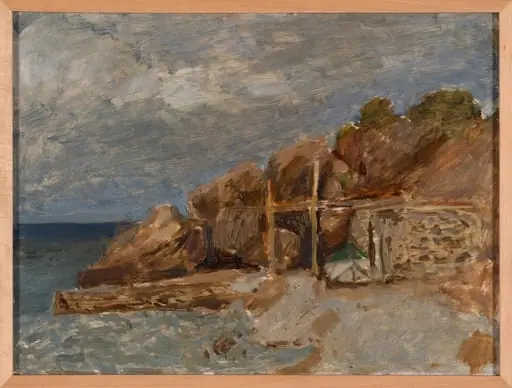 Outdoor study
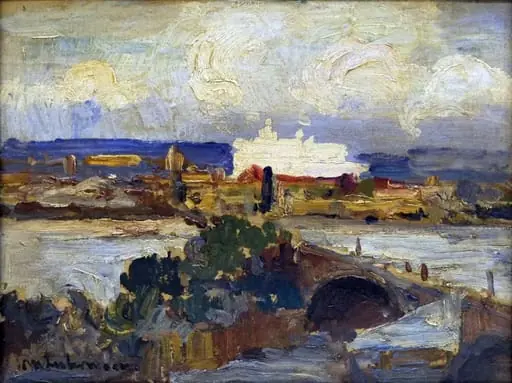 Peisaj (Vedere din Roma?)
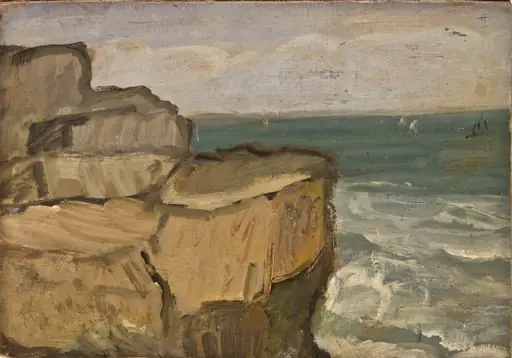 Peisaj marin cu stânci
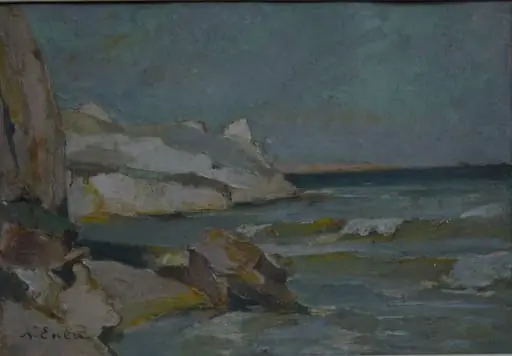 Peisaj marin
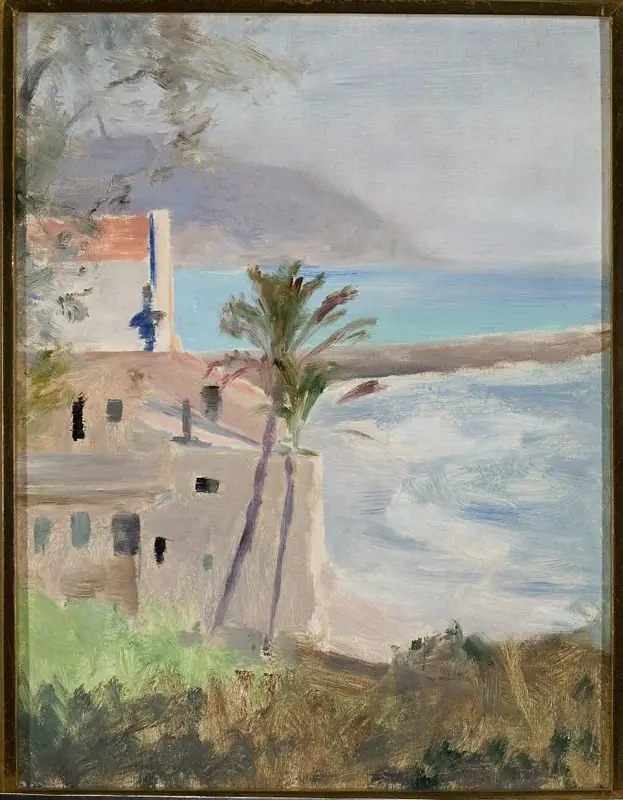 Morning in Porto Cruz Maurizia. From the journey to Italy
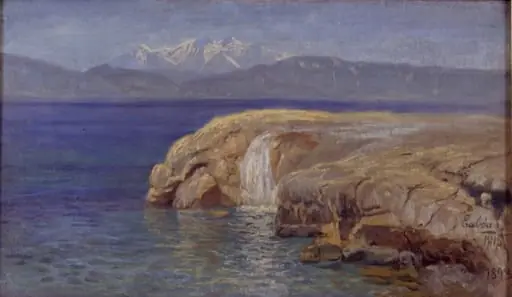 Klippekyst med vandfald på Eubøa
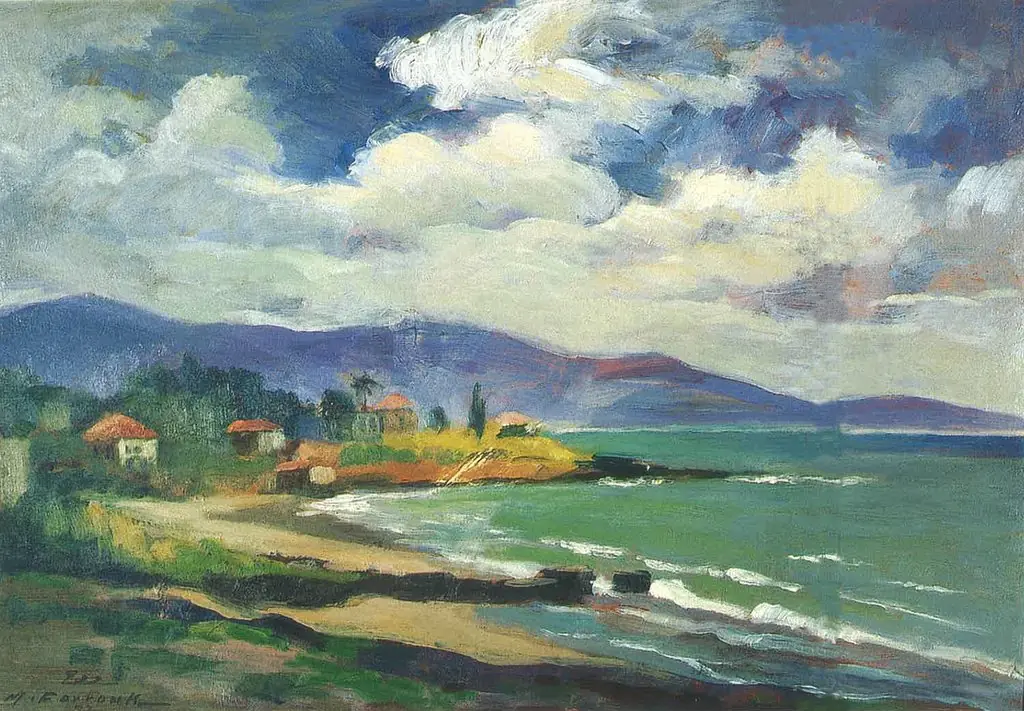 Dbayeh
 Outdoor study
 Syracuse (The Greek Theatre)
 Storm Cloud over the Sea
 View of Constantinople. From the journey to Constantinople
 Outdoor study