Artwork
Farmington, Connecticut
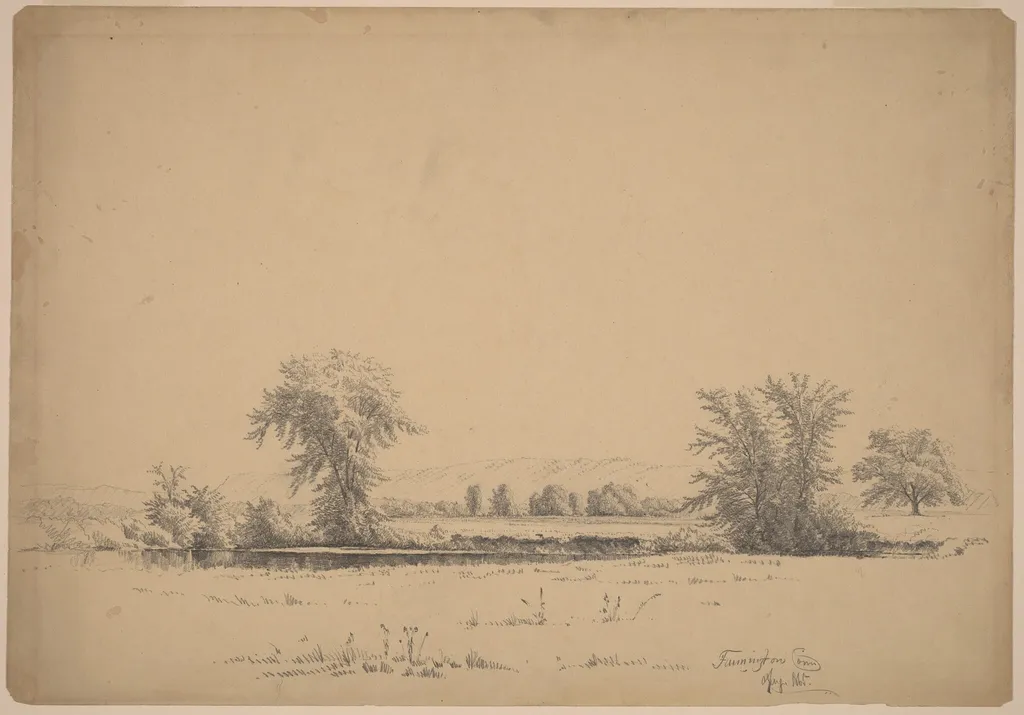
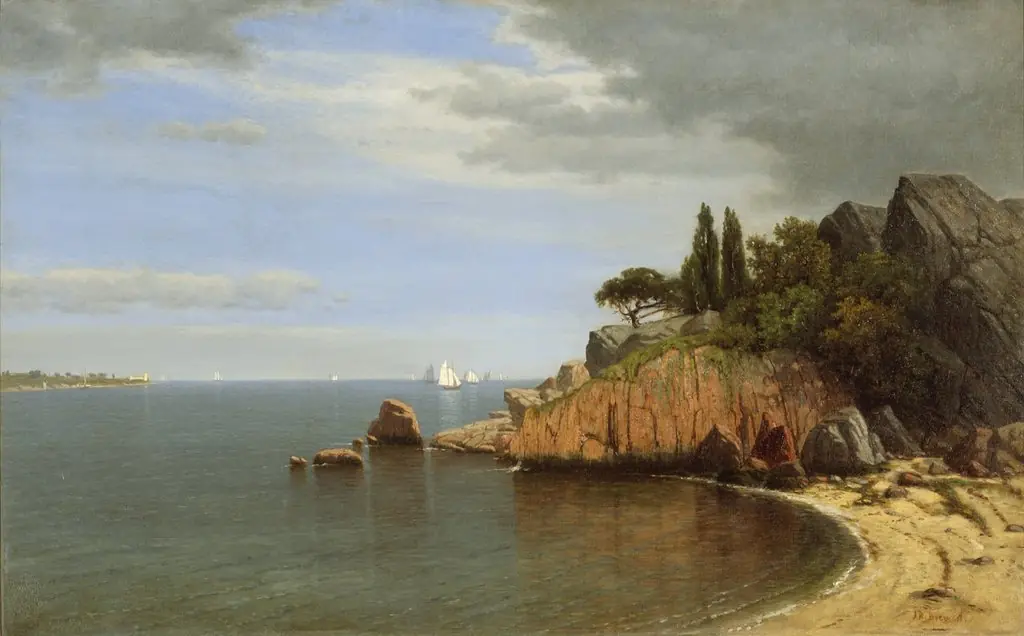
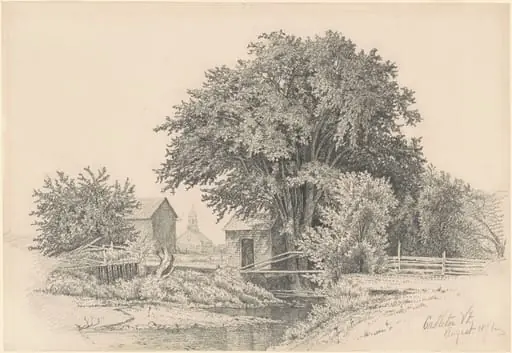
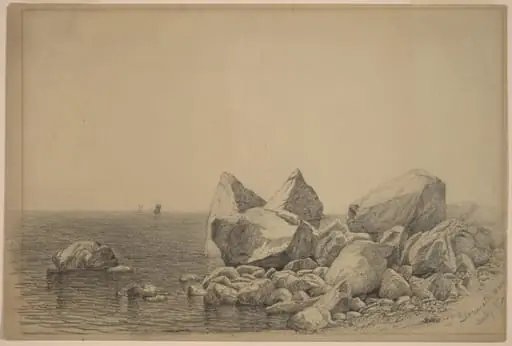
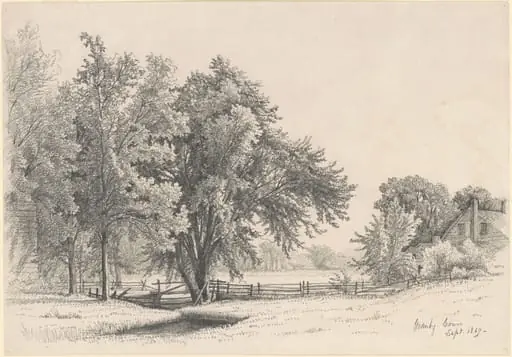
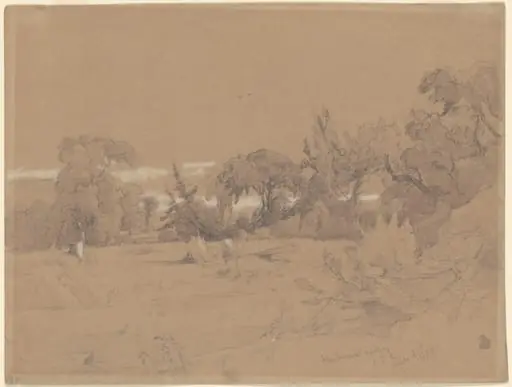
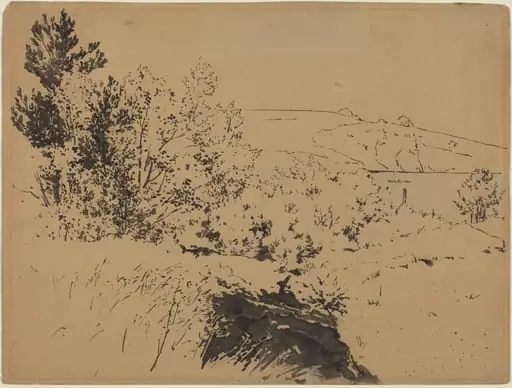
Farmington, Connecticut is a graphite drawing by the Impressionist artist James Renwick Brevoort. It dates from 1865 and is held in the collection of the National Gallery of Art.
About this work
Overview
Its modest scale and medium reflect a study-oriented approach, typical of artists documenting the American landscape during the mid-nineteenth century.
Created in 1865, *Farmington, Connecticut* is a graphite drawing by James Renwick Brevoort, an American artist linked to the Hudson River School. Executed on light brown wove paper, the work captures a quiet rural scene with careful attention to natural forms. Its modest scale and medium reflect a study-oriented approach, typical of artists documenting the American landscape during the mid-nineteenth century.
Subject & Meaning
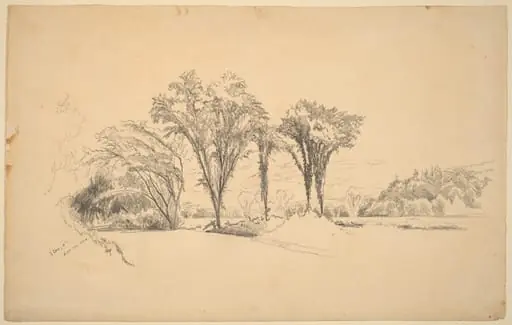
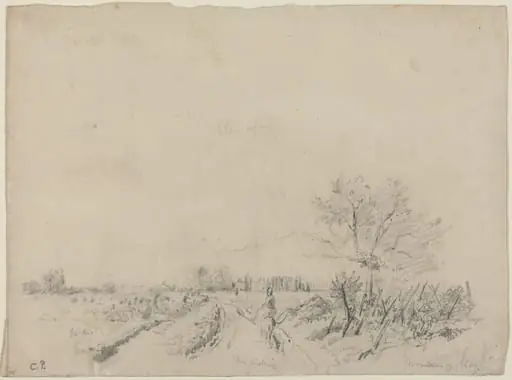
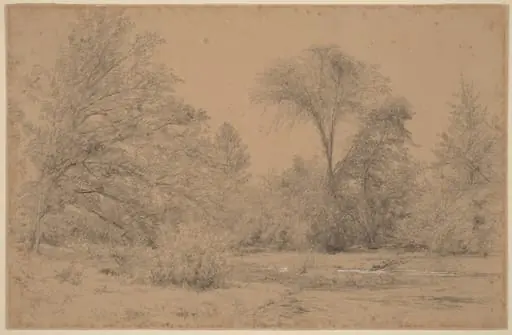
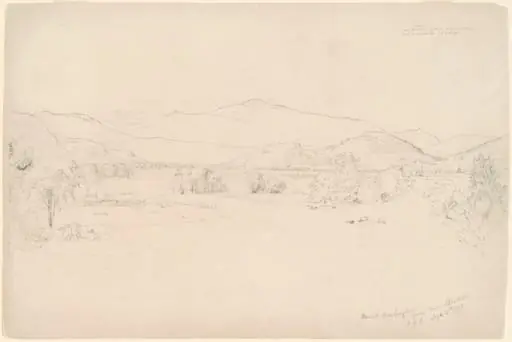
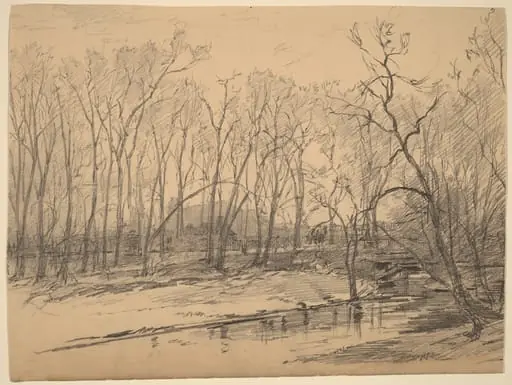
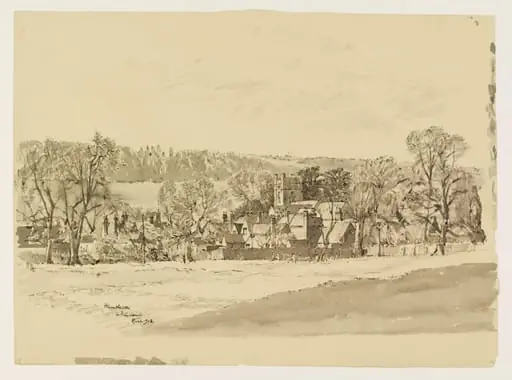
The drawing presents a tranquil Connecticut countryside: dense trees and underbrush in the foreground, an open field in the middle ground, and distant rolling hills under a pale sky. There is no human presence, emphasizing the quiet endurance of the land. The composition invites contemplation of nature’s order, consistent with the Hudson River School’s reverence for unspoiled American terrain.
Technique & Style
Brevoort employed graphite to render subtle tonal gradations on a warm, textured paper that contributes to the atmosphere of the scene. Details in foliage and terrain are rendered with precision but without flourish, favoring clarity over drama. The restrained palette and linear economy reflect a direct observational method, grounded in realism rather than romantic idealization.
History & Provenance
The drawing was made during a period when Brevoort was actively sketching New England landscapes, likely as part of his broader practice of recording regional scenery. While its early ownership is undocumented, it has remained within institutional collections since at least the twentieth century, preserved as an example of 19th-century American draftsmanship.
Context
Brevoort worked alongside contemporaries who sought to define an American visual identity through landscape. Unlike later Impressionists, he favored structured composition and detailed rendering over atmospheric effects. His work reflects the scientific and aesthetic interests of his time, aligning with geological surveys and topographical studies that mapped the nation’s natural features.
Legacy
Though less widely known than his peers, Brevoort’s drawings like this one contribute to the archive of American landscape observation. They offer insight into the methods and priorities of Hudson River School artists who valued accuracy and quietude over spectacle. The work remains a quiet testament to the discipline of sketching from nature in an era before photography became commonplace.
Own this work as a print
Artist & collection
Artist
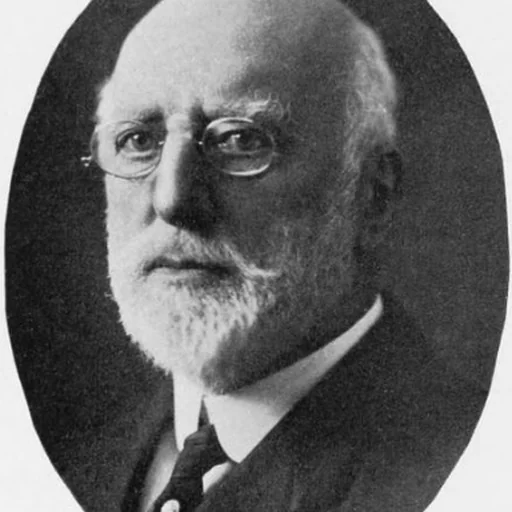
James Renwick Brevoort (July 20, 1832 – December 15, 1918) was an American artist known for his landscapes painted in the Hudson River School style.