Artwork
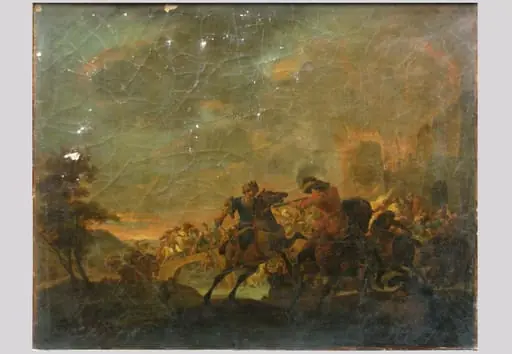
In luptă. Pandant: Încăierare într-un defileu
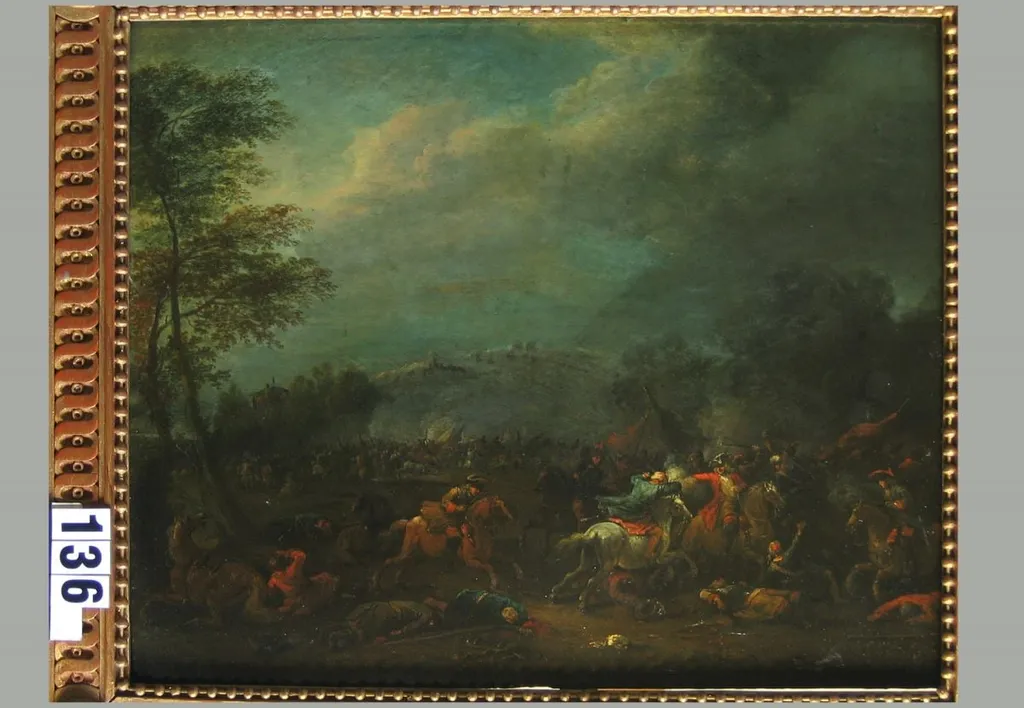
In luptă. Pandant: Încăierare într-un defileu is an unspecified painting by the Barbizon school artist Karel Breydel. It is held in the collection of the Brukenthal National Museum.
About this work
Overview
Its focus on two figures locked in struggle suggests an educational purpose within artistic training.
This work by Karel Breydel, a Flemish artist active in Antwerp around the turn of the 18th century, presents a tightly composed battle scene set within a confined mountain pass. Though often associated with dramatic warfare imagery, the painting functions as much as a study of human motion and physical tension as it does a record of combat. Its focus on two figures locked in struggle suggests an educational purpose within artistic training.
Subject & Meaning
The scene captures two men engaged in a violent grapple amid rugged terrain, their bodies twisted in dynamic tension. One figure wears a distinctive red cap, drawing attention amid the shadowed rocks. The setting—a narrow defile—heightens the sense of confinement and urgency. Rather than glorifying battle, the image serves as a study of anatomy in motion, likely used by students to observe and replicate complex postures under stress.
Technique & Style
Breydel employs strong chiaroscuro to define the figures against the rocky backdrop, using stark contrasts of light and shadow to amplify the physical struggle. The brushwork is direct and unembellished, favoring clarity over ornamentation. The composition is tightly framed, eliminating extraneous detail to isolate the interaction between the two combatants, creating an effect akin to a frozen moment observed from close range.
History & Provenance
Karel Breydel, known as 'Le Chevalier,' was part of a Flemish tradition of battle painting that flourished in Antwerp during the late 1600s and early 1700s. While his larger works often depicted grand military engagements, this smaller piece appears to have been produced for pedagogical use. Its survival suggests it was valued within artistic circles as a model for studying the human form in action.
Context
Though sometimes misattributed to the Barbizon School, this work predates that movement by nearly a century and belongs firmly within the Flemish academic tradition. During this period, artists frequently studied nature and human movement through staged or observed scenes. Battle imagery, even when violent, served as a vehicle for mastering anatomy, perspective, and dynamic composition in training studios.
Legacy
The painting reflects a broader practice in early modern art education, where dramatic scenes were used to teach the mechanics of motion and expression. Its emphasis on physical realism over narrative spectacle influenced later generations of figure painters. Though not widely exhibited, such works formed an essential, if quiet, part of the transmission of artistic skill across centuries.
Artist & collection
Artist
Karel Breydel or Carel Breydel, called 'Le Chevalier' (1678 in Antwerp – 1733 in Antwerp) was a Flemish painter of battle pieces, equestrian paintings and landscapes.

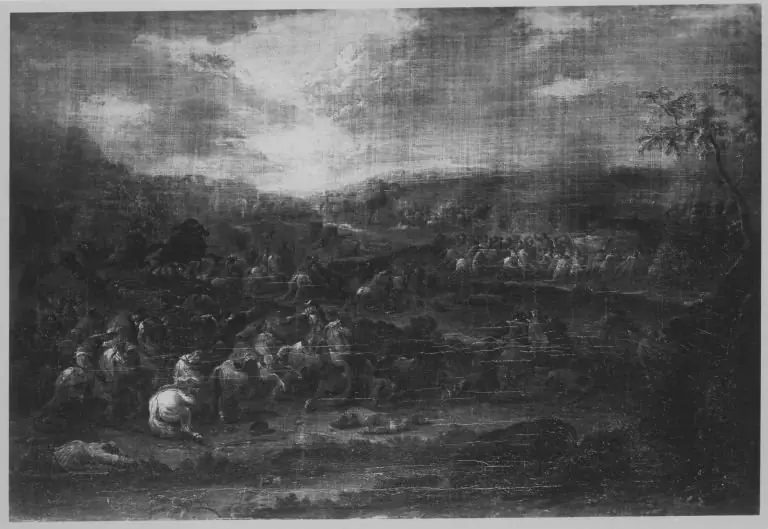
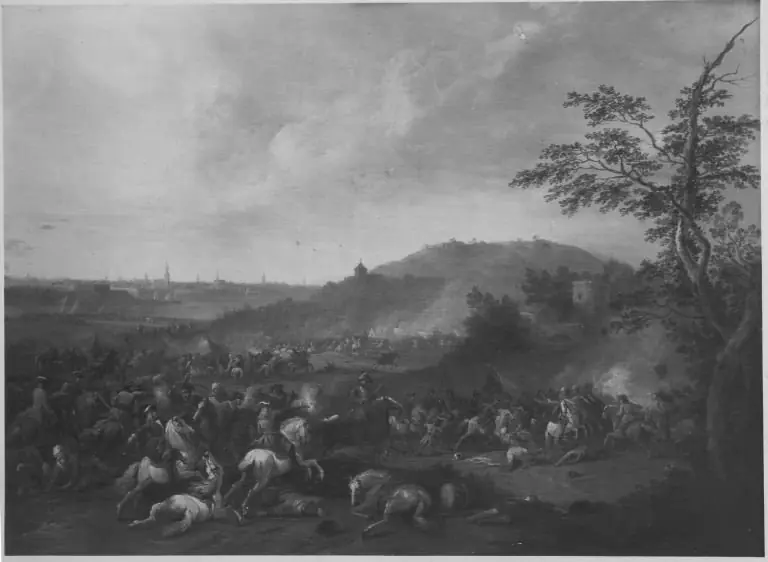 Reitergefecht
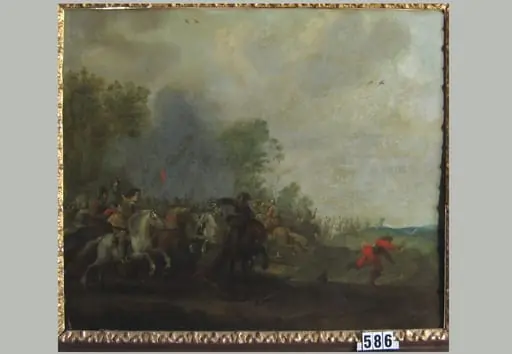 Luptă de cavalerie la marginea codrului
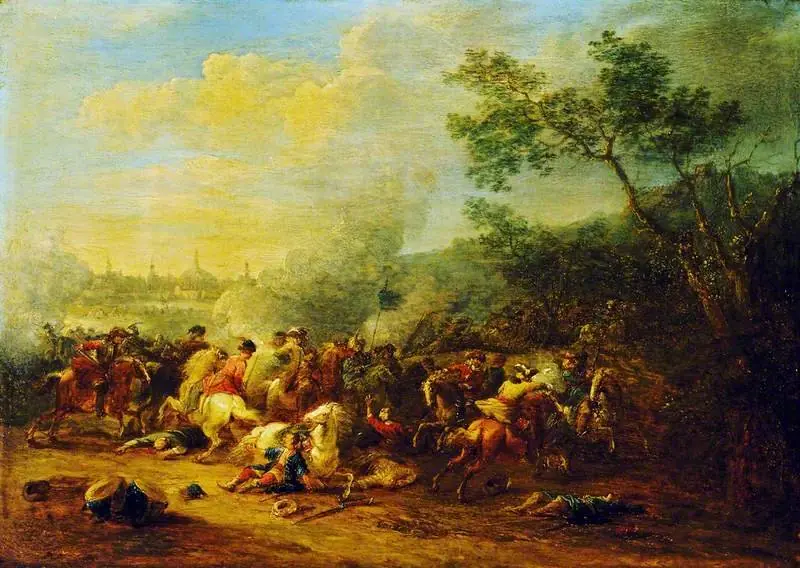 Cavalry Engagement against the Turks, with a Distant View of a Town
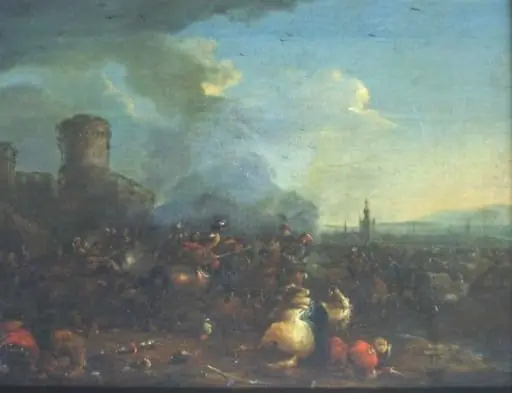 Luptă de cavalerie lângă un castel
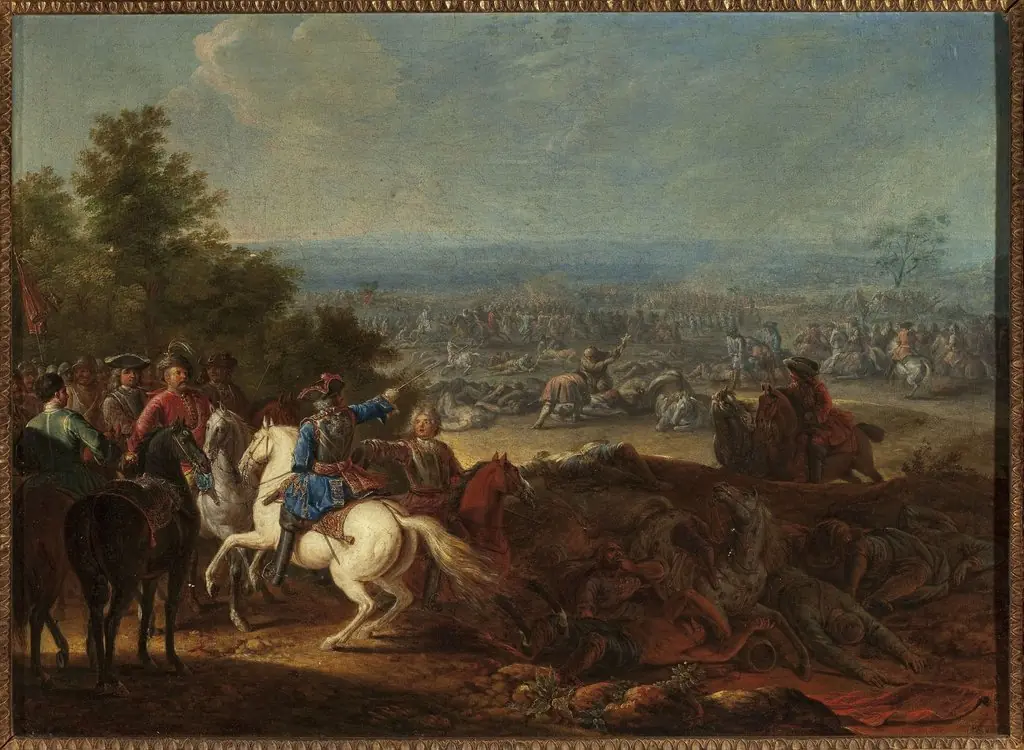 After the battle
 Luptă lângă o cetate (în Reg. Inv.: Atac dintr-o cetate) (pandant: Luptă de cavalerie lângă pietre antice, în Reg. Inv.: Luptă de cavalerie între pietre antice)
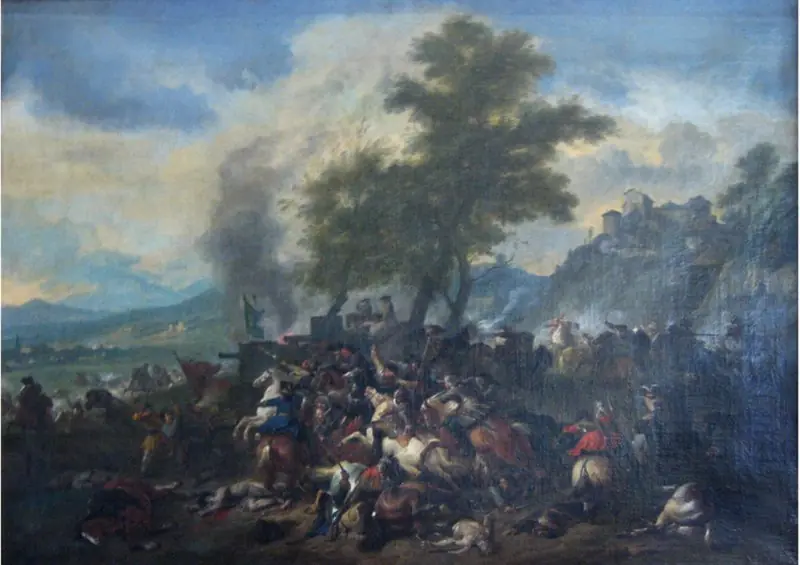 Prins Eugens slag ved Schellenberg