Artwork
After the battle
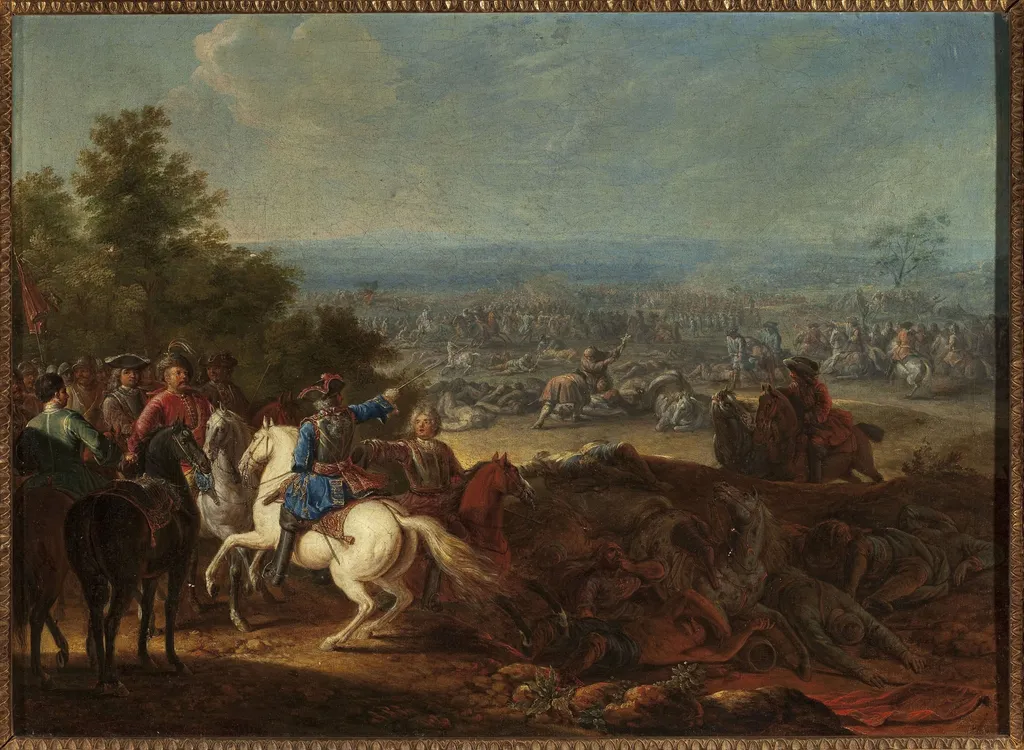
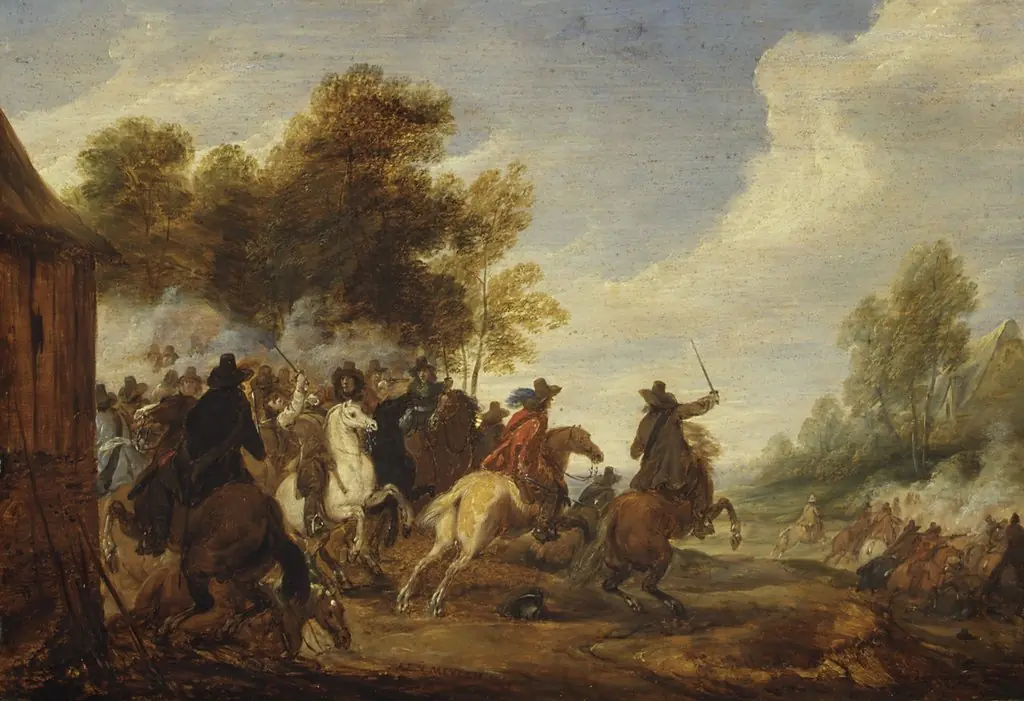
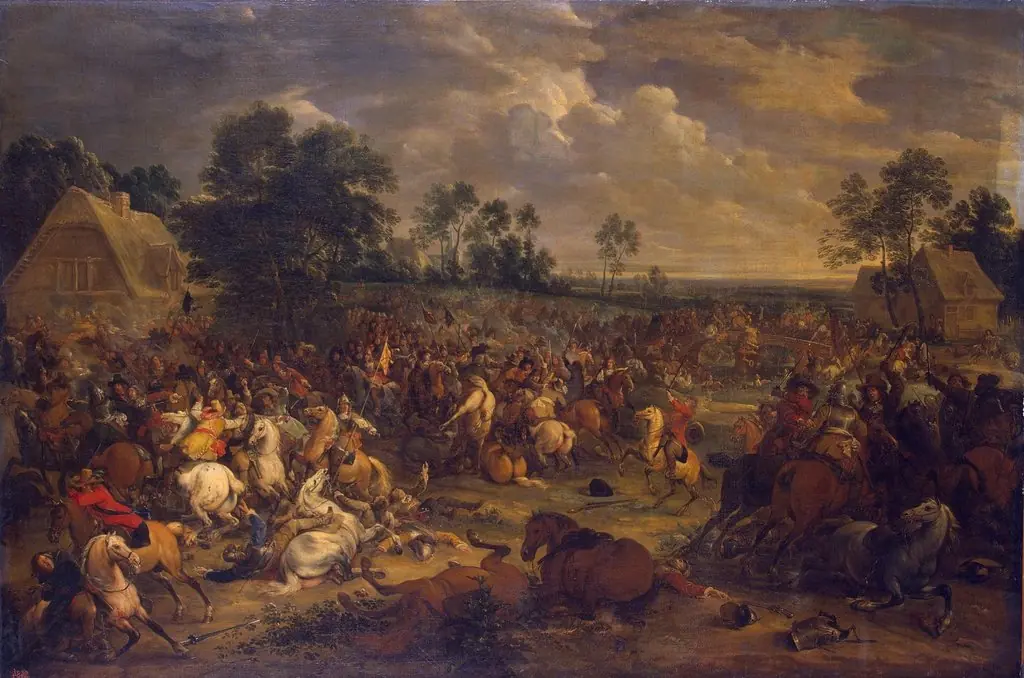
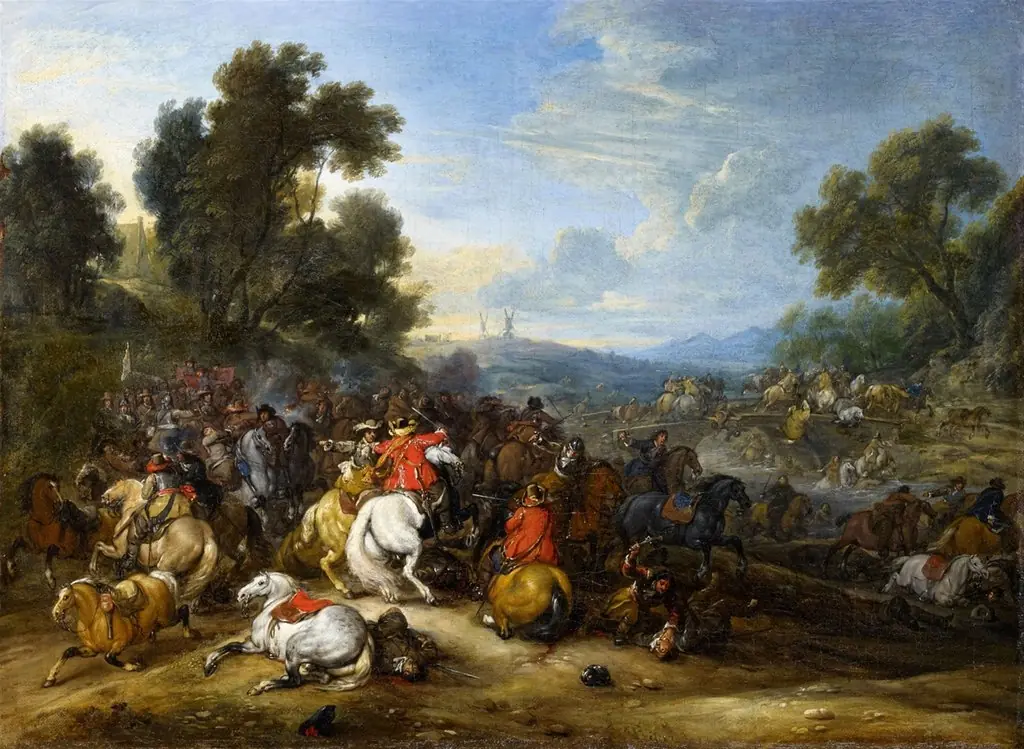
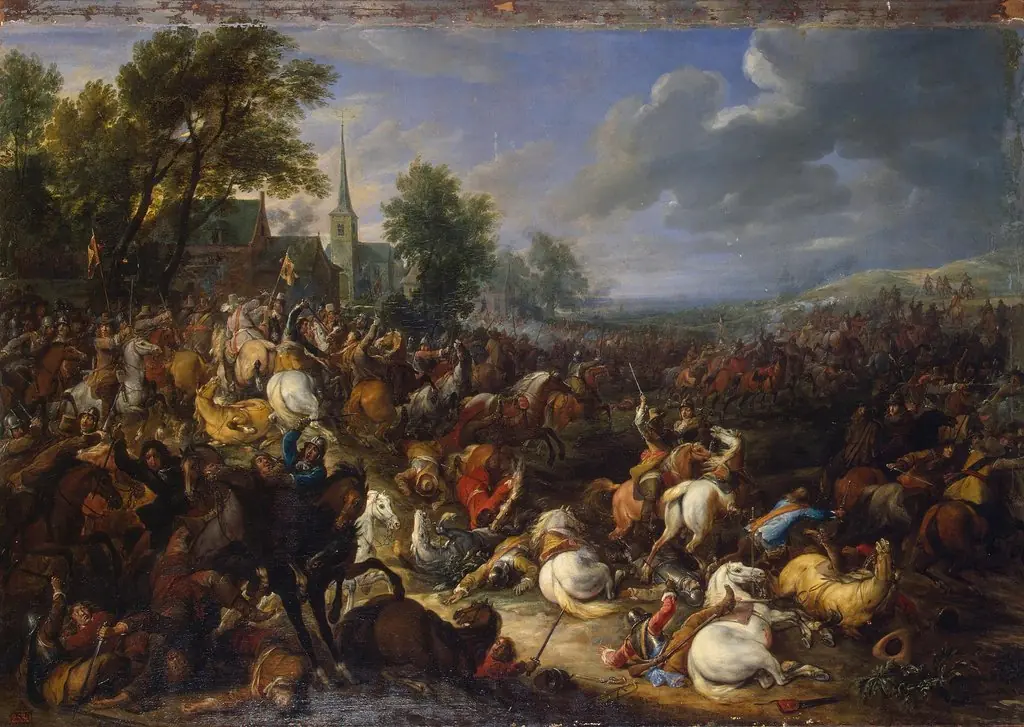
After the battle is an oil painting by the Flemish Baroque painting artist Adam Frans van der Meulen. It dates from 1675 and is held in the collection of the National Museum in Warsaw.
About this work
Overview
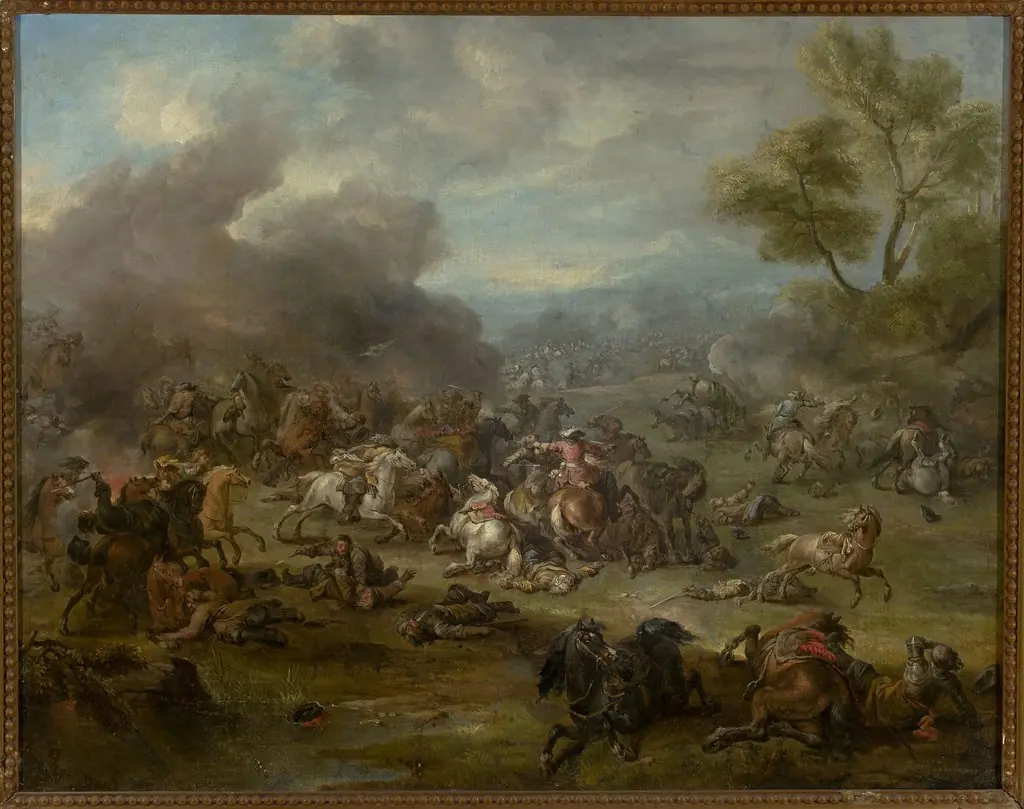
Created in 1675, *After the Battle* is an oil on canvas by Flemish artist Adam Frans van der Meulen. Executed during the height of the Flemish Baroque, the work records a moment of disorder following a military engagement. It is presently displayed in the National Museum in Warsaw and belongs to the genre of history painting, reflecting the artist’s focus on martial subjects.
Subject & Meaning
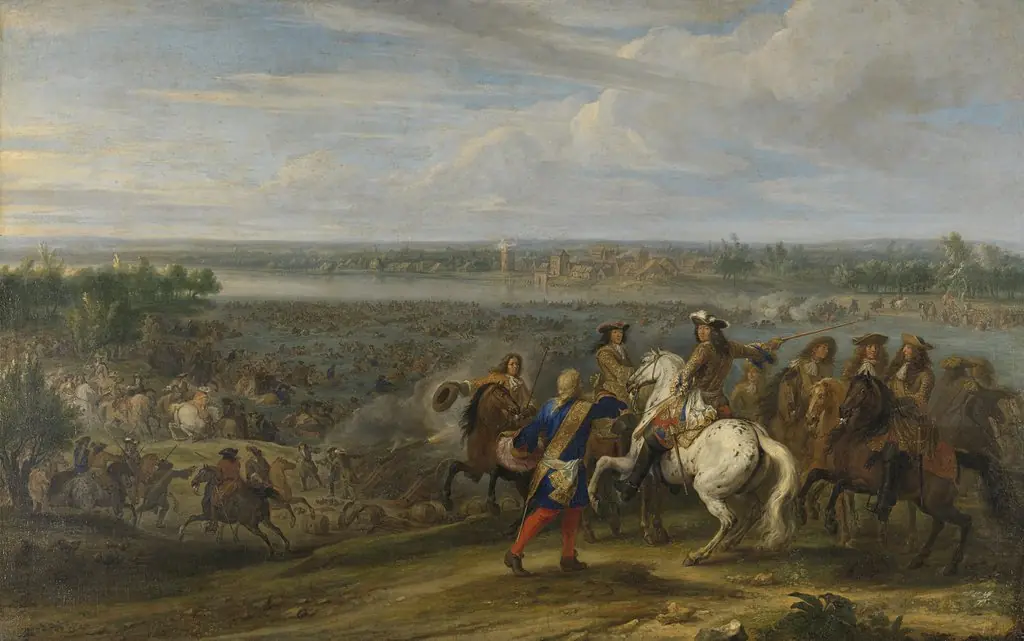
The composition depicts a tumultuous aftermath of combat, centered on a white horse ridden by a figure in a blue uniform who gestures toward the right. Surrounding him are cavalrymen in 17th‑century dress, while the background is populated with fallen soldiers and mounted troops, suggesting both victory and the lingering costs of war.
Technique & Style
Van der Meulen employs a restrained palette of earthy tones, allowing the white horse to dominate the foreground. The brushwork renders detailed armor and fabric, while subtle chiaroscuro models forms and creates a sense of depth. The overall effect emphasizes the drama of the scene without resorting to vivid coloration.
History & Provenance
Working for Louis XIV, van der Meulen produced the painting as part of a series celebrating French military successes, contributing to the monarch’s propagandistic image. After remaining in private collections for centuries, the canvas entered the National Museum in Warsaw, where it has been conserved as an example of Flemish Baroque military art.
Artist & collection
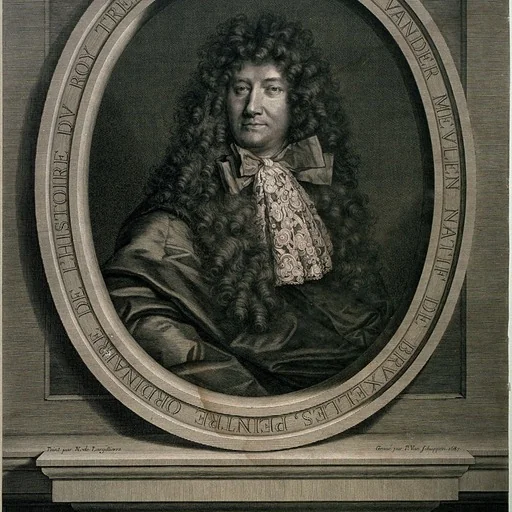
Artist
Adam Frans van der Meulen or Adam-François van der Meulen (11 January 1632 – 15 October 1690) was a Flemish painter and draughtsman who was particularly known for his scenes of military campaigns and conquests.