Artwork
Dead Yellow-breasted Bird in Autumn Landscape
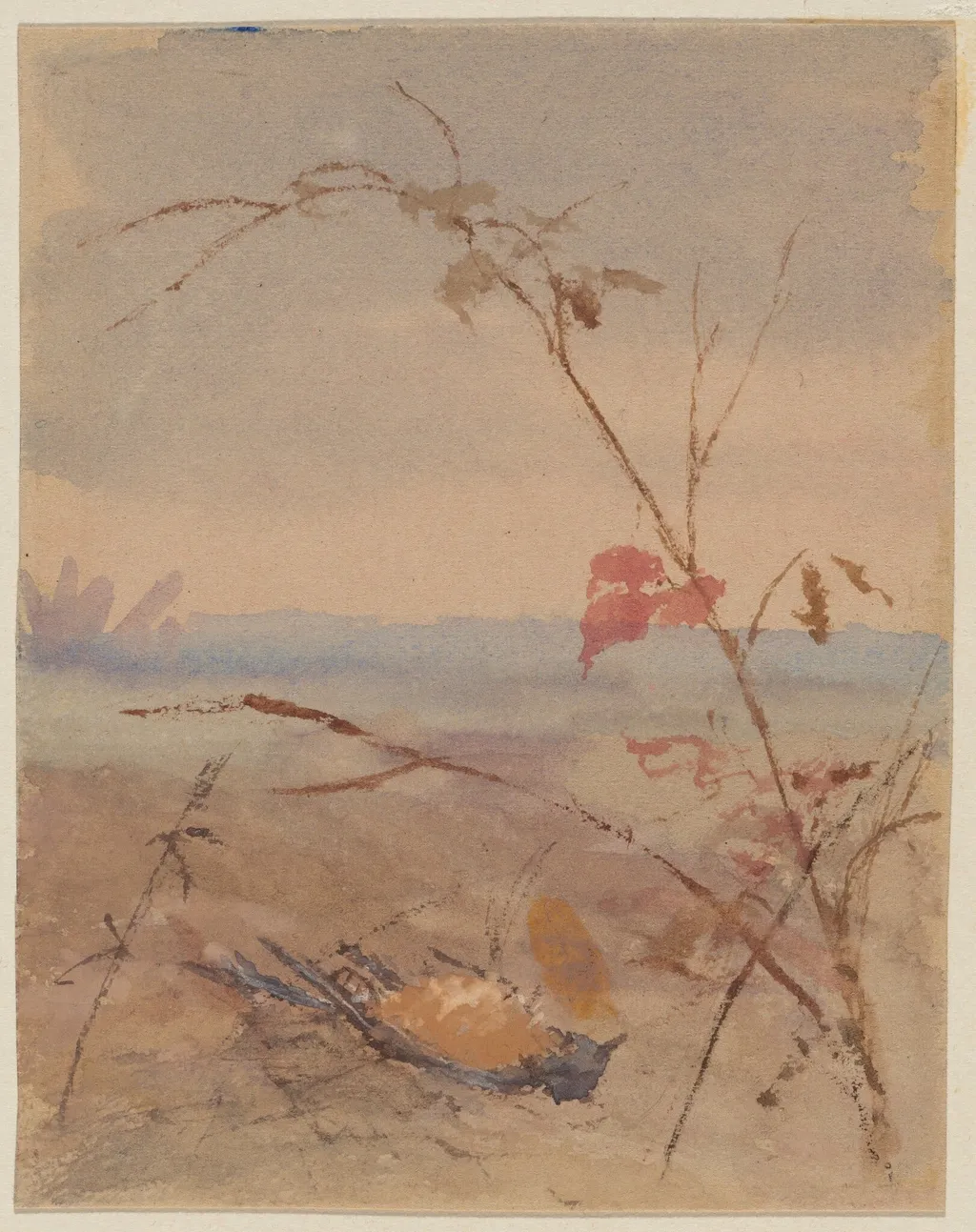
Dead Yellow-breasted Bird in Autumn Landscape is a watercolor drawing by the Impressionist artist Fidelia Bridges. It dates from 1874 and is held in the collection of the National Gallery of Art. Created circa 1874, this watercolor on wove paper depicts a lifeless yellow‑breasted bird perched on a branch amid an autumnal setting.
About this work
Overview
Created circa 1874, this watercolor on wove paper depicts a lifeless yellow‑breasted bird perched on a branch amid an autumnal setting. The composition is restrained, featuring muted earth tones, a pale sky, and scattered fallen leaves that convey a quiet, seasonal atmosphere.
Subject & Meaning
The work focuses on a solitary bird, rendered in subdued yellow‑brown hues, lying on its side against a dry, brown ground. The stillness of the scene suggests a moment of natural transition, emphasizing the fragility of life within the broader cycle of the season.
Technique & Style
Executed in watercolor, the piece employs the medium’s characteristic translucency, yielding soft edges and a slightly blurred effect. The artist’s handling of washes creates a delicate interplay of light and shadow, while the limited palette reinforces the muted, contemplative mood.
History & Provenance
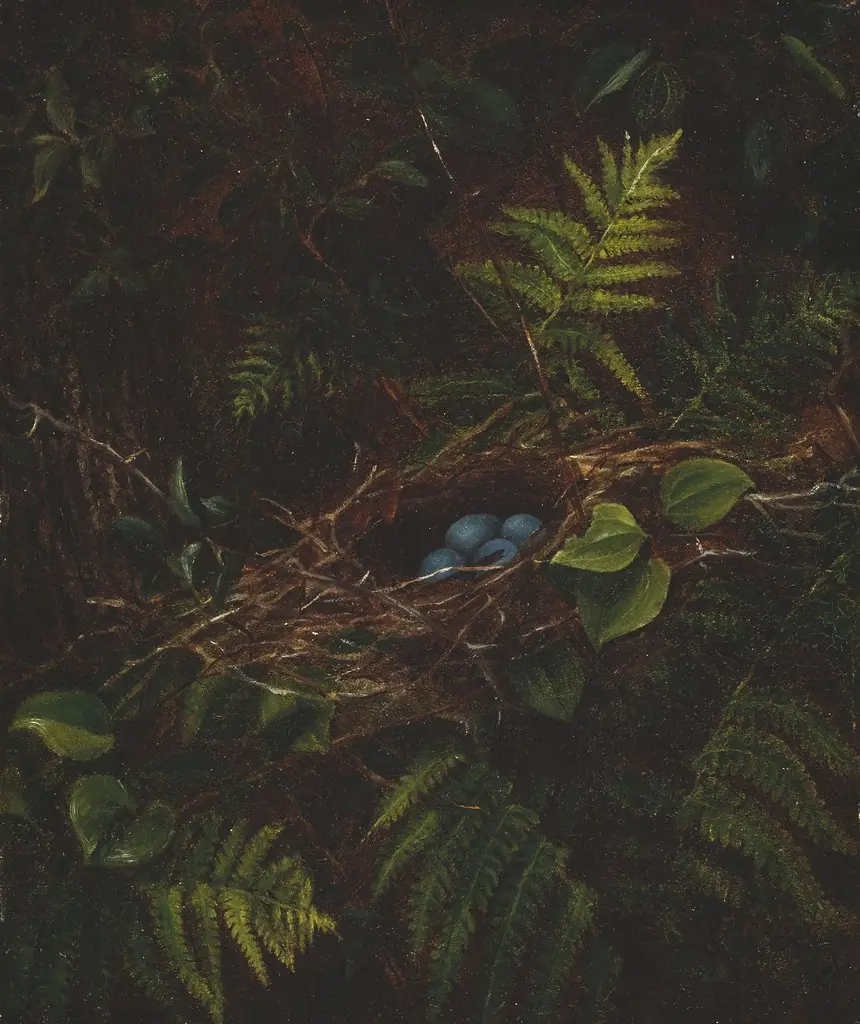
American artist Fidelia Bridges, initially trained in oil, shifted to watercolor and became the sole female member of the early American Watercolor Society. Though many of her watercolors were reproduced in publications and decorative objects, this particular study remains a focused, unpublished example of her interest in birds and plant life.
Context
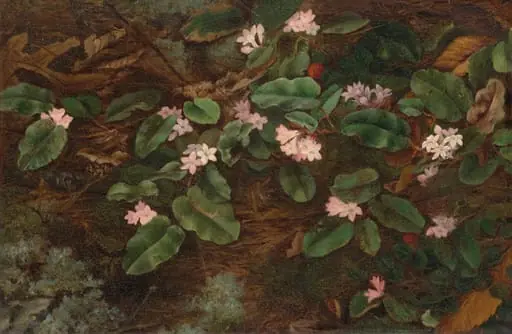
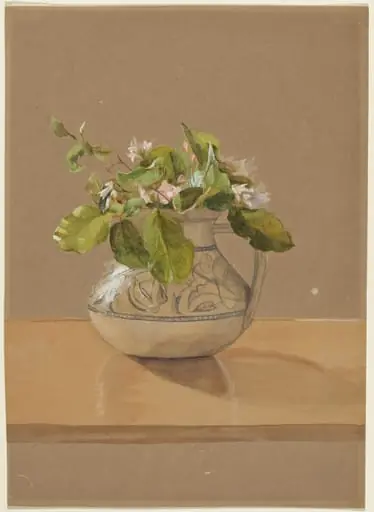
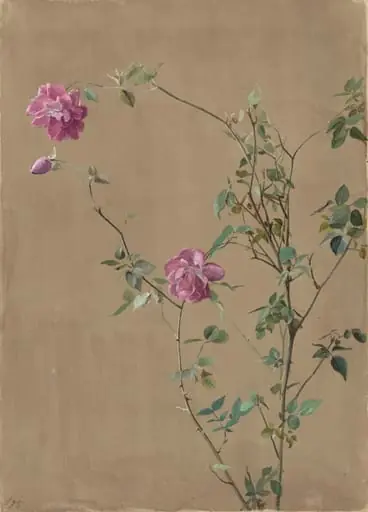
Bridges’ oeuvre is noted for meticulous natural observation, aligning with 19th‑century American interests in scientific illustration and domestic art. This piece reflects that dual concern, marrying precise botanical detail with an emotive portrayal of a fleeting natural moment.
Own this work as a print
Artist & collection
Artist
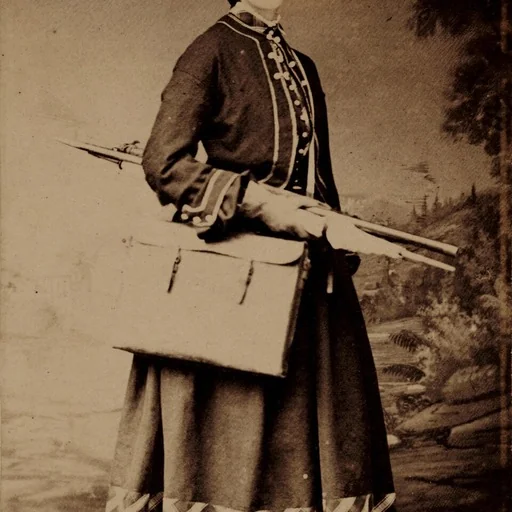
Fidelia Bridges (May 19, 1834 – May 14, 1923) was an American artist of the late 19th century.